


Refrigerant Recharge / Leak Repair in Allen: Fix the Leak, Not Just the Level
The leak found and repaired before any refrigerant goes in – because a recharge alone won't keep your home cool.
What’s Covered on This Page
- Signs Your AC Is Low on Refrigerant, Not Just Low on Power
- Why Topping Off Refrigerant Without Finding the Leak Doesn’t Work
- Check These Before Assuming It’s a Refrigerant Leak
- Why Older Allen Homes Are More Likely to Develop Refrigerant Leaks
- What Happens During a Refrigerant Recharge and Leak Repair Visit
- Can a refrigerant leak be fixed, or does it always come back?
- What is the 3 minute rule people mention for AC systems?
- Is it safe to run my car’s AC on recirculate if it’s low on refrigerant?
Signs Your AC Is Low on Refrigerant, Not Just Low on Power
Here’s the first thing to know. Your AC doesn’t burn through refrigerant the way your car burns gas. It moves the same refrigerant around a sealed loop, over and over. So if the level is low, it went somewhere. That’s a leak, and it’s why the signs below matter.
A system that’s low on refrigerant usually still turns on. It just can’t pull enough heat out of your home. Watch for these clues:
- The air from your vents feels cool, but not cold, even with the thermostat set low.
- Your system runs and runs on a hot afternoon and never seems to reach the set temperature.
- You see frost or ice on the copper line going into the outdoor unit, or on the indoor coil.
- You hear a hiss or a bubbling sound near the indoor or outdoor unit.
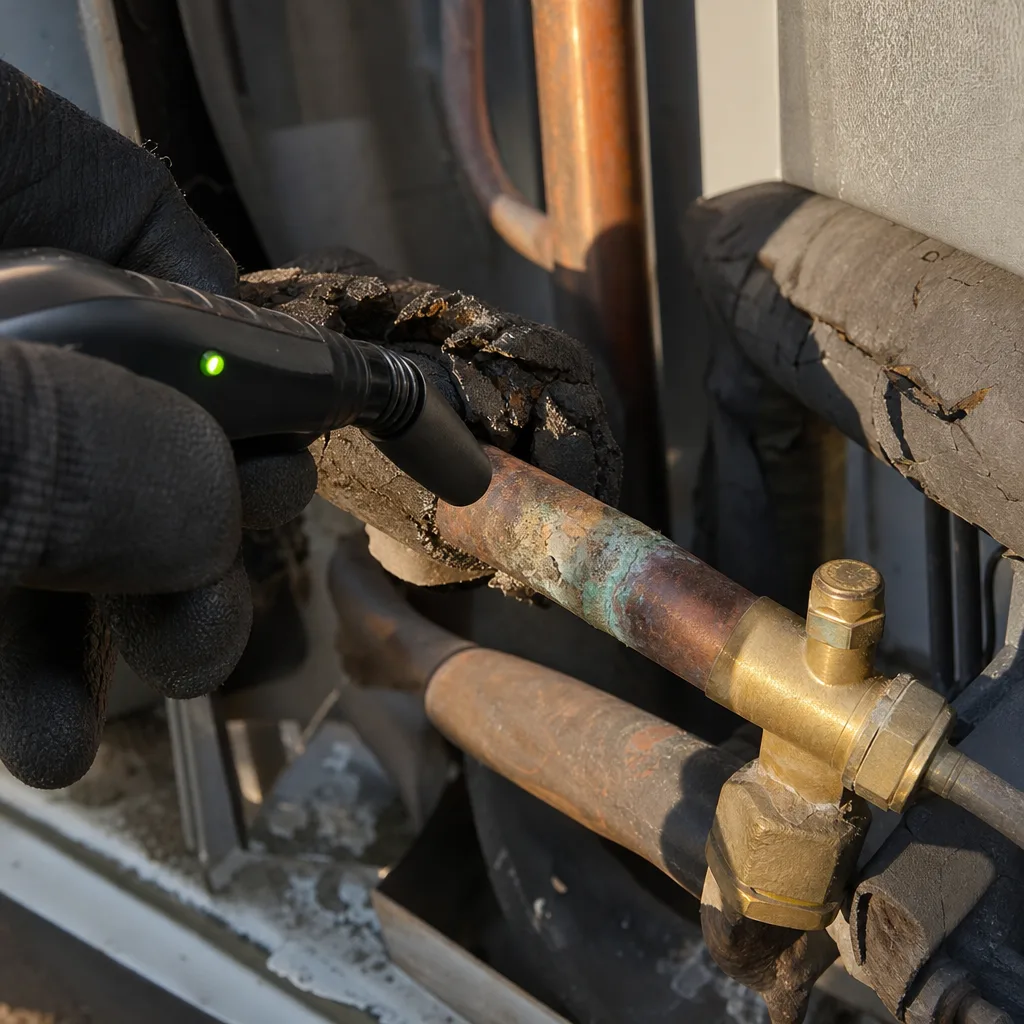
- You spot an oily film on copper fittings or around the coil. Refrigerant carries oil, so a leak can leave a greasy trail.
- Your electric bill climbs, but you haven’t changed how you use the AC.
Ice is the one that surprises people. It seems strange that a system short on cooling would freeze. But low refrigerant drops the pressure in the coil, and the coil gets cold enough to freeze the moisture in your air. If your air handler sits in the attic, as it does in a lot of North Texas homes, you may not see the ice at all. You might just notice water near the unit or weak airflow from the vents.
Power and electrical problems look different. These point away from refrigerant:
- Nothing happens when you lower the thermostat, or the thermostat screen is blank.
- The outdoor unit hums, but the fan on top doesn’t spin.
- A breaker keeps tripping when the AC kicks on.
- The system clicks on and off over and over in short bursts.
Before you call anyone about a dead system, check the breaker and the thermostat batteries yourself. That’s a fair first step, and sometimes it’s the whole fix. A humming outdoor unit with a still fan often turns out to be a failed capacitor, the small part that gives the motors their starting kick. That’s an electrical repair, not a refrigerant one.
Some homes show both kinds of signs, and that’s when a technician earns their keep. When a system has run low for a while, it works harder than it should. That extra strain can wear on electrical parts too. So a bad capacitor and a slow leak can show up at the same time.
This is also where North Texas heat works against you. A small leak might not show in April. By July, with long afternoons in the upper 90s and beyond, your system is running near its limit all day. A unit that’s even a little low can’t keep up, and that’s often when people first notice. If you’re seeing the cooling signs above, tell us what you’ve noticed when you call. It helps your technician go straight to finding the leak instead of guessing.
Why Topping Off Refrigerant Without Finding the Leak Doesn’t Work
A top-off feels like a fix. Someone adds refrigerant, the air turns cold again, and you get your evenings back. But if nobody found the leak, the refrigerant you just paid for starts slipping out the same way the last batch did. You haven’t fixed anything. You’ve only bought some time.
How much time depends on the size of the leak. A big one can drain the system in weeks. A slow one might hold through spring and then give out in July, right when you need your AC most. Either way, you end up paying for refrigerant again, and maybe again after that. Over a few summers, those top-offs can add up to more than fixing the leak would have cost the first time.
The bigger cost is what running low does to your equipment. The compressor is the heart of your outdoor unit, and it’s one of the most expensive parts to replace. Refrigerant carries the oil that keeps it lubricated and helps keep it cool. When the charge drops, the compressor runs hotter and longer with less protection. A system that gets topped off and slowly drained over and over is wearing out its most costly part along the way.
Guessing causes its own trouble. A leaking system has no correct level to top off to, because the amount inside keeps changing. Add too little and you’re back where you started. Add too much and you can strain the compressor from the other direction. A proper charge is measured against the manufacturer’s specs once the system is sealed again, not eyeballed on a system that’s still losing refrigerant.
Most leaks hide in a handful of places:
- The indoor evaporator coil, where tiny pinholes can form in the copper tubing over the years
- The outdoor condenser coil, which can take damage from hail, a weed trimmer, or a bent fin that rubs a tube
- Brazed joints and flare fittings where copper lines connect
- Service valves and the small valve cores where refrigerant gets added
- Copper lines that rub against framing or vibrate against each other in the attic
Finding the leak takes real work. Technicians use electronic leak detectors, bubble solution on fittings, UV dye, or a pressure test with nitrogen to track down the spot. In North Texas, where so many air handlers and line sets run through hot attics, that can mean some time spent crawling around up there. It’s worth it, because a leak you can see is a leak you can fix.
There’s one more reason to fix it right. Newer systems run on R-410A or the newer A2L refrigerants, and handling any of them is a job for a certified technician. Letting refrigerant leak into the air year after year isn’t good for anyone, and it’s not how the trade is supposed to work.
Check These Before Assuming It’s a Refrigerant Leak
Not every AC that feels weak is low on refrigerant. A lot of the signs from the first section, like cool-but-not-cold air, long run times, and even ice on the coil, can come from simple airflow problems. Some of these you can find and fix yourself in a few minutes, at no cost. It’s worth checking them before you pay anyone to hunt for a leak.
Start with these:
- Your air filter. A filter packed with dust chokes the air moving across the indoor coil. Less air means less cooling, and it can make the coil cold enough to freeze, just like low refrigerant does. If you can’t remember the last time you changed it, change it now.
- Your vents and returns. Closed supply registers in unused rooms, or a big return grille blocked by a couch or a stack of boxes, starve the system of air. Open them up and clear the space in front of them.
- Your thermostat setting. If the fan is set to On instead of Auto, the blower keeps running after cooling stops. That pushes room-temperature air through the vents, and it can feel like the AC isn’t working. Make sure it’s set to Cool and the fan is on Auto.
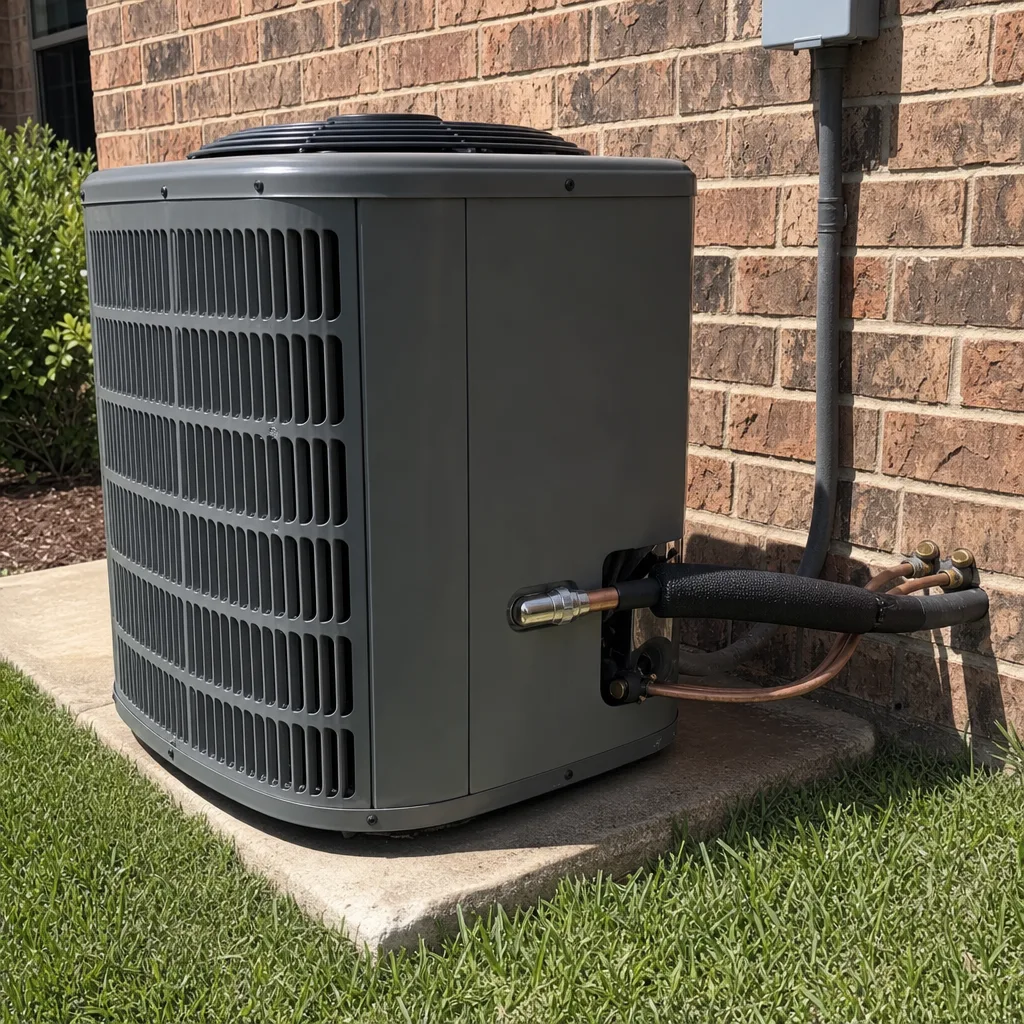
- Your outdoor unit. The outside coil has to dump the heat it pulled from your home. In North Texas, spring cottonwood fluff, grass clippings from mowing, and leaves can mat over the fins and trap that heat. Look for debris on the sides of the unit, and clear away weeds, shrubs, or anything stacked against it.
- Your condensate drain. Your AC pulls water out of the air and drains it away. If that line clogs, many systems have a safety switch that shuts cooling off to keep water from overflowing. If your system stopped cooling and you see standing water in the pan under an attic air handler, a clogged drain is a likely cause, not refrigerant.
One more thing to keep in mind is how hard the heat is pushing. On a brutal July afternoon, even a healthy system can run nonstop and still sit a few degrees above your setting. That doesn’t mean it’s leaking. If the house catches up in the evening and the vents still blow clearly cold air, your system may just be working at its limit. If the air from the vents is barely cooler than the room, that’s a different story.
Give your system a fair test after you make a fix. If you swapped a dirty filter or opened up blocked vents, let it run for a few hours and see if the air gets colder. If you found ice, give the coil time to thaw fully before you judge how it’s cooling, since a frozen coil can’t cool well no matter what caused it.
If the filter is clean, the vents are open, the outdoor unit is clear, the drain is flowing, and you’re still getting cool-ish air or ice, that’s a strong sign the problem is inside the sealed system. Then refrigerant is a real suspect, and it’s time for someone with the right tools to find out for sure. And if one of these checks fixed it, good. You just saved yourself a service call, and that’s exactly how it should work.
Ready when you are – get in touch today.
Call Today, Get Service Today. Xtreme Air Services — Allen is ready to help.
Why Older Allen Homes Are More Likely to Develop Refrigerant Leaks
If your Allen home still has its original AC, or one that’s been running for many summers, a leak isn’t bad luck. It’s wear. The copper tubing, joints, and coils that hold refrigerant don’t last forever, and North Texas puts them through a lot.
Think about what your system goes through in one year here. It runs hard through long, hot summers. Then it sits through winter freezes and sudden cold fronts. Every cycle makes the metal expand and shrink a little. After enough years, that movement wears down the weak spots we covered earlier, like brazed joints, fittings, and thin coil tubing, until a pinhole opens up.
A few things speed that up in older homes:
- Attic heat. Many North Texas homes have the air handler and copper lines in the attic. On a summer afternoon, that space gets far hotter than outside. Years of baking and cooling put real stress on copper and joints.
- Vibration. Every time your system kicks on, the compressor shakes a little. Over thousands of starts, lines that rub against framing or each other can wear thin.
- Corrosion inside the indoor coil. Older copper coils can develop tiny pinholes from slow corrosion. It starts inside the metal, so you won’t see it until refrigerant is already escaping.
- Storm seasons. An outdoor unit that has sat through years of hail and high winds may have dented or damaged coil fins. A dent that didn’t leak at first can crack later.
- Shifting ground. North Texas clay soil swells when it’s wet and shrinks when it dries. If the pad under your outdoor unit settles or tilts over time, it can pull on the copper lines where they connect.
None of this means a newer home can’t leak. A brand-new system can have a bad joint or a line nicked during install. But the older your equipment is, the more of these stresses it has stacked up.
There’s one more thing to check if your system is quite old: which refrigerant it uses. Many older units run on R-22. It’s no longer made for new use in the U.S., so the supply is limited and it costs a lot more to refill. Today’s systems use R-410A or the newer A2L refrigerants, and you can’t just swap one into a system built for R-22. If your unit runs on R-22, a leak repair can still make sense, but the cost math changes. You’ll want an honest talk about it before anyone adds refrigerant.
Age also affects what happens after the leak is fixed. An older system that has run low for a while may have other worn parts. If your technician finds more than one problem, you should hear about each one, with a clear price, before any work starts. Then you can decide whether to repair or start thinking about replacement. That choice should be yours, made with the facts in front of you.
So if your home has some years on it and you’re seeing the warning signs from the top of this page, a leak is a real possibility. Finding it early, before the compressor takes the strain, gives you the most options.
Watch Our Video
See How We Handle Refrigerant recharge / leak repair in Allen
Xtreme Air Services — Allen
What Happens During a Refrigerant Recharge and Leak Repair Visit
A real refrigerant repair has three jobs: find the leak, fix it, and prove the system is sealed and cooling before anyone calls it done. That’s how we approach Refrigerant recharge / leak repair at Xtreme Air Services. We find the failed part, repair or replace it, and confirm your system runs correctly. Most calls come down to a single common failure that gets fixed on the first visit.

Here’s what a proper repair looks like from start to finish:
- Confirm it’s really refrigerant. A technician checks the system’s pressures and temperatures and rules out the simple airflow problems covered earlier. There’s no point chasing a leak if a clogged drain or a dead capacitor is the real culprit.
- Track down the leak. This is where the detection tools from earlier on this page come in. In many North Texas homes, that also means time in a hot attic around the air handler and line set.
- Repair or replace the failed part. A leaking fitting or valve core can often be fixed on the spot. A coil with corrosion pinholes may need to be replaced instead.
- Seal and clear the system. Once the leak is fixed, the system is pressure-checked to make sure it holds. Then a vacuum pump pulls out air and moisture, because moisture left inside can damage the compressor over time.
- Charge it correctly. Refrigerant goes in to the manufacturer’s specs for your equipment, whether that’s R-410A or one of the newer A2L refrigerants.
- Test it. Your technician runs the system and checks that the vents are blowing properly cold air and the pressures look right.
You’ll know what the repair costs before any of that work starts. There’s a $26 to $99 service-call fee, and it’s credited toward the repair if you go ahead with us. Our most common refrigerant recharge and leak repair runs $250 to $800. More involved jobs fall in our typical range of $250 to $1,500.
That price includes the diagnosis, the labor, the standard replacement part, and testing and cleanup when we’re done. It doesn’t include additional failed parts, major components, code upgrades, or permits. Those get quoted separately, so you can decide on each one. That matters most in older homes, where a technician may find more than one worn part, or a system that still runs on R-22.
A few things move the price up or down: how big the failure is, what the part costs and how easy it is to get, your equipment’s age and brand, and whether more than one component has failed. The time of day doesn’t change it. There’s no extra charge for nights or weekends, so you don’t have to wait out a hot Saturday to save money.
Financing usually isn’t offered for a smaller job like this. If the repair turns into something larger, or you decide replacement makes more sense, financing options are available. The person doing the work is a licensed, background-checked technician, and you’ll get a straight answer about your options either way.
Call 469-299-8996
Frequently Asked Questions
Common questions about Refrigerant recharge / leak repair
Can a refrigerant leak be fixed, or does it always come back?
Yes, a refrigerant leak can be fixed for good when the failed part is found and repaired, not just patched over. Once the leak source, like a bad fitting, valve core, or corroded coil, is repaired, the system is pressure-tested and vacuumed before it’s recharged. That process is what stops the slow drain that brings a leak back.
What is the 3 minute rule people mention for AC systems?
The 3 minute rule refers to waiting a few minutes before restarting your AC after it shuts off, so the compressor pressure can equalize and the motor doesn’t strain on startup. It’s a general protection habit for the compressor and isn’t a sign of a refrigerant leak on its own. If your system is short-cycling on and off in bursts that fast without you touching the thermostat, that points to an electrical issue like a failing capacitor, which needs a technician’s eyes.
Is it safe to run my car’s AC on recirculate if it’s low on refrigerant?
Running recirculate helps a struggling car AC cool faster since it isn’t pulling in hot outside air, but it won’t fix a refrigerant leak underneath the problem. The same rule applies to your home system: cooling tricks like fans or shade only buy time. If your home AC blows cool-ish air, ices up, or runs nonstop in Allen’s summer heat, the real fix is finding where the refrigerant is escaping.
Ready to Get Started?
Call (469) 299-8996 Today, Get Service Today.