


Central Air Conditioning Installation in Frisco, Sized Right From Day One
Central air sized to your home from day one, with what's included, what isn't, and the permits explained up front.
What’s Covered on This Page
- Frisco’s Newer Homes Are Reaching Replacement Age
- Proper Sizing Decides Whether Your New System Works
- What’s Included in a Standard Installation and What Isn’t
- Licensing and Permits Required for a Frisco Installation
- When a Repair Makes More Sense Than Full Replacement
- What is the $5,000 rule for AC units?
- How much is a new AC unit for a 2000 sq ft home?
- How long does a central air conditioning installation take?
Frisco’s Newer Homes Are Reaching Replacement Age
Your house might still feel new to you. The kitchen looks good, the paint holds up, and the neighborhood has grown in around you. The AC is different. It doesn’t age like the rest of your home. It ages by how many hours it runs, and in Frisco it runs a lot.
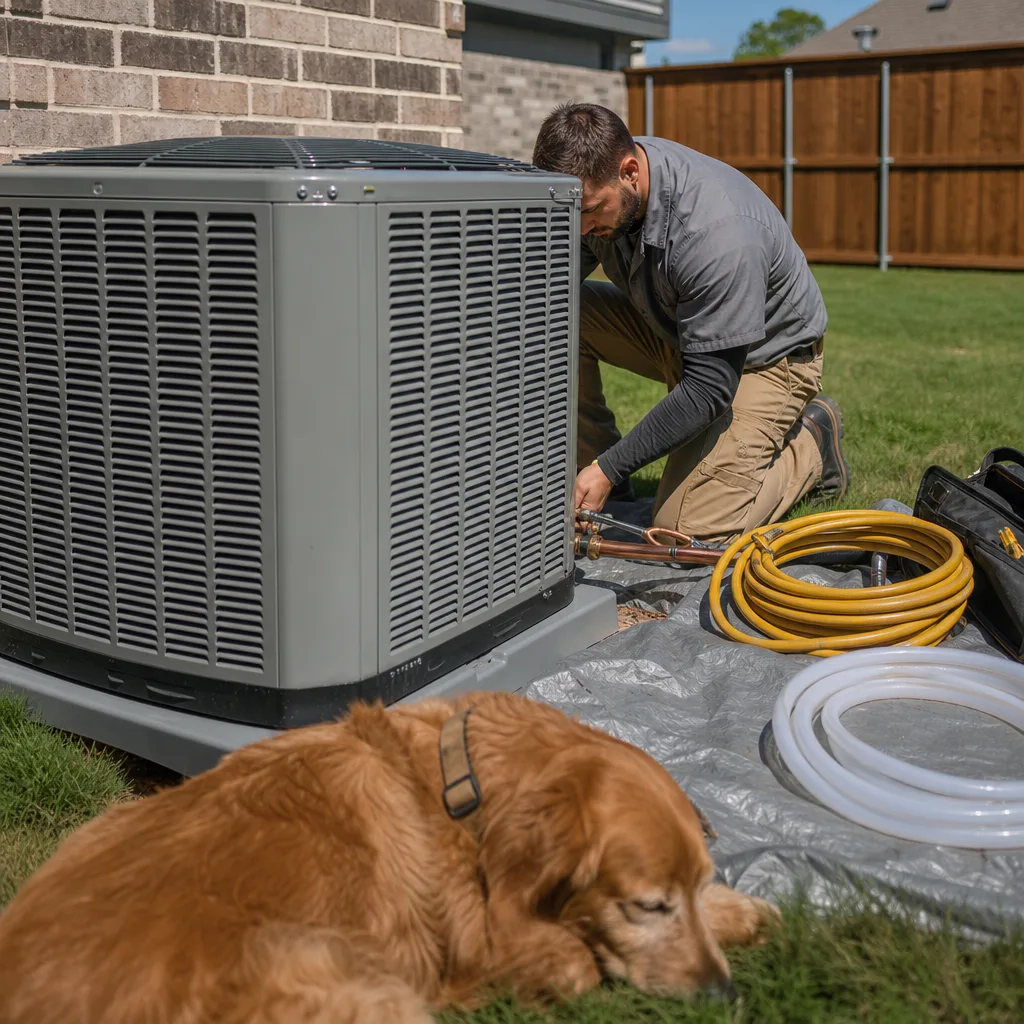
Frisco grew fast from the late 1990s through the 2010s. Whole subdivisions were built in just a few years, and most of those homes got a builder-grade central AC system. Builder-grade means it was chosen to meet the spec and the budget at the time, not to give you the most comfort over the long haul. Many of those first systems are still running today, and a lot of them are getting close to the end of a normal lifespan.
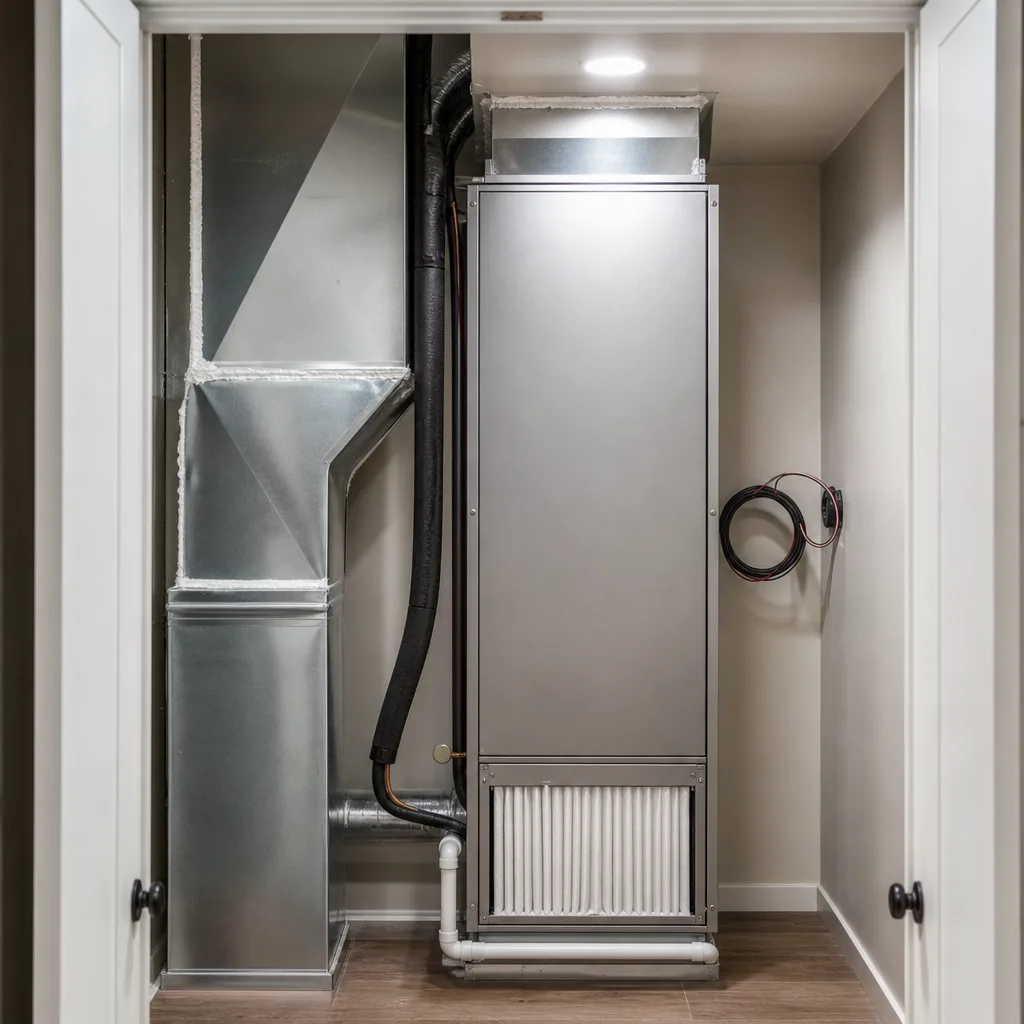
Most central air systems last somewhere around 15 to 20 years. How long yours lasts depends on how well it was sized, how often it was serviced, and how hard it has had to work. Frisco summers make it work hard. Long stretches of triple-digit days keep the system running for hours with few breaks. In many homes here, the indoor coil and air handler sit up in the attic, where summer heat climbs far past the temperature outside. That wears parts out faster than a mild climate would.
Here’s what you might notice in an aging system:
- It runs almost nonstop on hot afternoons and still can’t get the house down to your setting.
- Upstairs rooms stay a few degrees warmer than downstairs, and that gap gets bigger each year.
- Your summer electric bills keep creeping up even though your habits haven’t changed.
- Repairs that used to happen once in a while now come every season.
- The house feels sticky or damp even when the air coming out of the vents is cool.
Refrigerant is another thing worth checking. Some systems from the earlier part of Frisco’s building boom were made for an older refrigerant that has since been phased out. If yours uses it, a leak or a major repair can cost more than it’s worth, because that refrigerant is harder to get. One of our technicians can tell you which kind your system uses by reading the label on the outdoor unit.
None of this means you have to replace a system just because it hit a certain birthday. If an older unit still cools well, doesn’t need many repairs, and your bills look normal, keeping up with regular maintenance can make sense for now. Age is a reason to start planning. It isn’t a reason to panic.
Planning ahead gives you choices. You can compare efficiency levels, look at financing, and pick a time that works for your family. When an original builder system finally quits in the middle of August, you lose most of those choices. As a Trane Comfort Specialist, our team can look at your current setup, check how well it’s sized for your home, and give you a straight answer on whether it’s time to replace it or whether it still has some good years left.
Proper Sizing Decides Whether Your New System Works
A new AC is only as good as its size. Pick one that’s too big or too small, and you’ll pay for new equipment and still put up with the same hot rooms and sticky air. Getting the size right is the single biggest thing that decides whether your new system feels better than the old one.
AC size is measured in tons. That’s not weight. It’s how much heat the system can pull out of your home in an hour. More tons isn’t automatically better, and here’s why.
- Too big: The system cools the air fast, hits your setting, and shuts off before it has time to pull moisture out. That’s called short cycling. The house feels cool but damp, and all that starting and stopping wears parts out sooner.
- Too small: The system runs and runs on hot afternoons and still can’t keep up. Your bills climb, and the equipment never gets a break.
Humidity matters a lot here. In a North Texas summer, a system that cools without drying the air leaves you reaching for the thermostat to drop it a few more degrees. A properly sized system runs long enough to do both jobs, so you can feel comfortable at a higher setting.
The easy shortcut is to look at the old unit’s label and install the same size. Don’t assume that number was right. Your current system may have been picked by a quick rule of thumb when the house was built. And your home has probably changed since then. Maybe you added attic insulation, put in new windows, finished a room over the garage, or turned the garage into a game room. Each of those changes how much cooling you need.
The right way to size a system is a cooling load calculation. It’s a room-by-room look at how much heat your home takes on. It weighs things like:
- Square footage and ceiling height
- How much insulation is in the attic and walls
- How many windows you have and which way they face, since west-facing glass soaks up the late-afternoon sun
- Whether your coil, air handler, and ductwork sit in a hot attic
- How many people live in the home and how you use each room
Our team offers cooling load calculations, so your new system is matched to the home you live in today, not the one the builder handed over years ago.
Sizing also ties into your ducts. In a lot of two-story Frisco homes, the upstairs bedrooms run warmer than the rest of the house. Sometimes that’s a tonnage problem. Often it’s an airflow problem in the ducts. A bigger unit won’t fix a duct that can’t carry enough air upstairs. It’s worth knowing which one you’re dealing with before you buy anything.
The outdoor condenser and indoor coil also need to be matched to each other. A new outdoor unit paired with an old coil that doesn’t fit it won’t reach its rated efficiency.
What’s Included in a Standard Installation and What Isn’t
Most central air installations we quote fall between $5,500 and $13,000. The most common job is a standard like-for-like swap that uses your existing connections with no major changes. That job usually runs $7,000 to $10,000. It includes a new outdoor condenser and a new indoor coil, so the matched pair we covered above is part of the price, not an extra.
A standard installation includes:
- All equipment and materials, including the new condenser and coil
- Professional installation by our licensed and insured technicians
- Standard connections to your existing lines, wiring, and drain
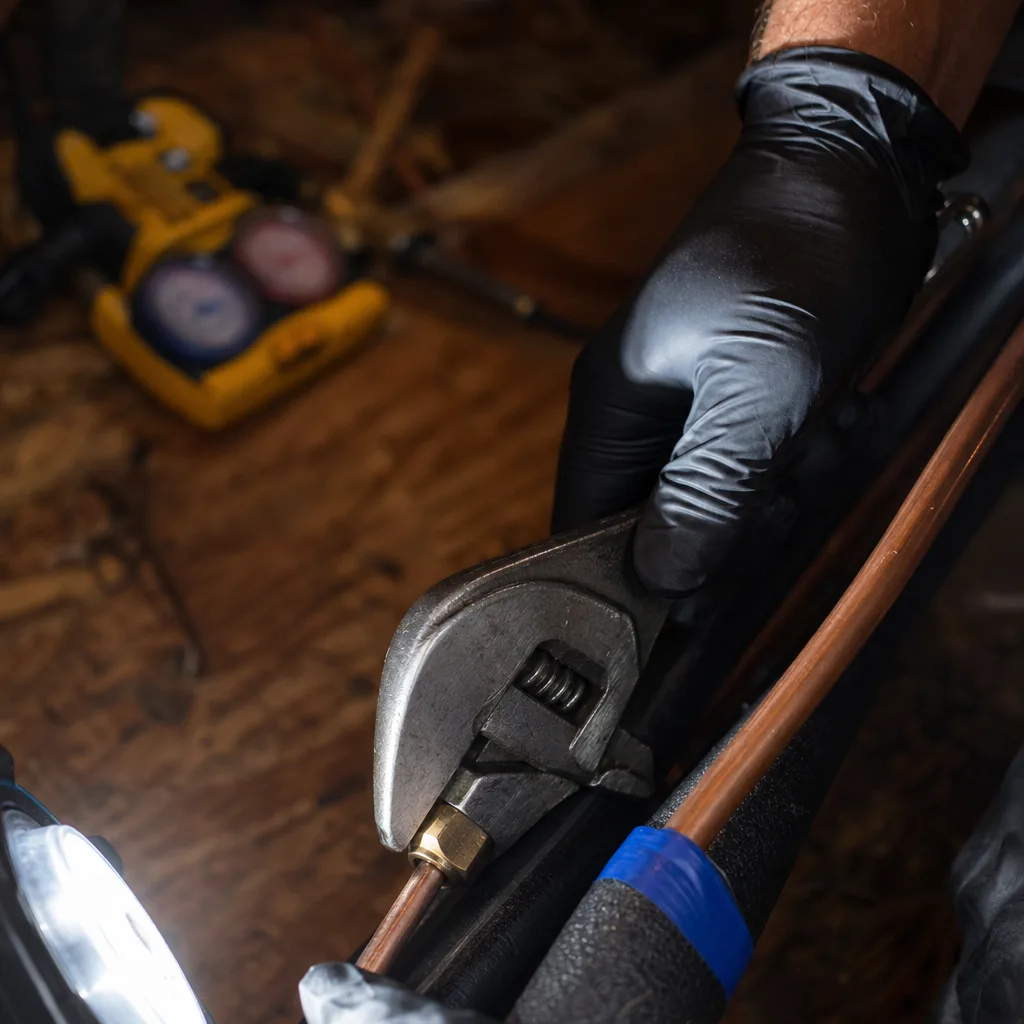
- Startup and testing, so you know the system is cooling the way it should before we leave
- Haul-away of your old unit, so it doesn’t sit on the side of your house
Some things aren’t part of a standard job unless your quote says so. These aren’t hidden fees. They’re the parts of the job that depend on what we find in your home, and they can’t be priced fairly until someone looks.
- Duct changes. If your ducts leak, have pulled apart in the attic, or are too small to carry air to the upstairs rooms, fixing them is separate work.
- Electrical changes. A new system may need a different breaker, a new disconnect box, or heavier wire than the old one used.
- Plumbing changes. The coil makes water, and in an attic setup that water has to drain safely. If your drain line or drain pan needs to be rerouted or replaced, that’s added work.
- Code corrections. Your old system was installed under the rules in place back then. If something no longer meets current code, it has to be brought up to date.
- Permits, unless your quote says they’re included.
Here’s a simple way to think about it. If your old system was installed well and your ducts, wiring, and drain are in good shape, you’re likely looking at the standard job. If your upstairs has run hot for years, or your drain pan has rust stains, plan on some of those extras.
Other things move the price too. The size of the system, its efficiency rating, the brand and model, and how easy your attic is to work in all play a part. A system with a higher SEER2 rating, which means it uses less electricity to cool the same space, costs more up front but can lower your summer bills. A tight attic with a small opening takes more time and care than one with plenty of room. Custom fabrication, like reshaping a metal duct fitting to fit a new coil, adds cost as well.
You shouldn’t have to guess about any of this. We use upfront flat-rate pricing, and you approve the price before work starts. If your home needs duct, electrical, or drain work, we’ll tell you what it is, why it’s needed, and what it costs, all before you sign. When you compare quotes from other installers, ask each one to list these items in writing. A low number that leaves out the coil, the haul-away, or the permit isn’t really a lower price.
If the total is more than you planned to spend at once, we offer flexible financing on qualifying installations and larger jobs, on approved credit.
Have questions? We’re happy to help.
Call Today, Get Service Today. Xtreme Air Services — Frisco is ready to help.
Licensing and Permits Required for a Frisco Installation
In Texas, you can’t legally hire just anyone to put in a central air system. Air conditioning contractors are licensed by the Texas Department of Licensing and Regulation, called TDLR for short. Most Frisco installations also need a city permit and an inspection. Both are there to protect you, and both are easy to check before you sign anything.
A TDLR license means the contractor has passed state exams, carries insurance, and can be held to account if the work is done wrong. Our HVAC license number is TACLA29023C. You can look up that number, or any installer’s number, on the TDLR website in about a minute. If a contractor can’t give you a license number, or the name on the license doesn’t match the company on your quote, keep looking.
Refrigerant is the other piece. Federal rules from the EPA say anyone who handles AC refrigerant has to be certified to do it. Your old system’s refrigerant has to be recovered properly, not vented into the air. Ask your installer how they handle it.
Replacing a central AC system in Frisco typically calls for a mechanical permit through the city. The permit isn’t just paperwork. It triggers a visit from a city inspector, who checks the work against current code. That’s a second set of trained eyes on your new system, at no extra effort for you.
An inspector will usually look at things like:
- The electrical disconnect and wiring at the outdoor unit
- How the coil’s drain line and drain pan are set up, which matters a lot when that coil sits over your ceiling in the attic
- Safe access and clearances around the equipment
- Whether the refrigerant lines are installed and sealed correctly
This is often where the code corrections we covered earlier come to light. A system installed back when your home was built may have met the rules then and not meet them now.
Skipping the permit might save a little up front, but it can cost you later. An installation with no permit on file can raise questions when you sell your home, and it can make an insurance claim harder if something goes wrong. Ask every installer you talk to a plain question: “Will this job be permitted and inspected?” If the answer is a shrug, that tells you how the rest of the job will go.
One more Frisco detail. Many subdivisions here have an HOA. If yours does, check whether there are rules about where the outdoor unit sits or how it’s screened before your install day, so there aren’t any surprises.
When you call us, you’ll talk to a real person. Our licensed and insured technicians will size your system with a load calculation, walk you through anything your home needs, and give you upfront flat-rate pricing before any work starts. As a Trane Comfort Specialist, we’ll help you pick a system that fits your home and your budget.
Call 469-490-3595
Watch Our Video
See How We Handle Central air conditioning installation in Frisco
Xtreme Air Services — Frisco
When a Repair Makes More Sense Than Full Replacement
Not every AC problem means you need a new system. If your unit is on the younger side, has cooled well up to now, and one part just quit, a repair is usually the smarter money. A new system is a big purchase. You shouldn’t make it because one part failed on a hot afternoon.
Start with the simple stuff, because some “broken” systems aren’t broken at all. Before you call anyone, check these:
- The air filter. A clogged filter chokes airflow and can make the indoor coil freeze into a block of ice. Swap in a clean filter. If the coil is frozen, switch the system off and let it thaw before you run it again.
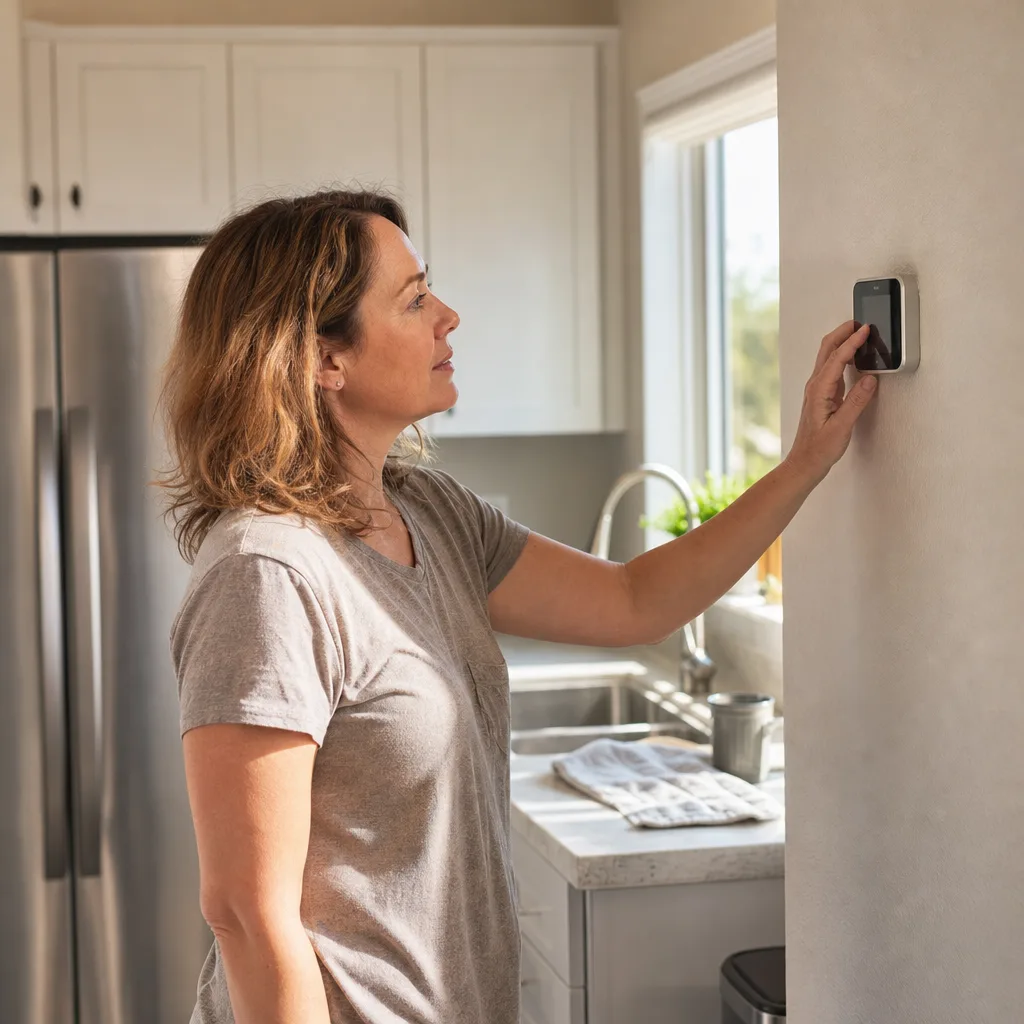
- The thermostat. Make sure it’s set to Cool and the setting is below room temperature. If it runs on batteries, try fresh ones.
- The breaker. Look for a tripped AC breaker in your panel. If it trips again right after you reset it, leave it off and get it checked. That’s a sign of a real electrical problem.
- The outdoor unit. Grass clippings, leaves, and cottonwood fluff can pack against the outdoor coil. Clear away anything blocking the sides so the unit can breathe.
If none of that helps, a technician needs to take a look. Plenty of common failures are fixable without replacing anything big:
- A failed capacitor, the small part that gives the motors a kick to start. It’s one of the most common reasons an outdoor unit hums but won’t run.
- A worn-out outdoor fan motor.
- A clogged condensate drain line. In an attic setup, a safety switch may shut the whole system off to keep water from coming through your ceiling.
- A small, findable refrigerant leak on a system that uses current refrigerant.
- A bad thermostat or a loose wire.
Each of those is a repair, not a reason to replace. Our service-call fee runs $26 to $99, and it’s credited toward the repair if you go ahead with us. You’ll know what’s wrong and what it costs before any work starts, so you can decide with real information.
Repair makes less sense when the big, costly parts start to go on an older system. That means the compressor, which is the pump at the heart of the outdoor unit, or a leaking outdoor or indoor coil. It’s the same story when your system runs on the phased-out refrigerant covered earlier. In those cases you can end up putting serious money into equipment that’s already near the end of the line. When the repairs keep stacking up season after season, it’s usually time to stop paying for them.
Timing matters too. Say your older system limps along in late September and you’re heading into cooler weather. You don’t have to decide that week. A small repair can carry you into spring. That gives you the slow months to plan, compare options, and replace on your schedule instead of in the middle of a heat wave.
You might also choose a modest repair as a bridge in July. That gets your family cool again now, and you can replace later once you’ve had time to look at efficiency levels and financing. That’s a reasonable call, and a good technician should lay out both paths and let you pick.
Frequently Asked Questions
Common questions about Central air conditioning installation
What is the $5,000 rule for AC units?
The $5,000 rule is a quick way to decide between repair and replacement, not an official code. You multiply the age of your unit by the repair cost, and if that number is above $5,000, replacement usually makes more financial sense than another repair. For a 15-year-old builder-grade system common in Frisco, even a $400 repair crosses that line, which is why it’s worth a second look once a system hits that age.
How much is a new AC unit for a 2000 sq ft home?
A 2,000 square foot Frisco home typically needs a 3 to 4 ton system, but square footage alone doesn’t decide the size. Insulation levels, window placement, ceiling height, and whether ductwork runs through a hot attic all change the cooling load, which is why a room-by-room load calculation gives a more accurate answer than a square-footage rule of thumb.
How long does a central air conditioning installation take?
A standard like-for-like swap in a Frisco home usually takes about one day when no duct, electrical, or drain changes are needed. If your home needs duct repairs, a new breaker, or a rerouted drain line, those extras add time, which is why we walk through your attic and equipment first and tell you what to expect before work starts.
Ready to Get Started?
Call (469) 490-3595 Today, Get Service Today.