


HVAC System Maintenance in Plano: What’s Included and What It Decides
A full inspection, cleaning and safety check on every visit, so you know exactly what you're paying for.
What’s Covered on This Page
- What a Maintenance Visit Includes and Excludes
- Signs Your System Is Due for Service
- Why Plano’s Long Cooling Season Puts Extra Demand on Equipment
- What Drives the Cost of a Maintenance Visit
- How Often Plano Homeowners Should Schedule Maintenance
- What is the $5000 rule for HVAC systems?
- Is paying for HVAC maintenance worth it?
- How much is a typical HVAC service call?
What a Maintenance Visit Includes and Excludes
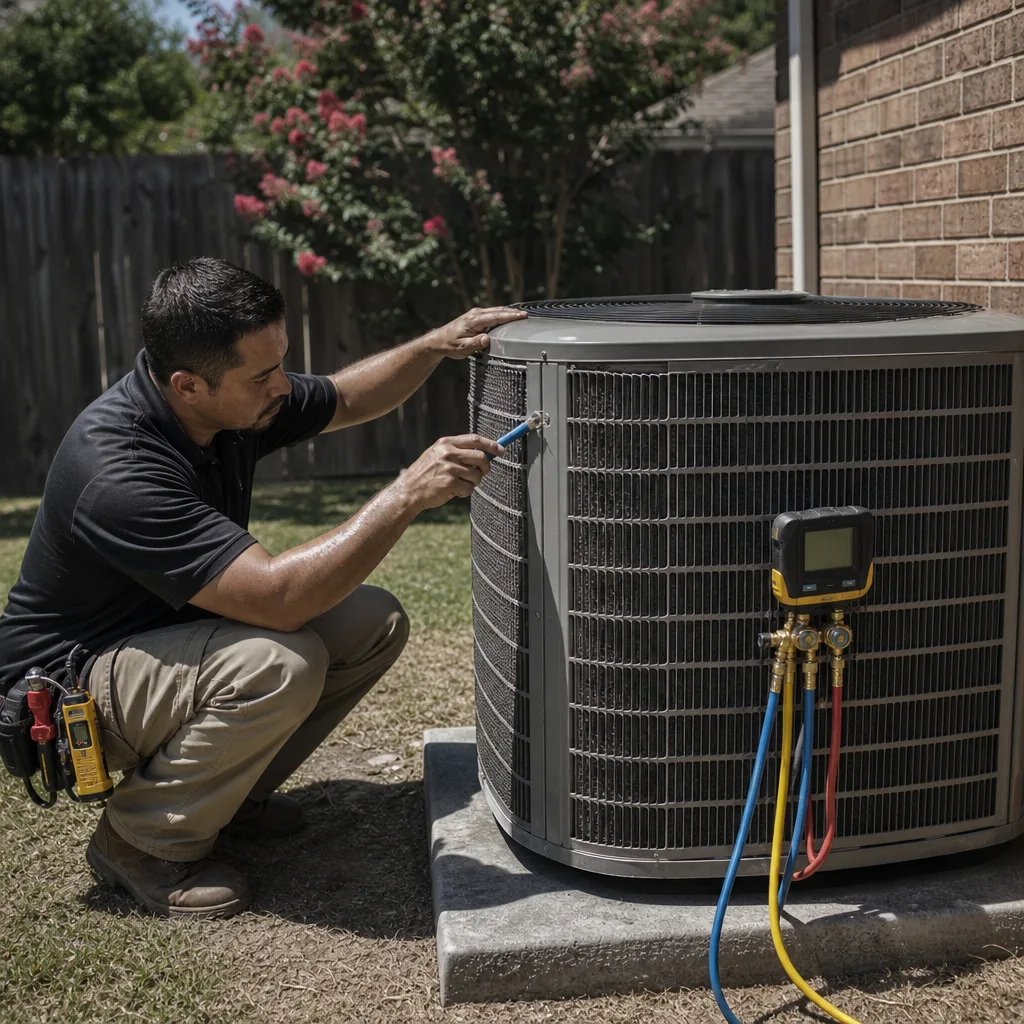
Here’s what you’re paying for. Routine maintenance on one system covers three things: we inspect it, we clean it, and we check how well and how safely it’s running. That’s the whole scope, and it’s the job our customers book most. Across all our maintenance work, the typical range is $100-$300. Where your home lands depends on a few things covered below.
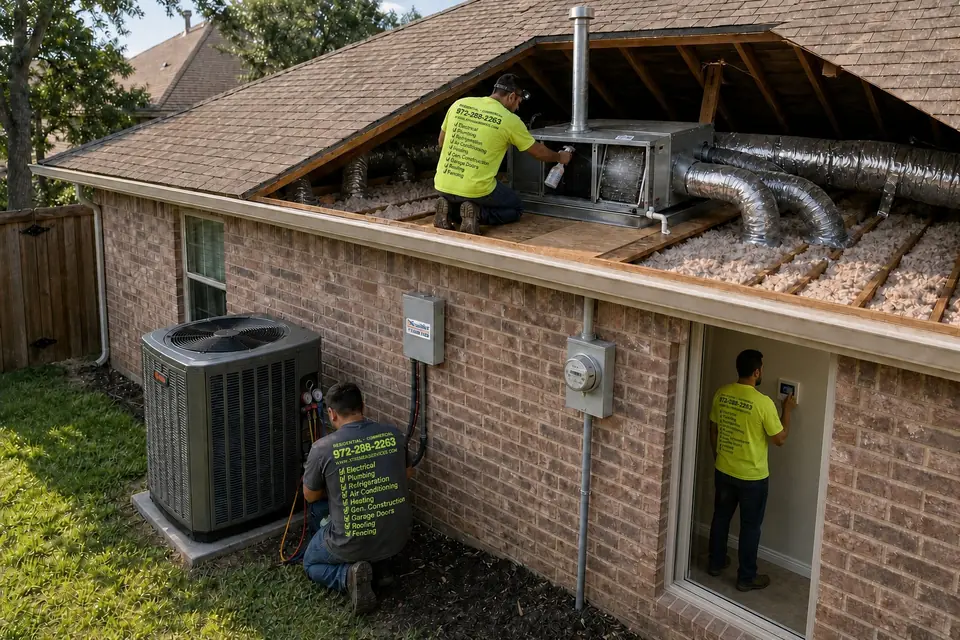
If you’re comparing any company’s tune-up, a real inspection should look at the parts that cause most breakdowns, not just the filter:
- The outdoor unit’s coil and fan, which shed heat from your house
- The indoor coil and the condensate drain line that carries water away
- Electrical connections and the capacitor, the small part that helps the motors start
- The blower and overall airflow through your vents
- Your thermostat, to make sure it’s reading and calling for air correctly
- On a gas furnace, the burners, flame sensor, and venting
That list matters in Plano. A lot of homes here have the air handler up in the attic, where summer heat bakes the equipment while your AC runs hard for months. A slow drain line or a dirty coil up there is easy to miss until there’s a water spot on your ceiling or ice on the lines.
Here’s what isn’t included: repair parts or corrective work found during the visit. Say the technician finds a weak capacitor or a drain line that’s starting to back up. That fix isn’t part of the maintenance price. You’ll get a separate quote first. Our pricing is upfront and flat-rate, so you approve the work before it starts. If you’d rather wait or think it over, that’s your call.
There’s also a $26-$99 service-call fee. It’s credited toward the repair if you proceed with Xtreme Air Services.
These four things move the price up or down:
- How many systems or units you have. A two-story home with an upstairs and a downstairs unit means two systems to service.
- How easy the equipment is to reach. A tight attic or a cramped closet takes more time.
- How much buildup or neglect there is. A system that hasn’t been touched in years needs more cleaning.
- Whether it’s a one-time visit or part of a maintenance plan.
Financing isn’t typically offered for a maintenance visit, since it’s a smaller job. It’s available on larger repairs and replacements, so if the inspection turns up something bigger, you’ll have options to talk through.
Signs Your System Is Due for Service
You don’t have to wait for a breakdown to know it’s time. The simplest sign is the calendar. If you can’t remember the last time anyone looked at your system, it’s due.
In Plano, your AC carries the load from late spring well into fall. Then a cold front can push you onto heat almost overnight. The best time to book is right before each switch: spring for cooling and fall for heating. That way, a weak part shows up on a mild day, not on the first scorching afternoon or the first freezing night.
Your system also drops hints. These usually mean it’s ready for a tune-up:
- Your electric bill keeps climbing, but you haven’t changed the thermostat. A dirty coil or clogged filter makes the system run longer to do the same job.
- Airflow from the vents feels weaker than it used to, or one room never quite cools down.
- The system turns on and off in short bursts instead of running steady cycles.
- Your home feels sticky or clammy even when the temperature is fine. Your AC is supposed to pull moisture out of the air, and a dirty coil does that job poorly.
- You hear new rattling, buzzing, or squealing from the outdoor unit or the indoor equipment.
- You see water around the indoor unit, a damp spot on a ceiling below the attic, or frost on the copper lines outside.
Those last two deserve quick attention. Water and ice usually mean a drain or airflow problem has already started. Catching it during a maintenance visit can keep a small fix from turning into a stained ceiling.
Some problems go past maintenance. If your system won’t turn on, blows warm air all day, or keeps tripping a breaker, a tune-up isn’t the right fix. That’s a repair, and you need a diagnosis. When you call, tell us what you’re seeing. It helps us send the right kind of help.
Some things don’t need a technician at all. Check these yourself first:
- Your air filter. If it looks gray and dusty, swap it out. A fresh filter is often the easiest fix for weak airflow.
- Your thermostat. Make sure it’s set to cool or heat, the temperature is right, and the batteries aren’t dead.
- That first-heat smell. A faint burning-dust smell the first time you run the heat each fall is normal. It usually fades within a short while. If it lingers or smells electrical, that’s different.
- The outdoor unit. Clear away leaves, grass clippings, and anything stacked against it so it can breathe.
If your system was serviced recently and it’s running quiet and steady, you probably don’t need another visit yet. Keep changing the filter and enjoy it. Maintenance is worth paying for when it’s due, not before.
Why Plano’s Long Cooling Season Puts Extra Demand on Equipment
Wear on your system comes down to hours of running time, and Plano piles those hours on. Your AC doesn’t just run on the hottest afternoons. It runs through long stretches of hot days and warm nights, month after month. A system in a milder climate might get the same yearly checkup. Yours does a lot more work between visits.
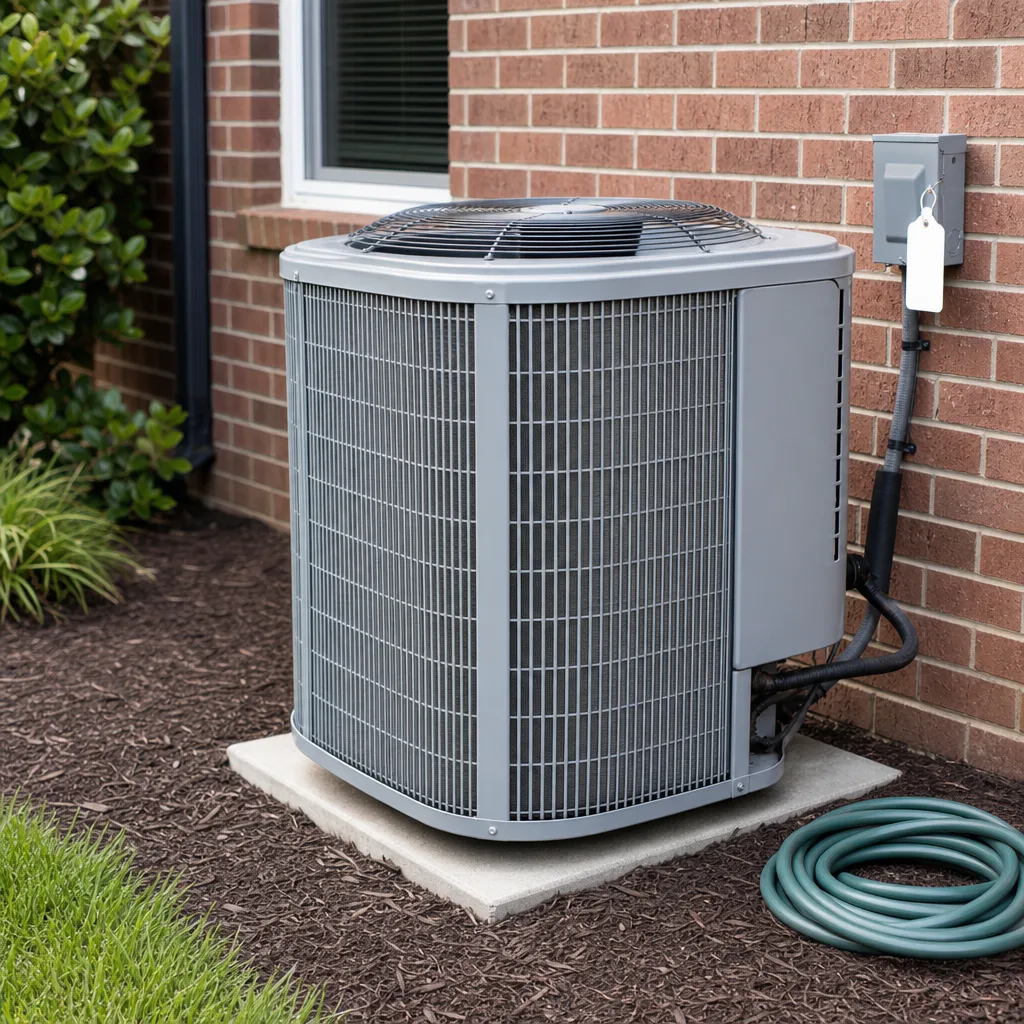
Most of that work lands on a few parts:
- The compressor and motors. Every time your system kicks on, these parts start up under load. In a long cooling season, that adds up to a lot of starts.
- The capacitor. This small part gives the motors their push to start, and heat wears it down. The outdoor unit sits in direct Texas sun all summer, so the capacitor works hot for months.
- Electrical connections. Heat and steady vibration can loosen wires over time. A loose connection runs hotter and can damage the parts around it.
- The outdoor coil. Your condenser pulls air through its fins all summer. Grass clippings, dust, and cottonwood fluff get pulled in with it. A coated coil can’t shed heat well, so the system runs longer to cool your home.
North Texas weather adds a few more problems on top of the heat.
Hail is one. Spring storms can flatten the thin metal fins on your outdoor coil. Bent fins block airflow the same way dirt does. You may not notice it from the patio, but a technician checking the coil will.
Humidity is another. On sticky days your AC pulls a lot of water out of the air, and that water drains away through the condensate line. Warm, damp, and dark is just what algae and sludge like. Over a long season, the line can slowly clog. When the air handler sits in the attic, as it does in many Plano homes, a backed-up line can mean water on the ceiling below.
Then there’s the ground under your outdoor unit. North Texas has expansive clay soil, which swells when it’s wet and shrinks when it dries out. That movement can tip a condenser pad out of level over the years. A tilted unit can strain the copper refrigerant lines and keep parts from running the way they should. It’s an easy thing to check during a visit and a hard thing to spot on your own.
If you have a heat pump, it doesn’t get a break at all. The same outdoor unit cools your home in summer and heats it in winter. Those running hours keep adding up all year long.
None of this means your system is about to fail. It means a summer here asks a lot of your equipment, and small wear builds up quietly. A weak capacitor, a dirty coil, or a slow drain usually doesn’t stop your AC on day one. It makes the system work harder until one hot afternoon it can’t keep up. A maintenance visit is your chance to find that wear while it’s still a small, planned fix and not a surprise in the middle of July.
Ready when you are – get in touch today.
Call Today, Get Service Today. Xtreme Air Services — North Plano is ready to help.
What Drives the Cost of a Maintenance Visit
Your price comes from the four factors in the pricing section above. The good news is you can usually tell which way each one leans before you ever pick up the phone. Here’s how to read your own home.
Start by counting your systems. Walk around and count your thermostats. Two thermostats usually means two systems, and each one gets its own inspection and cleaning. Plenty of two-story Plano homes have one unit for upstairs and one for downstairs, each with its own outdoor unit. If you heat with a gas furnace, mention that too, so the heating side gets checked along with the cooling side.
Next, look at where your equipment sits. An indoor unit in a hall closet or the garage is quick to reach. One in the attic takes more time. The technician has to climb the ladder, cross the walkway over the insulation, and work in a space that gets very hot in summer. You can help by clearing the floor under the attic ladder and moving anything stacked in front of the closet. Outside, trim back shrubs or fencing that crowd the condenser.
Then be honest about the last service. This isn’t about judging anyone. Life gets busy. But a system that’s gone a few years without a visit usually needs more cleaning than one serviced last spring. Here are a few quick clues:
- The fins on your outdoor unit look gray or matted instead of clean metal.
- You can’t remember the last time you changed the filter.
- You’ve had a drain line back up before.
- You bought the house and don’t know its service history.
None of these mean something is broken. They just tell you the cleaning part of the visit may take longer. Sharing them when you call helps your price match the work.
Finally, think about whether you want a one-time visit or regular service. If you’d like your system checked on a schedule, ask us how a maintenance plan would change your price compared with booking one visit at a time.
If you’re comparing prices from a few companies, a low number only means something when you know what’s behind it. Ask each company the same questions:
- Is the price per system, or for the whole house?
- Does it include cleaning, or only an inspection?
- Is there a service-call fee, and does it go toward a repair?
- If you find a problem, will I get a price before any work starts?
A tune-up that costs less but skips the coil and the drain line isn’t really a better price. It’s a smaller visit. When every answer is clear, you can compare companies fairly and pick the one you trust.
Call 469-527-5131
Watch Our Video
See How We Handle HVAC system maintenance in Plano
Xtreme Air Services — North Plano
How Often Plano Homeowners Should Schedule Maintenance
Here’s the short answer. Every system in your home should get a maintenance visit at least once a year. If your system handles both cooling and heating with parts that need their own checkup, plan on twice a year: once before summer and once before winter, at the timing covered above.

Which one fits you depends on what’s in your home:
- Central AC with a gas furnace: twice a year. The spring visit covers the cooling side. The fall visit covers the burners, flame sensor, and venting on the furnace, which a summer tune-up doesn’t touch.
- Heat pump: twice a year. The same outdoor unit cools in summer and heats in winter, so it never really gets an off-season. Two visits split that long workload into checkups you can plan.
- Central AC with electric heat: at least once a year, before cooling season. That’s when your system does its hardest work. Ask your technician whether your heating side needs its own fall visit.
- Two systems, like an upstairs and downstairs unit: each one follows the schedule above. Booking them on the same day saves you from setting aside two separate mornings.
Some homes do better with a little more attention. Think about booking on the earlier side, or asking about an extra check, if any of these sound familiar:
- Your air handler is in the attic and the drain line has backed up before. A clog there can show up as a ceiling stain, so it’s worth keeping an eye on.
- You have pets that shed a lot. Hair and dander load up filters and coils faster.
- There’s been a remodel or new construction near your house. Dust gets pulled into the system and coats the parts that need to stay clean.
- You just moved in and don’t know when the system was last serviced. Start with one visit now. That gives you a clear picture, and you can set your schedule from there.
On the other hand, don’t let anyone talk you into more visits than you need. If your system was serviced this season and it’s running quiet and steady, you’re set until the next one. A rarely used system, like a unit for a guest room that sits empty most of the year, still needs its yearly visit. It just usually needs less cleaning when the technician gets there.
What you do between visits matters too. Check your filter often during the heavy cooling months and swap it when it looks dusty. Keep the outdoor unit clear of grass clippings and leaves. And glance at the area around your indoor unit now and then for water. Those small habits help each visit go faster and help catch trouble early.
If you already know you’ll be booking twice a year, that’s a good time to ask us about a maintenance plan and how it compares with booking visits one at a time.
Call 469-527-5131
Frequently Asked Questions
Common questions about HVAC system maintenance
What is the $5000 rule for HVAC systems?
It’s a rule of thumb for deciding between repair and replacement. You multiply the repair cost by the age of your system, and if that number tops $5,000, replacement usually makes more financial sense than another repair. A maintenance visit is the best way to catch small issues before they turn into the kind of repair bill that triggers this math.
Is paying for HVAC maintenance worth it?
Yes, especially in a climate where your system runs hard for months at a time. A yearly or twice-yearly visit catches a weak capacitor, a dirty coil, or a slow drain line while it’s still a small, planned fix. Skipping maintenance doesn’t save money long term; it just moves the cost to a breakdown on the hottest afternoon of the year.
How much is a typical HVAC service call?
A service call is different from a maintenance visit, and it runs $26-$99 for us. That fee covers a technician coming out to diagnose a specific problem, like a system that won’t turn on or keeps tripping a breaker. If you move forward with a repair, that fee gets credited toward the cost.
Ready to Get Started?
Call (469) 527-5131 Today, Get Service Today.