


Emergency HVAC Service in Fort Worth: Is It Serious Enough to Call Now?
Real emergencies handled fast – with simple checks to try first and the cost explained before anyone is dispatched.
What’s Covered on This Page
- What Counts as a True HVAC Emergency
- When It Can Wait Until Regular Service Hours
- What Happens When You Call for Emergency HVAC Service
- Common Failures That Trigger a Same-Day Call in Fort Worth
- How to Verify the Technician at Your Door Is Licensed
- What is the $5000 rule for HVAC?
- Is a weak or dying AC during a Fort Worth heat wave really an emergency, or can it wait a day?
- Should I shut off my AC completely if it’s making a strange noise but still cooling?
What Counts as a True HVAC Emergency
Not every breakdown is an emergency, and you shouldn’t feel pushed into treating it like one. The question is simple. Is someone’s health, your home, or your equipment at risk if this waits until tomorrow? If the answer is yes, it’s an emergency. If the answer is no, it’s an inconvenience, and an inconvenience can wait for a normal appointment.
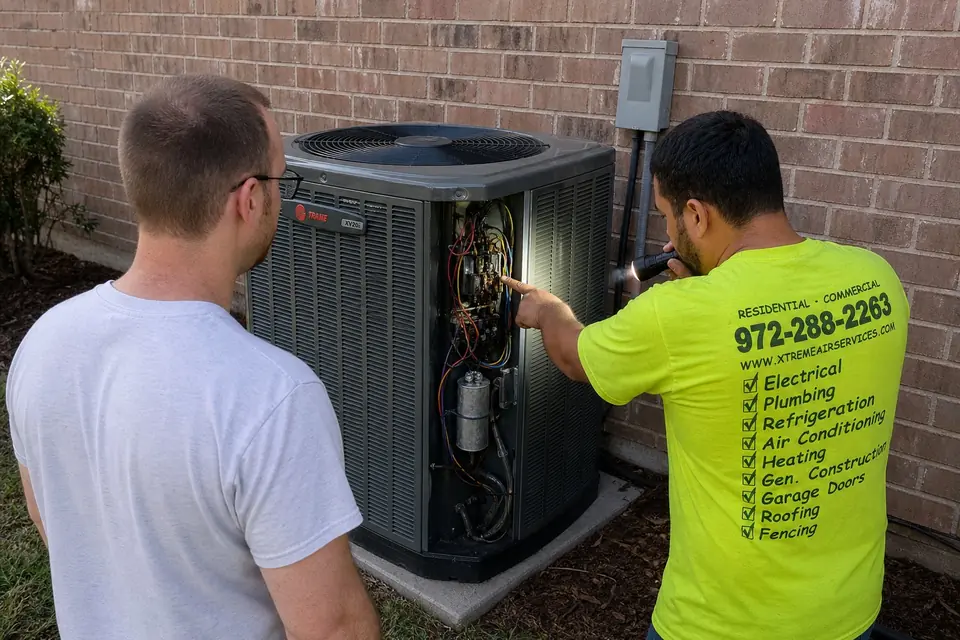
These situations need help today:
- No cooling on a hot Fort Worth summer day, especially with a baby, an older adult, someone with a health condition, or pets in the house. A closed-up home can heat up fast once the AC stops.
- No heat during a hard North Texas freeze. Cold fronts here can drop temperatures quickly, and a home without heat gets uncomfortable and unsafe for vulnerable people.
- A burning smell, smoke, or sparks coming from the unit, the vents, or the thermostat wiring. These point to an electrical problem, and the system shouldn’t keep running.
- Water dripping through a ceiling or pooling around the indoor unit. Many homes have the air handler in the attic, so a clogged or overflowing drain line can soak drywall and insulation before you notice.
- Loud grinding, banging, or screeching that started suddenly. A failing motor or fan can damage other parts if it keeps running.
- A breaker that keeps tripping every time the system turns on.
If your carbon monoxide alarm goes off or you smell gas near the furnace, treat it as a life-safety issue first, not a repair call. Call 911 or your gas company before you call any HVAC contractor.
Here’s the honest other side. Plenty of problems feel urgent but can wait, and some you can handle in a few minutes:
- A blank thermostat screen. Try fresh batteries before anything else.
- A breaker that tripped once. Reset it one time. If it trips again, stop and call.
- Weak airflow with a filter you can’t remember changing. Swap in a clean filter and give the system some time.
- One room that runs a few degrees warmer than the rest. That’s often an airflow or duct issue, and it’s worth fixing on a regular schedule.
- A system that still cools, just a little less, on a mild day. Book a repair, but there’s no need to pay for a rush visit.
Some calls land in the gray zone. Maybe the AC is still running but blowing warm air, and the forecast says triple digits tomorrow. In that case, the weather makes the decision for you. A problem that’s small today can become a no-cooling emergency by tomorrow afternoon.
Timing shouldn’t scare you off either. Xtreme Air Services charges no extra for nights or weekends, so a Saturday evening call doesn’t cost more than a Tuesday morning one. That means you can decide based on what’s wrong, not on the clock.
When It Can Wait Until Regular Service Hours
If you’ve run through the quick checks above and nothing points to danger, you can book a regular visit and sleep easy. A problem can wait when it’s stable. That means your home is holding a safe temperature, nothing smells hot or burnt, no water is showing up where it shouldn’t, and the system sounds the same today as it did last week.
Some problems are slow, not urgent. They’re worth fixing, just not tonight. These are good fits for a planned appointment:
- Your electric bill jumped compared to the same month last year, but the house still feels comfortable.
- The system runs longer than it used to before it shuts off.
- The air feels a little sticky or damp, even though the temperature is right.
- Your home seems dustier than normal, or you’re thinking about better indoor air quality.
- You’re overdue for an HVAC maintenance or tune-up visit.
- You’d like to upgrade to a smart thermostat.
- Your system is getting older, and you want to talk through repair versus replacement before it fails.
That last one matters. An aging system is much easier to plan for on a calm weekday than in the middle of a breakdown. If replacement makes sense, you’ll have time to compare options and ask questions. Financing is available on larger repairs and replacements, so you can make a decision that fits your budget without feeling rushed.
Fort Worth’s mild stretches in spring and fall are the easiest time to handle this kind of work. Your AC isn’t fighting triple-digit heat, and your furnace isn’t racing against a cold front. Catching a weak part during those months means you’re less likely to face a no-cooling call in July.
To help your technician find the problem faster, jot down a few things before your visit:
- When you first noticed the problem, and whether it’s getting worse.
- What you see, hear, or feel, such as a hum, a click, short cycles, or warm spots.
- Whether it happens all day or only at certain times, like hot afternoons.
- The brand and model number from the label on your outdoor unit, if you can reach it safely.
- About how old the system is, and when it was last serviced.
A clear picture like this helps us get to the fix sooner and get it done right the first time. When you call, you’ll talk to a real person who can help you decide whether a regular appointment makes sense.
Keep an eye on things while you wait. A problem that can wait today can change. If you notice a new smell, water around the indoor unit, a sudden loud noise, or the house temperature starts slipping during extreme weather, it’s no longer a scheduling question. It’s one of the emergency signs described above, so treat it that way. And because there’s no extra charge for nights or weekends, the price won’t change if a problem you planned to wait on turns urgent on a Sunday.
What Happens When You Call for Emergency HVAC Service
When you call, you talk to a real person. You won’t get a phone tree or a recording. Tell us what’s going on in plain words, like “the AC is blowing warm air” or “there’s water coming through the hallway ceiling.” If you already checked the thermostat, the filter, or the breaker, say so. It saves time once a technician is at your door.
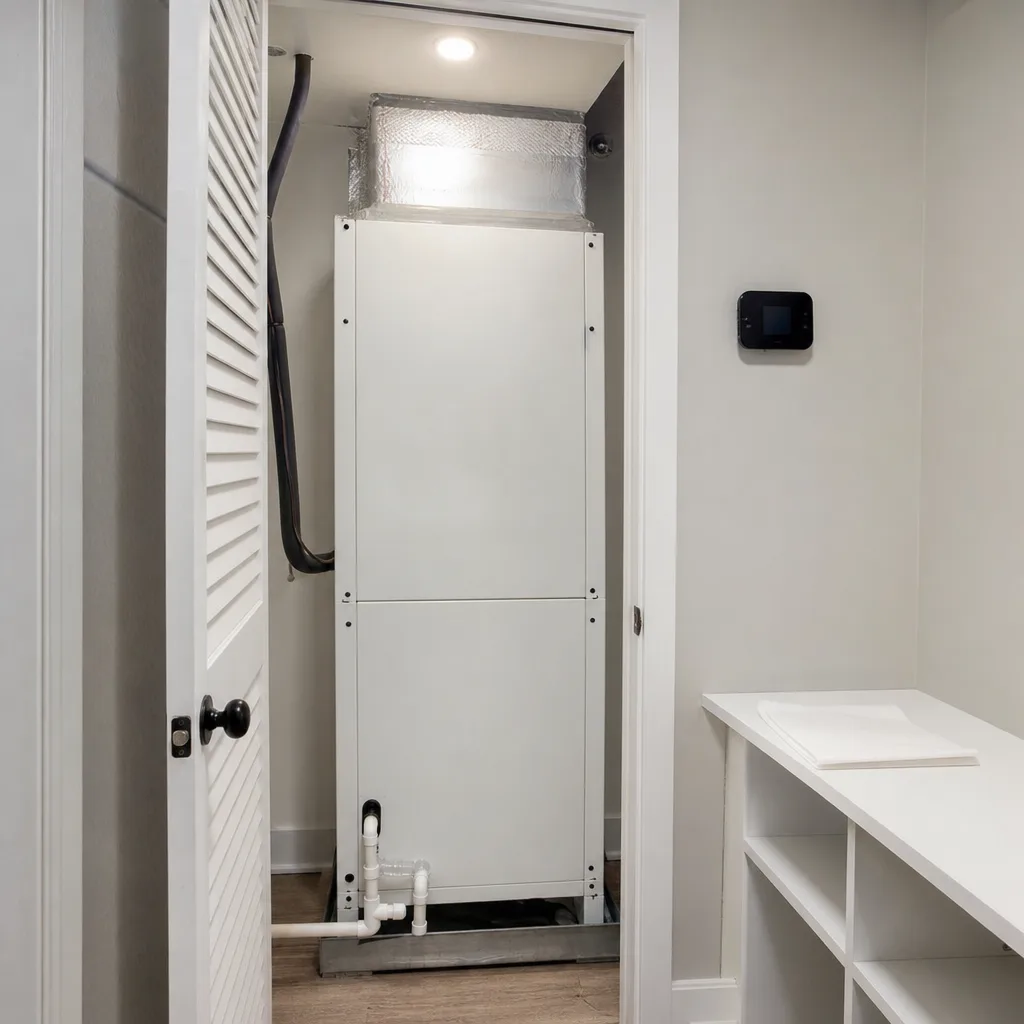
From there, we set up your visit. Same-day service is available, so a breakdown in your Fort Worth home gets handled today, not next week. While you wait, make it easy to reach the equipment. Clear a path to the indoor unit, the attic hatch, and the outdoor condenser. Put pets in another room. If anything smelled hot or burnt, leave the system off.
The person who shows up is a licensed and insured technician who has been background-checked and drug-tested. That matters when someone is walking through your home, sometimes late in the evening. Our HVAC license number is TACLA29023C, and you’re welcome to ask about it.
Here’s how the visit itself works:
- Find the problem. The technician tracks down the part that failed and tells you what it is, in plain English.
- Get the price first. You get upfront flat-rate pricing, and you approve it before any work starts. There’s no meter running while you decide.
- Fix it. The failed part gets repaired or replaced. Most calls come down to a single common failure that gets fixed on the first visit.
- Make sure it works. The technician runs the system to confirm it’s working right, then cleans up before leaving.
Here’s what it costs. The service-call fee is $26-$99, and that fee is credited toward the repair if you go ahead with Xtreme Air Services. The most common emergency repair runs $200-$525. Emergency HVAC calls in general fall between $200-$900. Where your repair lands depends on how much failed, what the part costs and whether it’s in stock, how old your equipment is, its brand, and whether more than one component gave out. Calling at night or on a weekend doesn’t raise the price, as covered above.
Your price covers diagnosis, labor, and the standard replacement part, plus testing and cleanup. Some things aren’t included unless they’re quoted to you separately. Those are extra failed parts, major components, code upgrades, and permits. If the technician finds a second problem, you’ll hear about it and get a price before anything else happens. You stay in control of the decision.
Sometimes the honest answer is that a major part has failed, or an older system isn’t worth putting more money into. If that’s the case, we’ll explain your options clearly. Financing isn’t usually offered for smaller emergency repairs, but it’s available on larger repairs and replacements, so a big decision doesn’t have to be made in a rush.
Call 817-677-1907
Have questions? We’re happy to help.
Call Today, Get Service Today. Xtreme Air Services — Fort Worth is ready to help.
Common Failures That Trigger a Same-Day Call in Fort Worth
When your system quits on a hot afternoon or a freezing night, the cause is usually one worn-out part, not the whole system. Knowing the usual suspects helps you tell us what you’re seeing on the phone. It also helps you follow along when the technician explains what broke and why.
On the cooling side, these are the parts that tend to give out when Fort Worth summers push your AC hard:
- Capacitor. This small part gives the motors a jolt to get them started. Long stretches of 100-degree days wear it down. If the outdoor unit hums but the fan won’t spin, or the system clicks and never starts, a weak capacitor is a common reason.
- Contactor. This is the switch that tells the outdoor unit to turn on. When it wears out or gets blocked, the thermostat calls for cooling and the outdoor unit just sits there, silent.
- Refrigerant leak. Your system doesn’t use up refrigerant the way a car uses gas. If it’s low, there’s a leak somewhere. You might notice air that’s barely cool, or ice on the copper line near the outdoor unit. The right fix is finding the leak, not just topping it off.
- Frozen evaporator coil. Ice on the indoor coil usually points to a dirty filter, low refrigerant, or a weak blower. Running the system harder won’t melt it. It needs the cause found and fixed.
- Clogged condensate drain. Sludge builds up in the drain line during humid months. Many systems have a safety switch that shuts the AC off when the drain pan fills, so a system that dies suddenly with water in the pan may come down to this, along with the ceiling risk covered above.
- Blower or fan motor. If the outdoor unit runs but almost no air comes out of your vents, or you hear a new screech, the motor may be failing.
- Compressor. This is the heart of the AC. It’s a major component, so it’s quoted separately if it fails. A compressor often wears out after it’s been strained by other problems that went unfixed.
When a hard North Texas freeze rolls in, the heating side has its own weak spots:
- Furnace igniter or flame sensor. The furnace clicks, tries to light, then shuts off again. A dirty flame sensor can’t tell that the burner lit, so the furnace stops itself as a safety step.
- Heat pump icing. A light frost that clears on its own is normal, because heat pumps run short defrost cycles. A solid block of ice that won’t clear means something isn’t working.
- Control board. This is the system’s brain. Power surges during spring storms can damage it, and you may see a dead system or a blinking error light.
Storms add a few problems of their own. Hail can bend or crack the thin metal fins on your outdoor coil, and that cuts down how well the unit releases heat. In homes with the air handler in the attic, summer attic heat makes motors and electrical parts work even harder.
One worn part can also put strain on others. A weak capacitor makes the compressor and fan motor struggle every time they start. That’s why a technician checks the parts around the failure, not just the one that quit. Fixing the real cause means your system is more likely to keep running through the rest of the season.
Watch Our Video
See How We Handle Emergency HVAC service in Fort Worth
Xtreme Air Services — Fort Worth
How to Verify the Technician at Your Door Is Licensed
When your AC dies at 9 p.m., you want help fast. You also want to know the person walking through your home is who they say they are. You can check both in a few minutes, and a good contractor won’t mind one bit.

In Texas, HVAC contractors are licensed by the Texas Department of Licensing and Regulation, which most people call TDLR. TDLR offers a free license search online. You can type in a license number or a company name and see whether the license is active.
Here’s a simple way to check before and after someone shows up:
- On the phone, ask for the company’s HVAC license number. A licensed contractor can give it to you right away. If they hesitate or change the subject, that tells you something.
- Look it up with TDLR. Make sure the license is active and the business name matches the company you called.
- At the door, ask the technician which company sent them. It should match the company you called and the name on the license.
- Ask if the company is insured. If something gets damaged in your attic or your ceiling, insurance is what protects you, not the technician’s word.
- Get the price before work starts. A real contractor explains what failed and what it costs, and waits for your yes.
A few warning signs are worth knowing, especially after a big North Texas hail storm. That’s when door knockers sometimes go street to street offering to fix AC units and roofs. Be careful with anyone who:
- Shows up at your house without you calling them.
- Can’t or won’t give you a license number.
- Wants cash up front before they’ve even looked at the system.
- Won’t tell you the price until the job is done.
- Pushes you to replace the whole system on the spot, without showing you what failed.
None of these mean you have to argue on your porch. You can just say no thanks and close the door. Your system can wait the extra hour it takes to call someone you’ve checked.
With us, you don’t have to take anything on faith. Our HVAC license number is TACLA29023C, the one mentioned earlier, and you can look it up yourself before we arrive. Xtreme Air Services is licensed and insured, and the technicians who come into your home are background-checked and drug-tested. That matters most on a late-night call, when you’re letting someone in after dark.
Checking a license isn’t rude. It’s smart. The right company will be glad you asked, because it means you’ll trust the answer when they tell you what’s wrong and what it costs.
Call 817-677-1907
Frequently Asked Questions
Common questions about Emergency HVAC service
What is the $5000 rule for HVAC?
It’s a rule of thumb for deciding between repair and replacement. Multiply the age of your system by the repair cost, and if that number is over $5,000, replacement usually makes more financial sense than another repair. A 12-year-old system facing a $500 compressor repair, for example, lands at $6,000, which points toward replacing it. This only works as a guideline, so talk through your specific numbers before deciding.
Is a weak or dying AC during a Fort Worth heat wave really an emergency, or can it wait a day?
If your home is still holding a safe temperature and nothing smells hot or burnt, you likely have a little time, but don’t wait long. Fort Worth summers can push a struggling system from barely cooling to no cooling at all within a day, especially during a stretch of triple-digit afternoons. Watch for rising indoor temps, new noises, or warm air coming from the vents, and call as soon as any of those show up.
Should I shut off my AC completely if it’s making a strange noise but still cooling?
Yes, if the noise is new, sudden, or sounds like grinding, banging, or screeching, turn the system off. Running it risks turning a single worn part, like a failing motor or fan, into damage that spreads to other components. If it’s running fine otherwise and the noise is new, flip the system off at the thermostat until a technician can look at it.
Ready to Get Started?
Call (817) 677-1907 Today, Get Service Today.