


HVAC Contractor in Fort Worth: HVAC Repair, Maintenance & Emergency Service
Emergency repairs, tune-ups and maintenance plans for Fort Worth homes – the problem diagnosed first, so you only pay for the fix you need.
What’s Covered on This Page
- Emergency HVAC Service Responds When Systems Fail Without Warning
- HVAC System Repair Fixes Heating and Cooling Problems Fast
- Repair HVAC Service Covers Everyday System Breakdowns
- HVAC Maintenance and Tune-Up Keeps Systems Running Smoothly
- Preventative Maintenance Plans Build Ongoing System Protection
- HVAC System Inspection Finds Problems Before They Grow
- Ductless Mini-Split Installation Fits Homes Without Existing Ductwork
- Ductless Mini-Split Repair Restores Comfort in Zoned Spaces
- Indoor Air Quality Solutions Address Fort Worth Allergy Season
- High Efficiency HVAC Systems Lower Long-Term Energy Use
- How do I choose the right HVAC contractor in Fort Worth?
- Which HVAC service do I need if I’m not sure what’s wrong?
- When should I call for emergency HVAC service instead of a regular repair?
- Do older Fort Worth homes need different HVAC service than newer ones?
- Is a maintenance plan or a one-time tune-up better for my home?
- How quickly can an HVAC contractor get to my Fort Worth home?
Your AC is blowing warm air in July, or your heat won’t come on during a cold snap. You need help, and you also need to know what kind of help. As an HVAC Contractor serving Fort Worth, Xtreme Air Services – Fort Worth handles everything from emergency calls to new high efficiency systems. The main idea behind this page is simple: picking the right service is half the fix.
Many HVAC services sound alike: repair, inspection, tune-up, maintenance plan. They aren’t the same thing. If you mix them up, you can end up paying for a visit that doesn’t solve your problem. Fort Worth homes also vary a lot. Older houses near downtown often have aging ductwork, and newer homes on the far west and south sides are more likely to have zoned systems.
Below is a short rundown of each service and who it’s for. Each one links to its own page with more detail.
If you can’t tell which one fits, give us a call and we’ll help you sort it out.
Emergency HVAC Service Responds When Systems Fail Without Warning
It’s 9 p.m. in August, and the inside of your house is 88 degrees and climbing. That calls for emergency HVAC service, and it shouldn’t have to wait until Monday.
Emergency HVAC service covers sudden breakdowns. That includes losing cooling during a heat wave, losing heat during a hard freeze, or a system that shuts off and won’t come back on. Fort Worth summers push units hard for months, and winter cold snaps can arrive fast. Either one can leave your family uncomfortable in a hurry.
Our licensed, background-checked technicians answer the phone around the clock and get to you the same day, with upfront pricing and no surprises. You’ll know the fix and the price before any work starts. That matters when you’re stressed and the house keeps getting hotter.
The hardest part for most people is deciding whether the problem is bad enough to call about. If your family’s safety or comfort is at risk, it is. Our Emergency HVAC Service page explains what counts as an emergency and what happens after you pick up the phone.
HVAC System Repair Fixes Heating and Cooling Problems Fast
HVAC system repair is the deeper look. A technician checks your heating and cooling as one system, finds the real cause of the problem, and fixes it.
This is the right call when something has been off for a while and you can’t pin it down. Maybe the house never quite cools. Maybe the heat runs nonstop on a 30-degree night. Problems like these often start in one place and show up somewhere else, so guessing doesn’t help.
That’s how it differs from our Repair HVAC service. Repair HVAC is the quick call for a clear problem. HVAC system repair starts with a diagnosis of the whole system before any parts get replaced.
This is also where the repair-or-replace question usually comes up. Once a system is about 10 years old, many homeowners assume warm air means the end. Often it doesn’t. A good diagnosis can find a worn part that’s well worth fixing. If replacement really does make more sense, we’ll tell you plainly and explain why in terms you can follow.
You can learn more on our HVAC System Repair page, or call and tell us what your system is doing.
Need help with HVAC Contractor?
Call Today, Get Service Today. Xtreme Air Services — Fort Worth is ready to help.
Repair HVAC Service Covers Everyday System Breakdowns
Did your system start making a new noise this morning? Or is the airflow suddenly weak? Our Repair HVAC service is built for that.
Repair HVAC is the everyday fix. You’ve noticed a clear problem, you want it handled, and you don’t need a full system workup. A technician comes out, finds the issue, explains it, and fixes it. Simple.
Common reasons people call for Repair HVAC:
- Grinding, squealing, or banging sounds from the unit
- Weak airflow from one or more vents
- A system that turns on and off too often
- A thermostat that doesn’t seem to control anything
If the problem turns out to be bigger than it looked, we’ll tell you before we go any further. At that point, HVAC system repair, the deeper whole-system diagnosis, may be the better fit. That choice stays with you.
See what a typical Repair HVAC visit looks like on our Repair HVAC page.
HVAC Maintenance and Tune-Up Keeps Systems Running Smoothly
Fort Worth has two good windows for an HVAC maintenance / tune-up. The first is spring, before the long summer heat. The second is fall, before the first cold front.
Many people wait until the first 100-degree day or the first freeze to find out something’s wrong. By then, every HVAC company in town is busy. Getting a tune-up ahead of time prepares your system before it’s under stress.
An HVAC maintenance / tune-up is a single seasonal visit. It usually covers:
- Cleaning the coils so heat moves in and out the way it should
- Checking refrigerant, the fluid that carries heat out of your home
- Calibrating the thermostat so it reads and responds correctly
- Looking over electrical and moving parts for wear
You book the visit, and when it’s over, you’re done. That’s the key difference from a preventative maintenance plan, which is an ongoing membership with visits scheduled for you. If you just want your system checked before summer, a tune-up is all you need.
Read more about what’s included on our HVAC Maintenance and Tune-Up page.
Want your system ready before the next heat wave? Call today and talk with a local technician.
Preventative Maintenance Plans Build Ongoing System Protection
A tune-up is one visit. A preventative maintenance plan is an ongoing relationship.
With a preventative maintenance plan, you sign up once and we put your visits on the calendar. You don’t have to remember to call every spring and fall. Plan members also get priority service, so if something goes wrong in the middle of July, you’re near the front of the line.
This is the part most people mix up. They figure a single maintenance visit and a preventative maintenance plan are the same thing under different names. They’re not. A single visit checks your system once. A plan keeps checking it year after year and builds a record of how your system is holding up. That history makes repair-or-replace decisions much easier later on.
A preventative maintenance plan makes sense if you’d rather not think about your HVAC at all. It also suits anyone who has had one too many surprise breakdowns.
You can see how a plan works on our Preventative Maintenance Plans page.
Have questions? We’re happy to help.
Call Today, Get Service Today. Xtreme Air Services — Fort Worth is ready to help.
HVAC System Inspection Finds Problems Before They Grow
You’re buying a home in Fort Worth, and the seller says the AC works fine. Before you sign anything, you’ll want more than their word.
An HVAC system inspection tells you what’s really going on. A technician checks the whole system, including heating, cooling, airflow, electrical parts, and the overall condition of the equipment. You get a clear picture instead of a guess.
A zoning system inspection is different. It only looks at zoned setups, meaning the dampers and controls that send air to different parts of the house. An HVAC system inspection covers the whole unit from top to bottom.
An HVAC system inspection is also a smart first step if you’re weighing repair against replacement. It shows you which parts are worn, which still have life left, and whether a fix makes sense. If your system worried you last summer, it’s worth booking one before the heat comes back.
If you ask us, this is the most overlooked service we offer. People skip it and then make a big decision with very little information. Our HVAC System Inspection page explains what the inspection covers.
Ductless Mini-Split Installation Fits Homes Without Existing Ductwork
Many Fort Worth homes weren’t built with today’s ductwork in mind. Older houses in Fairmount and Ryan Place often have original ducts that can’t easily reach a new addition. Loft renovations near downtown and the Near Southside often have no practical way to add ducts at all.
Ductless mini-split installation solves that problem. A mini-split has an outdoor unit and one or more indoor units mounted on the wall. A small line through the wall connects them. No ducts needed. Each indoor unit cools and heats its own space.
Common uses include room additions, garage conversions, sunrooms, and older homes with no ductwork. A common misconception is that mini-splits only work for one small room. Not true. With several indoor units, a ductless system can handle a whole floor, or even a whole home that never had ducts. These systems are built to handle Texas heat, too.
Ductless mini-split installation starts with deciding where the units should go and how big they need to be. Get that right, and the space stays comfortable through every season.
See how the process works on our Ductless Mini-Split Installation page.
Watch Our Video
See How We Handle HVAC Contractor in Fort Worth
Xtreme Air Services — Fort Worth
Ductless Mini-Split Repair Restores Comfort in Zoned Spaces
Your mini-split is on and the little light is glowing, but the room still feels warm.
Ductless mini-split repair is for systems that are already in place and acting up. Putting in a new system is a separate job, called ductless mini-split installation. Ductless mini-split repair means finding out why your current unit isn’t doing its job and fixing it.
Common problems include low refrigerant from a small leak, a unit that won’t switch between cooling and heating, water dripping from the indoor unit, and a remote that stops responding. Sometimes the cause is a dirty filter inside the indoor unit. Other times, a part has worn out.
Mini-splits work differently from central systems. They need a technician who knows how they’re built and how their controls work together. A wrong guess can mean replacing a part that was never the problem.
Most mini-split problems can be fixed. Before anyone talks about replacing your unit, you deserve a clear answer about what’s wrong. Find out more on our Ductless Mini-Split Repair page.
Thinking about HVAC Contractor? Let’s talk.
Call Today, Get Service Today. Xtreme Air Services — Fort Worth is ready to help.
Indoor Air Quality Solutions Address Fort Worth Allergy Season
Indoor air quality solutions are upgrades that make the air inside your home cleaner and more comfortable to breathe. They work with your HVAC system, not in place of it.
Fort Worth gets plenty of pollen and dust, especially in spring and fall. On windy days, dust from across North Texas finds its way inside. If someone in your home has allergies, you probably know this already.
The indoor air quality solutions we offer include:
- UV air purifier installation, which uses ultraviolet light inside your system to help limit mold and bacteria growth
- Humidifier installation, for dry winter air when the heat runs a lot
- Dehumidifier installation, for sticky, humid summer days
- Air filter replacement, a simple step that keeps dust out of your system
Humidifiers and dehumidifiers do opposite jobs. One adds moisture to the air, and the other pulls it out. Which one you need depends on your home and the season.
This section only gives you the big picture. Each option has its own page with more detail, and our Indoor Air Quality Solutions overview is a good place to start.
High Efficiency HVAC Systems Lower Long-Term Energy Use
If your old system needs a repair every summer, it may be time to think about replacing it. If you’re replacing it anyway, high efficiency HVAC systems are worth a look.
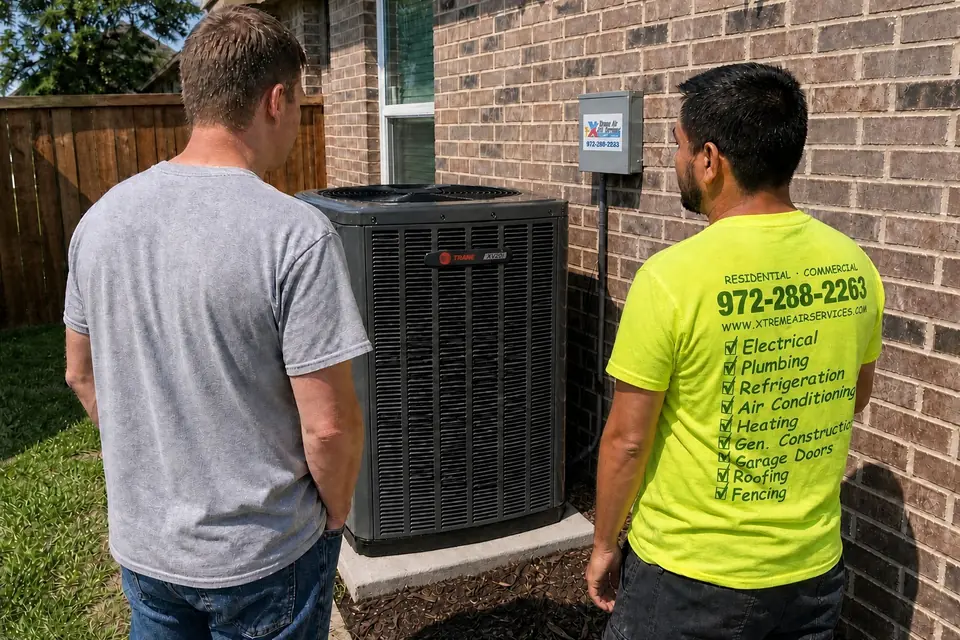
High efficiency HVAC systems use less energy to cool and heat your home. You’ll see ratings like SEER2, which measures cooling efficiency. A higher number means the system uses less energy to keep you just as comfortable. Many high efficiency HVAC systems also run at variable speeds. They run longer at a gentler pace, which helps control humidity and evens out hot and cold spots.
The equipment is only part of the picture, though. Leaky ducts can waste much of what a new system saves. That’s why duct sealing often goes hand in hand with a new system, especially in older Fort Worth homes.
As a Trane Comfort Specialist, we can walk you through Trane systems and help you pick the right size and efficiency level for your home. Bigger isn’t always better. A system that’s too large turns on and off too often and doesn’t control humidity well.
Learn more about your options on our High Efficiency HVAC Systems page.
Ready to find the right system for your home? Call Xtreme Air Services at 817-677-1907 and talk to a real person today.
Frequently Asked Questions
Common questions about HVAC Contractor
How do I choose the right HVAC contractor in Fort Worth?
Pick a contractor who is licensed through TDLR and explains the problem before doing any work. Ask how fast they can respond, whether they offer upfront pricing, and if a real technician answers the phone. A contractor who walks you through repair versus replacement in plain language is one you can trust with your system.
Which HVAC service do I need if I’m not sure what’s wrong?
Start with our Repair HVAC service for a clear, single problem like weak airflow or a strange noise. If the issue has been going on a while or seems to move around the house, HVAC system repair gives you a full diagnosis instead of a guess. Call us and we’ll help you sort out which one fits.
When should I call for emergency HVAC service instead of a regular repair?
Call emergency HVAC service when your home is unsafe or unlivable, like no cooling during a Fort Worth heat wave or no heat during a freeze. A regular repair visit works fine when the system is still running but something seems off. If your family’s comfort or safety is at risk right now, treat it as an emergency.
Do older Fort Worth homes need different HVAC service than newer ones?
Often, yes. Homes near downtown Fort Worth tend to have aging ductwork that can cause uneven airflow or hot and cold rooms. Newer homes on the west and south sides are more likely to have zoned systems with their own quirks. Tell us your home’s age and layout when you call so we send the right fix.
Is a maintenance plan or a one-time tune-up better for my home?
A tune-up is a single visit before summer or winter, good if you just want a check-up this season. A preventative maintenance plan schedules those visits for you year after year, so you never have to remember to call. If you want ongoing protection against Fort Worth’s extreme heat and hard freezes, the plan saves you the hassle.
How quickly can an HVAC contractor get to my Fort Worth home?
We answer the phone around the clock, and our technicians typically reach Fort Worth homes the same day you call. Response time can depend on how far you are from central Fort Worth and current call volume during heat waves or cold snaps. For true emergencies, tell us right away so we can prioritize your visit.
Ready to Get Started?
Call (817) 677-1907 Today, Get Service Today.