

Humidifier Installation in Sunnyvale: Restore Comfort All Heating Season
Whole-home humidification tied into the furnace, ducts, and water line you already have, to end dry winter air.
What’s Covered on This Page
- Signs of Low Indoor Humidity in North Texas Homes
- When a Portable Humidifier Is Enough (And When It Isn’t)
- What Happens During Humidifier Installation in Sunnyvale
- What Drives Whole-House Humidifier Installation Costs
- Keeping Your Humidifier Running Right Through Heating Season
- How long does humidifier installation take once I book?
- What should I expect when the technician arrives at my house?
- Why does my Sunnyvale home feel so dry in winter when summers are humid?
- How do I know if I need a whole-home humidifier instead of a portable one?
- Will adding a humidifier mean changes to my existing ductwork?
Signs of Low Indoor Humidity in North Texas Homes
North Texas has a bit of a humidity paradox. Summers feel thick and sticky, but the moment furnace season starts in late fall, indoor air can turn drier than a desert. That’s because forced-air furnaces heat air without putting any moisture back into it, and as that heated air circulates through a sealed-up home, relative humidity indoors can fall to the 20 to 30 percent range even while it’s damp outside. Both the Department of Energy and the 2021 IECC point out that combustion heating systems common in Zone 3A homes speed up this indoor drying, which explains why symptoms tend to appear suddenly in November or December and fade once spring arrives.
The most obvious symptoms show up on your body. Homeowners notice static shock when touching doorknobs or light switches, skin that feels tight or flaky no matter how much lotion goes on, chapped lips, a scratchy throat on waking, and frequent nosebleeds, especially among kids. Wood furniture, trim, and flooring take a hit too, developing visible cracks, gaps, or warping as the wood loses moisture and shrinks, sometimes leaving you with squeaky floorboards or doors that suddenly stick when they never used to.
- Single-room symptoms: dryness confined to a nursery, bedroom, or home office often points to poor airflow or a closed vent rather than a house-wide problem, and a portable unit may solve it
- Whole-home symptoms: static shock in multiple rooms, cracking trim on different floors, and dry skin affecting everyone in the house usually mean the entire duct system is pushing out overly dry air
- Seasonal timing: symptoms that show up with the first cold snap and stick around through winter strongly point to furnace-related humidity loss rather than a one-time fluke
- Material damage patterns: gaps opening in hardwood floors, cracked crown molding, or instruments going out of tune are signs the whole house needs added moisture, not just one room
If symptoms show up in every room and get worse as the temperature drops, that pattern usually means the forced-air system itself needs a moisture source. That’s when a whole-home humidifier tied directly into the HVAC ductwork becomes the practical long-term fix, rather than shuffling portable units from room to room.
When a Portable Humidifier Is Enough (And When It Isn’t)
Not every dry house calls for a whole-home humidifier. If the problem is really just one room, a nursery or home office where your lips keep cracking, a portable unit from the store will likely handle it fine. Fill it, run it, empty it. That’s the whole routine.
The harder question is knowing when it’s more than a one-room issue. Plenty of Sunnyvale homes heat their air through attic ductwork, and that same ductwork pulls in dry outside air and pushes it into every room on the loop. So if the dryness follows you from bedroom to living room to kitchen, you’re not dealing with a single-room problem anymore. A portable unit just doesn’t have the output to keep up with that much square footage.
- Static shocks happening in more than one room, not just wherever the portable unit sits
- Wood floors or trim cracking in multiple parts of the house each winter
- Nosebleeds or a dry throat that stick around no matter which room you’re in
- You’re refilling more than one portable unit just to keep pace
- Your furnace or AC runs through attic or crawlspace ductwork that feeds the whole house
A portable unit isn’t built to fix a whole-house problem, no matter how good it is.
We’ve been in homes where someone bought three separate portable humidifiers trying to solve what was actually a whole-house issue, and they were still miserable come February. If that sounds familiar, another portable unit on the counter isn’t the answer. The real fix is tying a humidifier into the ductwork that’s already moving air through your entire home.
What Happens During Humidifier Installation in Sunnyvale
Most humidifier installations in Sunnyvale kick off with a quick diagnostic call. A technician will ask about your current HVAC setup, how old the furnace is, how easy the ductwork is to reach, and whatever’s been bugging you lately, static shocks, dry skin, wood trim starting to crack. That conversation lets the team show up with the right equipment already in hand instead of guessing, and it gives you a realistic price range before anyone’s even in the driveway.
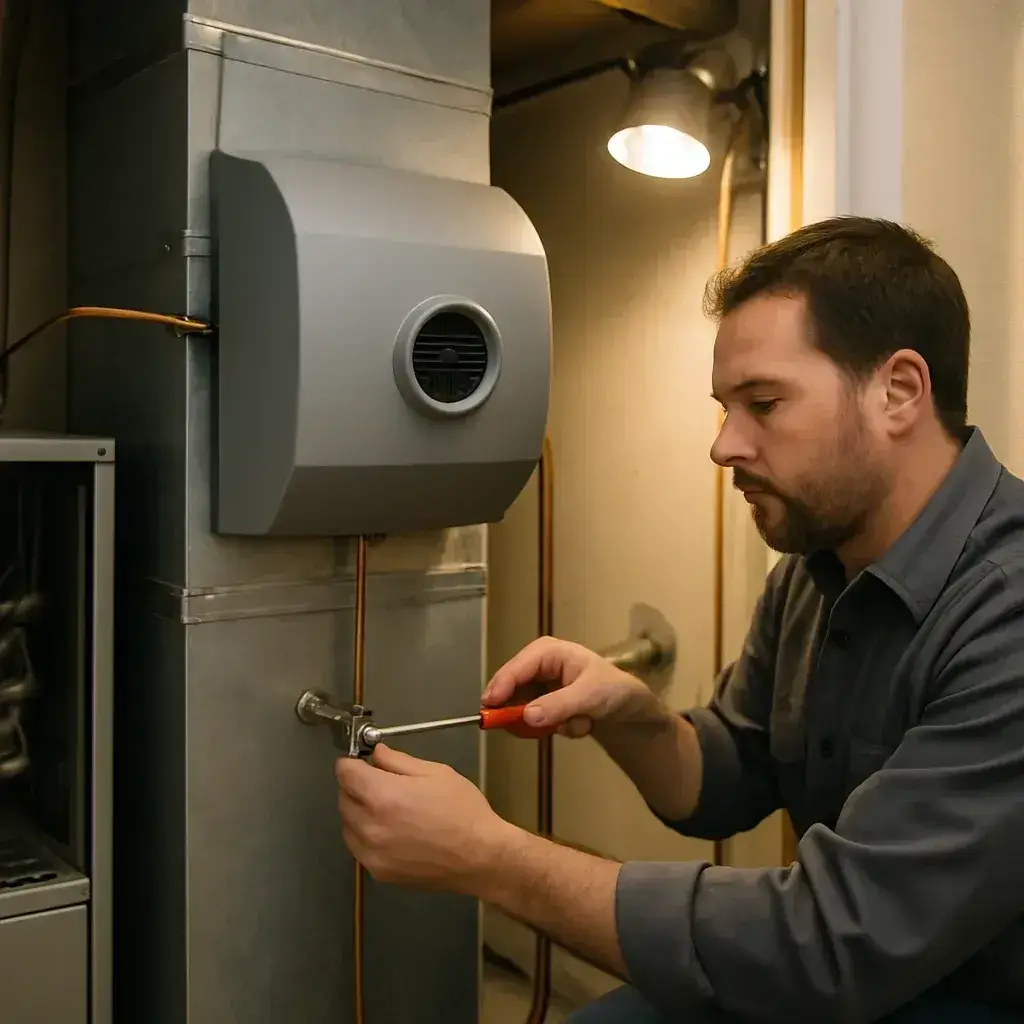
Once the technician is on-site, they’ll take a hands-on look at the furnace, the plenum, and the ductwork. Since most homes across Sunnyvale and the greater DFW metro already run forced-air furnaces for central air, this part usually goes fast. The existing ducts, electrical panel, and water line access are typically already in place to support a straightforward, like-for-like humidifier tie-in, no major modifications needed, which keeps both labor time and cost easy to predict.
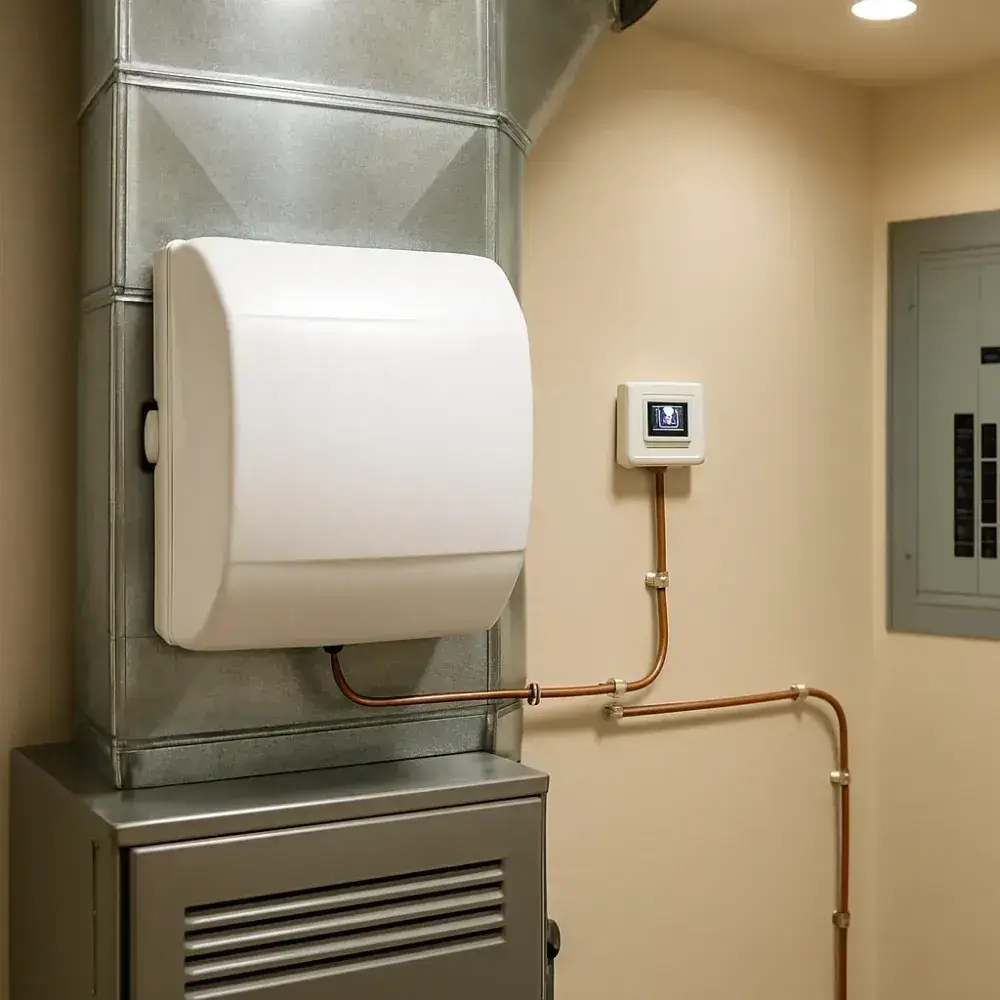
From there, the technician will recommend a unit sized for your square footage and your furnace’s capacity, whether that means a bypass, fan-powered, or steam humidifier. You’ll go over the options and pricing together before any work starts. Once you’re on board, installation moves into the tie-in phase: mounting the unit to the supply or return plenum, wiring it into the furnace’s low-voltage system, and tapping a saddle valve into the nearby water line. If the unit needs condensate removal, drain lines get routed at this stage too.
- Diagnostic call to confirm furnace type, ductwork layout, and homeowner concerns
- In-home assessment of plenum space, electrical access, and water line proximity
- Unit selection matched to square footage and furnace airflow
- Physical tie-in to existing ductwork, low-voltage wiring, and water supply
- Startup calibration, humidistat programming, and leak checks
- Full walkthrough covering filter pad changes, seasonal settings, and maintenance
With everything tied in, the technician powers up the system, calibrates the humidistat, and checks for leaks or airflow issues. This startup phase confirms the unit is hitting your target humidity without putting extra strain on the furnace blower. The visit wraps with a walkthrough, so you know how to adjust settings by season, when it’s time to swap the evaporator pad, and what upkeep keeps your warranty intact.
Every technician sent to a Sunnyvale home is licensed and background-checked, and pricing is quoted upfront before any tie-in work begins, so there’s no risk of surprise scope changes mid-project. Because most local furnace systems are so compatible with standard installs, the whole process, from that first diagnostic call to the final walkthrough, usually wraps up in a single visit.
Not sure what your Humidifier installation project needs? Ask us.
Call Today, Get Service Today. Xtreme Air Services is ready to help.
What Drives Whole-House Humidifier Installation Costs
No two homes are quite alike, which is why no two humidifier quotes look exactly the same. Before we ever put a number in front of you, we walk through what’s actually driving that price.
Most installations fall somewhere between $400 and $1,200. The job we see most often, a straightforward swap that uses your existing connections without major changes, typically runs $550 to $875. That price covers the equipment itself, professional installation, startup, and testing.
What pushes a job toward one end of that range or the other? A handful of factors, mostly.
- Equipment size and efficiency, since larger homes need higher-capacity units to keep humidity consistent from room to room
- The brand and model you go with
- How accessible your furnace or air handler is, attic units in older Sunnyvale homes can take extra time to reach
- The condition of your existing ductwork and wiring, since older systems sometimes need work done before installation can start
- Any code upgrades your specific setup requires
- Permits, on jobs where one is needed
Your quoted price covers the equipment, standard connections, startup, testing, and hauling away your old unit if you have one. It does not cover duct, electrical, or plumbing work, code corrections, or permits, unless we’ve already flagged that your home needs them. 80 six days a week.
Before you call anyone for a quote, ask what’s included and what might add to the total. How they answer tells you a lot about who you’re about to hire.
We charge a $26 to $99 service-call fee, and that amount gets credited toward your installation if you move forward with us. Flexible financing is also available on qualifying jobs, subject to approved credit, so a whole-home humidifier doesn’t have to wait until it fits the budget all at once.
Keeping Your Humidifier Running Right Through Heating Season
Sunnyvale falls in IECC Climate Zone 3A, so our heating season is real, but it’s shorter than what folks up north deal with. That shorter window actually makes your humidistat setting more important, not less. Homeowners who leave the dial cranked too high, or forget to adjust it as outdoor temperatures shift, often end up dealing with foggy windows, damp sills, and sometimes hidden moisture behind drywall or insulation that opens the door to mold.
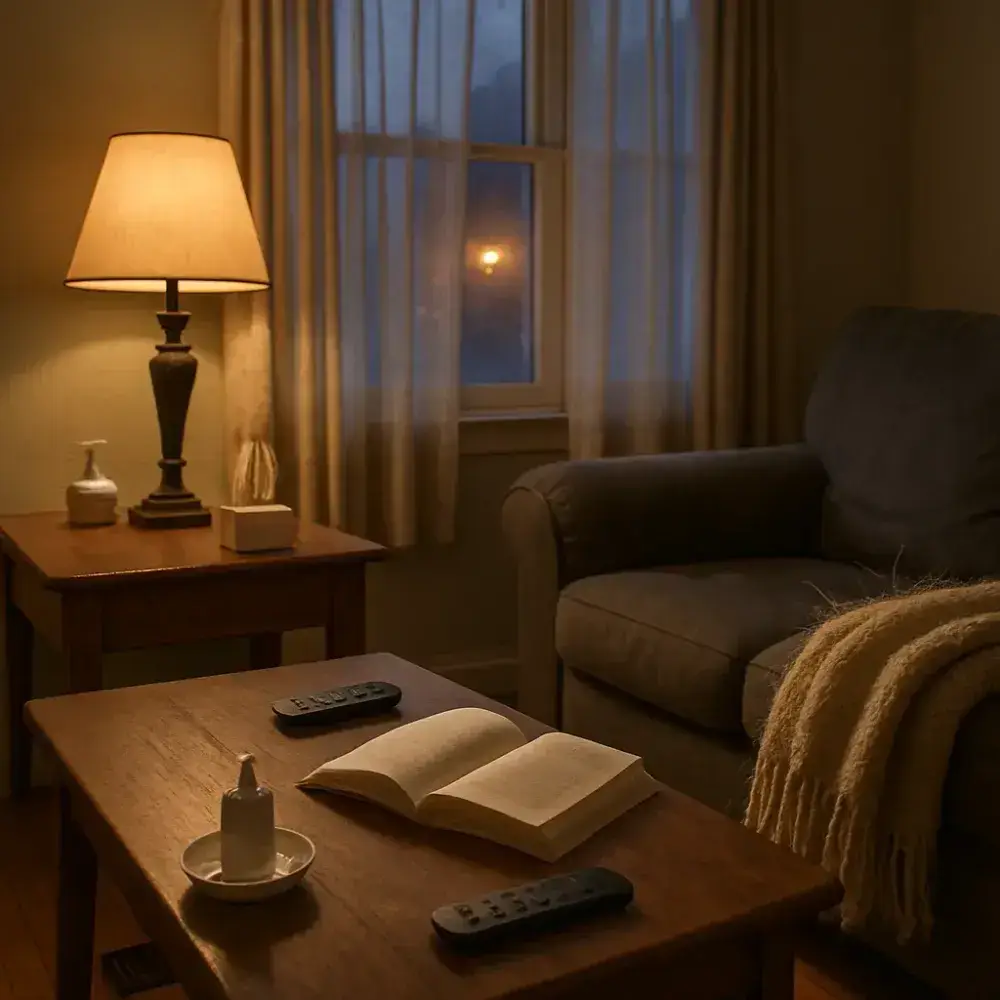
The right humidistat setting really comes down to what’s happening outside. As a general rule for our area, when outdoor temps are in the 40s, aim for indoor relative humidity around 40 percent. When a rare cold snap pushes temps into the 20s or 30s, dial that back to 30 to 35 percent. And if you spot condensation forming on the inside of your windows, take that as a clear sign the setting is too high for current conditions and needs to come down right away.
- Check window glass each morning during cold weather for condensation or fogging
- Lower the humidistat setting whenever moisture appears on glass or frames
- Shut off the humidifier entirely once heating season ends, typically by early spring in our area
- Inspect the water panel or pad each fall before restarting the system for the season
- Replace the humidifier pad annually to prevent mineral buildup and reduced efficiency
Since our heating season doesn’t last long, it’s easy to forget to shut the humidifier off once spring rolls in. Running it through warmer, already-humid months adds moisture your home doesn’t need, which can strain your air conditioner and create the kind of damp conditions mold and dust mites love. Most modern humidifiers connect to the furnace control board and can be programmed to shut down automatically when the system switches over to cooling, but it’s worth double-checking that this was set up correctly during installation.
This is exactly where proper setup pays off. A Trane Comfort Specialist brings calibration know-how that goes well beyond mounting a unit and hooking it to the ductwork. Getting the calibration right means matching the humidistat to your home’s specific construction, window type, and insulation, so the system keeps the air comfortable without tipping over into condensation territory. If a certified specialist installed your humidifier, chances are the seasonal shutoff and humidity targets were already dialed in to protect your home through the heating months and the long stretch of Texas humidity that follows.
Frequently Asked Questions
Common questions about Humidifier installation
How long does humidifier installation take once I book?
Most whole-home humidifier installations in Sunnyvale take a few hours from start to finish. It starts with a quick diagnostic call about your furnace age and ductwork, then a technician confirms the details in person. Since most Sunnyvale homes already have forced-air furnaces with existing ducts, electrical, and water line access, the tie-in work moves fast. You’ll get a clear plan and pricing before any work begins, so there are no surprises once the technician starts mounting the unit.
What should I expect when the technician arrives at my house?
The technician will first check your furnace, plenum, and ductwork to confirm the humidifier will fit your setup. This hands-on look usually goes quickly because most homes across Sunnyvale already run central forced-air systems. From there, they’ll walk you through unit options like bypass, fan-powered, or steam, based on your square footage and furnace capacity. You’ll approve the plan together before any mounting, wiring, or water line work starts.
Why does my Sunnyvale home feel so dry in winter when summers are humid?
Your furnace is pulling moisture out of the air even though outdoor humidity stays normal most of the year. Sunnyvale sits in a mixed-humid climate zone, but forced-air heating strips moisture from indoor air as it circulates through a sealed-up house. Indoor humidity can drop to the 20 to 30 percent range once furnace season starts, usually around November or December. That’s why static shocks and dry skin show up suddenly with the first cold snap and fade by spring.
How do I know if I need a whole-home humidifier instead of a portable one?
If dryness follows you from room to room, a portable unit won’t keep up. Static shocks in multiple rooms, cracking wood trim on different floors, and dry skin affecting everyone in the house usually mean your whole duct system is pushing out dry air. Homes with attic ductwork feeding every room are especially prone to this. When you’re refilling more than one portable unit just to keep pace, it’s a sign the fix belongs in your ductwork, not on your counter.
Will adding a humidifier mean changes to my existing ductwork?
Usually not much. Most Sunnyvale homes already have the ducts, electrical panel, and water line access needed for a straightforward tie-in. The technician mounts the unit to your supply or return plenum, wires it into the furnace’s low-voltage system, and taps a saddle valve into a nearby water line. Since these connections already exist in most forced-air setups, installation stays predictable without major modifications to your home.
Ready to Get Started?
Call 972-288-2263 Today, Get Service Today.