


Zoning System Inspection in Sunnyvale: Fix Hot and Cold Rooms for Good
A full check of dampers, zone control boards, and sensors to find why some rooms never match what the thermostat says.
What’s Covered on This Page
- Signs Your HVAC Zoning System Needs a Closer Look
- One Zone Off Vs. Whole-House Trouble: A Quick Disqualifier
- What a Zoning System Inspection Covers in Sunnyvale Homes
- How Zoning Inspection Costs Are Structured
- Long Texas Cooling Seasons Wear Down Dampers and Controls
- How quickly can someone come out to check my zoning system in Sunnyvale?
- What happens when the technician arrives for a zoning system inspection?
- Why do so many Sunnyvale homes have zoning problems in the first place?
- How do I know if it’s a zoning problem or my whole AC unit failing?
- Can a small zoning problem really shorten the life of my whole HVAC system?
Signs Your HVAC Zoning System Needs a Closer Look
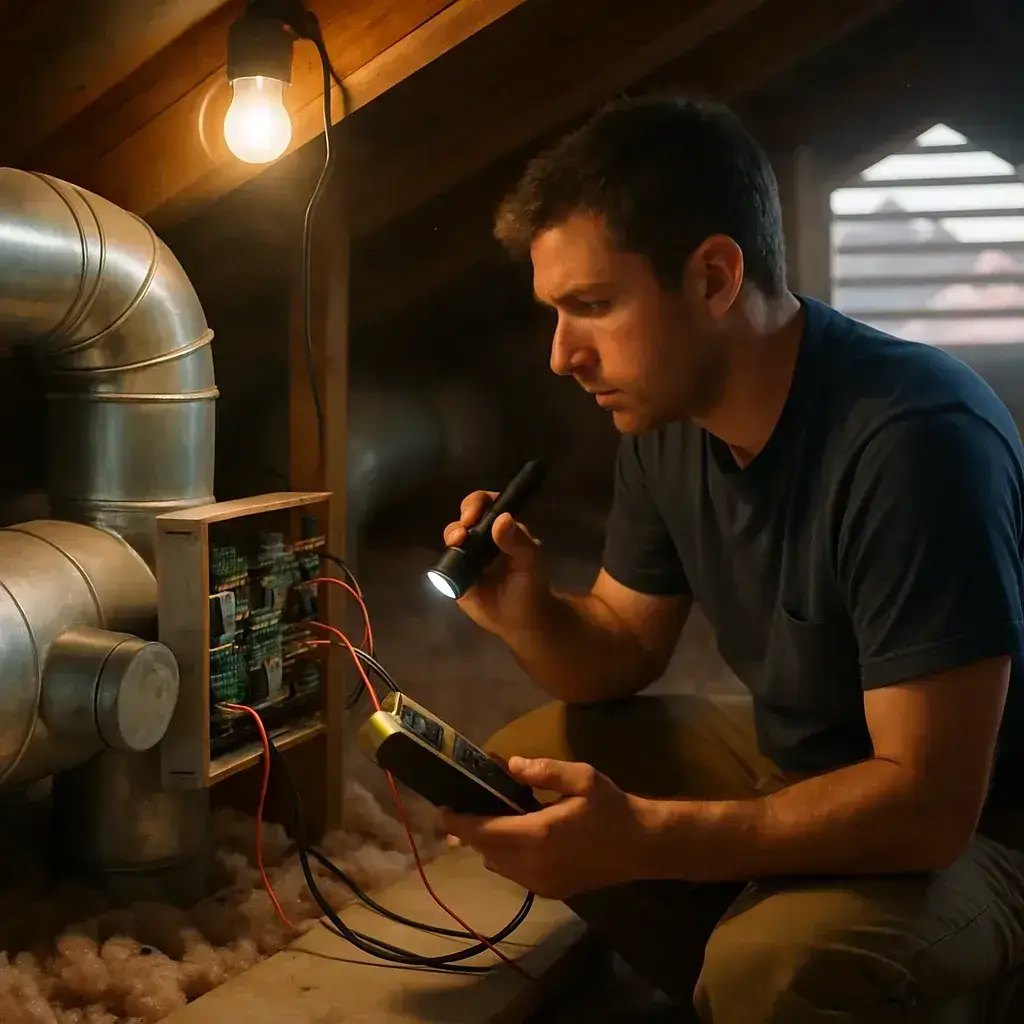
Here’s how it usually plays out. You walk into the back bedroom and it’s ten degrees warmer than the living room, even though the thermostat insists the house should be even. Or one zone runs nonstop while another barely turns on. Sound familiar? That’s pretty common in homes with attic-run ductwork, where a stuck damper or a failing zone control board can throw the whole balance off.

- One room stays hot or cold no matter what the thermostat reads
- You hear clicking or humming from the attic or a closet panel when the system switches zones
- One zone’s vents blow strong while another barely blows at all
- Your energy bills climbed but comfort didn’t improve
- A zone thermostat shows a different reading than what the room actually feels like
We see this every single week, someone assumes their whole AC is dying when really it’s just one stuck damper working overtime. That’s exactly why catching it early matters: a small zoning issue left unchecked can push your main system to run longer than it should, and that shortens its life.
One Zone Off Vs. Whole-House Trouble: A Quick Disqualifier
Before you book a zoning system inspection in Sunnyvale, take five minutes and run a simple check: how much of the house is actually affected? Zoning problems and core HVAC failures show up in very different ways, and mixing up the two costs you real time and money. If a technician shows up for a zoning call and finds a failed compressor or a cracked heat exchanger, they can’t fix it on the spot. You’ll end up paying for a diagnostic visit that never touched the actual problem, then scheduling a second appointment anyway.
Give it a day or two and the pattern usually becomes obvious. Homes in Sunnyvale neighborhoods off Tripp Road and Collins Road, and the townhome clusters near Belt Line Road often have multi-zone systems for a reason, split-level layouts, added rooms, west-facing upper floors that bake in the afternoon sun. When the zoning hardware in these setups fails, it almost always fails in one spot rather than dragging the whole system down.
- One bedroom or zone stays hot or cold while the rest of the house feels fine: likely a damper stuck open or closed, a bad zone sensor, or a control board relay issue.
- One zone’s thermostat display is blank, frozen, or unresponsive while the others work normally: that points to wiring or the control panel for that zone, not the furnace or AC unit itself.
- The whole house won’t heat or cool, every zone included: that points to the compressor, blower motor, refrigerant charge, or furnace ignition system.
- Airflow feels weak everywhere, not just in one room: that suggests a duct, filter, or blower problem upstream of the zoning dampers.
- The system short-cycles or trips the breaker no matter which zone is calling for heat or cool: that’s a core equipment or electrical issue, not a zoning fault.
The logic here is pretty simple once you see it. A zoning system is just a layer of dampers and sensors sitting on top of one central AC or furnace. If that central unit isn’t producing heated or cooled air to begin with, no amount of poking at dampers or sensors will help, there’s nothing for the zoning hardware to distribute in the first place. On the flip side, if the core equipment is clearly running and putting out conditioned air but it’s only reaching some rooms, the problem is almost always in the zoning components themselves.
If your symptoms clearly point to a single zone, a zoning system inspection is the right next step. If the whole house is affected, skip that and go straight to a general AC or furnace repair diagnostic instead.
What a Zoning System Inspection Covers in Sunnyvale Homes
Plenty of Sunnyvale homes lean on zoning to make additions, converted attics, or split-level layouts livable, keeping upstairs bedrooms and downstairs living areas comfortable at the same time. A proper zoning system inspection looks at every link in that chain, not just the thermostat on the wall. Because zoned systems depend on dampers, electrical controls, and airflow paths all working in sync, one overlooked component can throw off comfort across an entire section of the house.
During the visit, a licensed technician works methodically from the air handler down to the individual registers. It is a diagnostic process built to pinpoint exactly where a zoning problem starts, whether that is a stuck damper, a failing control board, a miscalibrated sensor, or a duct connection that was never sized right for the zone it serves.
- Motorized dampers in the ductwork get checked for full open and close movement, listening for motors that hum but don’t turn, and confirming they respond to control signals
- The zone control board or panel is inspected for correct wiring, blown fuses, corroded terminals, and proper communication with each zone damper
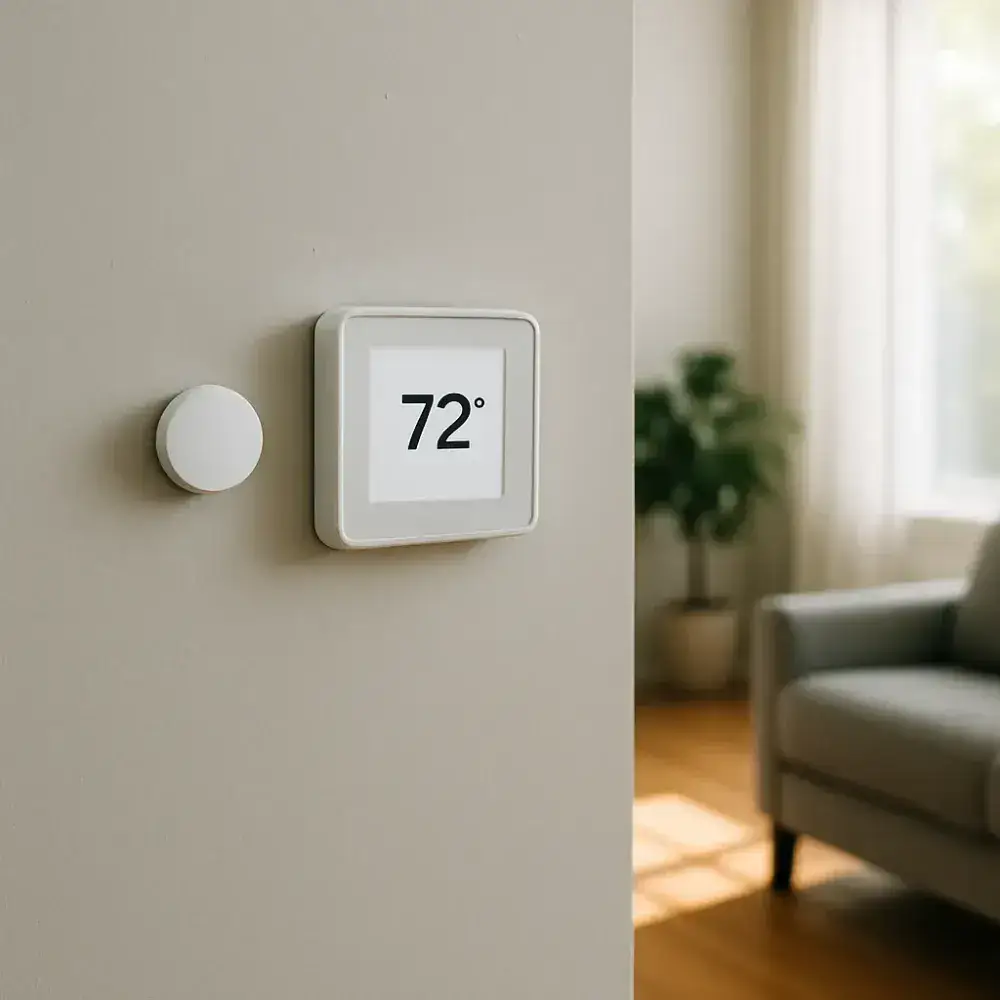
- Zone sensors and bypass dampers are evaluated for accurate temperature readings and correct placement, since a sensor near a supply vent or window can send misleading signals
- Each thermostat is tested for accurate calibration and proper programming against the zone it is assigned to control
- Duct connections and transitions near dampers are checked for leaks, disconnections, or crushed sections that restrict airflow to a specific zone
- Static pressure and airflow balance are checked at key points to see whether one zone is starving another when multiple zones call for conditioning at once
It helps to know what this appointment is and is not. A zoning system inspection is an assessment, not a repair visit. The technician isn’t pulling out tools to swap a damper motor or rewire a control board on the spot. The goal instead is a clear, evidence-based picture of system health. By the end of the visit, the homeowner gets a written findings and recommendation summary documenting what was tested, what was found, and what options exist for fixing any issues, whether that means a minor adjustment, a component replacement, or a bigger conversation about system design.
Zoning problems rarely show themselves at the thermostat, which is exactly why this level of detail matters. A technician who only glances at the wall control can miss a failing damper motor or a control board that has stopped communicating with one zone. A full inspection, covering every physical and electrical component in the zoning chain, gives Sunnyvale homeowners the accurate diagnosis they need before making any repair decision.
Have questions? We’re happy to help.
Call Today, Get Service Today. Xtreme Air Services is ready to help.
How Zoning Inspection Costs Are Structured
Let’s talk money, because you deserve to know what you’re paying for before anyone climbs into your attic. A zoning system inspection in Sunnyvale typically runs $100 to $300. The most common version, an on-site assessment with a written summary of findings, usually falls between $100 and $200. That’s not a ballpark guess, that’s the actual range.
What pushes the price toward one end or the other? A few factors.
- How complex your zoning system is, since more dampers and zones mean more time on the ladder
- The size of your property, because a larger home with a longer duct run simply takes longer to trace
- Whether specialized gear is needed, like a camera, leak detection tools, or meters to check dampers and control boards
Here’s the part most people appreciate. There’s a service-call fee, usually $26 to $99, and if you move forward with a repair through us, that fee gets credited toward the work. You’re not paying twice. 80 six days a week.
One thing worth being upfront about: this inspection covers the assessment and the written recommendation only. Any repair work identified gets quoted separately, with flat-rate pricing approved before we touch anything. And no, we don’t typically offer financing on the inspection itself, that’s reserved for bigger jobs like a full zoning install or system replacement. Ask us about it when the time comes.
Long Texas Cooling Seasons Wear Down Dampers and Controls
Sunnyvale falls within DOE/IECC Climate Zone 3A, a hot-humid designation that keeps air conditioners running hard for close to seven months out of the year. Cooling season typically runs from April through October, with long summer stretches pushing past 95 degrees. That kind of extended runtime wears on more than the compressor and outdoor condenser. It also forces constant cycling of the zoning dampers, actuators, and control boards responsible for steering conditioned air through the house.
Every time a zone calls for cooling, a motorized damper opens or closes to redirect airflow. Over the course of a Texas summer, that damper could cycle dozens of times a day. The motors and linkages inside are mechanical, and mechanical parts wear down over time. Bearings loosen, actuator gears pick up slack, and damper blades can drift away from a full open or closed position. None of this happens overnight, and it rarely triggers an error code or an obvious comfort complaint right away.
The zone control board and its sensors face similar pressure. Sustained high heat raises temperatures inside the air handler closet, and electronics tend to age faster in warmer conditions. Thermostats and duct sensors that track temperature and airflow can slip out of calibration after repeated heat exposure, leaving zones running slightly warmer or cooler than the setpoint with no clear sign of failure.
- Damper actuators showing early wear from repeated daily cycling during peak cooling months
- Zone control board components aging faster due to sustained heat exposure in the air handler cabinet
- Thermostat and duct sensors drifting out of calibration after a full Texas summer
- Damper blades losing full-seal positioning, allowing minor air bleed-through between zones
- Wiring connections loosening from repeated thermal expansion and contraction
Because these problems build up slowly, many Sunnyvale homeowners don’t notice anything until a zone stops responding entirely, usually during the hottest week of the year when a technician’s schedule is hardest to get on. A routine inspection before or during peak season gives a technician the chance to check damper travel, verify actuator response, and confirm the control board is reading zones correctly, catching wear before it turns into a mid-August emergency.
Frequently Asked Questions
Common questions about Zoning system inspection
How quickly can someone come out to check my zoning system in Sunnyvale?
We schedule zoning inspections based on how your symptoms sound over the phone. If you tell us one room stays hot or cold no matter what the thermostat says, that points to a zoning issue we can plan for directly. We serve homes across Sunnyvale, including split-level layouts and homes with attic-run ductwork near Tripp Road and Collins Road. Give us the details of what you’re feeling in each room, and we’ll get you on the schedule fast.
What happens when the technician arrives for a zoning system inspection?
The technician starts at your air handler and works down to each damper and register in the house. They’ll check motorized dampers for full open and close movement, test the zone control board for wiring or fuse problems, and check each zone sensor for accurate readings. You can expect them to explain what they find in each zone as they go, so you know exactly which part is causing your hot or cold room before any repair work starts.
Why do so many Sunnyvale homes have zoning problems in the first place?
Many Sunnyvale homes use multi-zone systems because of split-level layouts, added rooms, or west-facing upper floors that bake in afternoon sun. Homes near Belt Line Road and in the neighborhoods off Tripp Road often run attic ductwork, and that setup puts extra strain on dampers and control boards over time. When one of those parts fails, it almost always affects a single zone rather than the whole house, which is exactly the pattern worth having checked.
How do I know if it’s a zoning problem or my whole AC unit failing?
Check how much of the house is affected before you book. If one room or zone stays off-temperature while the rest of the house feels fine, that’s a zoning issue like a stuck damper or bad sensor. If the entire house won’t heat or cool, or airflow feels weak everywhere, that points to the core furnace or AC equipment instead. Standing near your air handler and feeling for strong airflow at the main trunk is a quick way to tell the difference.
Can a small zoning problem really shorten the life of my whole HVAC system?
Yes, a stuck damper or failing zone sensor can force your main unit to run longer than it needs to. When one zone can’t get proper airflow, the system compensates by working harder across the board, which adds wear to the compressor and blower motor over time. Catching a zoning issue early, before it forces the whole system to overwork, protects the equipment you already have and keeps your energy bills from climbing without any comfort improvement.
Ready to Get Started?
Call 972-288-2263 Today, Get Service Today.