

Emergency HVAC Service in Sunnyvale: Fast Help When Your System Fails
Round-the-clock diagnosis and repair when your heat or cooling quits without warning, with a technician dispatched the same day.
What’s Covered on This Page
- Signs Your HVAC Problem Can’t Wait
- How Emergency HVAC Pricing Works
- When Your System Doesn’t Need Emergency Repair
- What Happens When You Call for Emergency Service
- Sunnyvale’s Heat and Freeze Seasons Drive HVAC Emergencies
- How fast can you get someone out for an emergency HVAC call in Sunnyvale?
- What should I expect when the technician shows up for an emergency repair?
- Why does water leak from my ceiling when my HVAC system fails?
- How do I know if my HVAC problem is really an emergency?
- Could my thermostat or a tripped breaker be causing the problem, not the HVAC unit itself?
- Why does my system struggle more during Sunnyvale summers?
Signs Your HVAC Problem Can’t Wait
So how do you tell the difference between annoying and urgent? Honestly, your nose, your ears, and the thermostat will usually clue you in first.
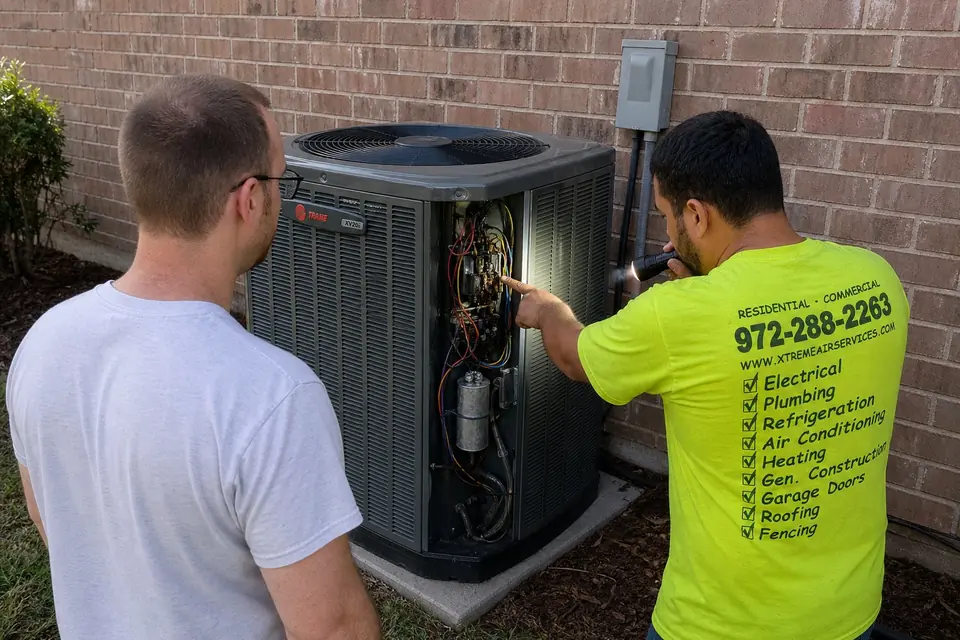
A lot of homes around Sunnyvale still run older attic-mounted systems, and those units sit right above the living space. When a drain line clogs up there, water doesn’t just pool – it can drip straight through the ceiling. We see this constantly during peak summer, when heavy condensation and fast-building clogs catch homeowners off guard.
- No cool air at all while it’s 95 degrees or hotter outside
- A burning smell or smoke coming from the vents or the outdoor unit
- Grinding, screeching, or loud banging from the system
- Water stains on the ceiling or pooling near the indoor unit
- The breaker trips repeatedly when the system tries to start
- A gas furnace that won’t ignite, or a carbon monoxide alarm going off
Any one of those means it’s time to stop troubleshooting and pick up the phone. Weak airflow or a slightly warm house can usually wait a day. A tripping breaker or a burning smell can’t – those point to electrical strain that only worsens the longer the system keeps running.
How Emergency HVAC Pricing Works
Most reputable HVAC companies, including the ones serving Sunnyvale, run emergency calls on a diagnose-then-quote basis. A flat service-call fee covers the technician’s trip out and the diagnostic work needed to pin down exactly what failed. Once that’s confirmed, you get a written repair quote before anyone touches a tool. There’s no charge for guesswork, and you always have the final say on whether to approve the repair once you’ve seen the price.
That diagnostic fee usually gets applied toward the repair if you decide to move forward, so in most cases it’s not stacked on top of your final bill. This setup exists to protect you from open-ended hourly billing when you’re already stressed, whether that’s a blown compressor on a 95-degree Sunnyvale afternoon or a cracked heat exchanger during one of North Texas’s rare hard freezes.
A few things shape the final repair quote beyond that initial service call:
- How extensive the failure is, whether it’s a single blown capacitor or a full compressor burnout
- The cost and availability of replacement parts, particularly for older or discontinued units
- The age of your equipment, which determines whether repair or replacement is the smarter financial call
- Additional failed components found during diagnosis, which turns up often in systems over 12 years old
- When you call, since many providers tack on extra charges for nights, weekends, and holidays
That last item trips up more homeowners than you’d think. A lot of HVAC companies pile on fifty to one hundred fifty dollars or more for after-hours dispatch, which means a 2 a.m. no-heat emergency can end up costing more than the identical repair done during business hours. Xtreme Air Services skips the night and weekend surcharges entirely, so the price you’re quoted reflects what the repair actually involves, not what time it happens to be.
When Your System Doesn’t Need Emergency Repair
Not every HVAC hiccup calls for a middle-of-the-night service visit. Before you dial for emergency help in Sunnyvale, take five minutes to rule out the simple stuff first. A surprising number of after-hours calls turn out to be things homeowners can fix faster than it takes to explain the problem to a dispatcher.
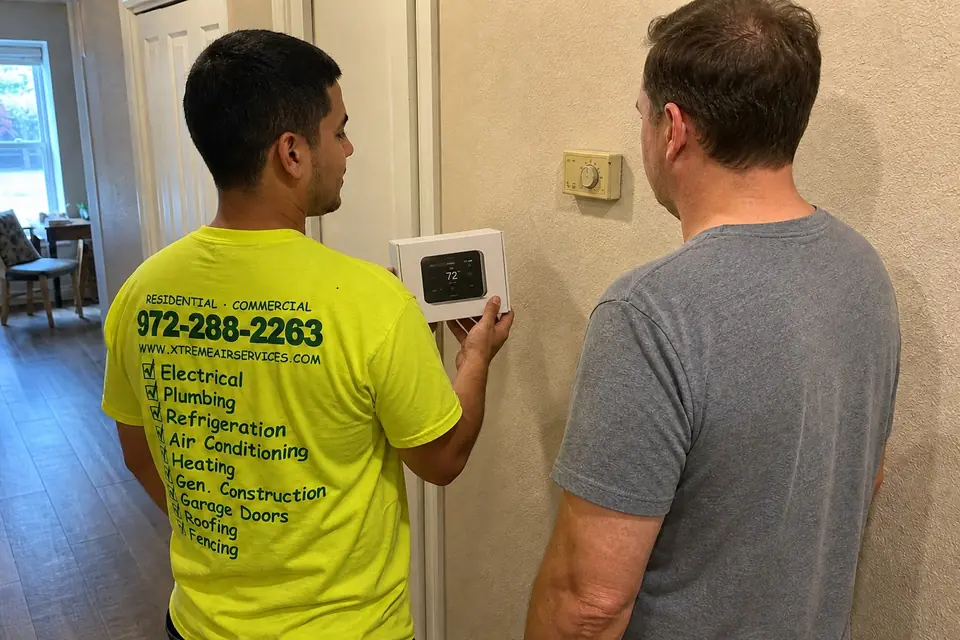
Start with the thermostat. If the screen is blank or unresponsive, the battery has probably just died, especially in older programmable models that run on AA batteries instead of being hardwired. Swap them out, wait about sixty seconds, and see if the display comes back before assuming your whole system has gone down.
Next, check the electrical panel. A breaker that trips once, resets, and holds steady isn’t an emergency, it’s a five-second fix. Flip it fully off, then back on. If it stays on and the system runs normally, you’ve just solved the problem without paying for a truck roll. Breakers that trip repeatedly, smell like burning plastic, or refuse to reset at all are a different story, and those are worth a call.
- Dead or low thermostat batteries causing a blank display
- A tripped breaker that resets and holds without tripping again
- A dirty, clogged air filter restricting airflow and weakening output
- A system that was accidentally left off, switched to the wrong mode, or set to an unexpected temperature
Dirty air filters deserve their own mention, since they’re the most common cause of weak airflow, warm air from the vents, or a system that runs nonstop without actually cooling the house. In Sunnyvale’s dry, dusty summers, filters clog faster than most people expect, especially in homes near U.S. 80 or close to construction and landscaping work. If yours looks gray, matted, or hasn’t been swapped in the last sixty to ninety days, replacing it is a five-dollar fix, not a reason to call for service.
We’d rather tell you upfront that your issue isn’t an emergency than send a technician out for something you could handle yourself in five minutes. That honesty is exactly why homeowners trust us when we say we’re available around the clock for the problems that truly can’t wait.
Have questions? We’re happy to help.
Call Today, Get Service Today. Xtreme Air Services is ready to help.
What Happens When You Call for Emergency Service
You call, and a real person picks up. Not a machine, not someone reading from a script in another state. We’ll ask a few quick questions about what your system is doing, or not doing, and get a technician headed your way.
- Describe the problem. Warm air, a dead unit, a burning smell, whatever it is, just tell us what you’re seeing and hearing.
- We schedule a same-day visit. Nights and weekends cost the same as a weekday call, so timing never changes your price.
- A licensed, background-checked technician arrives and runs a full diagnosis on the system.
- You get a flat-rate price before any work starts. No guessing, no surprise number at the end.
- We make the repair. Most emergency calls come down to one failed part, and we keep common parts stocked on the truck.
- We test the system before we leave, then walk you through what we did in plain English.
There’s a small service-call fee, somewhere between $26 and $99, but it gets credited toward the repair if you move forward with us. In most cases, the whole thing wraps up in a single visit.
Sometimes, though, a part is on backorder or the failure runs deeper than expected.
When that happens, we tell you right away, not after the meter’s been running for an hour. That’s the real difference between upfront flat-rate pricing and getting surprised at the invoice.
Sunnyvale’s Heat and Freeze Seasons Drive HVAC Emergencies
Sit along the US-80 corridor in the Dallas-Fort Worth Metroplex, as Sunnyvale does, and your HVAC system almost never gets a real rest. Summers here routinely sit above 100 degrees for weeks on end, and attic temperatures in older Sunnyvale homes climb well past that. Compressors, capacitors, and condenser fan motors run nearly nonstop from June through September. That constant strain is precisely why so many systems give out at the worst possible time: mid-heatwave, on a weekend, with the indoor temperature already pushing 85.
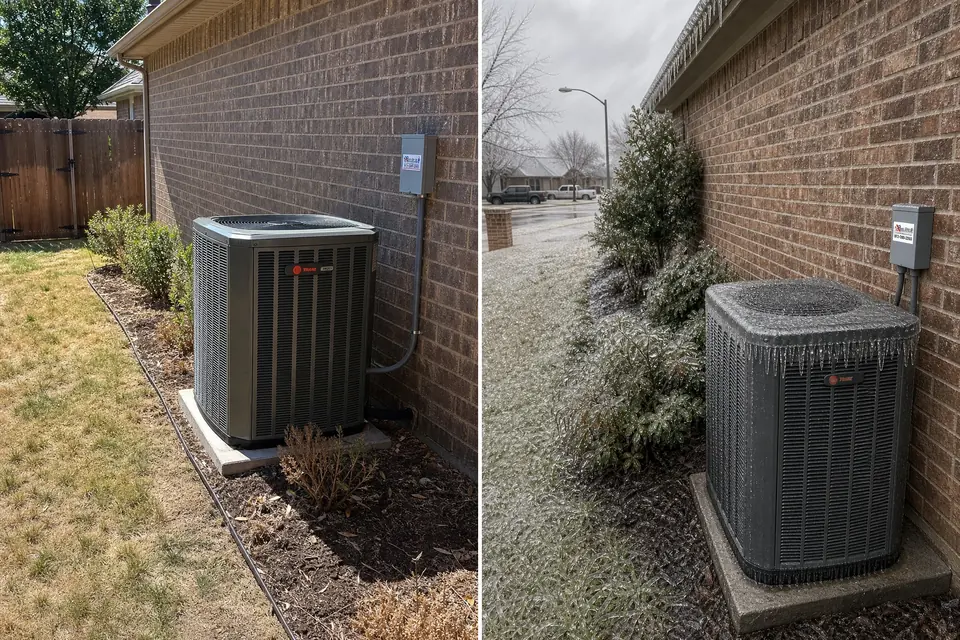
What catches a lot of residents off guard is that Sunnyvale has a second emergency season, and it shows up just as fast in January and February. North Texas winters can turn on a dime, sometimes with only a day or two of mild weather before a hard freeze sets in, and that catches furnaces and heat pumps that have sat idle for months. Igniters fail. Heat exchangers crack. Heat pumps leaning on backup strips struggle once temperatures drop into the teens or lower, the same pattern plenty of Metroplex residents remember all too well from the February 2021 winter storm.
This back-and-forth is exactly why emergency HVAC response in Sunnyvale can’t be built around summer alone. Fast dispatch and no overtime surcharges mean little to a family with a frozen heat pump on a 28-degree night in January if that service only exists in July. The providers that hold up in this market keep their staffing, parts inventory, and pricing steady across both peak seasons, not just the one that gets all the attention.
- Schedule a cooling system check in April, before the first 90-degree stretch hits Sunnyvale
- Have heating equipment inspected in October, ahead of the first hard freeze warning
- Replace air filters monthly during peak summer and peak winter runtime
- Keep outdoor condenser units clear of debris before storm season and freeze events alike
- Know your system’s age, since units over 12 to 15 years old are far more likely to fail during seasonal extremes
Once you understand this two-season pattern, it’s easier to set realistic expectations for response times, pricing, and preventive maintenance in Sunnyvale, rather than assuming the emergency risk disappears the moment summer ends.
Frequently Asked Questions
Common questions about Emergency HVAC service
How fast can you get someone out for an emergency HVAC call in Sunnyvale?
We treat true emergencies, like no cooling in 95-degree heat or a burning smell from the vents, as same-day priority calls. Once you describe the symptoms, we can usually tell you right away whether it needs urgent dispatch or a scheduled visit. Nights, weekends, and holidays don’t change how fast we respond. If your breaker keeps tripping or water is pooling near the indoor unit, say so when you call, since those details help us move you to the front of the line.
What should I expect when the technician shows up for an emergency repair?
The technician diagnoses the problem first and gives you a written repair quote before touching anything. You’ll hear exactly what failed, whether it’s a small part or something bigger, and what fixing it involves. There’s no guessing and no work starts until you approve the price. This matters most during a stressful moment, like a 2 a.m. no-heat call, when you want a clear answer instead of an open-ended bill.
Why does water leak from my ceiling when my HVAC system fails?
This usually happens because your system’s drain line clogged and backed up water above your living space. A lot of Sunnyvale homes still run older attic-mounted units, so a clog there drips straight through the ceiling instead of pooling somewhere harmless. We see this most in peak summer, when heavy condensation builds fast and catches homeowners off guard. Ceiling stains or dripping near vents are a same-day call, not something to wait out.
How do I know if my HVAC problem is really an emergency?
Burning smells, grinding noises, a repeatedly tripping breaker, or no cool air at all during a 95-degree day mean it’s urgent. Weak airflow or a slightly warm house can usually wait until the next business day. The clearest sign is anything pointing to electrical strain, since that only gets worse the longer the system keeps running. When in doubt, describe what you’re seeing, hearing, or smelling, and we’ll help you decide if it’s a same-day issue.
Could my thermostat or a tripped breaker be causing the problem, not the HVAC unit itself?
Yes, and it’s worth checking before you call for emergency service. A blank thermostat screen often just means dead batteries, especially on older programmable models. A breaker that trips once and holds steady after you reset it isn’t a system failure, either. But a breaker that keeps tripping, smells like burning plastic, or won’t reset at all is a different story and needs a technician right away.
Why does my system struggle more during Sunnyvale summers?
Dry, dusty conditions clog air filters faster than most homeowners expect, especially near U.S. 80 or close to construction and landscaping work. A dirty filter restricts airflow, so your system runs constantly without cooling the house. If your filter looks gray or matted, or hasn’t been changed in sixty to ninety days, swap it out first. That simple fix solves a surprising number of what feel like emergency calls.
Ready to Get Started?
Call 972-288-2263 Today, Get Service Today.