


Fast, Licensed Repair HVAC in Sunnyvale When Your System Fails
Licensed technicians who track down why the system quit and repair it properly, rather than resetting it and hoping.
What’s Covered on This Page
- Common Signs Your HVAC System Needs Repair
- When You Might Not Need a Repair Visit Yet
- What a Sunnyvale HVAC Repair Visit Looks Like
- How HVAC Repair Pricing Works
- Verify Your Contractor’s Texas HVAC License
- How fast can you get someone out for an HVAC repair in Sunnyvale?
- What happens when the technician arrives for a repair visit?
- Why is my AC running but blowing warm air?
- Why does my HVAC system keep turning off after just a couple minutes?
- Do I need a full system replacement, or can this be repaired?
- What should I check before calling for HVAC repair?
Common Signs Your HVAC System Needs Repair
So how do you know it’s time to call? Your AC is running, but the air coming out isn’t cold. That’s one of the most common calls we get in Sunnyvale once summer heat settles in on those brick one-story homes with older duct systems.
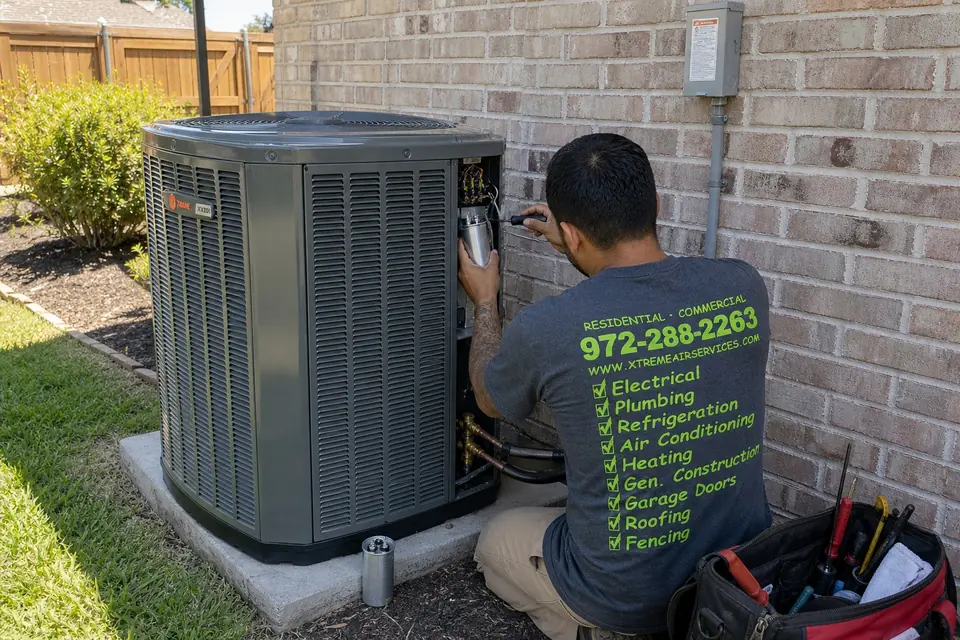
Short cycling is another big one. The system kicks on, runs for a couple of minutes, then shuts off before your house even starts to cool down. That pattern usually points to a bad capacitor or a sensor issue. Loud grinding, squealing, or clanking when the system starts up almost always means a motor problem or a part that’s worked itself loose.
- Warm or weak airflow from the vents, even with the thermostat set low
- System turns on and off in short bursts instead of running a full cycle
- Grinding, squealing, or rattling noises from the outdoor unit or air handler
- Higher than normal energy bills with no change in how you use the system
- Thermostat seems unresponsive or the system won’t turn on at all
- Ice building up on the indoor coil or refrigerant lines
We see this every single week: a homeowner waits a few extra days on a noise or a warm-air complaint, hoping it fixes itself. It rarely does. The earlier you catch it, the more likely we’re looking at a single part repair instead of a problem that’s already damaged a second component down the line.
When You Might Not Need a Repair Visit Yet
Not every HVAC hiccup in Sunnyvale means your system is on its way out. Before you reach for the phone, take five minutes to rule out a few common culprits that look like serious failures but cost nothing to fix. Any technician worth trusting will tell you the same thing, because earning your confidence matters more than charging a truck-roll fee for something you could have solved yourself.
- Blank or unresponsive thermostat display: Check whether the batteries have died, especially if it has been more than a year since you last swapped them. Also make sure the thermostat’s dedicated breaker or the furnace’s service switch hasn’t been knocked off, which happens more often than you’d think during garage cleanups or storage shuffles.
- A breaker that trips once but resets and holds: If your HVAC breaker tripped during a heat wave or a scorching North Texas afternoon, it may have just been momentarily overloaded. Reset it once. If it holds and the system runs fine, you’ve likely avoided a repair call altogether. If it trips again within minutes, though, that’s a genuine sign to call for help.
- Weak or warm airflow from the vents: A clogged air filter is by far the most common cause of this in Sunnyvale homes, especially during dry summer months when dust and pollen pile up fast. Pull the filter and hold it to the light. If you can’t see light through it, swap it out and give the system twenty minutes to catch up before assuming there’s compressor trouble.
- Musty odor when the system starts: This is usually just condensation sitting in the drain pan after a period of disuse, not a sign of mold or a failing coil.
These self-checks take less time than sitting on hold, and they can save you the cost of a visit entirely. That said, we’d much rather answer a quick question for free than have you guess wrong on something involving gas lines, refrigerant, or electrical panels. Our dispatchers are glad to walk through these checks with you over the phone before anything gets scheduled.
What a Sunnyvale HVAC Repair Visit Looks Like
HVAC breakdowns in Sunnyvale rarely wait for business hours, which is exactly why the whole process is built around being available 24/7. Whether a compressor gives out at 2 p.m. on a Tuesday or a furnace ignitor dies at 11 p.m. on a cold January night, a real person picks up the phone, not a voicemail promising a callback tomorrow. That first call is used to gather basic symptoms, the age of the system, and whether anyone vulnerable is in the home, so dispatch can prioritize the visit accordingly.
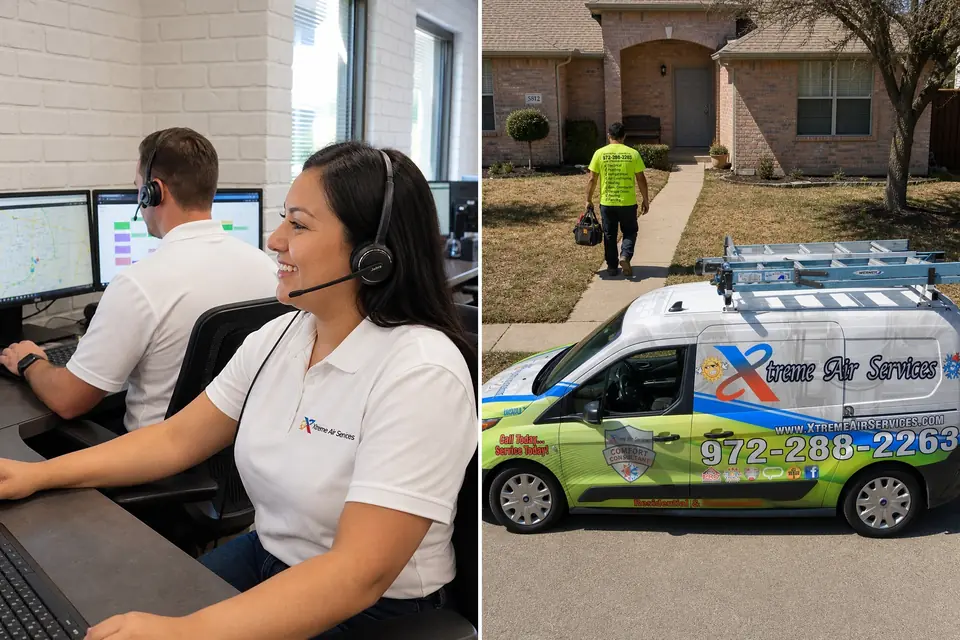
- Call is answered live, day or night, with no automated triage delay
- Same-day diagnostic appointment is scheduled, often within a two to four hour window
- Technician arrives with a stocked truck covering common capacitors, contactors, igniters, and blower motors
- Failed part is identified using readings, amperage tests, and airflow checks
- Repair or replacement is completed on the spot when the part is in stock
- Full system test confirms proper cooling or heating output before the technician leaves
- Work area is cleaned, and the customer walks through what failed and why
Local weather makes this kind of fast turnaround non-negotiable. NOAA and National Weather Service data show Dallas-Fort Worth area July highs regularly sitting in the mid-90s Fahrenheit, and that sustained heat load pushes aging air conditioners past their limits, especially units that have been quietly losing refrigerant charge for months. A same-day repair during a heat wave isn’t just convenient, it’s often what keeps a household safe overnight.
Heating systems face their own stress test. The February 2021 ERCOT grid emergency is a stark reminder that Texas heating demand can spike just as hard as summer cooling demand, straining furnaces and heat pumps that rarely run at full capacity. When extreme cold hits, the same same-day scheduling and stocked-truck approach applies, because a failed heat exchanger or a dead blower motor turns urgent fast once outdoor temperatures drop into the teens.
Pricing is disclosed before any repair begins, and it doesn’t change just because the visit happens at midnight or on a Sunday. That no after-hours-upcharge policy is confirmed verbally on the initial call, then again in writing once the technician diagnoses the issue, so there are no surprises on the invoice.
Ready when you are – get in touch today.
Call Today, Get Service Today. Xtreme Air Services is ready to help.
How HVAC Repair Pricing Works
Most HVAC companies in Sunnyvale, and really across the country, price repairs in two steps. First, a technician charges a diagnostic or service-call fee to come out, look at your system, and figure out what’s wrong. Once the problem is confirmed, you get a repair estimate covering parts and labor before any work starts. The Angi Cost Guide (2024) notes that this diagnose-then-estimate approach is standard industry practice, so homeowners should expect to sign off on the cost before a technician moves forward. For a broader breakdown of typical repair ranges, see our pricing guide.
That final estimate isn’t a flat number; it shifts based on several factors. Knowing what drives the price helps explain why two repairs on similar systems can land at very different costs.
- Extent of the failure: a simple capacitor swap costs far less than a compressor or heat exchanger replacement
- Part cost and availability: OEM parts for older or less common brands can drive up both price and wait time
- Equipment age and brand: discontinued models may require specialty-sourced components at higher cost
- Multiple failed components: when a system has more than one issue, labor and parts scale accordingly
- After-hours timing: many companies add premium surcharges for evening, weekend, or holiday service calls
That last point is where Xtreme breaks from much of the Sunnyvale market. Xtreme doesn’t tack on extra fees for nights or weekends, so a system failure on a Saturday evening costs the same as a weekday afternoon visit. On top of that, the diagnostic or service-call fee gets credited toward the final repair cost once you approve the recommended fix, so you’re not paying twice for the visit and the work itself.
In short, HVAC repair pricing follows a fairly predictable pattern: a service-call fee to diagnose the issue, then a clear estimate shaped by how severe the problem is, how easy the parts are to source, the system’s age, and when the work happens. Homeowners who understand this structure can read quotes more critically, ask sharper questions, and sidestep surprise after-hours charges. Since Xtreme keeps scheduling flat no matter the time of day and applies the diagnostic fee toward repairs, customers get a more straightforward path from inspection to fix, with no guessing about hidden fees. We see this regularly on Sunnyvale, TX systems.
Verify Your Contractor’s Texas HVAC License
Texas doesn’t let just anyone charge you money to work on an HVAC system. The state requires a license through the Texas Department of Licensing and Regulation, and any legitimate contractor should hand over their license number the moment you ask.
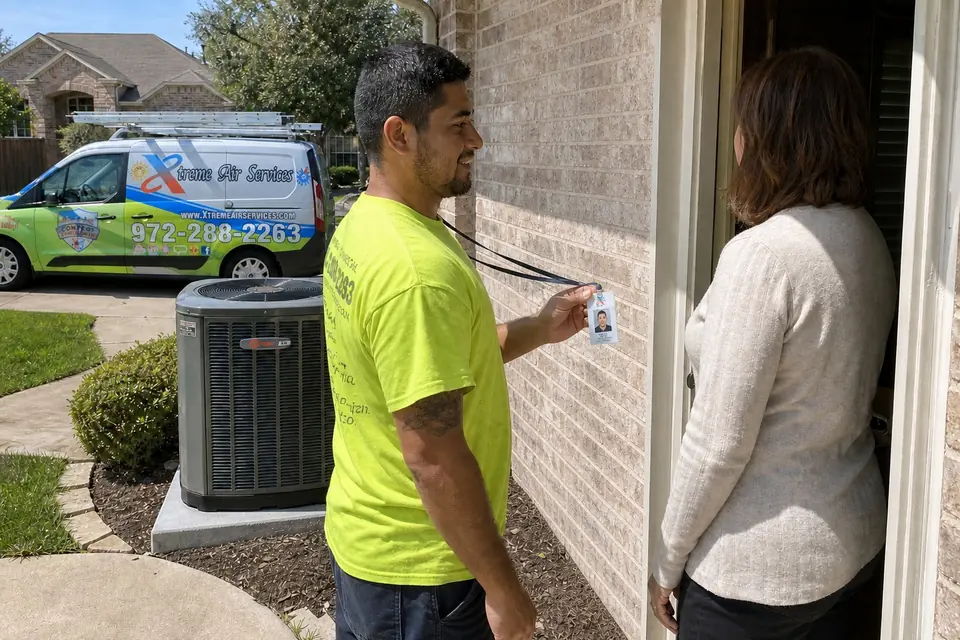
Here’s why that matters. A licensed contractor has been tested on refrigerant handling, electrical safety, and code compliance. An unlicensed one might undercut the price upfront, then stick you with a much bigger bill later when something turns out wired wrong, or a refrigerant line was run too close to a gas connection. Most of the HVAC work we do is within Sunnyvale and the nearby suburbs.
We’re a fully licensed and insured HVAC, plumbing, and electrical contractor, and our HVAC license number is TACLA29023C. Feel free to look it up. Our technicians are background-checked too, because letting a stranger into your home for a repair shouldn’t feel like a gamble.
Before anyone starts working on your system, it’s worth asking a few quick questions.
- What’s your HVAC license number, and is it current?
- Are you insured if something goes wrong during the repair?
- Is the tech coming out today actually licensed, or just a helper?
- Will you confirm pricing before starting the work?
Most homeowners never ask, and honestly, that’s fine most of the time since most contractors are straight shooters. But when your AC dies in August and someone’s rushing you into a decision, a 30-second license check is cheap insurance.
It’s a small step that costs you almost nothing but a moment of your time.
Frequently Asked Questions
Common questions about Repair HVAC
How fast can you get someone out for an HVAC repair in Sunnyvale?
Most repair calls in Sunnyvale get a same-day appointment, often within a two to four hour window. When you call, a real person picks up and asks about your symptoms, your system’s age, and whether anyone in the home is at extra risk from heat or cold. That helps us prioritize your visit correctly. Breakdowns don’t wait for business hours, so calls are answered live around the clock, not sent to voicemail. You won’t be stuck guessing when help is coming.
What happens when the technician arrives for a repair visit?
The technician runs amperage tests, checks airflow, and inspects common failure points like capacitors, igniters, and blower motors. The truck is stocked with these parts, so most repairs happen on the spot instead of requiring a second visit. Once the fix is done, the system gets a full test to confirm it’s cooling or heating correctly before anyone leaves. You’ll also get a walkthrough of what failed and why, so you understand the problem instead of just paying for a mystery fix.
Why is my AC running but blowing warm air?
Warm air with the system running is one of the most common calls we get in Sunnyvale, especially in older one-story homes with aging duct systems. It usually points to a refrigerant issue, a failing capacitor, or a duct problem rather than a totally dead unit. Before assuming the worst, check your air filter. A clogged filter is a frequent cause of weak or warm airflow, particularly during dry, dusty stretches. If a fresh filter doesn’t fix it within twenty minutes, it’s time to schedule a diagnostic.
Why does my HVAC system keep turning off after just a couple minutes?
This is called short cycling, and it usually means a bad capacitor or a sensor issue. The system starts, runs briefly, then shuts off before your house has a chance to cool or heat down. It’s one of the clearest signs something inside the unit has failed and needs a technician’s attention. Waiting on this problem rarely helps, since a small part failure can end up straining a second component the longer it runs this way.
Do I need a full system replacement, or can this be repaired?
Most HVAC problems come down to one failed part, not a dead system. Nine times out of ten, catching the issue early means a single repair instead of a bigger, more involved fix. That’s why we recommend calling as soon as you notice warm air, strange noises, or short cycling rather than waiting to see if it clears up on its own. A quick diagnostic tells you exactly what’s wrong, so you’re never guessing whether repair or replacement makes sense.
What should I check before calling for HVAC repair?
Start with your thermostat batteries and breaker, since both are common culprits behind a system that won’t turn on at all. If your breaker tripped once during a hot afternoon and holds after resetting, you may have avoided a repair call entirely. Also pull your air filter and hold it to the light. If you can’t see through it, replace it and give the system twenty minutes before assuming there’s a bigger problem. Our dispatchers are happy to walk through these checks with you by phone first.
Ready to Get Started?
Call 972-288-2263 Today, Get Service Today.