
Thermostat Repair in Sunnyvale: Get Your AC and Heat Back On Fast
Diagnosis of the wiring faults, dead displays and bad sensors that stop a thermostat from telling your system what to do.
What’s Covered on This Page
- Signs Your Sunnyvale Thermostat Needs Professional Repair
- Thermostat Repair vs. Replacement: Making the Right Call
- When a Thermostat Problem Doesn’t Need a Service Call
- What to Expect During a Thermostat Repair Visit
- How Thermostat Repair Costs Are Structured
- How do I know if it’s my thermostat or my AC and furnace acting up?
- How quickly can someone fix a thermostat in Sunnyvale?
- What happens when a technician comes to look at my thermostat?
- Why do thermostats break down more in Sunnyvale homes?
- Can I troubleshoot a thermostat problem myself before calling for repair?
- Should I repair my old thermostat or just replace it?
Signs Your Sunnyvale Thermostat Needs Professional Repair
Your thermostat is the brain of the whole setup. When one part inside it fails, the symptoms tend to show up everywhere else first: the AC short cycling, the furnace ignoring your settings, a room that stays warm no matter what you punch into the display.
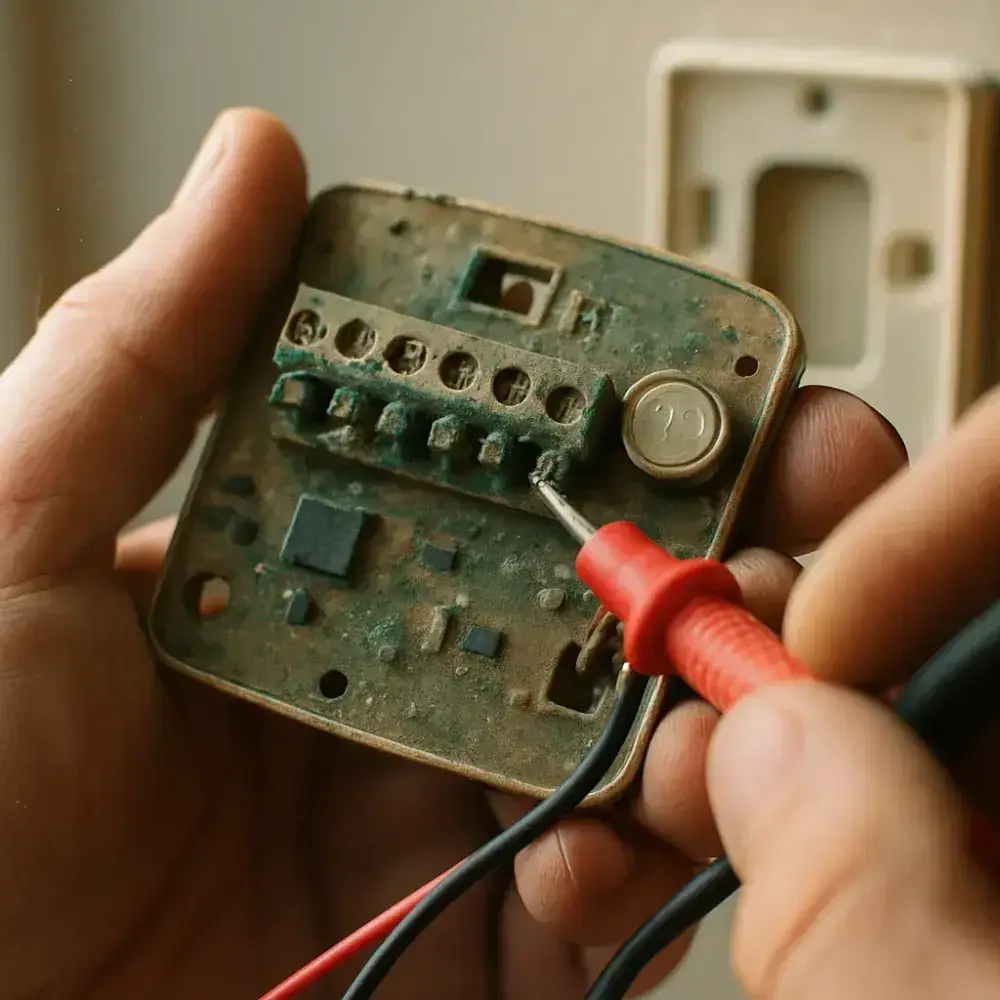
Sunnyvale summers push into the high 90s for weeks at a time, and that heat load stresses thermostat sensors faster than a milder climate would. We regularly see wiring connections and sensors drift out of calibration from repeated heat cycling, especially in homes where the thermostat sits on a wall that catches direct afternoon sun.
So how do you know it’s the thermostat and not the equipment itself? Watch for these patterns before you call anyone out.
- Blank or flickering display, even after you’ve checked the breaker and batteries
- The system runs but ignores every temperature change you make
- One room reads 68 while the thermostat says 74, a sign the sensor’s failed
- The AC or furnace short cycles, turning on and off every few minutes
- A smart thermostat that won’t connect, reboot, or hold a schedule
Any one of these on its own is worth a call. Two or three together, and you’re almost certainly looking at a thermostat repair, not a compressor or a cracked heat exchanger.
Thermostat Repair vs. Replacement: Making the Right Call
Not every thermostat problem means you need a new one. Often it comes down to a single failed part, a burned-out transformer, a loose wire, a worn relay. When that’s the case, a targeted repair brings everything back to full working order for a fraction of what replacement would cost, and the rest of the system keeps doing its job just fine.
Replacement makes more sense in other situations. A thermostat that’s decades old, particularly a mechanical model with worn contacts or a mercury switch, often can’t be repaired simply because parts for it no longer exist. At that point, fixing it is like patching one leak on a boat that’s already taking on water somewhere else. Replacement also makes sense if you’re ready to move up to a smart or Wi-Fi thermostat for better scheduling, remote control, and lower energy bills.
Sunnyvale’s mix of housing shapes this decision in a real way. Older properties out on the edges of town often still run on basic mechanical thermostats installed decades ago, units built for simplicity, not smart features. Newer subdivisions and recently remodeled homes usually already have smart thermostats in place, so when something goes wrong, it’s more likely a software glitch, app connection issue, or low-voltage wiring problem than a worn-out mechanical part.
- Single-part failures like a bad transformer or loose wire generally point to repair
- Mechanical thermostats over 15 to 20 years old often make more sense to replace
- Homeowners wanting scheduling, remote access, or energy reports should consider a smart upgrade
- Older rural Sunnyvale homes are more likely to have basic mechanical units
- Newer subdivision homes often already have smart thermostats needing software or wiring fixes rather than full replacement
The real risk is skipping the diagnosis and just guessing. Some homeowners replace a perfectly good thermostat when the actual problem is in the HVAC control board, or they pay for a repair that fails again within weeks because the wiring issue underneath was never addressed. A proper inspection before any work starts makes sure the fix matches the actual failure, so your money goes toward solving the real problem instead of chasing symptoms.
When a Thermostat Problem Doesn’t Need a Service Call
A blank screen or a thermostat that won’t respond doesn’t automatically mean something’s wrong inside the wall. A good number of the service calls we get from Tripp Road, Collins Road, and the Town East corridor turn out to be problems the homeowner could have solved in five minutes flat. So before you book a visit, it’s worth running through a few basics first.
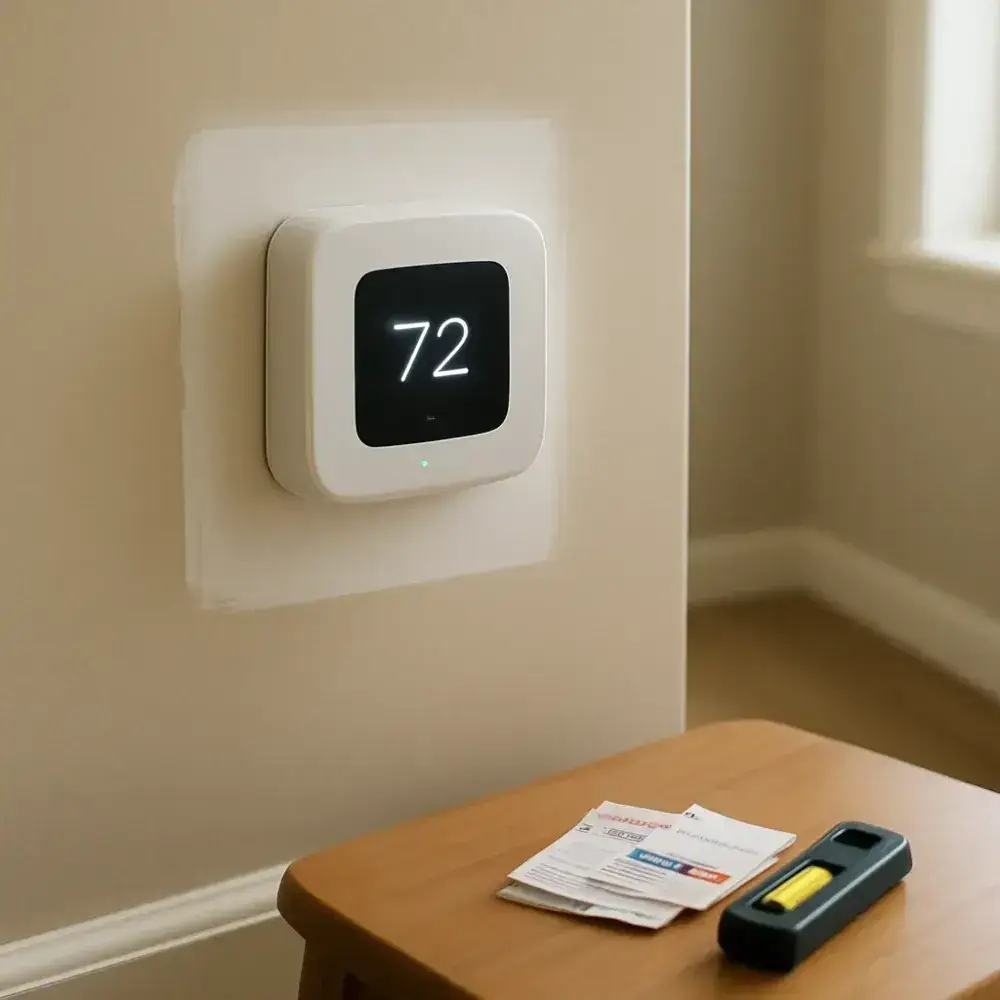
- Dead batteries: Most battery-powered thermostats, and even some hardwired ones, use AA or AAA batteries for backup power. A dim, flickering, or totally blank display is often nothing more than tired batteries. Swap them out and give the unit a minute to reboot.
- Tripped breaker: Central air and furnace systems typically run on their own dedicated circuit. If the thermostat is completely dark and fresh batteries didn’t help, check your electrical panel for a breaker labeled HVAC, furnace, or AC condenser, and reset it if it’s tripped.
- Misprogrammed schedule: A thermostat that seems to have a mind of its own, kicking on at odd hours or refusing to hold a set temperature, is often just stuck running an old or accidental schedule. Open the programming menu and check the day and time, any hold periods, and whether vacation mode got left on by mistake.
These three checks alone resolve a meaningful share of the thermostat calls we hear about across Sunnyvale, particularly in older homes near downtown where the thermostat has passed through a few different hands and programming habits over the years.
We’d rather walk a Sunnyvale homeowner through checking a breaker over the phone than send a technician out for a fifteen-minute fix and a padded invoice. Leading with honesty instead of upselling every call isn’t just good ethics, it’s how we’ve built repeat business across this area for years.
Ready when you are – get in touch today.
Call Today, Get Service Today. Xtreme Air Services is ready to help.
What to Expect During a Thermostat Repair Visit
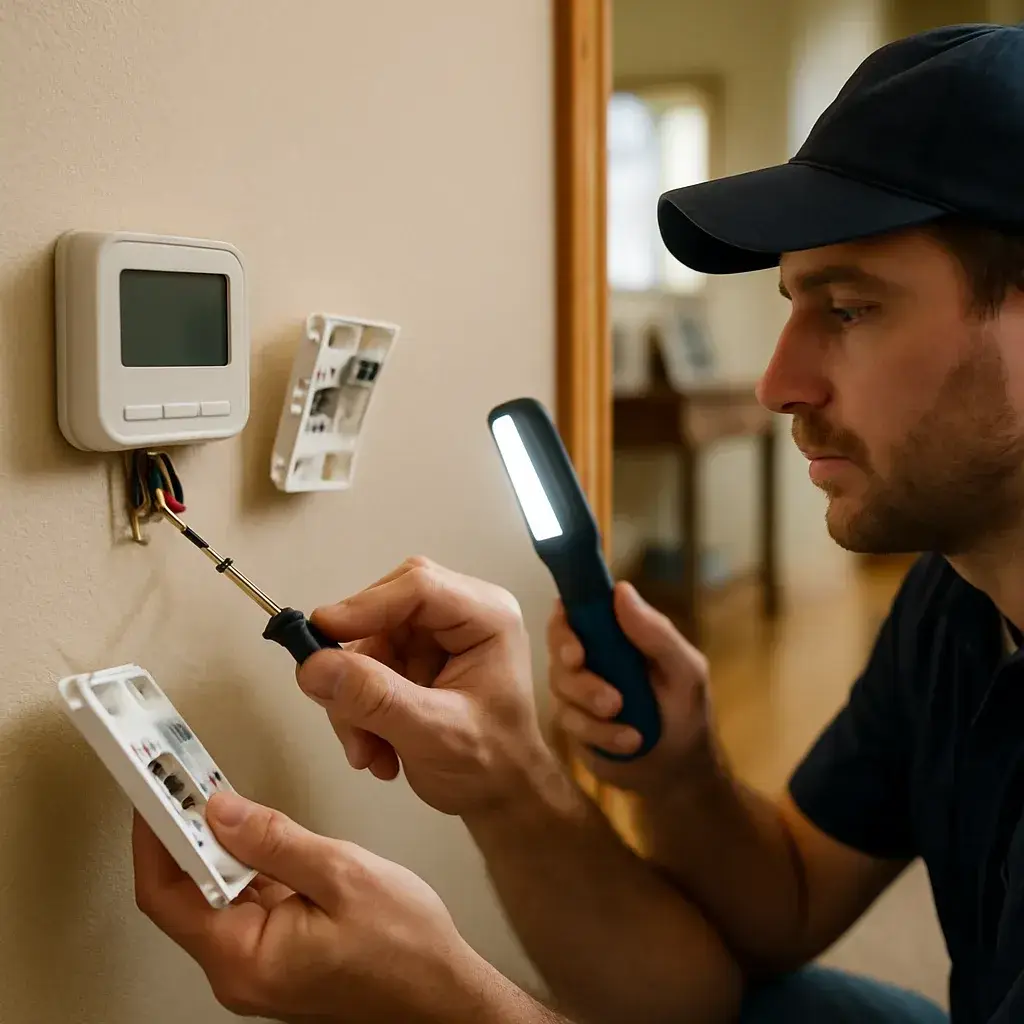
A good thermostat repair visit starts well before anyone reaches for a replacement part. When a technician shows up at a Sunnyvale home, the first job is figuring out whether the thermostat is actually the problem or just showing symptoms of something else going wrong upstream. That means checking the low-voltage wiring behind the wall plate, testing the transformer inside the furnace or air handler, and making sure the breaker or fuse feeding the system hasn’t tripped or blown. Homeowners often assume a blank or unresponsive display means the thermostat is dead, but on plenty of Sunnyvale service calls, the real cause turns out to be a loose wire nut, a corroded connection in an aging junction box, or a transformer that quietly gave out after years of use.
Once the technician pins down the actual point of failure, the repair itself tends to move quickly. A stuck relay, a cracked circuit board, or a worn-out temperature sensor can often be fixed or swapped in under an hour. If the thermostat is truly beyond saving, a replacement gets installed and calibrated right there on the spot. But a good visit doesn’t stop once the new part is in. Before wrapping up, a thorough technician runs a full heat and cool cycle test, confirming the system properly calls for heat, switches over to cooling, and cycles the fan on command. That step catches the kind of intermittent issue a quick glance would easily miss.
Smart thermostat installations call for a bit more attention. Many homes across Sunnyvale, especially those built before the 1990s, were wired for basic mechanical thermostats and never included a common wire, or C-wire, which most smart thermostats need for steady power. Without it, a newly installed smart thermostat might run fine for a few days, then start randomly rebooting, dropping Wi-Fi, or losing control of the system altogether. A qualified technician checks for this during the first visit and, if needed, installs a C-wire adapter or runs new wiring so the smart thermostat keeps working reliably down the road.
- Inspection of thermostat wiring, transformer, and breaker before any part is replaced
- Repair or replacement of the specific failed component, not a blanket unit swap
- Full heat and cool cycle test to confirm the fix holds under real operating conditions
- C-wire evaluation and installation for smart thermostat compatibility in older homes
- Clear explanation of what failed and why, before the technician leaves
This kind of full diagnosis takes a little longer than a guess-and-swap repair, but it saves you from the frustrating cycle of paying for a new thermostat only to see the same symptoms return a week later because nobody checked the wiring or transformer in the first place.
How Thermostat Repair Costs Are Structured
Let’s talk money, since that’s usually the second question right after ‘can you fix it.’ Most thermostat repair calls run $100 to $300. The most common job, tracking down the failed part and swapping it out, usually lands at $100 to $200. That’s not a teaser rate meant to get a foot in the door. It’s what most homes actually pay once a tech has been out and looked at the wiring.
So what pushes a job toward the higher end? A few things.
- How far the failure has spread, one bad part versus several
- Whether the replacement part is common or something we have to track down
- The age and brand of your existing system
- If multiple components failed at once instead of just the one
- Timing, though nights and weekends never add extra with us
Here’s what’s included in a standard call: diagnosis, labor, the standard replacement part, testing, and cleanup before we leave. What’s not included: extra parts that fail separately, major equipment swaps, or any code upgrade and permit work. Those get quoted on their own if they come up.
We do charge a service-call fee, $26 to $99 depending on the visit. Here’s the part folks tend to like, that fee gets credited toward the repair if you move forward with us. You’re not paying twice.
Financing isn’t typically needed for a job this size, it’s really built for bigger repairs and full system replacements. For a thermostat, most homeowners just pay it and move on with their day.
Frequently Asked Questions
Common questions about Thermostat repair
How do I know if it’s my thermostat or my AC and furnace acting up?
A blank screen, a system that ignores your settings, or a room that never hits the right temperature usually means the thermostat, not the AC or furnace. Your thermostat is the brain of the whole system, so when one part fails, the symptoms show up everywhere. Watch for short cycling or one room reading way off from the display. If you notice two or three of these signs together, you’re almost certainly dealing with a thermostat problem, not a broken compressor.
How quickly can someone fix a thermostat in Sunnyvale?
Most thermostat repairs get diagnosed and fixed in a single visit once we’re at your home. We serve homes across Sunnyvale, including older properties near downtown and newer builds in the subdivisions, so we’re familiar with both mechanical and smart thermostat setups. A short phone conversation about your symptoms helps us bring the right parts the first time, which keeps the visit quick and avoids a second trip.
What happens when a technician comes to look at my thermostat?
We start by checking the basics like wiring, breaker connections, and calibration before touching anything else. This step matters because a proper inspection makes sure the fix matches the actual failure instead of guessing. If we find a single bad part, like a worn relay or burned-out transformer, we handle it on the spot. If the wiring behind the plate looks frayed or damaged, we’ll walk you through what that means for your system.
Why do thermostats break down more in Sunnyvale homes?
Sunnyvale summers push into the high 90s for weeks at a time, and that heat stresses thermostat sensors faster than a milder climate would. We regularly see wiring connections and sensors drift out of calibration from repeated heat cycling, especially on units mounted on a wall that catches direct afternoon sun. Homes in older neighborhoods near downtown, where thermostats have passed through several owners and programming habits, tend to see this issue more often.
Can I troubleshoot a thermostat problem myself before calling for repair?
Yes, a good number of thermostat issues can be fixed in five minutes at home. Try swapping the batteries first, since a dim or blank display is often just tired batteries. Next, check your electrical panel for a tripped HVAC or AC breaker. Finally, look at the programming menu for an old schedule or vacation mode left on by mistake. If none of that works, or you see frayed wiring, it’s time to call for a trained eye.
Should I repair my old thermostat or just replace it?
It depends on what’s broken, which is why a diagnosis comes first. A single failed part, like a loose wire or bad transformer, usually means a repair will bring the system back to full working order. Replacement makes more sense for mechanical thermostats over 15 to 20 years old, since parts often no longer exist for them. Older Sunnyvale homes on the edges of town are more likely to have these aging mechanical units.
Ready to Get Started?
Call 972-288-2263 Today, Get Service Today.