


Ductless Mini-Split Repair in Sunnyvale: Same-Day Fixes for North Texas Heat
Repair for mini-split heads and outdoor units, from refrigerant leaks and error codes to boards that stopped responding.
What’s Covered on This Page
- Signs Your Ductless Mini-Split Needs Professional Repair
- When You Don’t Need to Call a Technician
- Repair or Replace: Weighing the Real Factors
- Inside a Sunnyvale Mini-Split Repair Visit
- Why Refrigerant Repairs Require a Licensed Technician
- How fast can you get someone out for a mini-split repair in Sunnyvale?
- What happens when a technician arrives to fix my mini-split?
- Why does my mini-split blow warm air during Sunnyvale heat waves?
- Is it normal for ice to build up on the indoor coil?
- Should I repair my mini-split or replace it?
- Why do refrigerant repairs need a licensed technician?
Signs Your Ductless Mini-Split Needs Professional Repair
You flip the remote on a hot Sunnyvale afternoon and nothing happens. Or the unit hums along, but the air coming out feels barely cooler than the room. That’s usually your first clue something inside has failed.
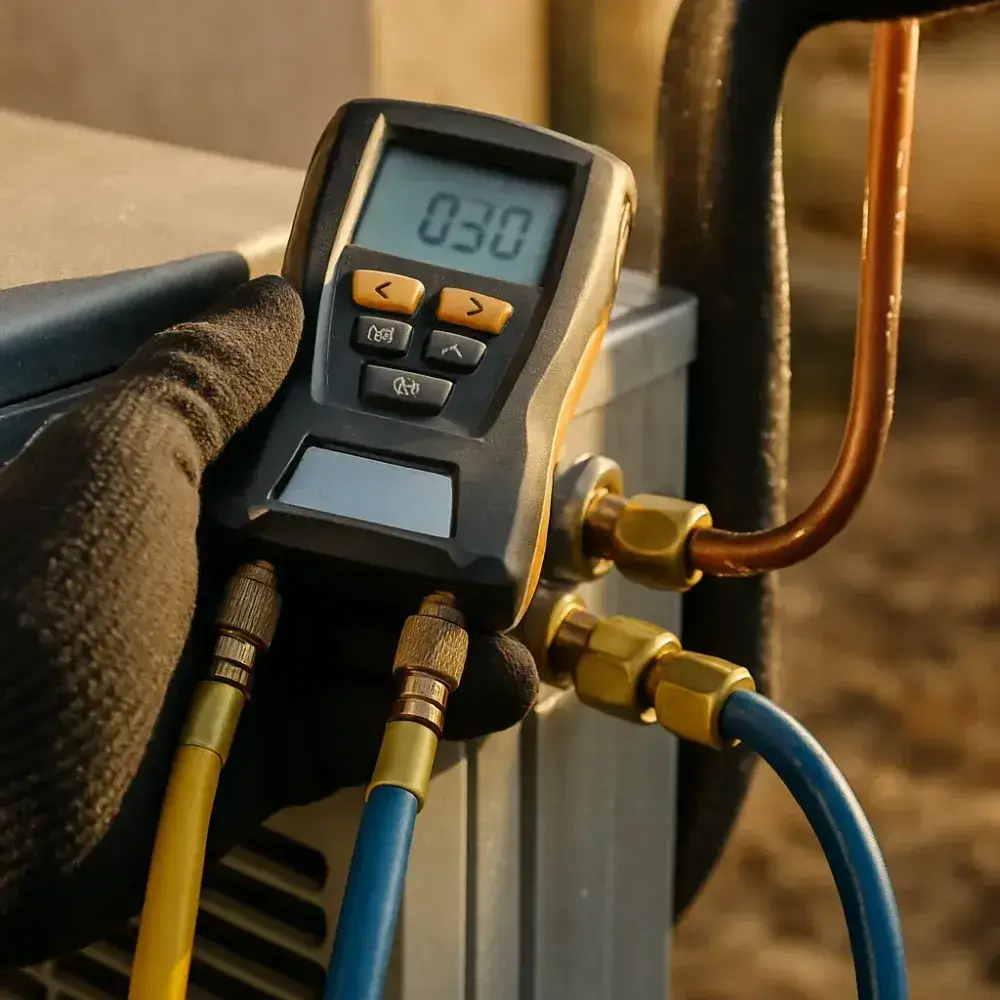
Ice on the indoor coil is never normal.
Sunnyvale summers push these systems hard for months straight, and that kind of steady runtime is exactly when worn parts finally give out. Here’s what we hear about most when a customer calls us for ductless mini-split repair.
- Warm or barely cool air even with the thermostat set low
- A layer of ice or frost building up on the indoor coil or the copper lines
- Water dripping from the indoor head onto your wall or floor
- Clicking, buzzing, or grinding noises coming from the outdoor unit
- The system short cycling, turning on and off every few minutes
- A blinking error code on the indoor unit that won’t clear
- The outdoor fan spinning but the indoor unit blowing no air at all
We see that last one every single week once the heat hits triple digits. Nine times out of ten it’s a failed capacitor or a stuck contactor in the outdoor unit, not the whole system. So before you assume the worst, get a technician out to look at it.
A mini-split that’s icing over or short cycling won’t fix itself. Running it in that condition can burn out other parts fast, and that turns a simple repair into a much bigger one.
When You Don’t Need to Call a Technician
Not every mini-split problem is a repair. Sometimes it’s just a dirty filter or a dead remote battery. We get calls in Sunnyvale every summer where the fix takes thirty seconds, not a service visit.
- The indoor unit blows warm or weak air, but the filter looks gray and clogged. Rinse it, let it dry, try again.
- Nothing happens when you press the remote. Check the batteries first, that’s it.
- The breaker tripped once during a storm and hasn’t tripped since. Reset it and watch the unit for a day.
- Ice has built up on the indoor coil after running nonstop in the heat. Turn the system off, let it thaw completely, and see if it cools normally once it’s dry.
- The outdoor unit is buried in leaves or grass clippings. Clear the debris around it and give the airflow room to breathe.
If any of those quick checks solve it, great. Save your money, no call needed.
But if the breaker keeps tripping, the unit smells burnt, or it’s leaking water inside your house, stop troubleshooting. Those point to something electrical or a real component failure, and poking at it yourself can turn a small problem into a bigger one. So can running a frozen coil unit for days hoping it fixes itself, that usually just stresses the compressor. If your basic checks don’t change anything within a day, it’s time to get a real diagnosis instead of guessing.
Repair or Replace: Weighing the Real Factors
Here’s the question every homeowner asks us on the phone. Is this worth fixing? Usually, yes. A ductless mini-split repair usually means one part failed, not the whole system giving up. We find it, replace it, and the unit runs like normal again.
But there’s a real point where repair stops making sense. If your outdoor unit is old and the compressor’s going, or you’re calling us for the third time this year on the same head, that’s different. Multiple failed components change the math fast.
- Age of the equipment: older units can have harder-to-source parts, which adds time and cost
- How many parts failed: one bad capacitor is simple, a compressor plus a board is a bigger decision
- Repeat visits: a unit that keeps breaking is telling you something the last fix didn’t solve
- Refrigerant type: some older systems use refrigerant that’s getting harder to find
We’ll never push a replacement you don’t need. And we won’t quietly patch something that’s going to fail again next month either. Our tech looks at the failed part, the age of your system, and what it’s cost you in repairs already, then gives you a straight answer. That’s the whole approach, done right the first time.
Most calls we get around Sunnyvale are single-part fixes on units that still have years left in them.
Not sure what your Ductless mini-split repair project needs? Ask us.
Call Today, Get Service Today. Xtreme Air Services is ready to help.
Inside a Sunnyvale Mini-Split Repair Visit
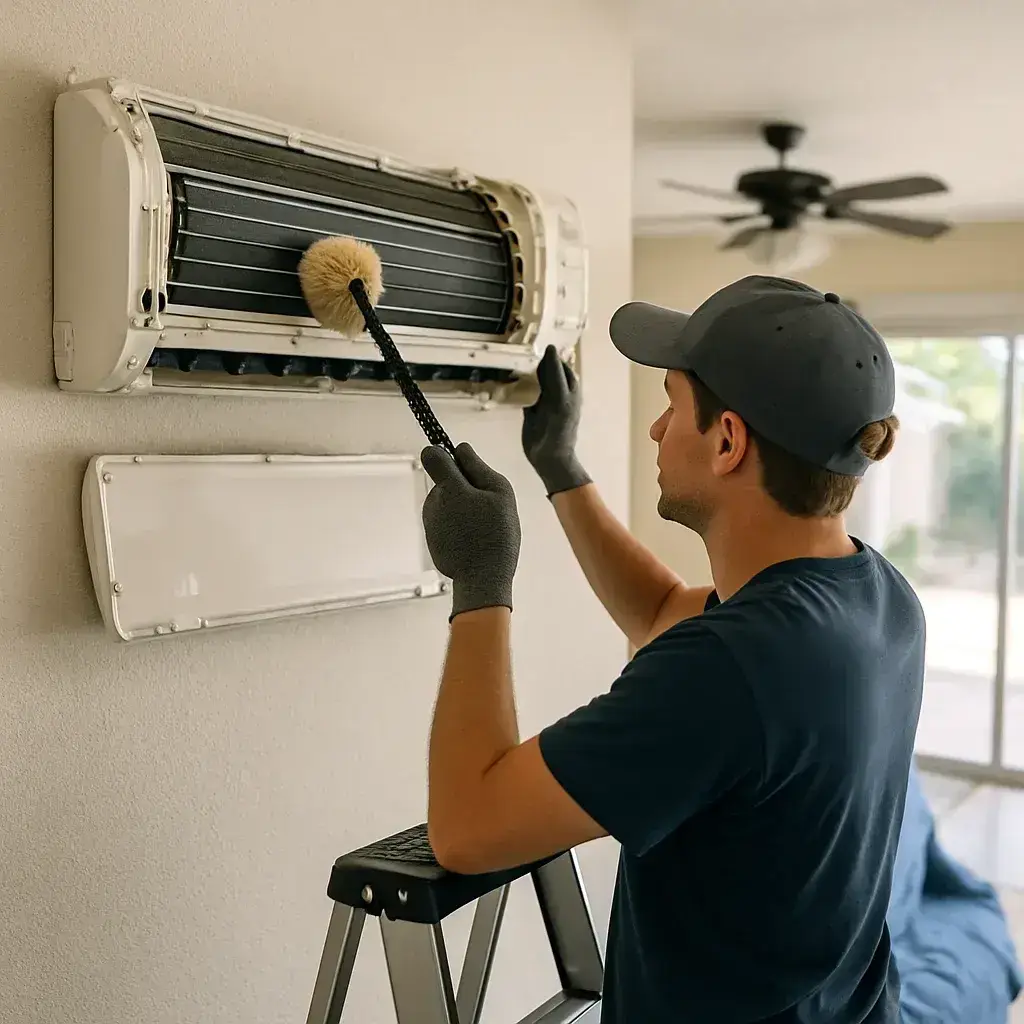
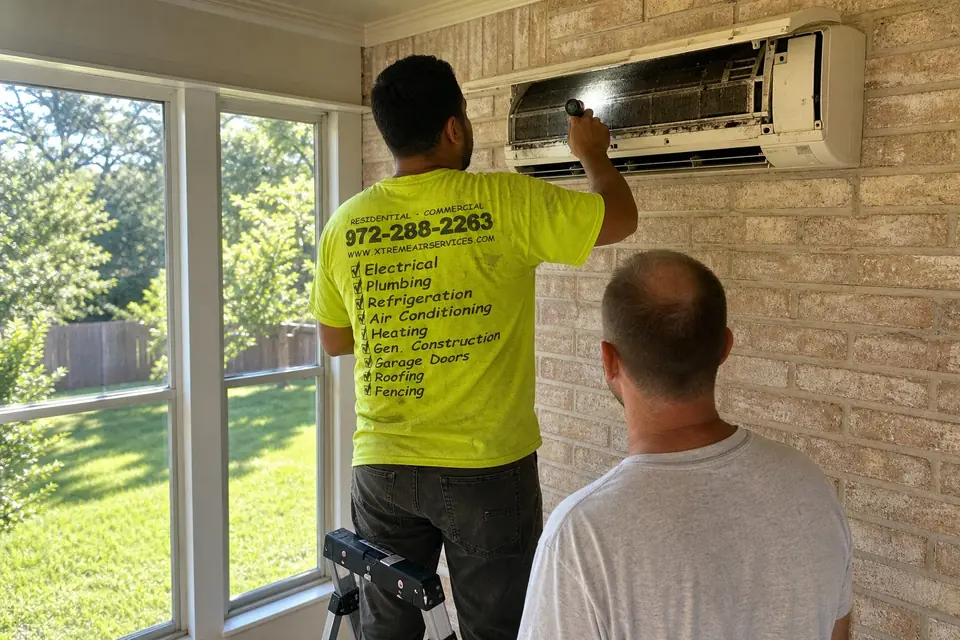
Here’s what happens once we pull into your driveway. A lot of Sunnyvale homes have added a ductless mini-split to a garage conversion or a sunroom built after the main house went up, and that unit runs on its own schedule, its own wiring, its own set of parts. So the visit isn’t guesswork. It follows a pattern we’ve run hundreds of times.
- We ask what you’re seeing or hearing, warm air, a clicking noise, a blinking light, before we touch anything.
- We check the indoor head and the outdoor condenser, since a mini-split problem can hide in either box.
- We test the electrical components first, the capacitor, the board, the sensor, because that’s where most failures start.
- We find the failed part and explain it in plain English, what broke and why.
- We repair or replace that part on the spot, most of the time in one visit.
- We run the system, check the temperature split, and make sure it’s cooling or heating before we leave.
Nine times out of ten, it’s one part, not five. A stuck capacitor or a dirty sensor causes way more no-cool calls than people expect, and once that’s swapped, the system’s usually back to normal the same visit. The service call fee runs between twenty six and ninety nine dollars, and it gets credited toward the repair if you move forward with us that day. That’s the whole visit, start to finish, no mystery in the middle.
Why Refrigerant Repairs Require a Licensed Technician
Here’s something a lot of folks don’t know until they call around for quotes. Refrigerant isn’t like coolant you top off in your car. It’s a federally regulated substance, and touching it legally requires an EPA certification. Add a leak, and you’re not just low on refrigerant, you’ve got a system that’s venting a controlled chemical into the air. That’s not a job for a handyman with a gauge set from the hardware store.
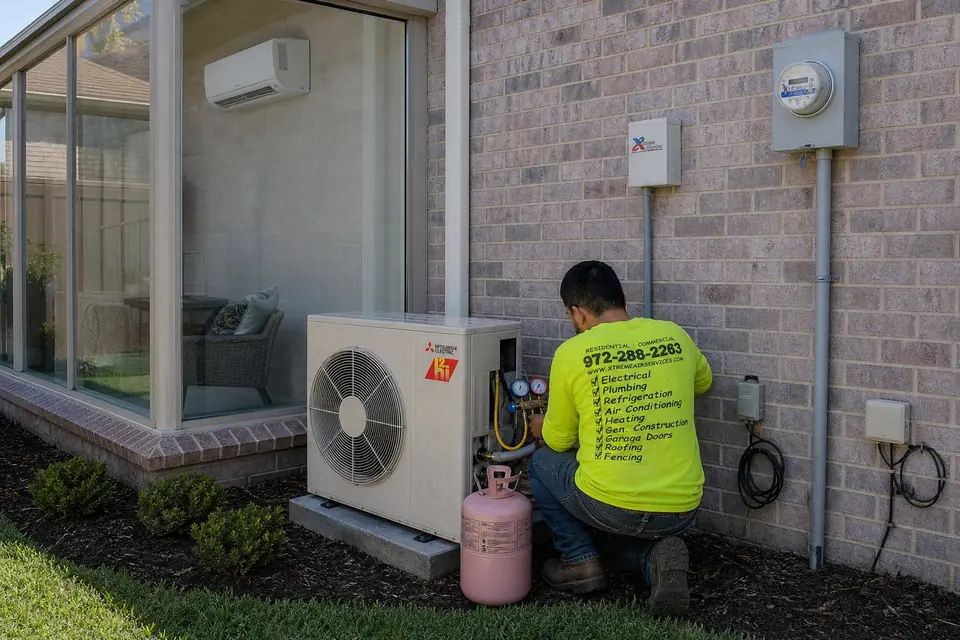
We’re a licensed and insured HVAC contractor based right here in Sunnyvale, and refrigerant repairs are exactly the kind of job that license exists for. Often, a mini-split that’s lost its cooling power has a leak somewhere in the line set or at a fitting behind the wall unit. Finding it takes proper tools and training, not guesswork.
- Recovering refrigerant safely instead of releasing it into your yard or attic space
- Testing the full line set, not just the spot that looks suspicious
- Matching refrigerant type and charge exactly to your system’s specs, since overcharging causes just as much damage as running low
Get this wrong, and you can wreck a compressor, and that’s a much bigger repair than the leak ever was. So when someone tells you they’ll top it off for cheap, ask if they’re certified to handle refrigerant at all. If they hesitate, that’s your answer.
Our technicians are background checked and carry the certification this work legally requires. That’s not a sales pitch, it’s just how refrigerant work has to be done in Texas.
Frequently Asked Questions
Common questions about Ductless mini-split repair
How fast can you get someone out for a mini-split repair in Sunnyvale?
We aim to get to most Sunnyvale calls the same day, especially once summer heat sets in. A no-cool mini-split isn’t something you want to sit with for days, so we work hard to fit same-day visits into the schedule during peak season. When you call, tell us what you’re seeing, warm air, a blinking light, a strange noise. That helps us bring the right parts on the first trip.
What happens when a technician arrives to fix my mini-split?
First, we ask what you noticed before we touch anything, then we check both the indoor head and the outdoor unit. Most failures start in the electrical parts, so we test the capacitor, board, and sensor early. Once we find the broken part, we explain it in plain terms and usually repair it on the spot. Before we leave, we run the system and check that it’s cooling or heating like it should.
Why does my mini-split blow warm air during Sunnyvale heat waves?
Warm air with the outdoor fan still spinning is almost always a failed capacitor or a stuck contactor, not a dead system. We see this exact call every week once temperatures climb into the triple digits. Sunnyvale summers push these units hard for months, and that steady runtime is when worn electrical parts finally give out. It’s usually a quick fix once we’re on site, so don’t assume the whole unit is done.
Is it normal for ice to build up on the indoor coil?
No, ice on the coil or copper lines is never normal and means something needs attention. Sometimes it’s a dirty filter blocking airflow, which you can rinse and dry yourself. But if the ice keeps coming back after you’ve thawed and cleaned the unit, that points to a real component problem. Running a frozen unit for days stresses the compressor and can turn a small fix into a much bigger repair.
Should I repair my mini-split or replace it?
Most of the time, repair is the right call because one part failed, not the whole system. We replace that part and the unit runs like normal again. Replacement starts making more sense when the compressor is failing, when you’re calling about the same head for the third time this year, or when the equipment is old enough that parts are hard to source. We’ll give you a straight answer based on what broke.
Why do refrigerant repairs need a licensed technician?
Refrigerant work involves pressurized lines and chemicals that require handling under federal rules, so only a licensed technician can legally recharge or repair a refrigerant leak. It’s not a job for guesswork or a DIY fix. If your Sunnyvale system is low on refrigerant, that usually means there’s a leak somewhere in the line set, and finding it takes proper equipment. Trying to top it off yourself won’t fix the underlying problem.
Ready to Get Started?
Call 972-288-2263 Today, Get Service Today.