

Smart Thermostat Installation in Sunnyvale That Keeps Up With Texas Heat
Wi-Fi thermostat setup done properly, including C-wire power, equipment compatibility and app configuration before we leave.
What’s Covered on This Page
- Signs Your Thermostat Is Holding Back Your HVAC System
- When You Don’t Need a Professional Thermostat Install
- What Happens During a Professional Compatibility Check
- Smart Thermostat Installation in Sunnyvale Homes With Older Wiring
- How Installation Pricing Works When Wiring Gets Complicated
- How fast can you get someone out to install a smart thermostat in Sunnyvale?
- What does your technician check when they arrive for a thermostat install?
- Why do so many older Sunnyvale homes need extra work for a smart thermostat?
- Can I install a smart thermostat myself, or do I need a professional?
- What happens if my smart thermostat doesn’t match the wires behind my old one?
Signs Your Thermostat Is Holding Back Your HVAC System
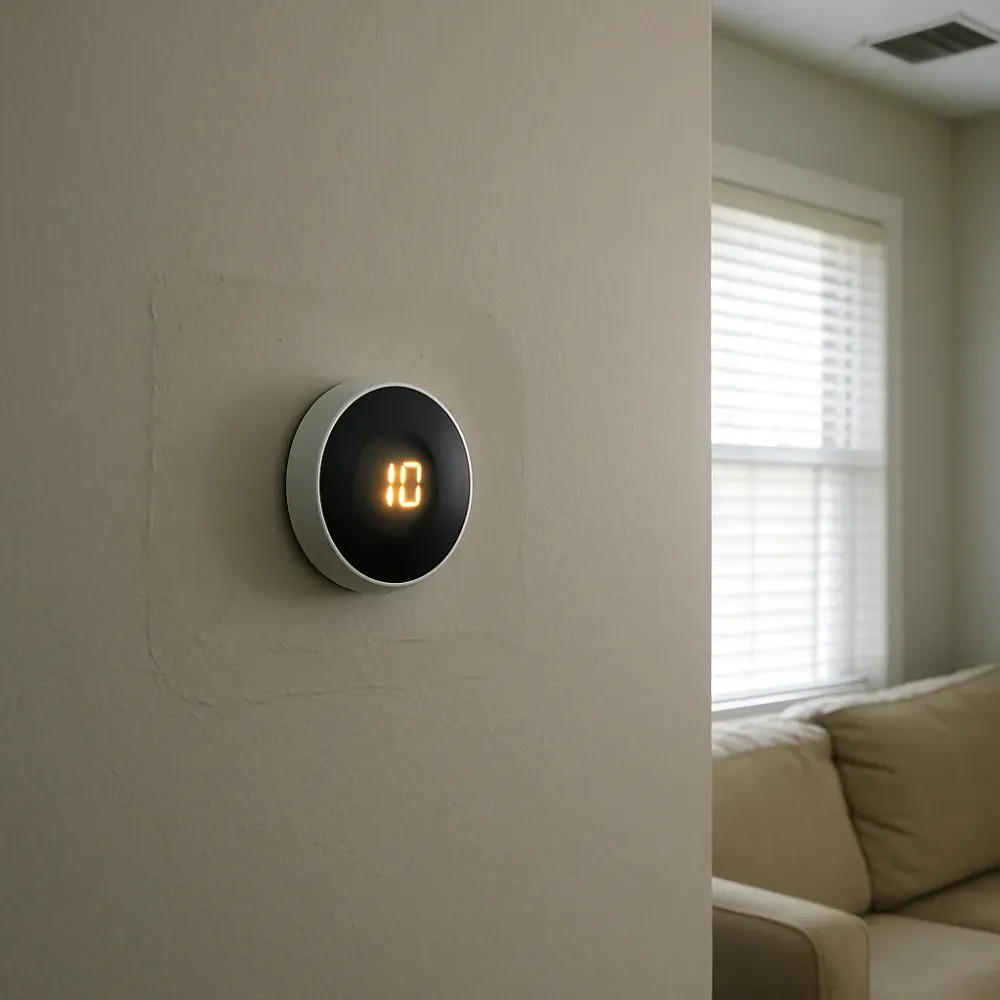
You probably walk past your thermostat a dozen times a day without giving it a second thought. But if your AC is running longer than it used to, or one room stays warm while another feels fine, the thermostat is likely part of the problem, not the equipment hiding behind the wall.
- The display shows one temperature but the room clearly feels different
- Your system short cycles, turning on and off every few minutes instead of running a full cycle
- You catch yourself adjusting the thermostat by hand two or three times a day
- Your energy bills went up even though your habits didn’t change
- It’s still a basic dial or slider with no schedule and no way to program it
We see this every week in Sunnyvale, especially in older homes built before programmable thermostats came standard. The original dial-style unit is often still sitting on the wall decades later, doing its best with technology that’s way behind the system it’s supposed to control. When the AC runs but never quite hits the temperature you set, that’s usually a thermostat sensor issue, not a compressor issue.
Nine times out of ten, it’s not the big expensive part failing. It’s the brain of the system giving it bad instructions.
When You Don’t Need a Professional Thermostat Install
Not every thermostat swap requires a truck in your driveway. If your current thermostat already has a C-wire, and you’re simply replacing a basic digital or programmable model with a smart one on the same simple system, that’s often a twenty-minute job you can handle yourself.
Most smart thermostats walk you through the wiring with color-coded labels and a phone app. If your system is a standard single-stage AC and furnace, and the existing wiring already matches what the new thermostat needs, you probably don’t need us at all.
- You already have a C-wire (common wire) running to your thermostat
- Your system is a straightforward single-stage furnace and AC, no heat pump, no zoning
- You’re comfortable turning off power at the breaker and reading a simple wiring diagram
- The new thermostat’s app confirms compatibility with your exact system before you buy it
Where it gets trickier is older homes. We run into plenty of houses in Sunnyvale built decades back with two-wire or non-standard low-voltage wiring and no C-wire at all. No C-wire usually means adding one, and that’s not always a simple pull.
Heat pumps, dual-fuel systems, and zoned setups also complicate things fast, as does aluminum or brittle old wiring behind the wall plate. If any of that sounds like your house, a DIY attempt can leave you with a thermostat that won’t power on, or worse, a system short-cycling because the wiring’s wrong.
What Happens During a Professional Compatibility Check
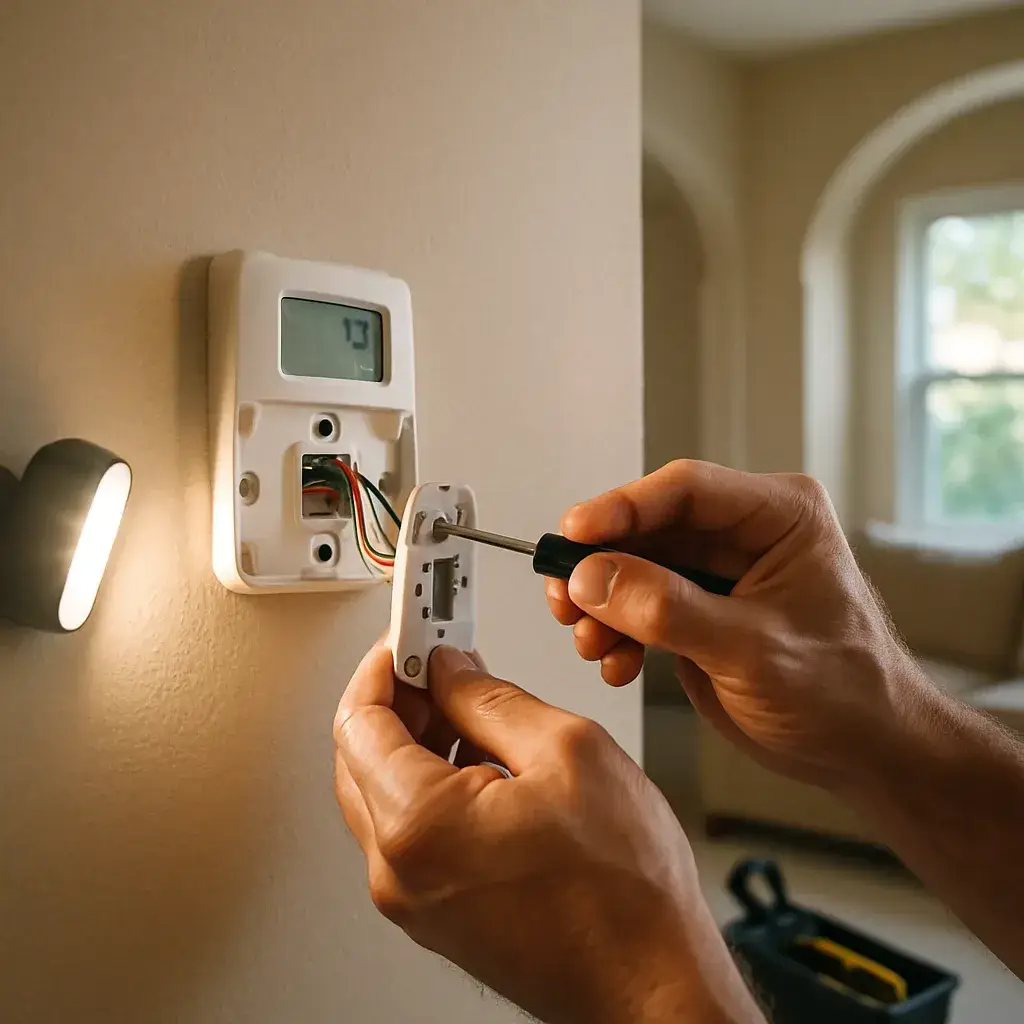
Before we touch your wall, we check what’s behind it. Every home wires its HVAC system a little differently, and that matters more than most people realize. The first thing our technician does is pull the old thermostat off the wall and look at the wires.
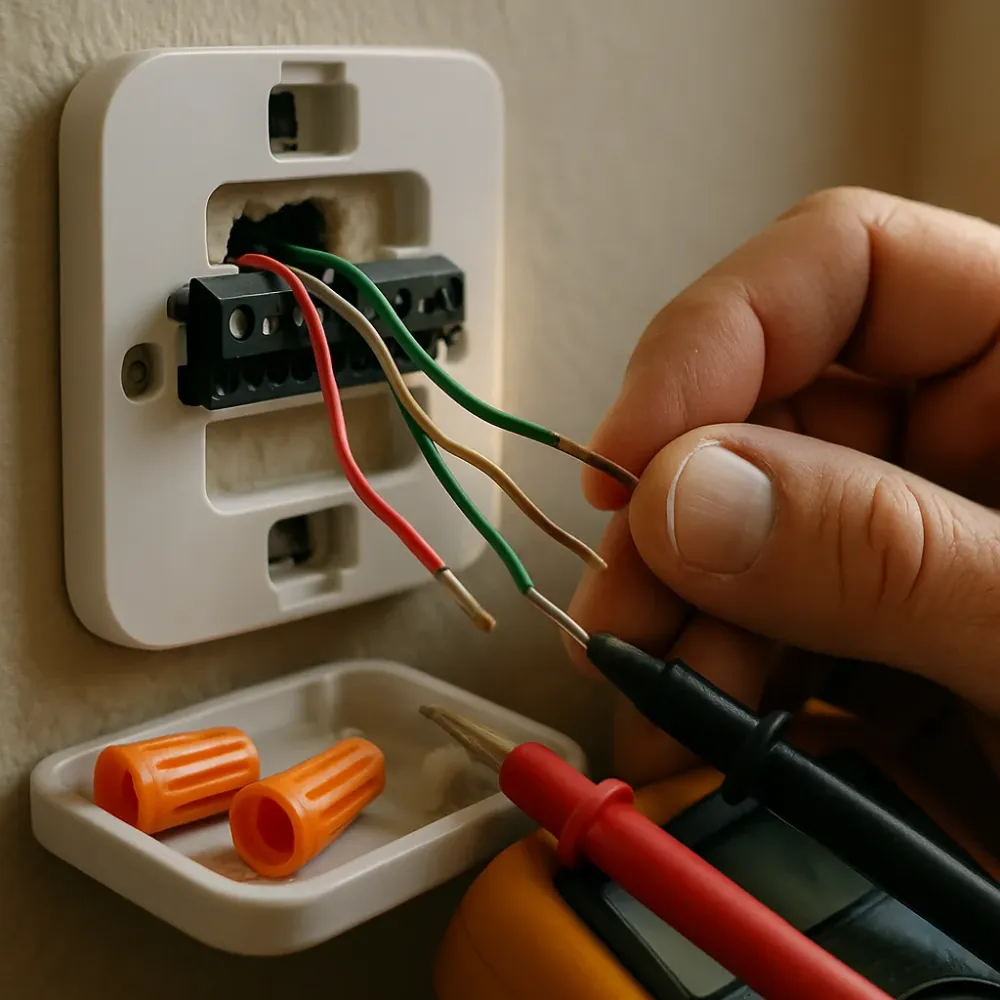
- Count and identify the wires. Most systems need a C-wire for constant power, and older homes in Sunnyvale often skip it.
- Check your HVAC system type. A heat pump wires up differently than a standard gas furnace and AC combo.
- Test the voltage at the wall to confirm the system is sending the right signal.
- Check your Wi-Fi signal strength at the thermostat location, since a smart thermostat is useless without a solid connection.
- Inspect the breaker panel and circuit if any extra wiring or a C-wire adapter is needed.
We see this every week: a homeowner buys a smart thermostat online, gets it home, and finds four wires where the instructions show five. That’s not a defect, it’s just an older system. Sunnyvale has a good mix of established ranch-style homes and newer subdivisions, and the older ones near the historic parts of town often need a small adapter to add that missing C-wire.
Not sure if your setup can handle it? That’s the question we hear most often.
Once we know what we’re working with, we know exactly what the job needs, no guessing, and no return trip for a part we should have brought the first time. Our technicians are licensed and insured, and they check this stuff before a single screw comes out of the wall.
Have questions? We’re happy to help.
Call Today, Get Service Today. Xtreme Air Services is ready to help.
Smart Thermostat Installation in Sunnyvale Homes With Older Wiring
So you bought the thermostat, pulled the old one off the wall, and now you’re staring at a nest of wires that don’t match the instructions. We hear this a lot. A good chunk of homes around Sunnyvale’s older streets were built back when a simple dial thermostat and two wires did the job just fine. No C-wire, no problem back then. But most smart thermostats need that extra wire for constant power, and older homes off the original town roads often just don’t have it.
Here’s the thing: this isn’t a reason to give up on a smart thermostat. It’s a reason to have someone who does this daily take a look first. We can usually solve it without ripping into your walls.
- Adding a C-wire adapter that pulls power from your existing HVAC system
- Running a low-voltage wire through the attic where access allows it
- Checking your furnace or air handler’s control board for a spare terminal
- Confirming your existing wiring can handle the thermostat’s amp draw
That last one matters more than people think. Older wiring wasn’t built for a device pulling continuous power, and forcing it can trip your system or fry the thermostat’s board. That’s the difference between a fix that lasts and one you’re calling us back about in a month.
How Installation Pricing Works When Wiring Gets Complicated
Most smart thermostat installs are simple: old thermostat comes off, new one goes on, we test it, and you’re done. That standard like-for-like job runs $250 to $375. Wiring is where things get interesting, and it’s the number one reason a quote moves outside that range.
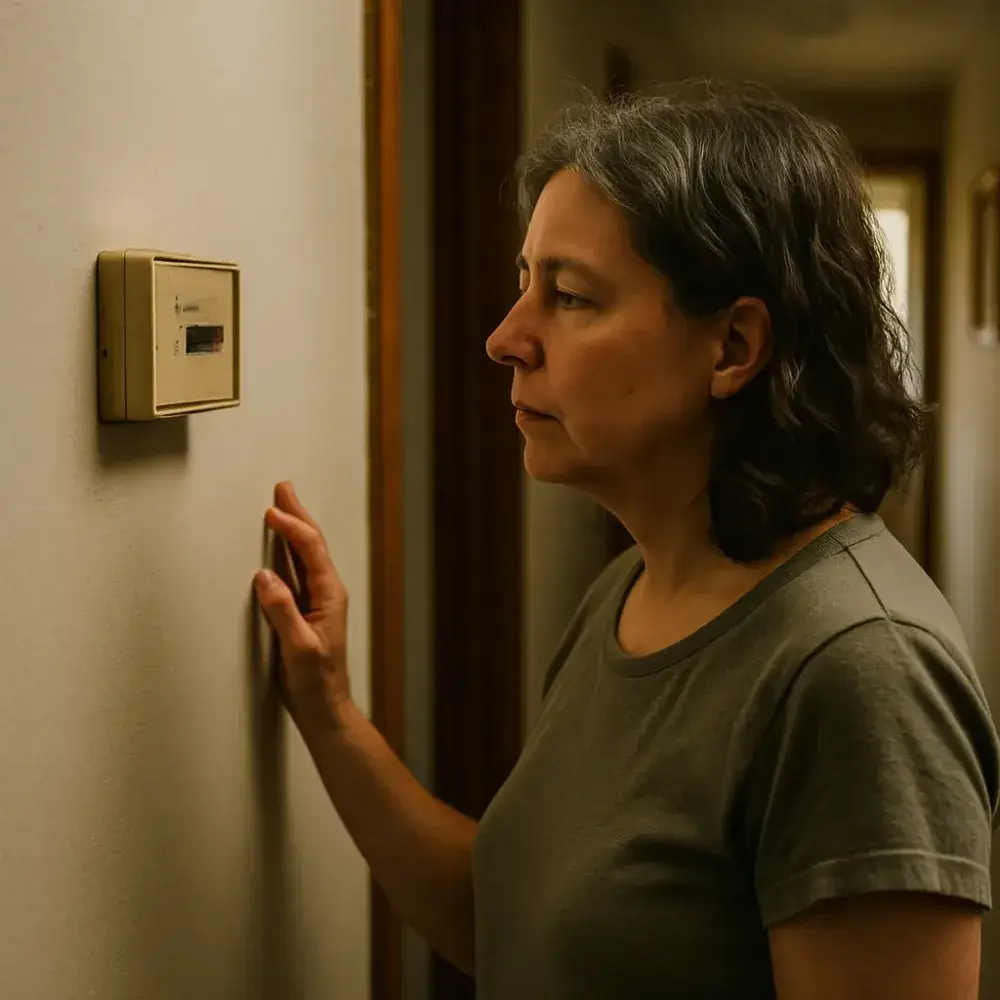
Here’s what nobody tells you upfront: smart thermostats need real power, not just the two wires an old mechanical dial used. Older homes around Sunnyvale, especially ones built before low-voltage wiring became standard for HVAC controls, often don’t have a C-wire run to the thermostat location. No C-wire means extra work. Sometimes we can add one through existing wall cavities. Sometimes we can’t, and we need a different fix.
- Missing C-wire or outdated low-voltage wiring at the thermostat spot
- Multi-stage or zoned HVAC systems that need extra wiring terminals matched correctly
- Hard-to-reach thermostat locations, tight attics, or finished walls with no access
- Any code corrections needed on existing wiring, which fall outside the standard install
- Equipment brand and features, since some smart models need more wiring terminals than others
None of that shows up as a surprise fee after we start. We look at your wiring first, tell you what we’re working with, and give you the number before anything gets touched. Our typical range for the whole job runs $200 to $500 depending on what we find, and financing is available if a bigger fix is needed.
If you’re not sure what’s behind your wall plate, don’t guess. Call and talk to a real person, and we’ll walk you through it.
Frequently Asked Questions
Common questions about Smart thermostat installation
How fast can you get someone out to install a smart thermostat in Sunnyvale?
Most smart thermostat installs get scheduled within a day or two of your call. We keep the visit itself short, usually under an hour once a technician is on-site, since most of the job is checking your wiring and confirming the system type. If you’re dealing with an older home without a C-wire, we may ask a few extra questions upfront so we bring the right adapter the first time. Same-week booking is normal for this kind of job.
What does your technician check when they arrive for a thermostat install?
The technician pulls your old thermostat off the wall first and looks at the wires before touching anything else. They count and identify each wire, check whether you have a C-wire, confirm your HVAC system type, and test the voltage at the wall. They’ll also check your Wi-Fi signal at that spot, since a smart thermostat needs a solid connection to work right. This takes about ten minutes and tells us exactly what the install needs.
Why do so many older Sunnyvale homes need extra work for a smart thermostat?
Older homes near Sunnyvale’s original streets were often wired with just two low-voltage wires and no C-wire, since that’s all a basic dial thermostat needed decades ago. Smart thermostats need that extra wire for constant power. We usually solve this with a C-wire adapter pulled from your existing HVAC system, or by running a low-voltage wire through the attic if access allows. It rarely means opening up your walls.
Can I install a smart thermostat myself, or do I need a professional?
You can often install it yourself if you already have a C-wire and a simple single-stage furnace and AC setup. Most smart thermostats guide you through wiring with color-coded labels and an app. Where it gets risky is heat pumps, zoned systems, or older aluminum wiring, since a wrong connection can cause short-cycling or a thermostat that won’t power on. If your system isn’t straightforward, it’s worth having a technician check it first.
What happens if my smart thermostat doesn’t match the wires behind my old one?
This is common, and it’s not a sign anything’s broken. Many homeowners buy a smart thermostat online and find four wires where the instructions show five, which usually just means an older system without a C-wire. A technician can confirm your system type, check the control board for a spare terminal, and add an adapter if needed. This avoids a return trip and keeps your new thermostat from being damaged by the wrong power setup.
Ready to Get Started?
Call 972-288-2263 Today, Get Service Today.