

HVAC System Inspection in Sunnyvale: What a Written Report Reveals
A documented top-to-bottom evaluation of system condition, safety and remaining life, delivered as a written report you keep.
What’s Covered on This Page
- Signs Your System Needs a Professional Look
- What Happens During an HVAC System Inspection in Sunnyvale
- Comfort Inspection vs. Permit Closeout Inspection
- When You Can Skip a Professional Inspection
- How Inspection Pricing and Fees Work
- How long does an HVAC system inspection take?
- What should I expect when your technician arrives?
- How quickly can you get a technician to my home in Sunnyvale?
- Why do Sunnyvale attic units seem to need more inspections?
- How often should I schedule an HVAC inspection?
Signs Your System Needs a Professional Look
You know your house, so when something feels off, you notice fast. Maybe it’s warm air sneaking through a vent that used to blow cold. Maybe the unit’s making a new sound, a click, a rattle, a screech that wasn’t there last summer. Usually it’s one specific part acting up, not the whole system falling apart.
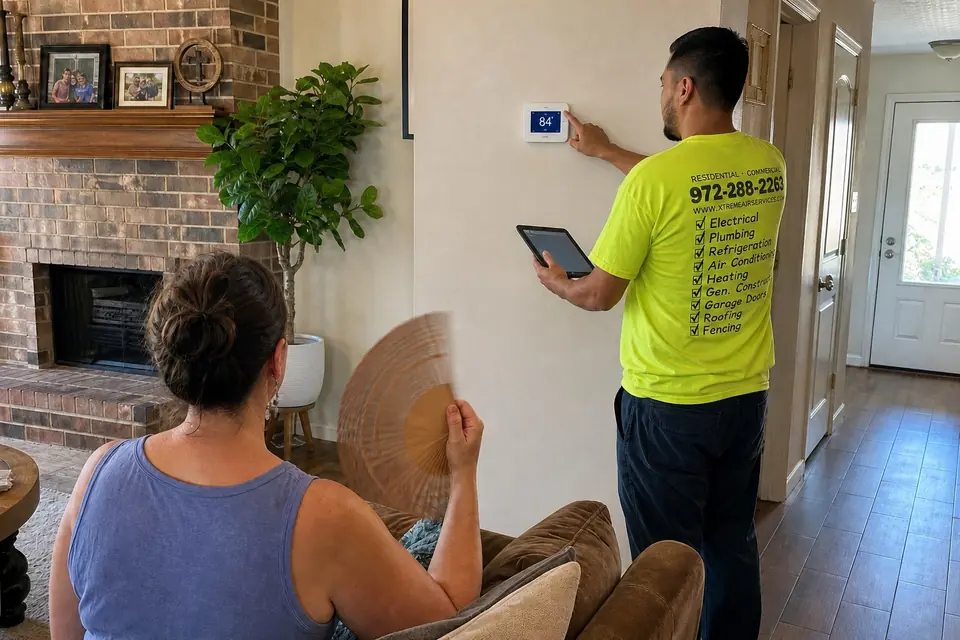
- The AC runs but the air coming out isn’t as cold as it should be
- Your electric bill jumped and your habits didn’t change
- One bedroom stays hot while the rest of the house feels fine
- The system short cycles, turning off before it finishes a cooling run
- You hear grinding, banging, or a high pitched squeal from the unit
- A musty or burnt smell comes through the vents
A lot of homes around Sunnyvale still run attic-mounted systems, and attic units take a beating from Texas summer heat that a basement or closet setup never sees. That extra heat load speeds up wear on belts, motors, and coils. So a noise or smell that seems minor in a newer subdivision home can mean something more urgent in an older attic setup.
Not sure if what you’re hearing is normal? That’s a pretty common call for us. We’re a Trane Comfort Specialist with a 4.8 star reputation across more than 2,900 reviews, so folks trust us to tell them straight whether it’s a quick fix or something bigger.
What Happens During an HVAC System Inspection in Sunnyvale
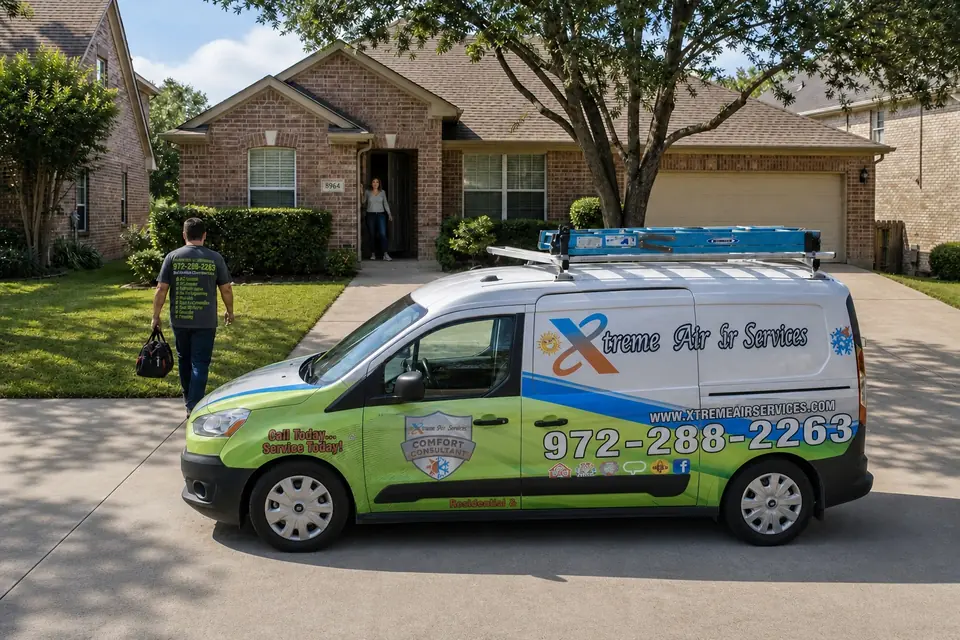
Here’s what happens when we show up. No mystery, no rushing through it. A technician walks the property first, then gets hands on the equipment. In a lot of Sunnyvale homes that means climbing into a hot attic where the air handler and ductwork live, so don’t be surprised if that’s step one.
- Walk the property and talk to you about what you’re noticing, weak airflow, odd noises, higher bills, whatever brought you to call
- Check the thermostat settings and response time
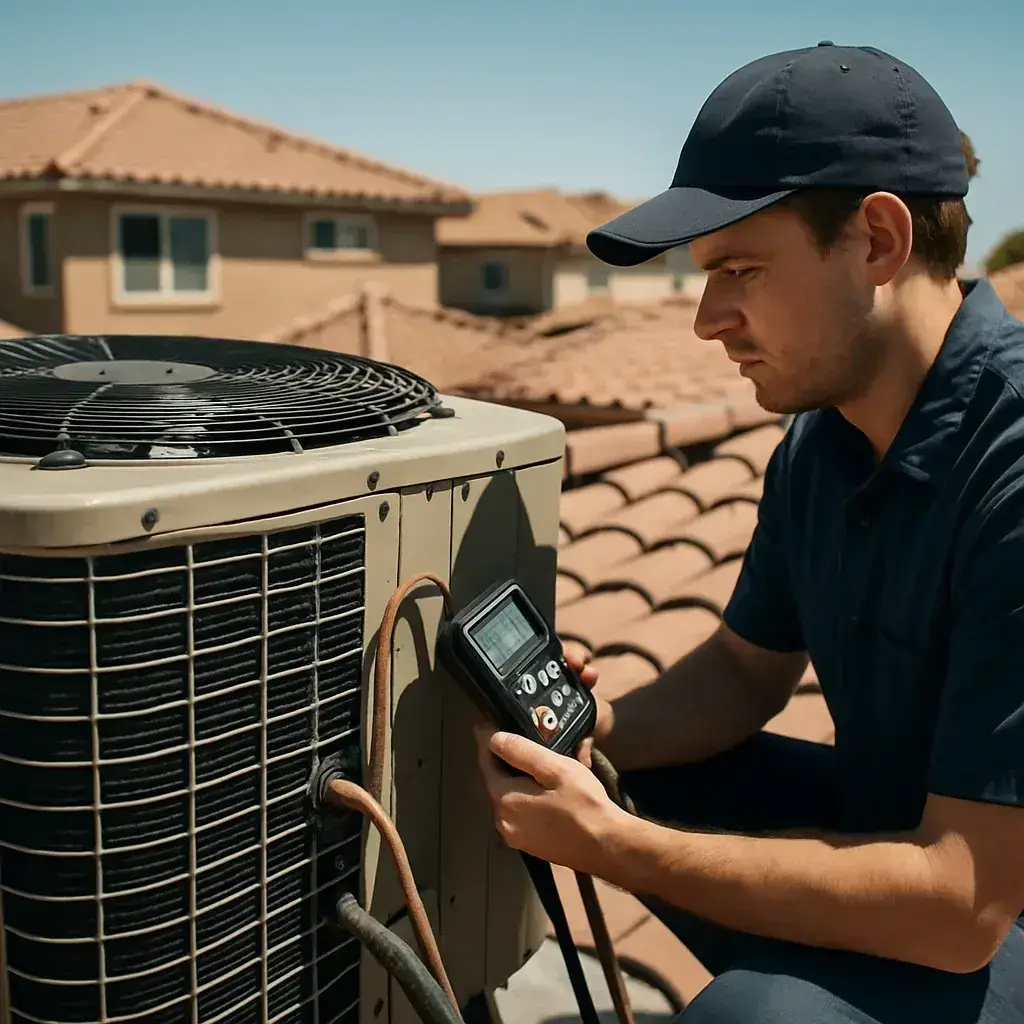
- Inspect the outdoor condenser unit for airflow, debris, and electrical wear
- Open the indoor unit or air handler and check coils, blower, and filter condition
- Test airflow at the vents and look for duct issues, especially in attic runs common around Sunnyvale’s newer subdivisions
- Check refrigerant levels and electrical connections with a meter if the system calls for it
- Write up a findings summary with plain-English notes on what’s working and what isn’t
We’re not poking around trying to invent problems. Most of the time, folks call because something feels off, and the inspection either confirms it or rules it out. Either way, you get a written summary, not a verbal guess you have to remember later.
That summary is the whole point. It’s your roadmap, whether you fix something today or just keep an eye on it.
Comfort Inspection vs. Permit Closeout Inspection
Let’s clear something up first. An HVAC system inspection from our team is not the same thing as a permit closeout inspection, and mixing the two up wastes your time.
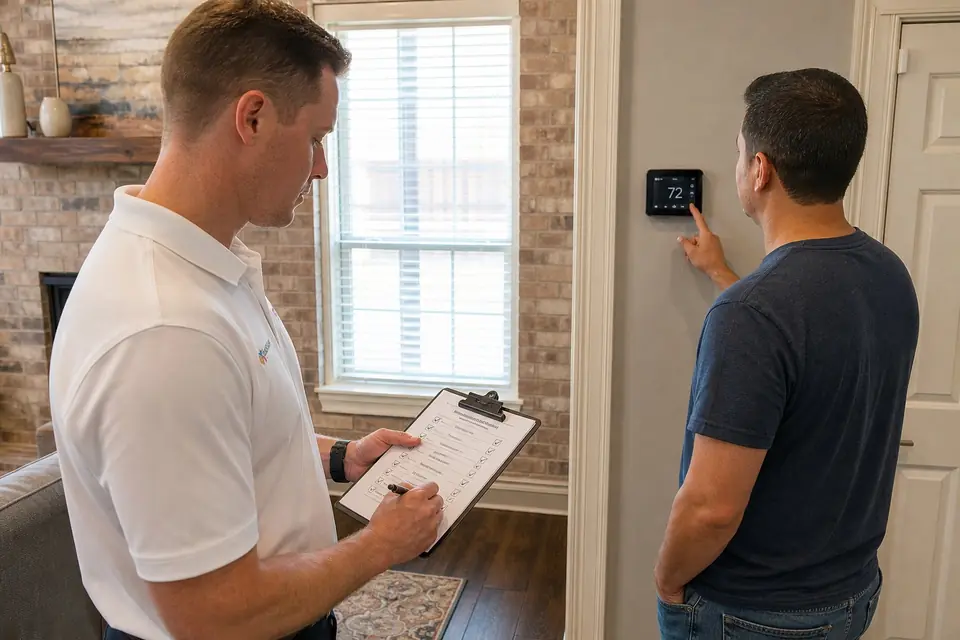
When we come out for a comfort inspection, we’re checking how your equipment is running right now, airflow, refrigerant levels, wiring, coil condition, drain lines, the works. You get a written summary and recommendations. That’s it. We’re not signing off on a building permit, and we can’t.
A permit closeout inspection is a different animal entirely. Once a new HVAC system gets installed or major equipment gets swapped in a Sunnyvale home, most jurisdictions require a municipal inspector to review the work before the permit officially closes. That inspector works for the city, not for us.
Confused about which one you need? You’re not alone. Homeowners call us all the time thinking we handle both.
- You need a comfort inspection if your system feels off, your bills crept up, or you just want a professional set of eyes on things.
- You need a permit closeout inspection if a contractor recently installed or replaced equipment and the paperwork with the city isn’t finished yet.
- You do not need to call us for the second one. That appointment goes through your local building department.
The comfort inspection tells you how your system is running, the permit inspection tells you if the installation meets code. Two different appointments. Two different purposes.
Ready when you are – get in touch today.
Call Today, Get Service Today. Xtreme Air Services is ready to help.
When You Can Skip a Professional Inspection
Not every hiccup needs a technician at your door. Sometimes it’s just a dirty filter or a thermostat that got bumped off schedule. Here’s the truth, straight up: if your system is cooling fine, running quiet, and your energy bills look normal for the season, you probably don’t need a professional inspection right now.
A few things you can check yourself before picking up the phone.
- Swap the air filter. A clogged one chokes airflow and makes the whole system work harder
- Check the thermostat batteries and settings, especially after a power blip
- Look at the outdoor unit for leaves, grass clippings, or debris packed against the coil
- Make sure vents around the house aren’t closed or blocked by furniture
- Reset the breaker if the system tripped once and everything’s running fine now
If any of those fix it, great. Save your money.
So when does skipping it become risky? If your system is under 5 years old, never gave you trouble, and you’re not planning to sell the house or list it as a rental, an inspection can wait until your normal maintenance season. But if you’re hearing a new noise, smelling something odd near the vents, or your last utility bill jumped for no clear reason, that’s your system telling you something. Don’t ignore that one. We’d rather you call us when something’s off than pay for a look-over you didn’t need. That’s just doing right by our customers.
How Inspection Pricing and Fees Work
Let’s talk money, since that’s usually the first question anyway. An HVAC system inspection in Sunnyvale typically runs $100 to $350. The most common version of this job, a straightforward on-site assessment with a written summary of findings, usually lands between $100 and $200.
There’s also a service call fee of $26 to $99. That covers the technician showing up and looking at your system. Here’s the part people like: if you move forward with the repair, that fee gets credited toward the work. You’re not paying twice.
So what pushes the price around? A few things.
- How complex the system is, older units and multi-zone setups take more time to check
- The size of your property, a small condo inspection moves faster than a large home with two systems
- Whether specialized equipment is needed, things like a camera or leak detection meter add time and cost
What you get for that fee is an honest assessment and a written summary you can use, not a sales pitch. What you don’t get, and this matters, is any repair work itself. That’s billed separately if you decide to move forward. And no, financing isn’t typically offered on an inspection alone, it’s usually reserved for bigger repairs or full system replacements.
We keep this upfront on purpose. You should know the number before a technician ever walks through your door.
Frequently Asked Questions
Common questions about HVAC system inspection
How long does an HVAC system inspection take?
Most inspections take about 45 minutes to an hour. Our technician checks the thermostat, the outdoor unit, and the indoor coils and blower, then tests airflow at your vents. If your home has an attic-mounted system, which is common around Sunnyvale, the attic check adds a few extra minutes. You’ll get a written summary before the technician leaves, so you’re not left guessing what was found.
What should I expect when your technician arrives?
Your technician starts by walking the property with you and asking what you’ve noticed, weak airflow, strange noises, or a higher bill. From there, they get hands-on with the equipment, checking the outdoor condenser, the indoor unit, and your ductwork. In many Sunnyvale homes, that means a trip into the attic where the air handler lives. You’ll get plain-English notes on what’s working and what needs attention.
How quickly can you get a technician to my home in Sunnyvale?
We handle inspection calls across Sunnyvale every day, so scheduling is usually quick. When you call, tell us what you’re noticing, warm air, a new noise, a bill that jumped, and we’ll get a technician on your calendar. Our licensed, background-checked techs work these calls often enough that same-week appointments are typical for a comfort inspection.
Why do Sunnyvale attic units seem to need more inspections?
Attic-mounted systems take on more heat stress than units in a basement or closet. Texas summer heat pushes attic temperatures well above the rest of the house, and that extra load wears down belts, motors, and coils faster. So a sound or smell that seems small in a newer subdivision home can point to a bigger issue when the system sits in a hot attic. That’s why we pay close attention to attic ductwork and the air handler during every visit.
How often should I schedule an HVAC inspection?
Once a year is a good baseline if your system is running fine and under five years old. Tie it to your normal maintenance season so small wear gets caught early. But don’t wait for the calendar if something feels off now, a new noise, a musty smell, or a bill that jumped for no clear reason. Those signs mean it’s worth calling sooner rather than later.
Ready to Get Started?
Call 972-288-2263 Today, Get Service Today.