
Thermostat Installation in Sunnyvale: Fast, Safe Comfort Upgrades
Correct wiring, mounting and configuration for a new thermostat, matched to the equipment it actually has to control.
What’s Covered on This Page
- Diagnosing a Blank or Unresponsive Thermostat
- Choosing Between Smart, Programmable, and Manual Control
- Why Older Home Wiring Changes the Job
- When a Repair Beats a Full Replacement
- What Professional Installation in Sunnyvale Includes
- Do you install thermostats in every part of Sunnyvale?
- What happens when your technician arrives at my house?
- Why do older Sunnyvale homes have trouble with smart thermostats?
- My thermostat screen is blank. Do I need a new one?
- Should I get a smart thermostat or a programmable one?
Diagnosing a Blank or Unresponsive Thermostat
Dead batteries top the list. Usually it’s the same thing, so check that first before you assume the worst.
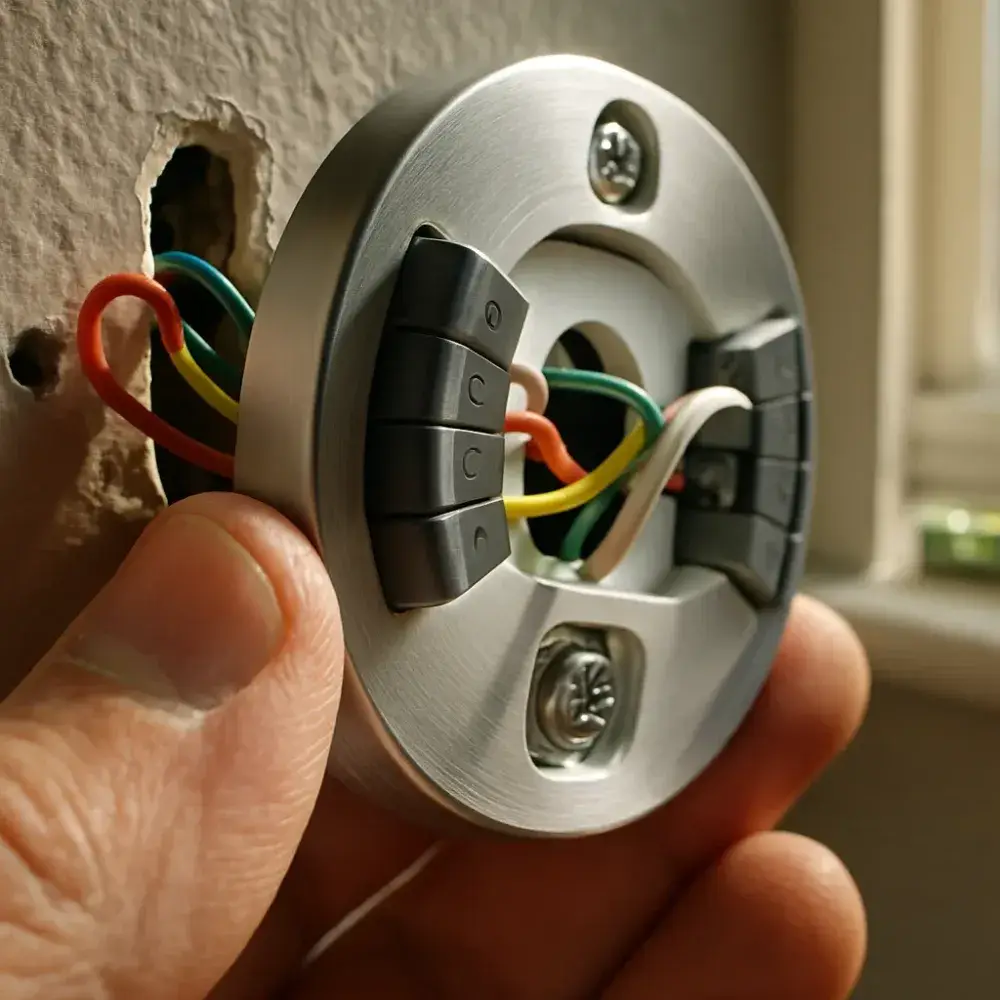
A tripped breaker or a blown low-voltage fuse on the furnace control board can cut power to the thermostat too. So can a loose wire behind the wall plate, especially in older homes where the wiring’s been disturbed by a paint job or a wall repair. And if you’ve got a smart thermostat that keeps rebooting or won’t hold a charge, that’s often a missing or weak C-wire, the extra wire that gives the unit steady power instead of borrowing it from the system.
- Replace the batteries even if they look fine, they can die without warning
- Check the breaker panel for anything tripped near the HVAC circuit
- Look for a small reset button on the furnace or air handler
- Gently pull the thermostat off its base and check for a loose or disconnected wire
- Note if the screen flickers instead of staying fully blank, that points to a power issue rather than a dead unit
Here’s the thing though – if you swap batteries, check the breaker, and it’s still dark, stop there. Pulling wires apart without knowing which terminal is which can damage the control board on your furnace or air handler. That’s a bigger repair than the thermostat itself.
Choosing Between Smart, Programmable, and Manual Control
Most Sunnyvale homeowners calling for thermostat installation are replacing an old dial or basic digital unit that only turns the system on and off. Before choosing a replacement, it helps to understand what each control type does. A manual thermostat requires you to physically adjust the temperature every time you want a change, offering no scheduling and no energy savings beyond what you remember to do yourself. A programmable thermostat lets you set schedules in advance, such as a lower temperature overnight and a warmer setting before you wake up, which suits homes with predictable routines. A smart thermostat goes further by learning patterns, adjusting automatically based on occupancy or outdoor conditions, and allowing remote control from a phone, which is especially useful for homeowners who travel or keep unpredictable hours around the Dallas metro.
System compatibility matters as much as feature preference. Single-stage systems, common in many older Sunnyvale homes built before the 1990s, run at one fixed output and work with nearly any thermostat type. Multi-stage systems, which cycle between low and high output for better efficiency, need a thermostat that can send the correct multi-stage signals, or the equipment will only ever run at one level. Heat pump systems are more particular still, often requiring support for auxiliary or emergency heat settings and a dedicated terminal for reversing valve control. Installing a thermostat that does not fully support these functions can lead to reduced efficiency, uneven temperatures, or premature wear on the equipment.
- Single-stage systems generally work with manual, programmable, or smart thermostats without special requirements
- Multi-stage systems need thermostats explicitly rated for multi-stage heating or cooling operation
- Heat pump systems often require auxiliary heat terminals and heat pump specific programming
- Older homes may lack a common wire, which many smart thermostats need for continuous power
- Not every smart thermostat on the market will work with every system without a wiring check first
Because wiring configurations vary widely between homes in Sunnyvale, especially in neighborhoods with a mix of original 1960s construction and newer remodels, a physical inspection of the existing wiring is the only reliable way to confirm compatibility before purchasing a smart model. A quick professional check can prevent the frustration of buying a thermostat that arrives home only to be unusable with your specific furnace, air handler, or heat pump setup.
Why Older Home Wiring Changes the Job
Sunnyvale’s housing stock tells a story of decades of growth, and that story matters when you’re planning a thermostat installation. Along the US-80 corridor, newer subdivisions sit blocks away from ranch-style homes built in the 1960s and 1970s. These older properties were wired for simple mercury thermostats, not the smart devices homeowners want today. The single biggest wiring obstacle we encounter in these homes is a missing C-wire, the common wire that provides continuous 24-volt power to run a smart thermostat’s display, Wi-Fi radio, and other features.
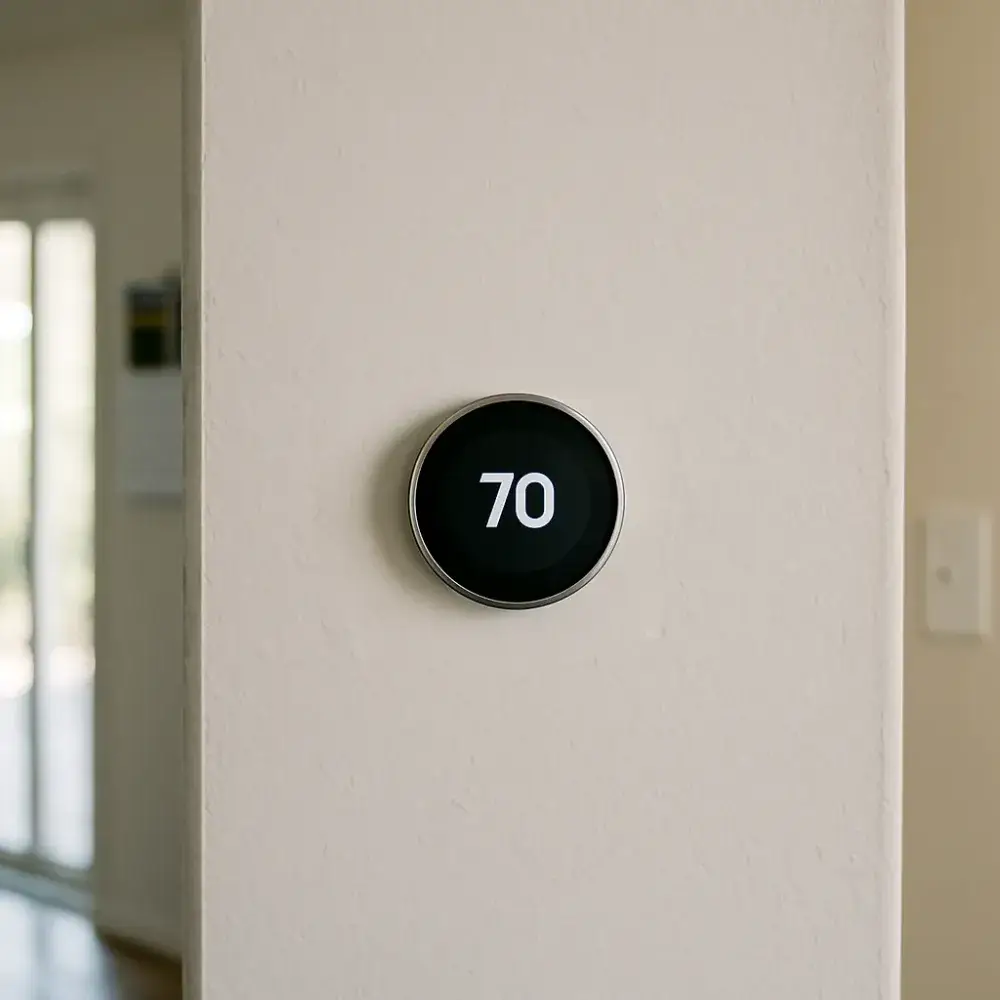
Older HVAC systems typically ran on just four wires: R for power, W for heat, Y for cooling, and G for the fan. That setup worked fine for basic thermostats, but smart thermostats need constant power to stay connected and responsive. Without a C-wire, some units will still function using battery power or by borrowing voltage from another wire, a method called power stealing. However, power stealing can cause erratic behavior like flickering displays, delayed responses, or even furnace short cycling in systems that are sensitive to voltage drops.
When our technicians arrive at a Sunnyvale ranch home and discover no C-wire, the job scope shifts in one of several directions depending on what the HVAC equipment allows.
- Running a new dedicated C-wire through existing wall cavities or conduit, which adds labor time but delivers the most reliable long-term result
- Installing a compatible add-a-wire or power extender kit at the furnace board, a common workaround that avoids opening walls
- Using the thermostat manufacturer’s power stealing mode, suitable only for systems with compatible furnace and AC boards
- Recommending a battery-powered smart thermostat model designed specifically for homes without a C-wire, sacrificing a few features for simpler installation
This discovery almost always happens during the initial site visit, before any wiring is disturbed, so homeowners are never surprised by extra costs mid-installation. We test the existing wiring, check the furnace control board, and explain which options apply to that specific home. In many ranch-style layouts near Sunnyvale, running a new wire is straightforward because the furnace sits in an accessible closet or garage wall, keeping added labor minimal. Split-level homes with finished basements sometimes require more creative routing, which we always quote clearly before starting work.
Need help with Thermostat installation?
Call Today, Get Service Today. Xtreme Air Services is ready to help.
When a Repair Beats a Full Replacement
Not every dead-looking thermostat needs to be replaced. Sometimes the fix is smaller than that.
We show up to plenty of calls where the thermostat looks broken but isn’t. A blank screen is usually dead batteries or a tripped breaker, not a failed unit. Loose wiring behind the plate can make a thermostat act erratic, and that’s a five-minute fix once we open it up. If your system is cooling and heating fine but the schedule keeps resetting or the display flickers, that’s often a wiring or power issue, not a reason to replace the whole thing.
Usually, if the existing thermostat is under ten years old and your system worked with it before, repair is the smarter move.
Where it gets trickier is in some of the older homes around Sunnyvale, especially places built before modern low-voltage wiring became standard. Those systems sometimes lack a dedicated C-wire, which smart thermostats need to run properly. In that case, a repair on the old unit can make more sense than forcing a smart thermostat into wiring that isn’t built for it, unless you’re ready for the extra wiring work that comes with it.
So ask yourself this. Is the thermostat itself failing, or is something else feeding it bad signals? Get that answered before you spend money on new equipment.
We’ll always tell you straight if a repair will hold you over. Doing right by our customers matters more to us than pushing equipment you don’t need yet.
What Professional Installation in Sunnyvale Includes
When you schedule thermostat installation with a Sunnyvale-based, family-owned team, you are getting more than someone who mounts a device on your wall. Our technicians are licensed and background-checked, so you can feel confident letting them into your home whether it’s a routine weekday appointment or an urgent weekend fix. Because we live and work in the same neighborhoods we serve, we know the wiring quirks common in Sunnyvale’s older ranch-style homes near Collins Road as well as the newer builds around Belt Line Road.
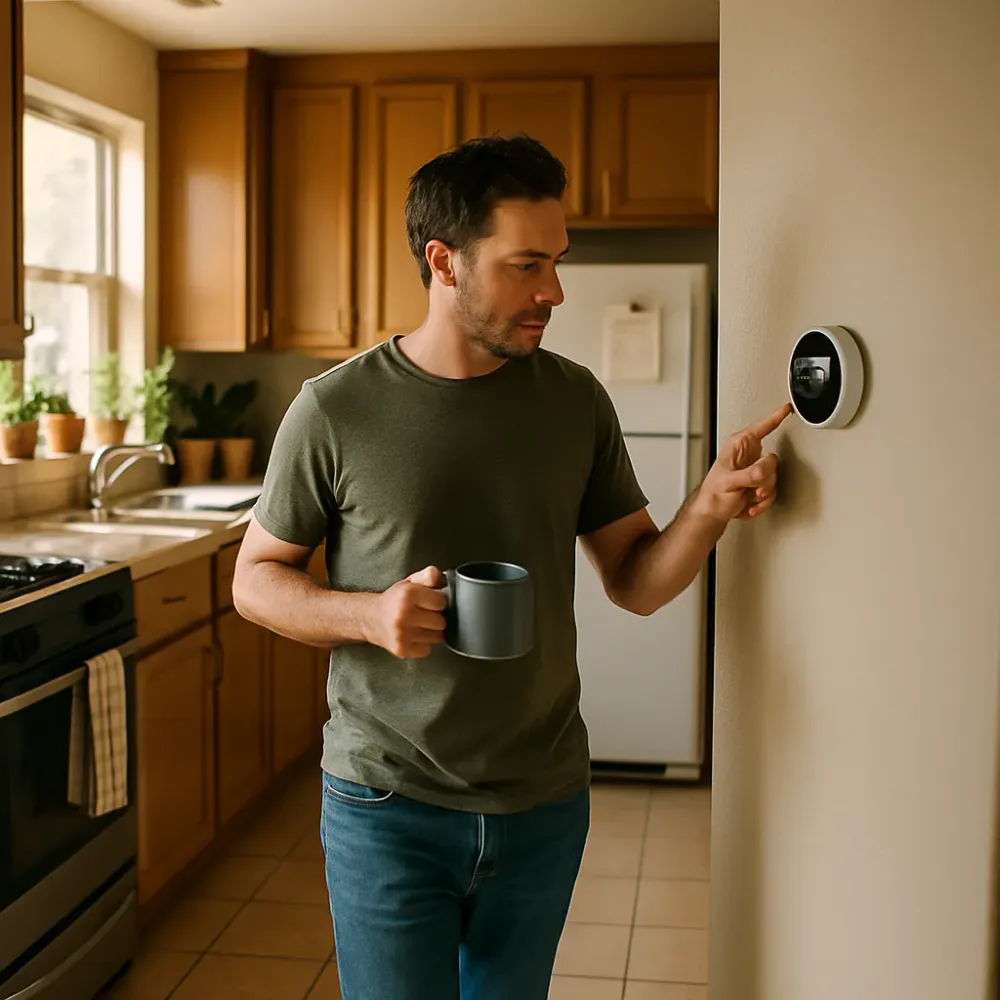
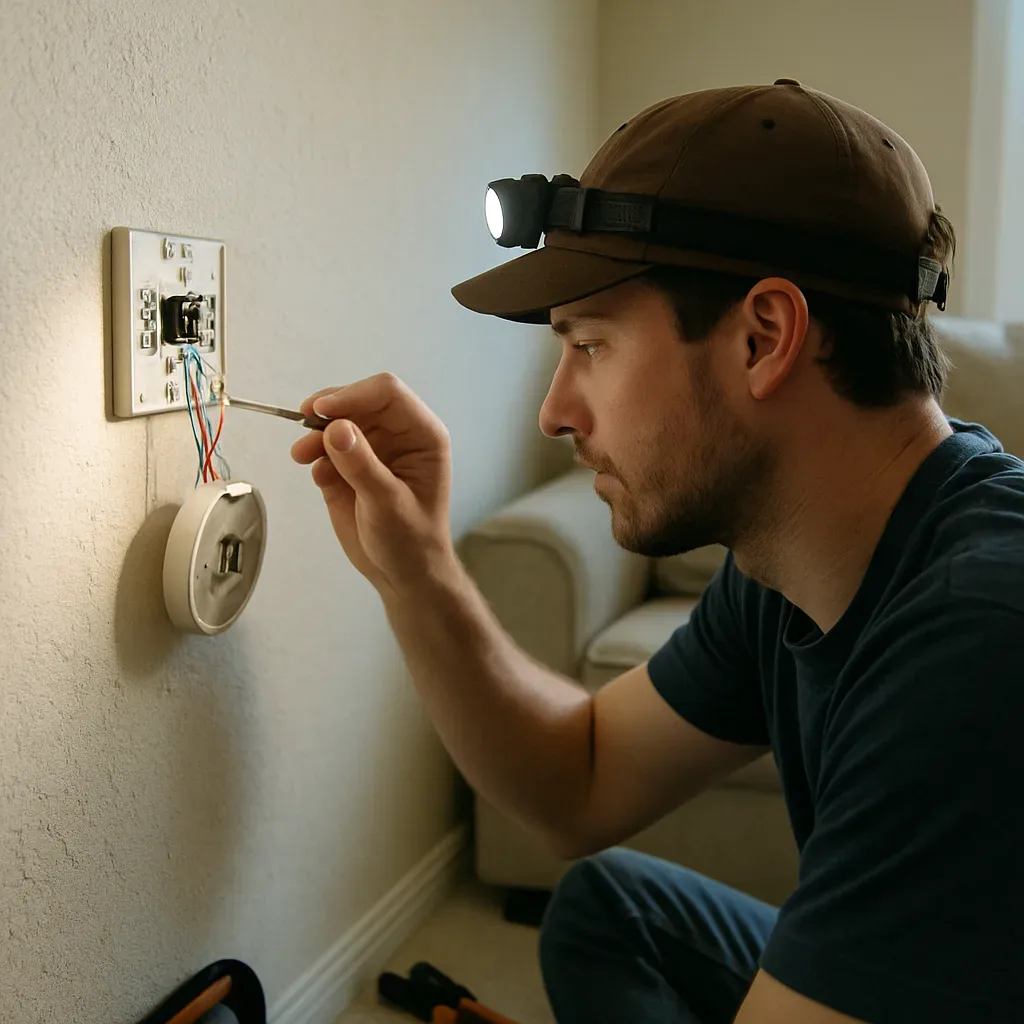
A typical visit starts with a diagnostic check of your existing wiring and HVAC compatibility, followed by removal of the old thermostat, mounting and wiring the new unit, and full system startup and testing to confirm heating and cooling cycles engage properly. Before we leave, we walk you through programming, Wi-Fi setup if applicable, and haul away the old equipment so you’re not left with extra clutter.
- Diagnostic assessment of existing wiring and thermostat compatibility
- Removal and disposal of the old thermostat
- Professional mounting and wiring of the new unit
- Full system startup, calibration, and multi-cycle testing
- Customer walkthrough on programming and app setup
- Haul-away of old equipment at no extra charge
On cost, most Sunnyvale customers pay between $150 and $400 for standard installation, with the most common like-for-like swap falling in the $200 to $300 range. We charge a trip fee of $26 to $99 depending on the day and time you call, and that fee is fully credited toward the job if you move forward with the installation. This pricing includes startup and testing plus haul-away of the old unit, but it does not cover electrical wiring upgrades or work needed to bring existing systems up to current code, since those add labor and materials beyond a standard swap. For a full breakdown of pricing tiers and what affects your final quote, see our pricing guide.
Because we answer calls around the clock and offer same-day service throughout Sunnyvale, you’re never stuck waiting days for a technician when your thermostat fails during a heat wave or cold snap.
Frequently Asked Questions
Common questions about Thermostat installation
Do you install thermostats in every part of Sunnyvale?
Yes, we cover homes throughout Sunnyvale, from the newer subdivisions near U.S. 80 to the older ranch homes on the west side. Most installations get scheduled within a few days of your call. Because wiring setups vary so much between a 1960s ranch home and a newer remodel, we like to know your home’s age and HVAC type before we arrive. That helps us bring the right parts, like a C-wire adapter, so the job goes fast the first time.
What happens when your technician arrives at my house?
Your technician starts by checking your existing wiring behind the old thermostat before touching anything new. This step matters because many Sunnyvale homes are missing a C-wire, the wire smart thermostats need for steady power. We test your system type, whether it’s single-stage or heat pump, and confirm the new thermostat will work with it. Then we mount, wire, and program the unit, and walk you through the settings before we leave.
Why do older Sunnyvale homes have trouble with smart thermostats?
Older Sunnyvale homes, especially ranch-style houses from the 1960s and 1970s, were wired for simple thermostats with just four wires. Smart thermostats need a fifth wire, called a C-wire, for constant power to run the display and Wi-Fi. Without it, some units flicker, reboot, or borrow power in a way that can cause your furnace to short cycle. We check for this wiring gap before we install anything, so you don’t end up with a smart thermostat that won’t behave.
My thermostat screen is blank. Do I need a new one?
Not always. A blank screen is usually dead batteries, a tripped breaker, or a loose wire behind the wall plate, not a failing HVAC system. Swap the batteries first, then check your breaker panel near the HVAC circuit. If the screen stays dark after that, the wiring may need a real look. Please don’t pull wires apart yourself, since a wrong connection can damage your furnace control board and turn a simple fix into a bigger repair.
Should I get a smart thermostat or a programmable one?
It depends on your schedule and your HVAC system. A programmable thermostat works well if your routine is predictable, letting you set a schedule once and forget it. A smart thermostat learns your habits and lets you adjust settings from your phone, which suits Sunnyvale’s many remote and travel-heavy schedules. Multi-stage and heat pump systems need a thermostat built to support those functions, so we check your equipment first to recommend the right fit.
Ready to Get Started?
Call 972-288-2263 Today, Get Service Today.