


HVAC Maintenance / Tune-Up in Sunnyvale: The Honest Pre-Summer Checkup
A full pre-season checkup of refrigerant charge, airflow and electrical connections before the first heat wave tests your system.
What’s Covered on This Page
- Signs Your System Is Overdue for Service
- What a Full Tune-Up Covers, Start to Finish
- When a Tune-Up Won’t Solve the Problem
- Why Spring Timing Matters for Sunnyvale Homes
- Multi-System Homes and Per-Unit Pricing
- How often should I schedule an HVAC tune-up in Sunnyvale?
- What happens when a technician arrives for a tune-up?
- Will a tune-up fix my air conditioner if it already stopped working?
- Why does spring timing matter so much for Sunnyvale homes?
- Do I need a separate tune-up for each system if my home has two units?
- What are the clearest signs my system is overdue for a tune-up?
Signs Your System Is Overdue for Service
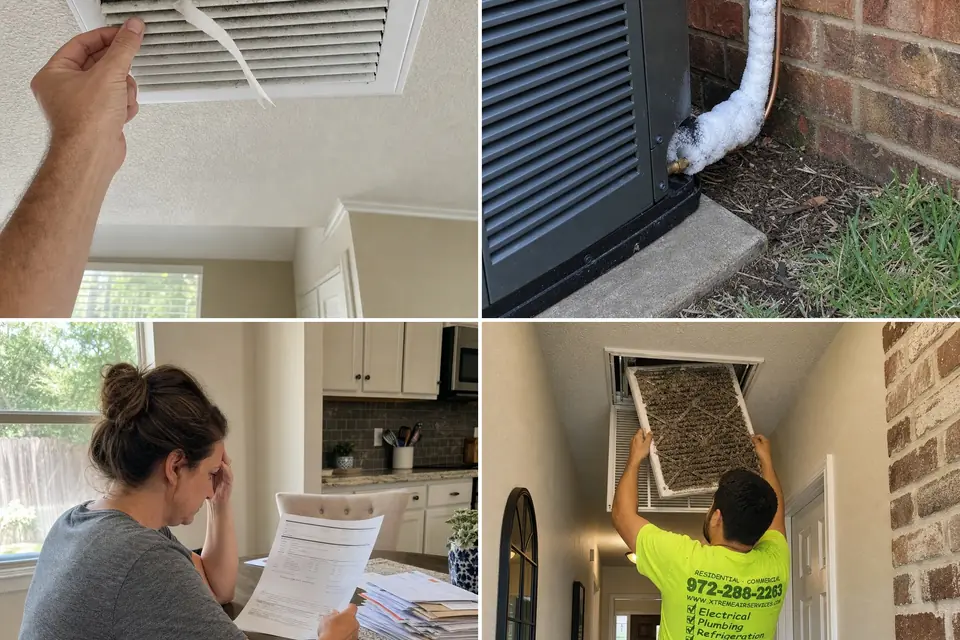
So how do you know it’s time? Your system usually tells you before it quits on you. Maybe the airflow from the vents feels weaker than it used to. Maybe the unit runs longer than it should to hit the same temperature. We hear this one a lot: ‘It just doesn’t feel as cold as it did last summer.’ That’s rarely your imagination.
- Weak or uneven airflow from room to room
- The system short cycles, turning on and off every few minutes
- Your energy bill climbs without a change in how you use the thermostat
- A musty or burning smell when the system kicks on
- Strange rattling, clicking, or grinding noises from the unit
- It’s been a year or more since anyone’s looked at the system
Any one of those on its own might not mean much. Two or three together, and you’ve got a system that’s overdue. Homes in Sunnyvale often run attic units hard through the summer months, and dust and pollen build up fast in that heat, clogging coils and filters quicker than folks expect. That buildup is exactly what a maintenance visit clears out before it turns into a repair bill.
What a Full Tune-Up Covers, Start to Finish
So what happens when a tech shows up for a tune-up? It’s not a quick glance and a handshake. A real HVAC maintenance visit means going through your whole system, one part at a time, checking it against what it’s supposed to do when it’s running right.
- Check the air filter and swap it if it’s dirty, since a clogged filter chokes airflow and makes the whole system work harder.
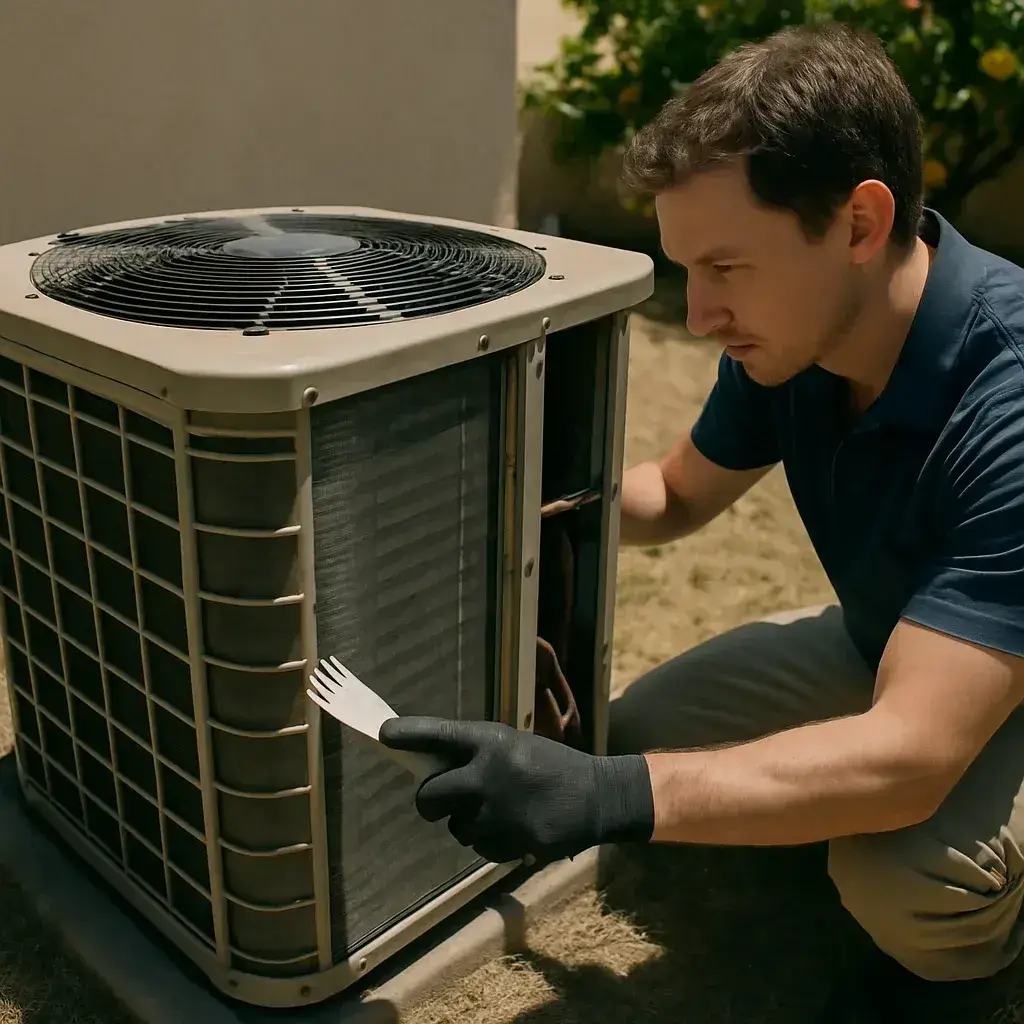
- Inspect the condenser coil outside and clean it if it’s caked with pollen, grass clippings, or dust.
- Check the evaporator coil inside for buildup that blocks heat transfer and hurts cooling.
- Test the capacitor and contactor, two small electrical parts that fail more than almost anything else in a system.
- Check refrigerant levels against the manufacturer’s spec.
- Clear the condensate drain line so water isn’t backing up into your home.
- Test the thermostat calibration and confirm it’s talking to the system correctly.
- Tighten electrical connections and check amp draw on the motors.
Attic-mounted units are common in a lot of Sunnyvale’s newer subdivisions, and those units take a beating from summer heat soaking up there. We check blower operation and motor bearings closely on attic systems, since they run hotter and harder than a garage or closet unit ever does.
None of this includes fixing anything we find broken.
That part gets quoted separately once you know exactly what it is and what it costs, no guessing, no pressure to say yes on the spot. The tune-up itself catches small stuff before it becomes a Saturday night no-cool call.
When a Tune-Up Won’t Solve the Problem
Let’s be straight with you. A tune-up is maintenance. It’s not a repair call in disguise.
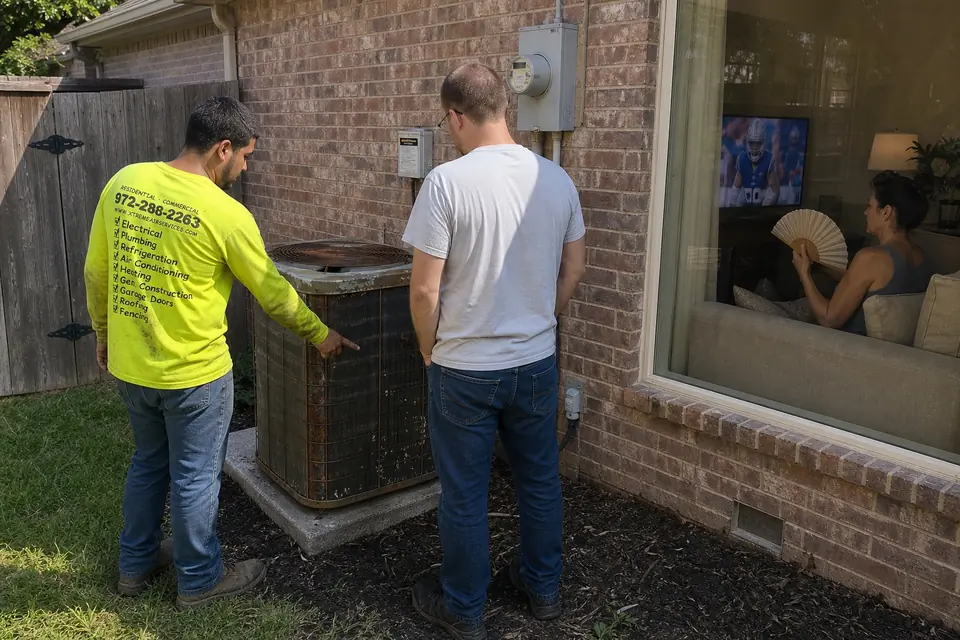
If your system is already broken, a tune-up won’t bring it back. We check, clean, and test what’s there. We don’t replace failed parts during that visit, that gets quoted separately once we know what’s wrong. So if your AC quit blowing cold air last night, or your furnace won’t fire up at all, you need a repair diagnosis, not a tune-up.
Here’s how you can tell the difference before you even call.
- No air movement at the vents, or air that’s barely cool even with the thermostat cranked down
- A breaker that trips every time the system kicks on
- Ice building up on the coil or the copper line outside
- Water pooling near the indoor unit or dripping from the ceiling below it
- A burning smell, grinding noise, or the system short-cycling on and off
Any of those, and you’re past the maintenance stage. We see this every single week, someone books a tune-up hoping it’ll fix a system that’s already down, and we have to tell them the truth on the phone before we ever drive out.
One more honest note. If your system is more than 12 to 15 years old and struggling, a tune-up might buy you a season, but it won’t solve an aging compressor or a duct system that was undersized from the start. That’s a bigger conversation, and it’s a fair one to have before you spend money on a visit that won’t get you where you need to be.
Need help with HVAC maintenance / tune-up?
Call Today, Get Service Today. Xtreme Air Services is ready to help.
Why Spring Timing Matters for Sunnyvale Homes
Spring in North Texas doesn’t last long. One week you’re running the heat at night, the next you’re flipping the AC on because it hit 88 degrees by lunch. That flip catches a lot of systems off guard.
Here’s the thing about a tune-up done in March or April instead of June. A weak capacitor, a dirty coil, a low refrigerant charge, none of that shows up much when the system barely runs. But once Sunnyvale summer settles in and your unit is cycling all day long, every small weakness gets stress-tested at once. That’s when it fails, usually on the hottest afternoon of the week.
A lot of Sunnyvale’s newer subdivisions run the air handler up in the attic. Attic space here can hit well over 120 degrees by June, which means any dust buildup or airflow restriction gets baked in fast. Spring is your window to clean that out before the attic turns into an oven.
We check the same handful of things every spring visit, and we find at least one thing worth catching early.
So don’t wait for the first 100-degree day to think about your system. Get it looked at while the weather’s still mild and scheduling is easy, before the phones start ringing off the hook.
Multi-System Homes and Per-Unit Pricing
Got two systems for one house? That’s pretty normal these days. A lot of newer two-story homes run separate units for upstairs and down, and older homes with additions often end up with a second system tacked on somewhere along the way. Either way, each unit gets its own full check. We don’t do a quick shared glance and call it good.
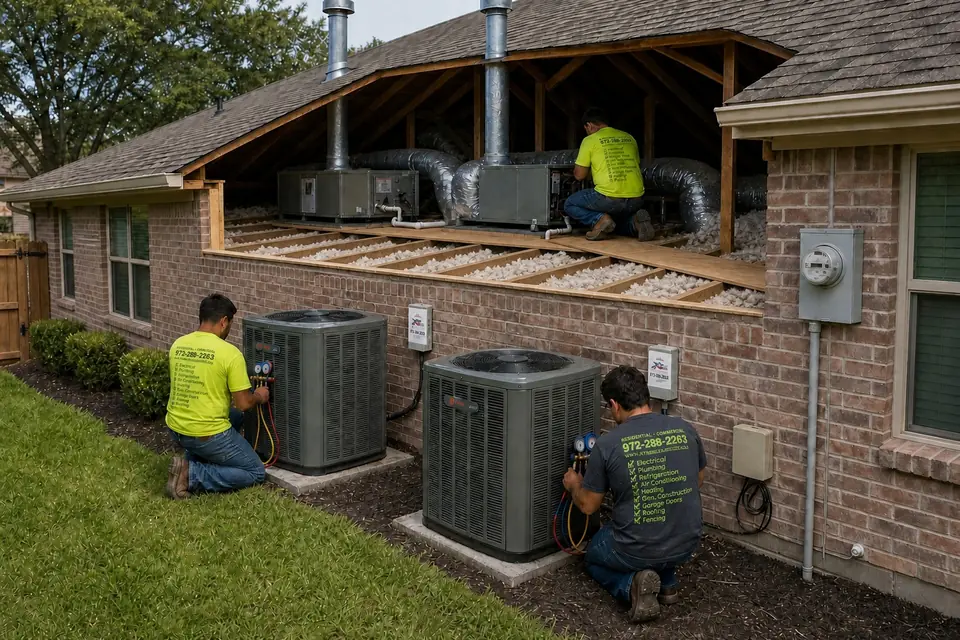
Our HVAC maintenance / tune-up pricing runs per system, typically $75 to $200, with the most common single-system job landing between $75 and $125. That number covers a full inspection, cleaning, and a performance and safety check on that unit. Repair parts or corrective work found during the visit get quoted separately, they’re never buried into the tune-up price.
Two units means two inspections, two sets of readings, two invoices, unless you’re on a maintenance plan that bundles them.
A few things push the per-system price around inside that range. The number of systems matters most, obviously. But so does how easy each one is to reach, an attic unit crammed behind ductwork takes longer than one sitting in a garage closet. And a system that’s been neglected for a few years, coils packed with dust, drain line half clogged, just takes more work to clean properly than one that’s been serviced every year like clockwork.
We see this every single week in bigger Sunnyvale homes: one system gets attention because it’s noisy or acting up, and the other one, tucked in a hallway closet, hasn’t been touched in years. Worth having us look at both while we’re already there.
Frequently Asked Questions
Common questions about HVAC maintenance / tune-up
How often should I schedule an HVAC tune-up in Sunnyvale?
Once a year, ideally in spring before the heat hits. Sunnyvale’s attic units take a beating once summer settles in, and spring gives us a window to catch problems while the system barely runs. Waiting until June means a weak capacitor or dirty coil gets stress-tested on the hottest afternoon of the week instead of caught early. Booking in March or April also means easier scheduling, since the phones haven’t started ringing off the hook yet.
What happens when a technician arrives for a tune-up?
We go through your whole system piece by piece, not a quick glance and a handshake. That means checking the air filter, cleaning the condenser and evaporator coils, testing the capacitor and contactor, checking refrigerant levels, and clearing the condensate drain line. On attic-mounted systems, common in newer Sunnyvale subdivisions, we pay extra attention to blower operation and motor bearings since those units run hotter than a garage or closet system ever does.
Will a tune-up fix my air conditioner if it already stopped working?
No, a tune-up is maintenance, not a repair call. If your system already quit blowing cold air, tripped a breaker, or built up ice on the coil, you need a repair diagnosis instead. We check, clean, and test what’s already there, but we don’t replace failed parts during a maintenance visit. We tell people this on the phone every week before we drive out, so you’re not paying for a visit that won’t fix what’s wrong.
Why does spring timing matter so much for Sunnyvale homes?
Spring gives your system a stress-free window before summer heat exposes every weak point at once. North Texas spring doesn’t last long, and once your unit starts cycling all day in the heat, a low refrigerant charge or dirty coil that stayed hidden in cooler weather suddenly causes a breakdown. Attic space in Sunnyvale can hit well over 120 degrees by June, baking in dust and airflow restrictions fast. Getting ahead of that in March or April keeps small issues from becoming summer emergencies.
Do I need a separate tune-up for each system if my home has two units?
Yes, each system gets checked on its own since they run independently and wear differently. Two-story Sunnyvale homes often run separate units for upstairs and downstairs, and older homes with additions sometimes end up with a second system tacked on later. One unit might be attic-mounted and taking more heat stress than the other, so each one needs its own filter check, coil cleaning, and electrical test rather than a single once-over for the whole house.
What are the clearest signs my system is overdue for a tune-up?
Weak airflow, short cycling, rising energy bills, and musty or burning smells are the biggest flags. Any one of these alone might not mean much, but two or three together usually means your system is overdue. Sunnyvale attic units run hard through summer, and dust and pollen clog coils and filters faster than most homeowners expect. Catching these signs with a spring tune-up almost always costs less than waiting for a breakdown mid-heat wave.
Ready to Get Started?
Call 972-288-2263 Today, Get Service Today.