
HVAC System Repair in Sunnyvale That Beats the DFW Heat
Component-level diagnosis and repair of compressors, blowers, capacitors and controls, so the whole system runs right again.
What’s Covered on This Page
- Signs Your HVAC System Needs Professional Repair
- Check These Things Before You Call for Repair
- Why Cooling Systems Wear Out Fast in Sunnyvale
- What Happens During an HVAC System Repair Visit
- What to Ask Before You Hire an HVAC Repair Company
- Do you cover all of Sunnyvale, and how fast can you get to my house?
- What happens when your technician shows up at my door?
- Why do Sunnyvale homes seem to have more HVAC breakdowns in summer?
- What’s that blinking light near my indoor unit, and does it mean I need repair?
- How long does a typical HVAC repair visit take?
- Should I repair my HVAC system or start planning for a replacement?
Signs Your HVAC System Needs Professional Repair
You walk in the door and the house feels wrong. Not broken exactly, just off. Warmer than it should be, or the air’s barely moving out of the vents. That feeling is usually the first clue something inside the system quit working right.
Nine times out of ten, it’s one part causing the whole headache.
- Air coming from the vents that’s warm instead of cool, or barely moving at all
- The system turning on and off in short bursts instead of running a full cycle
- A hum, click, or rattle that wasn’t there last month
- Your energy bill jumping with no change in how you use the thermostat
- One room staying hot while the rest of the house cools down fine
- Ice building up on the outdoor unit or the indoor coil
In Sunnyvale, a lot of homes run the system out of the attic, and attic space in a Texas summer can climb well past what the equipment was built to work in comfortably. That extra heat load stresses capacitors and motors faster than you’d think, and it’s a big reason we get more calls in July than any other month.
Not sure if what you’re hearing is serious? That’s a fair question, and it’s the one we get most.
A rattle might just be a loose panel. A hum might be a motor on its way out. You can’t always tell from the couch, but our licensed and insured technicians run the same diagnostic checks every time, so you get a straight answer instead of a guess.
Check These Things Before You Call for Repair
Before you pick up the phone, take two minutes and check a few things. It’s usually the same handful of culprits, and sometimes the fix is something you can do yourself.
- Thermostat set to cool or heat, and the batteries aren’t dead
- Breaker panel, a tripped breaker looks like a dead system but it’s a five-second fix
- Air filter, a filter clogged with attic dust can choke airflow fast in Sunnyvale’s dusty summer air
- Outdoor unit, leaves or grass clippings packed around the condenser block airflow
- A small red or green light blinking near the indoor unit, that’s often a full condensate pan shutting the system down on purpose
That condensate float switch trips a lot in homes with attic-mounted systems, which is most of the newer builds around here. The system isn’t broken, it’s protecting your ceiling from a drain line overflow. Clear the line or the pan, and it may kick right back on.
But if you’ve checked all that and the system still won’t run, or it runs and blows warm air anyway, that’s not a DIY situation anymore.
Burning smell, tripped breaker that won’t reset, water pooling near the unit, ice on the coil. Those are calls, not checklists.
Why Cooling Systems Wear Out Fast in Sunnyvale
Sunnyvale summers run long and hot, and that’s rough on a cooling system. Most homes here have the air handler tucked up in the attic, where temps can climb past 130 degrees on a July afternoon. That heat bakes the air handler’s electronics, dries out wiring insulation, and shortens the life of motor bearings faster than a system installed in a closet.
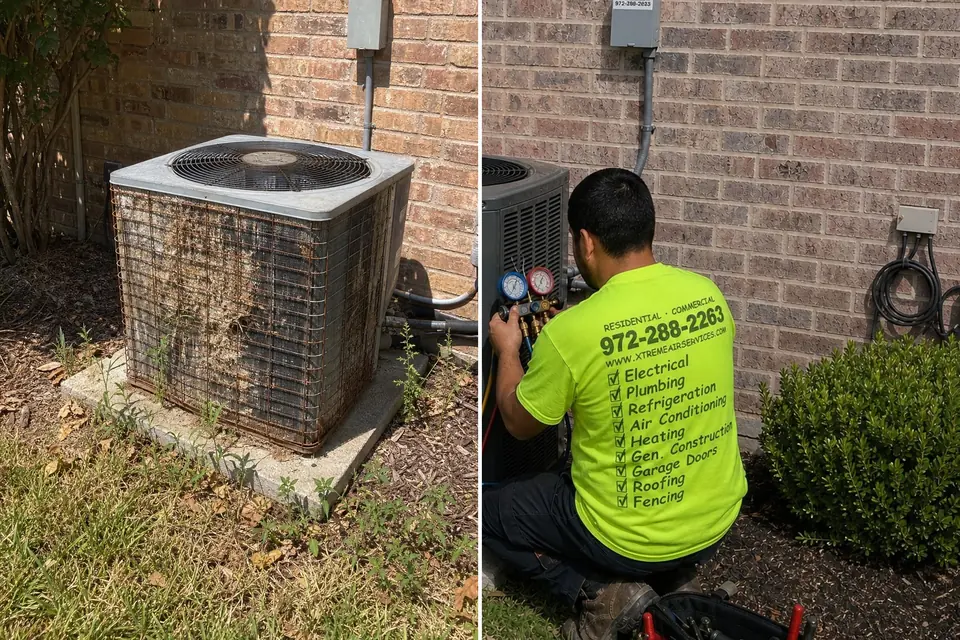
So the unit runs almost nonstop from May through September. That’s the real reason a capacitor pops or a contactor sticks, not a bad part from the factory. The system just works harder here than it does up north.
- Long run times during peak heat stress compressors and motors
- Attic heat accelerates wear on the air handler’s control board and wiring
- Dust and pollen from open fields around newer subdivisions clog coils and filters faster
- Sudden cold fronts force heat pumps and furnaces to switch modes hard, straining components
- Older homes with original ductwork often have duct leaks that make the system overwork
None of that means something’s wrong with your house. It just means Sunnyvale’s climate puts real demands on a system, and regular wear shows up as a specific failure, not a mystery. That’s good news, since a failed part is something we can find and fix, usually the same day.
Have questions? We’re happy to help.
Call Today, Get Service Today. Xtreme Air Services is ready to help.
What Happens During an HVAC System Repair Visit
So what does an actual visit look like? It’s usually the same pattern. Your system quits, warm air’s blowing, and you’re standing in the hallway wondering how bad it is. Here’s the truth: most calls end with one failed part found and fixed before the technician leaves.
A lot of Sunnyvale homes, especially the newer builds, run the air handler up in the attic. That changes where a tech looks first, and it means summer attic heat can wear out the blower motor and its wiring faster than you’d expect.
- We ask what you’re noticing, no cooling, a strange noise, short cycling, so we know where to start.
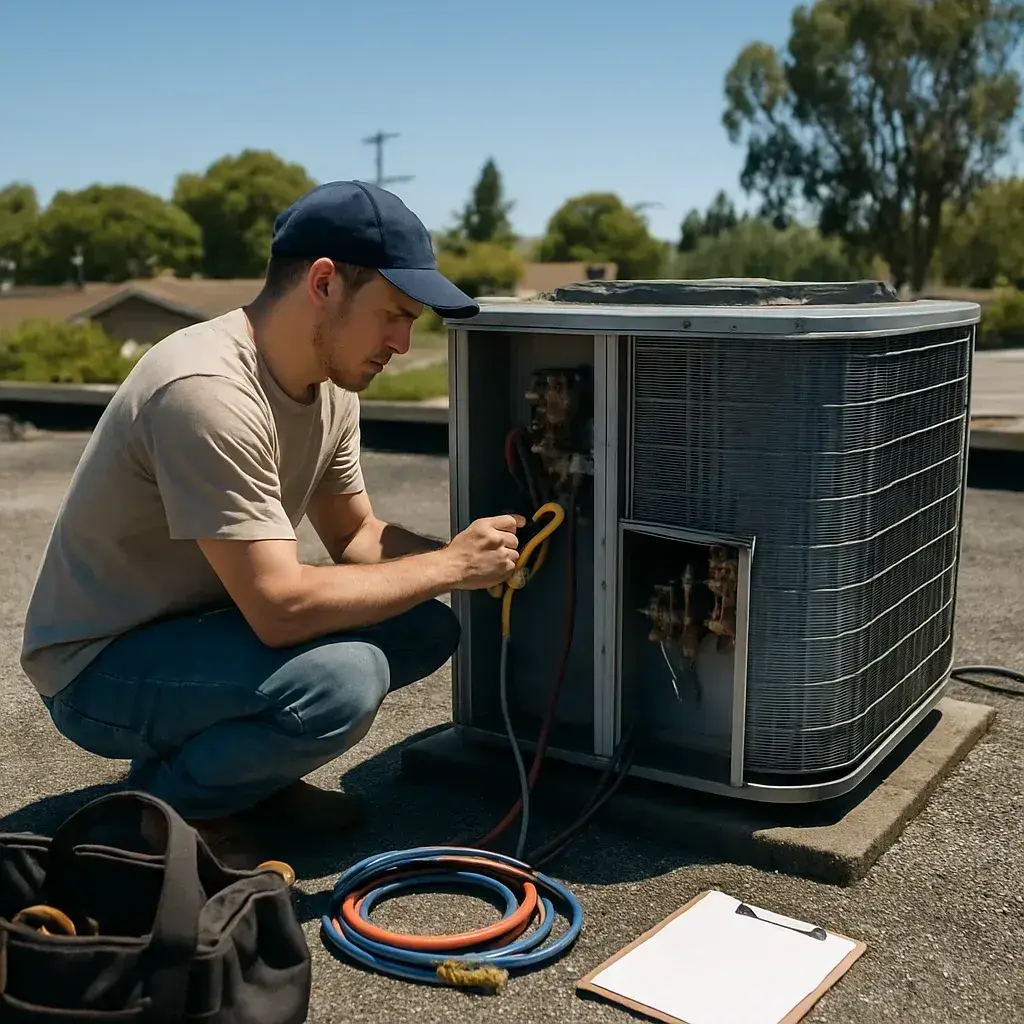
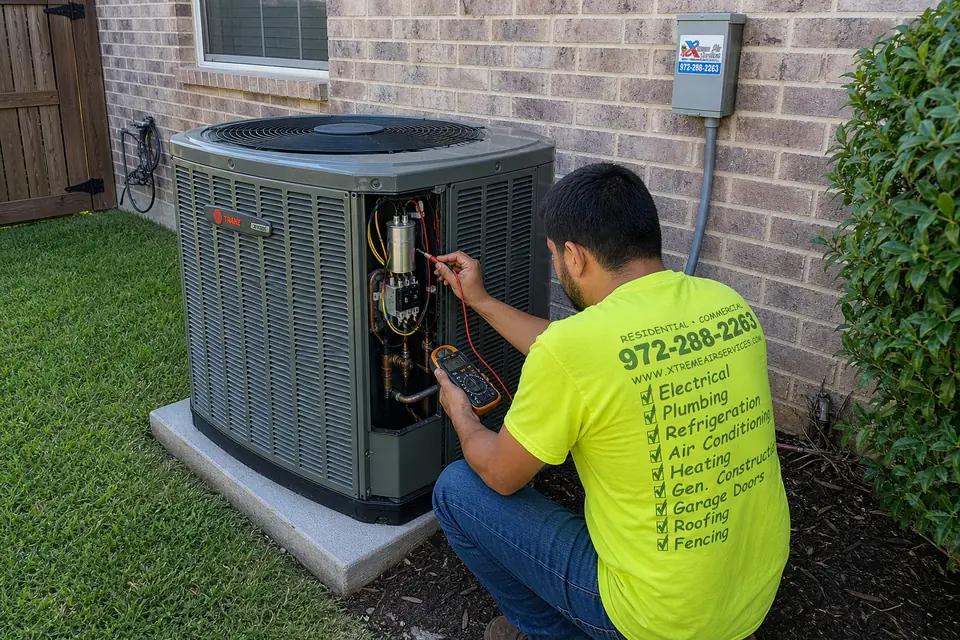
- We test the system with a meter, not a guess, checking capacitors, contactors, refrigerant, and airflow.
- We find the failed part and show you what broke, in plain English.
- We quote the flat-rate repair before touching anything else, no surprises once work starts.
- We replace or repair the part and run the system through a full cycle.
- We clean up, check the thermostat, and make sure cool air’s hitting the vents before we leave.
That service call fee, twenty-six to ninety-nine dollars depending on the visit, gets credited straight toward the repair if you move forward with us. Nights and weekends cost the same as a Tuesday afternoon. No overtime traps, ever.
Most single-part repairs land in that $150 to $400 range, and the full range for tougher jobs runs $150 to $700 depending on the part and what’s failed. You’ll know the number before we start, not after.
What to Ask Before You Hire an HVAC Repair Company
Before you let anyone touch your system, ask a few pointed questions. Not to be difficult, just to protect yourself. A company that answers straight away, without hedging, is usually the one worth hiring.
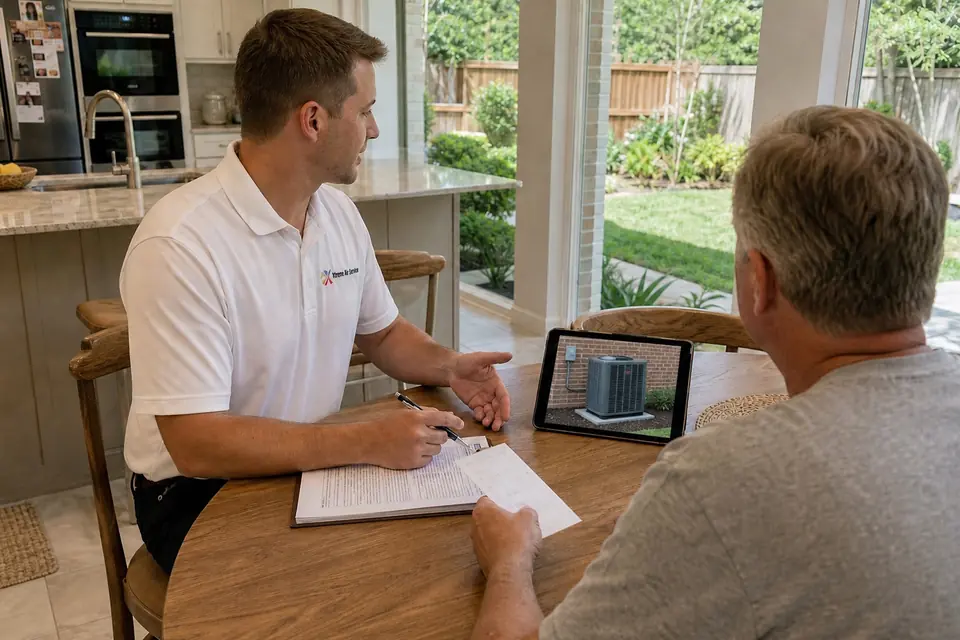
- Is there a service-call fee, and does it apply toward the repair if I move forward?
- Do you charge more for nights, weekends, or holidays?
- Will I get a price before the work starts, not after?
- Are your technicians licensed and insured?
- What happens if you find a second failed part mid-repair?
- Is financing available if this turns into a bigger job?
We hear that first question a lot, and it matters. Our service-call fee runs $26 to $99, and it’s credited toward the repair if you have us do the work. That’s not a gimmick, it’s just fair. Nights and weekends cost the same as a weekday call, too, no overtime surprise waiting at the end.
Financing usually isn’t part of a smaller repair call, since most single-part fixes don’t need it. But if the diagnosis turns up something bigger, like a compressor or a coil, financing options are there so the decision doesn’t have to be rushed. Ask about that upfront too, before anyone opens a panel.
Frequently Asked Questions
Common questions about HVAC system repair
Do you cover all of Sunnyvale, and how fast can you get to my house?
Yes, we cover homes and businesses across Sunnyvale, including newer subdivisions with attic-mounted systems. We schedule calls based on how serious the problem is, so a no-cool emergency in July jumps ahead of a routine check. When you call, tell us exactly what the system is doing. That helps us figure out how urgent your repair really is and get someone out to you as soon as we can.
What happens when your technician shows up at my door?
First, we ask what you’ve noticed, like warm air, strange noises, or short cycling. Then we test the system with a meter instead of guessing, checking capacitors, contactors, and airflow. Once we find the failed part, we show it to you and explain what broke in plain terms. You’ll know what’s wrong before any repair starts, so there are no surprises once the work begins.
Why do Sunnyvale homes seem to have more HVAC breakdowns in summer?
Most newer Sunnyvale homes run the air handler up in the attic, and attic temps can climb past 130 degrees on a July afternoon. That heat bakes the air handler’s electronics and dries out wiring insulation much faster than in a closet setup. The system also runs almost nonstop from May through September. That extra strain, not a factory defect, is usually why a capacitor pops or a contactor sticks.
What’s that blinking light near my indoor unit, and does it mean I need repair?
A blinking red or green light near the indoor unit usually means the condensate float switch has tripped. It shuts the system off on purpose to stop a full drain pan from overflowing onto your ceiling. This happens a lot in attic-mounted systems, which is most newer builds in Sunnyvale. Clearing the drain line or pan sometimes gets it running again, but if it keeps tripping, a technician should check the line.
How long does a typical HVAC repair visit take?
Most single-part repairs are found and finished in one visit, often within a couple hours. A technician tests the system, locates the failed part, and replaces it before leaving. Tougher jobs involving refrigerant or electrical components can take longer. Either way, you’ll get a clear explanation of what broke and what fixing it involves before any work starts, so there’s no guessing about the timeline.
Should I repair my HVAC system or start planning for a replacement?
Most calls we get end with one failed part found and fixed, not a full replacement. A single bad capacitor or motor doesn’t mean the whole system is done. We look at the age of the unit, how often it’s needed repairs, and what’s failed before giving you an honest opinion. If repair keeps your system running well, that’s usually the smarter first step.
Ready to Get Started?
Call 972-288-2263 Today, Get Service Today.