

HVAC System Repair or Replacement: How We Help You Decide
The age, cost and failed-part math behind the call, when a $150 to $400 single-part fix is the right answer, when repeat failures tip it toward replacement, and where the decision is not clear-cut.
What’s Covered on This Page
- The Short Answer: Repair or Replace Comes Down to Age, Cost, and What Failed
- The Factors That Decide Repair vs. Replace
- When We’d Recommend a Repair
- When We’d Recommend Replacement
- Where the Decision Isn’t Clear-Cut
- Related Links
- How do I know whether to repair or replace my HVAC system?
- What’s the mistake buyers make most often when comparing these two options?
- When would you tell me to replace instead of taking my repair money?
- Does a $150 to $700 repair ever make more financial sense than replacing the whole system?
- Is financing available if I end up needing a replacement instead of a repair?
The Short Answer: Repair or Replace Comes Down to Age, Cost, and What Failed
Here’s the plain version. If your system has one bad part – a failed capacitor, a stuck contactor, a dead blower motor – we repair it. Most calls are a single common failure. We fix it on the first visit. That’s true whether it’s 2pm on a Tuesday or 9pm on a Saturday. We don’t charge extra for nights or weekends. The repair cost doesn’t change based on when you call.
Replacement starts making more sense when the failure isn’t isolated. Say a technician opens the unit and finds a failed part. But there’s also a second or third component on its way out. Or the repair would need a major part like a compressor or evaporator coil. The math shifts then. At that point, you’re not comparing a $150 fix to a new system. You’re comparing a bigger repair bill, sometimes with multiple failures, against starting fresh. New equipment is covered under a full manufacturer warranty.
- What failed: a single common part points to repair; multiple failed components at once points to replace
- Part cost and availability: harder-to-source parts add cost and time to a repair
- Equipment age and brand: older equipment can make sourcing specific parts slower or pricier
- Whether the failure is isolated or a symptom of the whole system wearing out
- Your budget and whether financing makes more sense for a repair or a replacement
We won’t tell you to replace a system over one bad capacitor. We also won’t quietly patch a unit that’s failing part by part just to avoid the bigger conversation. Every visit starts with a service call fee of $26 to $99. We credit that toward the repair if you move forward with us. It includes diagnosis, labor, and the standard replacement part. What it doesn’t include is a second major failure discovered mid-repair. Code upgrades or permits get quoted separately once we see what we’re looking at. You can see the full breakdown on our HVAC system repair page before you ever pick up the phone.
Financing isn’t typically part of a smaller single-part repair. But it’s available for larger repairs and full replacements. This applies if that’s the direction the numbers point.
The Factors That Decide Repair vs. Replace
Most HVAC system repair calls run between $150 and $700. The single biggest factor is how many parts have failed. A straightforward job-locate the failed part, repair or replace it, and confirm the system runs right-usually lands at $150 to $400. We fix it the same visit. The number moves from there based on what we find once we’re inside the unit.
- How much of the system failed: one part is a repair; several failed parts start to look like a system giving out
- Part cost and whether it’s sitting on the truck or has to be ordered
- The age and brand of your equipment, since parts for older or discontinued models cost more and take longer to find
- Whether the failure touches a major component like a compressor or coil versus a smaller part like a capacitor or sensor
- Timing, though this one won’t move your price, we charge the same for nights and weekends as we do for a Tuesday afternoon
The repair price covers diagnosis, labor, and the standard replacement part. Plus testing and cleanup before we leave. It doesn’t cover a second failed part we find along the way. Major component swaps, or any code upgrade or permit work, get quoted separately once you can see them in writing. That same $26 to $99 fee applies to the visit. We credit it toward the repair if you decide to move forward with us. Financing isn’t typically part of a job this size. But it’s there for bigger repairs and full replacements where the number gets a lot larger.
Here’s where it gets specific to your unit. Not a general rule. If your system is older, and we’re looking at a second or third major part failing inside a year, sinking another repair bill into it usually isn’t the better move. We’ll tell you that directly instead of just quoting the fix. Multiple failed components on an aging unit is the one situation where repair math stops working in your favor. We’d rather say so before you spend the money than after.
You’ll get all of this in writing before any work starts. Our main service page has more on how the full HVAC system repair process runs from the first call to the final walkthrough.
One local factor weighs on this more than most. Most Sunnyvale homes run the air handler up in the attic, where temperatures can climb past 130 degrees on a July afternoon, and that heat wears out the blower motor and the wiring around it faster than you would expect. On an older system, that is often what turns a single failed part into the second or third failure inside a year.
When We’d Recommend a Repair
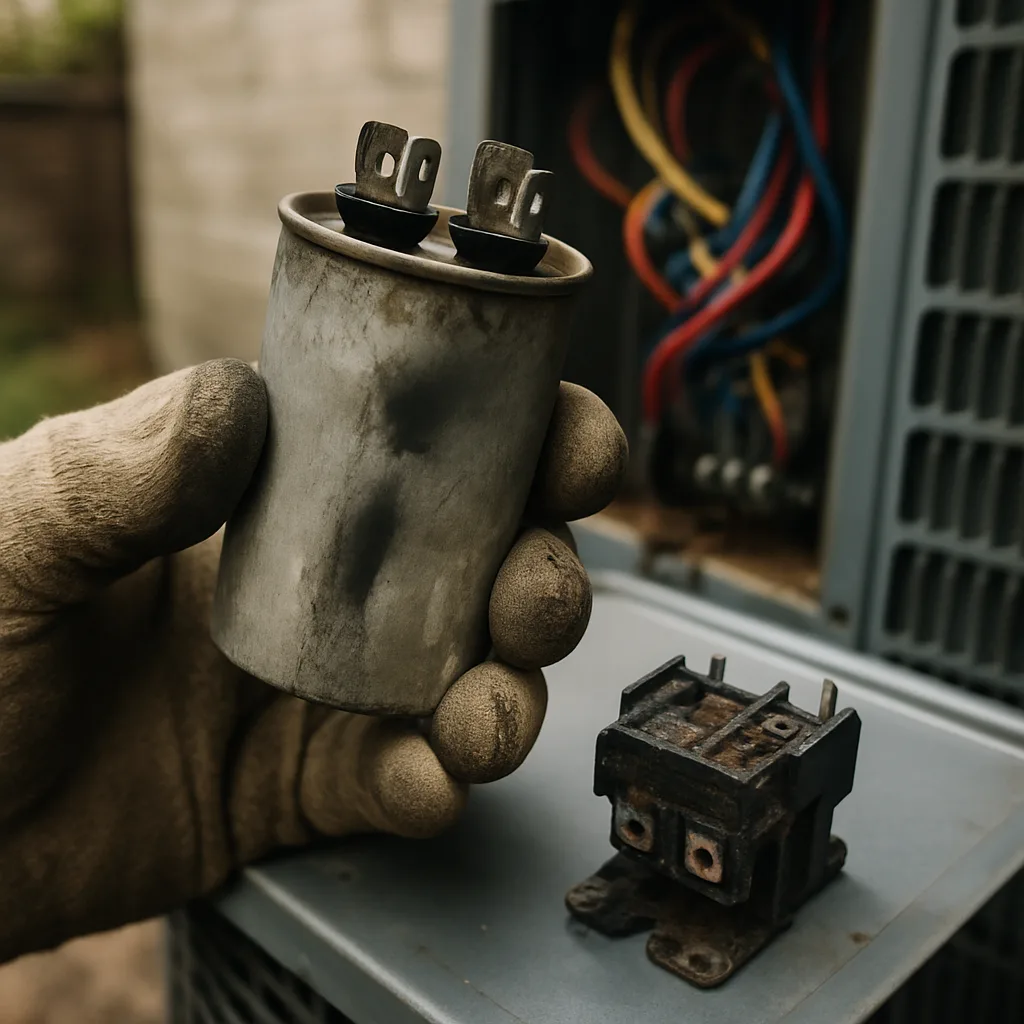
We recommend a repair when a technician finds one clear, isolated failure. The system is otherwise running the way it should. Most calls fall into this bucket. A capacitor gives out. A sensor fails. A blower motor seizes. The rest of the system is fine. That’s a single-visit fix. It’s why most HVAC system repair calls land in the $150 to $400 range for common issues. The full typical range runs $150 to $700, depending on the part.
Our HVAC system repair process starts with a same-day diagnostic visit. We find the actual root cause, not a guess. Then we write up a flat-rate quote before any work starts. If the diagnosis points to one part, and the cost fits inside that normal range, repair is almost always the right call. You get the system running again without paying for equipment you don’t need yet.
A few things push a job toward the higher end of that range. But it still stays a repair rather than a replacement. These things are how hard the failed part is to source. The brand and age of the equipment. Whether the fix touches more than one component. None of that changes what’s included. Every repair covers the diagnosis, labor, and the standard replacement part, plus testing and cleanup. So you know what you’re paying for before we touch anything.
If the diagnostic turns up more than one failed component, or the failure points to a major part like a compressor on an older unit, repair costs can climb fast. They might start competing with replacement cost. We’ll tell you that on the spot, in the quote, before you approve anything. Nobody gets surprised by a bigger number after the work is already done.
- A single part failed and the rest of the system tests fine
- The repair cost falls within the normal $150 to $700 range for the job
- The part is available and doesn’t require a major component swap
- The system doesn’t have a history of multiple failures stacking up
That service call fee gets credited toward the repair if you move forward with us. So the diagnostic visit isn’t money you lose either way. And it doesn’t matter if we’re out there on a Saturday night or a Tuesday afternoon. We don’t charge extra for nights or weekends. Timing never has to factor into whether repair makes sense for your budget.
Have questions? We’re happy to help.
Call Today, Get Service Today. Xtreme Air Services is ready to help.
When We’d Recommend Replacement
We lean toward replacement when the repair itself stops making financial sense. Most HVAC system repair calls run $150 to $700. The common fix lands in the $150 to $400 range. But when a diagnosis turns up more than one failed part, or the part we need is hard to source because of the equipment’s age or brand, that number climbs. At a certain point, spending toward the top of that range on a system already showing its age isn’t the better move.
Multiple failures at once is the clearest signal. A single bad capacitor or a dirty flame sensor is a straightforward fix. A blower motor going out the same year the condenser coil starts leaking is a different conversation. You’re not paying for one repair. You’re paying for a pattern.
Part availability plays into it too. Older systems and some brands use components that take longer to find. They might cost more because they’re less common now. That drives the repair price up. And it doesn’t make the system any newer or more efficient once fixed.
We’d rather quote you the real repair number and let you decide. We won’t steer you toward a new system you don’t need yet. That’s why our process includes a written, flat-rate quote before any work starts. Repair and replacement are laid out side by side. Financing is mentioned where it helps. You see both numbers before you approve anything, not after.
Replacement carries its own backing. New equipment we install comes with the manufacturer’s equipment warranty on the parts. Plus our workmanship warranty on the labor. And our 100% satisfaction guarantee on the job itself. That’s three layers instead of one. It matters more the bigger the investment gets.
If you’re trying to figure out where your situation falls, our HVAC system repair page walks through what a typical repair visit looks like. It also explains what’s included before you ever get to a replacement decision.
Where the Decision Isn’t Clear-Cut
Most calls to us aren’t a hard call at all. A single failed part on a system running fine otherwise gets fixed. And you’re done. The gray area shows up when the numbers get close. An older unit needs a part that costs almost as much as putting in a new system would over a few years. Or the same system has failed more than once in a short stretch.
We work through this with you using real factors, not a gut feeling. How much of the system failed matters. One bad capacitor is a different conversation than a failed compressor. Part cost and how fast we can get it matters too. Some brands and older models take longer to source. Age counts. And so does whether this is the second or third repair on the same unit in a year or two. None of that changes based on when you call us. Nights and weekends cost the same as a weekday visit. Timing never pushes the decision one way or another.
- A single common part failure on a system under 8 to 10 years old, we repair it, most jobs in this range run $150 to $400
- A major component like a compressor or coil failing on a system past 12 to 15 years, replacement usually makes more financial sense
- Multiple parts failing at once or repeat visits for the same unit, we’ll walk you through both costs side by side
- A rare or discontinued part that’s hard to source, this can tip the math toward replacing sooner than the age alone would suggest
If your system is younger and the failure is a single, ordinary part, we’re going to recommend the repair every time. Replacing a good system early doesn’t make sense for you or for us. But if you’re looking at a compressor or a major failure on a system already past its expected life, we’ll say plainly that another repair is often just delaying a cost you’re going to pay anyway. That’s not a pitch to replace. It’s what the numbers tend to show once you’ve owned a system that long.
The full cost breakdown, including what’s included in a repair visit and what typically pushes the price up, is laid out on our HVAC system repair page.
Frequently Asked Questions
Common questions about HVAC system repair
How do I know whether to repair or replace my HVAC system?
We look at what failed, not just the age of the unit. One isolated failure, like a capacitor or blower motor, usually points toward a repair. Multiple failed components at once, or a major part like a compressor, usually points toward replacement. We walk through what we found before quoting anything, so the decision fits your equipment, not a general rule. Full details are on our HVAC system repair page.
What’s the mistake buyers make most often when comparing these two options?
The most common mistake is comparing today’s repair price to a full replacement price. It skips whether more parts might fail soon. A $150 to $400 repair can look like the obvious cheaper choice next to a full system swap. But if a technician finds a second or third component failing, the repair number can climb and the math changes. We’d rather point that out up front than let the comparison stop at one number.
When would you tell me to replace instead of taking my repair money?
We’d tell you to replace when we find multiple failed components on an aging system, not just one bad part. A single capacitor or sensor failure is a repair every time. But a second or third major part failing close together usually means the whole system is wearing out. At that point we’ll say so directly instead of quoting another fix. You’ll see everything in writing before deciding either way.
Does a $150 to $700 repair ever make more financial sense than replacing the whole system?
Yes, when the failure is isolated to one part and the system is otherwise running well. Most repair calls land between $150 and $400 for a single common failure, fixed the same visit. That’s a straightforward fix, not a stopgap. Replacement starts making more financial sense once repair costs climb toward major-component territory. New equipment also carries a full manufacturer warranty a repair doesn’t.
Is financing available if I end up needing a replacement instead of a repair?
Yes. Financing isn’t typically part of a smaller single-part repair, since those usually run $150 to $400. But it is available for larger repairs and full system replacements, where the total is bigger. If a technician finds enough failed components that replacement makes more sense, we’ll walk through that option as part of the quote.
Ready to Get Started?
Call 972-288-2263 Today, Get Service Today.