


HVAC System Maintenance in Sunnyvale: Keep Your System Running Before It Breaks Down
Scheduled cleaning, calibration and wear checks that catch small failures while they are still cheap to fix.
What’s Covered on This Page
- What’s Included in a Full HVAC Maintenance Visit
- Warning Signs Your System Needs Attention Soon
- When Maintenance Isn’t the Right Call
- Seasonal Service Timing for Sunnyvale Homes
- How HVAC Maintenance Pricing Works
- How soon can I get an HVAC maintenance appointment in Sunnyvale?
- What should I expect when a technician arrives for a maintenance visit?
- Why do Sunnyvale homes with attic HVAC units need more frequent checkups?
- How can I tell if my HVAC system needs maintenance instead of a repair call?
- Is a routine filter change the same as HVAC maintenance?
- When is the best time of year to schedule HVAC maintenance in Sunnyvale?
What’s Included in a Full HVAC Maintenance Visit
Here’s what happens when we show up. A lot of folks assume maintenance means a quick filter change and a thumbs up. It’s not. We’re checking the whole system, inside and out.
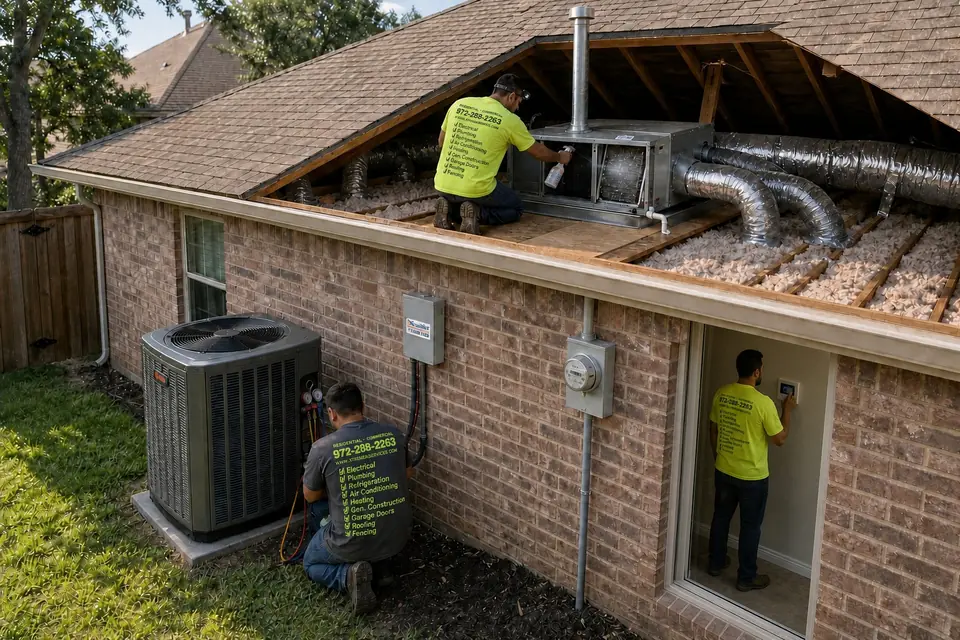
- A full inspection of your system, checking electrical connections, refrigerant levels, and airflow
- Cleaning of coils, blower parts, and drain lines where buildup collects over a Texas summer
- A performance and safety check on the whole unit, not just the parts you can see
- A look at your filter, with a recommendation if it’s time to replace it
- Straight talk on what we found, so you know what’s fine and what needs attention
This visit does not cover repair parts or corrective work. If we find something broken during the inspection, that gets quoted separately, so you’re never surprised by extra work added to the bill. Most maintenance visits for one system run $100 to $200, with the full range landing between $100 and $300 depending on the system and how much buildup we find. There’s a $26 to $99 service call fee, and it gets credited toward the repair if you move forward with us. As a Trane Comfort Specialist team, we’ve seen what happens when maintenance gets skipped, and it’s rarely cheap to fix later.
Warning Signs Your System Needs Attention Soon
Most breakdowns don’t happen out of nowhere. Usually the system’s been trying to tell you something for weeks. You just didn’t know what to listen for.
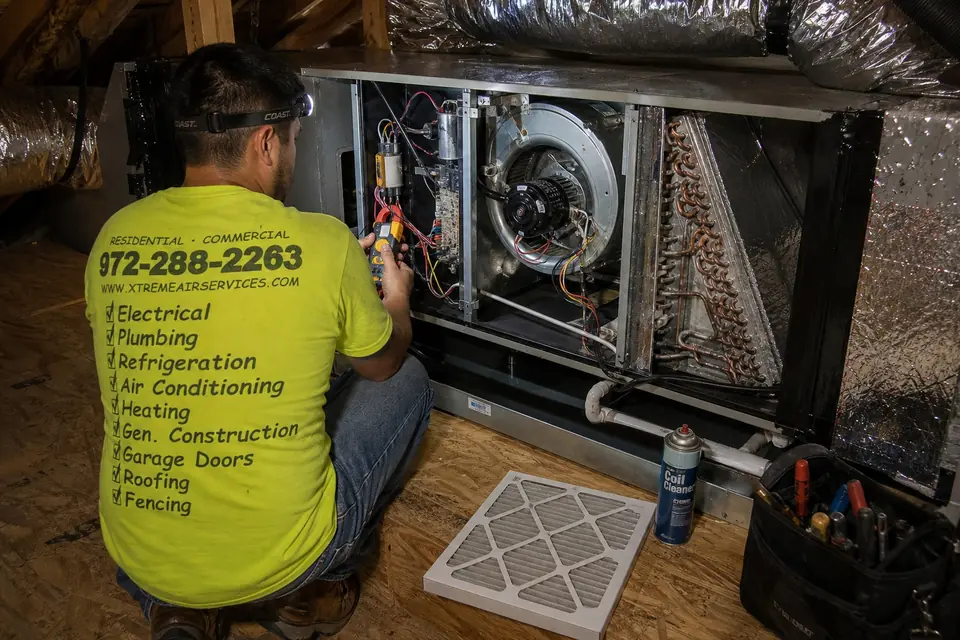
In Sunnyvale, a lot of homes run their HVAC unit tucked up in the attic, and that space can hit well over 130 degrees on a July afternoon. A system that’s already struggling doesn’t get any relief up there, so warning signs show up fast once the heat settles in for the season.
- Short cycling, where the system turns on and off every few minutes instead of running a normal cycle
- Warm or weak air coming from vents even though the thermostat looks set right
- A musty smell when the system kicks on, which often points to moisture sitting where it shouldn’t
- Ice building up on the coil or line, even in the middle of summer
- Your energy bill creeping up month over month with no change in how you use the house
- Rattling, clicking, or a hum that wasn’t there before
Any one of these on its own might not mean much. But two or three together, that’s usually a system asking for help before it quits on you completely.
Not sure if what you’re hearing counts as a real warning sign? That’s a fair question, and it’s one we get a lot. If it’s new, or it’s getting worse, it’s worth a look.
When Maintenance Isn’t the Right Call
Here’s the honest part. If your system is already down, hot air blowing, no air at all, a breaker that keeps tripping, that’s not a maintenance visit. That’s a repair call, and we’ll tell you that on the phone before we ever schedule a truck.
Maintenance is preventive. It’s for a system that’s running, but you want it checked before it isn’t. So if you’re standing in a warm house right now, skip the tune-up talk and get us out for a repair diagnosis instead.
- No cooling or heating at all, even a little
- A breaker that trips every time the system kicks on
- Water pooling near the indoor unit right now
- A strong burning smell or grinding noise you can hear from another room
- You had a full inspection done in the last few months and nothing’s changed
Some folks call us thinking a filter swap counts as maintenance. It doesn’t, not fully. A basic filter change you can do yourself between visits, no need to pay for that. And if your system is brand new, still under the builder’s first-year coverage, ask what that covers before booking anything extra. We’d rather tell you that upfront than take a call we shouldn’t.
Ready when you are – get in touch today.
Call Today, Get Service Today. Xtreme Air Services is ready to help.
Seasonal Service Timing for Sunnyvale Homes
Timing matters more than people think. Spring and fall are the sweet spot for HVAC system maintenance in Sunnyvale, right before the system has to work its hardest.
Here’s why. Summer in this part of Texas doesn’t ease in, it slams the door open. One week it’s mild, the next you’re running the AC nonstop just to keep the house at 74. If a system’s got a weak capacitor or a dirty coil, that’s when it gives out, usually on the hottest day possible. Sound familiar? Most of our summer emergency calls trace back to a system that never got a spring check.
Fall matters too, especially for homes with newer construction where the furnace shares attic space with the AC unit. A lot of Sunnyvale subdivisions built in the last couple decades run HVAC equipment up in the attic, and attic temperature swings put extra strain on components that don’t get looked at until something quits.
- Spring visit, ideally March or April, before daily highs push past 85
- Fall visit, September or October, before the first real cold front rolls through
- Twice-a-year service catches wear before it turns into a breakdown
- If your system’s part of a maintenance plan, timing is already built in for you
Waiting until the system struggles costs you comfort and money. Booking ahead just makes sense.
How HVAC Maintenance Pricing Works
Most HVAC system maintenance visits run somewhere between $100 and $300. The most common job, a routine tune-up on one system, usually lands between $100 and $200. That covers a full inspection, cleaning, and a performance and safety check on your equipment.
So what pushes a visit toward the higher end? A few things.
- How many systems or units need attention, one unit costs less than a two-system home
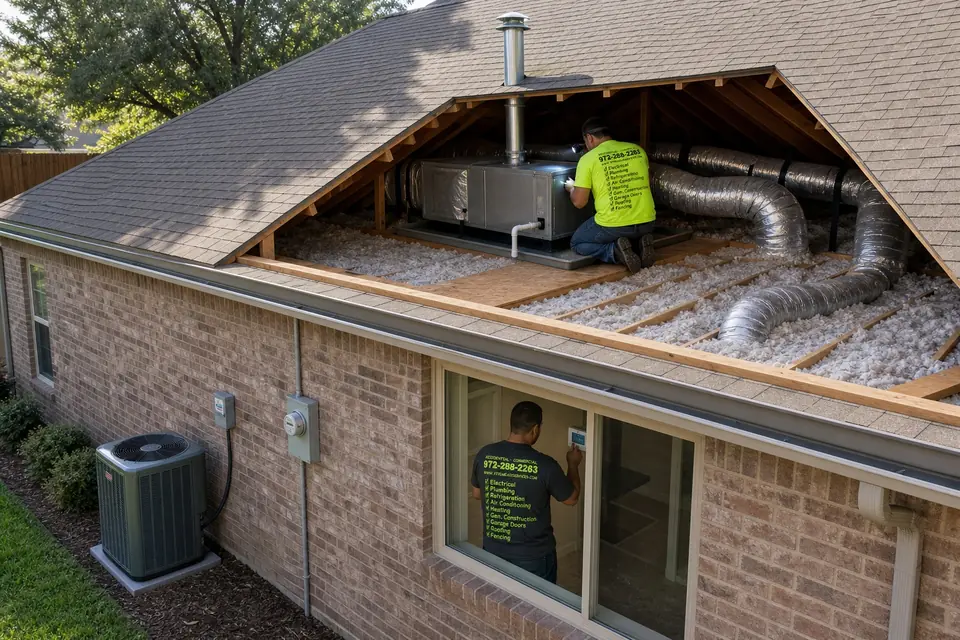
- How easy the equipment is to reach, an attic unit takes longer than a garage unit
- How much buildup or neglect has piled up, a unit that’s never been serviced needs more work
- Whether it’s a one-time visit or part of an ongoing maintenance plan
Here’s the part folks appreciate. The visit includes the inspection, the cleaning, and the safety check. It does not include repair parts or corrective work, that gets quoted separately once we know what’s wrong. We won’t fix something you didn’t agree to pay for.
If you call for a repair instead of maintenance, there’s a service-call fee between $26 and $99. And here’s the thing most people don’t expect: that fee gets credited toward the repair if you move forward with us. You’re not paying twice.
Before you hire anyone for HVAC system maintenance, ask two questions. What exactly is included in the visit? And how do you handle it if you find something broken while you’re in there? A straight answer to both tells you a lot about who you’re dealing with.
Frequently Asked Questions
Common questions about HVAC system maintenance
How soon can I get an HVAC maintenance appointment in Sunnyvale?
We book most maintenance visits within a few days, especially outside peak summer weeks. Spring and fall fill up fast because that’s when smart homeowners get ahead of the heat. If your system is already down and blowing warm air, tell us on the phone. We’ll treat that as a repair call instead and get someone out sooner. Booking early in March or September gives you the best pick of appointment times before the rush hits.
What should I expect when a technician arrives for a maintenance visit?
You’ll get a full walk-through, not just a filter swap. We check electrical connections, refrigerant levels, and airflow, then clean coils, blower parts, and drain lines. After that, we test performance and safety on the whole unit. Before we leave, we tell you exactly what we found, including your filter’s condition. If something’s broken, we quote that separately so you know the difference between maintenance and repair costs upfront.
Why do Sunnyvale homes with attic HVAC units need more frequent checkups?
Attic-mounted systems take more punishment because that space can hit well over 130 degrees on a July afternoon. Many newer Sunnyvale subdivisions built in the last couple decades run both the furnace and AC up there, so components get hit hard by heat swings all year. A system that’s already struggling gets no relief in that heat. That’s why spring checkups before summer highs push past 85 matter so much for these homes.
How can I tell if my HVAC system needs maintenance instead of a repair call?
If your system still runs but you’re noticing warning signs, that’s maintenance territory. Watch for short cycling, weak airflow, a musty smell, or ice on the coil even in summer heat. If two or three of these show up together, book a checkup soon. But if you’ve got no cooling at all, a tripping breaker, or water pooling by the indoor unit right now, skip the tune-up talk and call for a repair diagnosis instead.
Is a routine filter change the same as HVAC maintenance?
No, a filter swap alone doesn’t count as full maintenance. You can handle basic filter changes yourself between visits, and there’s no need to pay for that. A real maintenance visit covers inspection, cleaning, and a performance and safety check across the whole system, not just what you can see. If your filter needs replacing, we’ll flag that during the visit and let you know if it’s time.
When is the best time of year to schedule HVAC maintenance in Sunnyvale?
Spring and fall are the sweet spot, ideally March or April and again in September or October. Texas summer heat arrives fast, and a weak capacitor or dirty coil often fails on the hottest day possible if it’s not caught early. Fall visits matter too, especially for attic systems that share space with the furnace. Twice-a-year service catches wear before it turns into a summer breakdown or an unexpected repair call.
Ready to Get Started?
Call 972-288-2263 Today, Get Service Today.