


HVAC Duct & Vent Installation in Sunnyvale: Fix Uneven Airflow for Good
New and repaired ductwork with airflow balanced room by room, for houses where some rooms never quite cool.
What’s Covered on This Page
- Warning Signs You Need New Duct & Vent Installation
- When Duct Sealing or Repair Is the Better Fix
- What Determines Duct Installation Cost
- Inside a Professional Duct & Vent Installation Project
- How Airflow Is Tested After Installation
- How long does duct and vent installation usually take?
- How do I know if I need duct repair instead of full replacement?
- What should I expect when your technician arrives?
- Why does one room in my Sunnyvale home always feel hotter than the rest?
- How do you test airflow after a duct installation?
- Do I need a permit to replace ductwork in Sunnyvale?
Warning Signs You Need New Duct & Vent Installation
So how do you know it’s the ducts and not the unit? Start with the rooms. If one bedroom never cools down no matter what the thermostat says, that’s usually a duct problem, not a compressor problem.
- One or two rooms always feel warmer or colder than the rest of the house
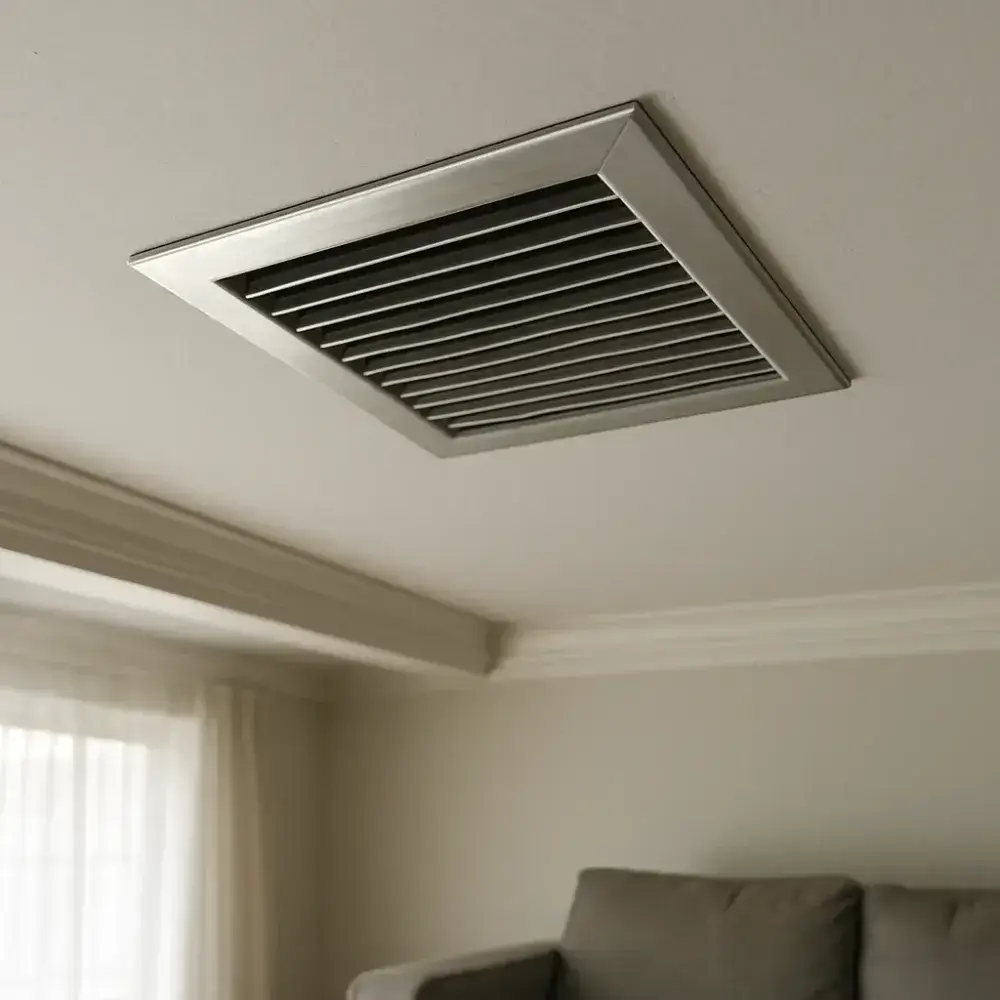
- You hear whistling, rattling, or a hollow banging sound near the vents
- Dust builds up fast around registers even right after cleaning
- Your energy bill climbed but your habits didn’t change
- The ductwork is original to a home built decades ago
A lot of Sunnyvale homes built in the 80s and 90s still route ductwork through hot attics. After thirty-plus years of Texas summers, that insulation breaks down and the metal seams work loose. We see it every year, a homeowner replaces the AC unit, the bill barely budges, and it turns out the real problem was air leaking out before it ever reached the vent.
Not sure if what you’re feeling counts as a real problem? If a room feels a little off but you can live with it, that’s one thing. If you’re running the system nonstop just to keep up, that’s your ductwork asking for help.
When Duct Sealing or Repair Is the Better Fix
Not every duct problem needs a full install. Sometimes what you’ve got is fine, it just needs sealing or a repair.
If your ductwork is under 15 years old and the layout still matches your home’s floor plan, tearing it all out is overkill. A leaky joint in the attic, a crushed flex run under a Sunnyvale slab foundation, a boot that came loose behind a wall, these get fixed with duct sealing or a targeted repair, not a full replacement.
- Uneven cooling in one or two rooms, but the rest of the house feels fine
- Ducts less than 15 to 20 years old with no crushing, sagging, or rodent damage
- Rising energy bills with no other clear explanation
- Whistling or hissing sounds near vents or up in the attic
- A recent renovation that didn’t touch the duct layout at all
If your ducts check those boxes, we’ll tell you straight: sealing or repair is the smarter move. Full replacement makes sense when the ductwork is old, undersized for the home, damaged in multiple spots, or wasn’t sized right in the first place, not simply because a system has a few years on it.
We see this every week. A homeowner calls expecting to hear you need all new ducts, and instead we find one bad connection in the attic. Sealing it fixes the whole complaint.
Nine times out of ten, if the ductwork is holding air and reaching every room, a repair gets you back to full comfort for a lot less disruption. Not sure which one you’ve got? That’s what an inspection is for, not a guess made over the phone.
What Determines Duct Installation Cost
Every duct job is priced by what’s actually happening behind your walls and in your attic, not by a flat number someone quotes over the phone. A standard like-for-like install, using your existing connections with no major changes, runs $2,800 to $5,400 for most homes. That’s the most common job we run. Full duct and vent installation across a whole home typically falls between $1,500 and $8,000, depending on the scope.
So what pushes a job toward the low end or the high end? A few things.
- Equipment size and efficiency, meaning the tonnage and SEER2 rating your system needs to match your square footage
- How easy or hard it is to get into your attic or crawlspace
- The condition of your existing ductwork, since damaged or undersized runs cost more to replace than to reuse
- Whether code upgrades or permits are required for the work
- Any custom sheet metal fabrication needed for tight spots or odd layouts
If you just need one or two runs replaced instead of the whole system, that’s usually priced separately, around $250 to $500 per run. Full installation includes the equipment, materials, professional installation, standard connections, startup and testing, and haul-away of the old ductwork. It does not include electrical or plumbing modifications, code corrections, or permits unless we’ve already talked about those upfront. We’ll walk your attic with you and explain exactly what we’re seeing before any number gets written down. And if a bigger job makes sense for your home, flexible financing is available so the cost doesn’t have to hit all at once. 80 six days a week.
Thinking about HVAC duct & vent installation? Let’s talk.
Call Today, Get Service Today. Xtreme Air Services is ready to help.
Inside a Professional Duct & Vent Installation Project
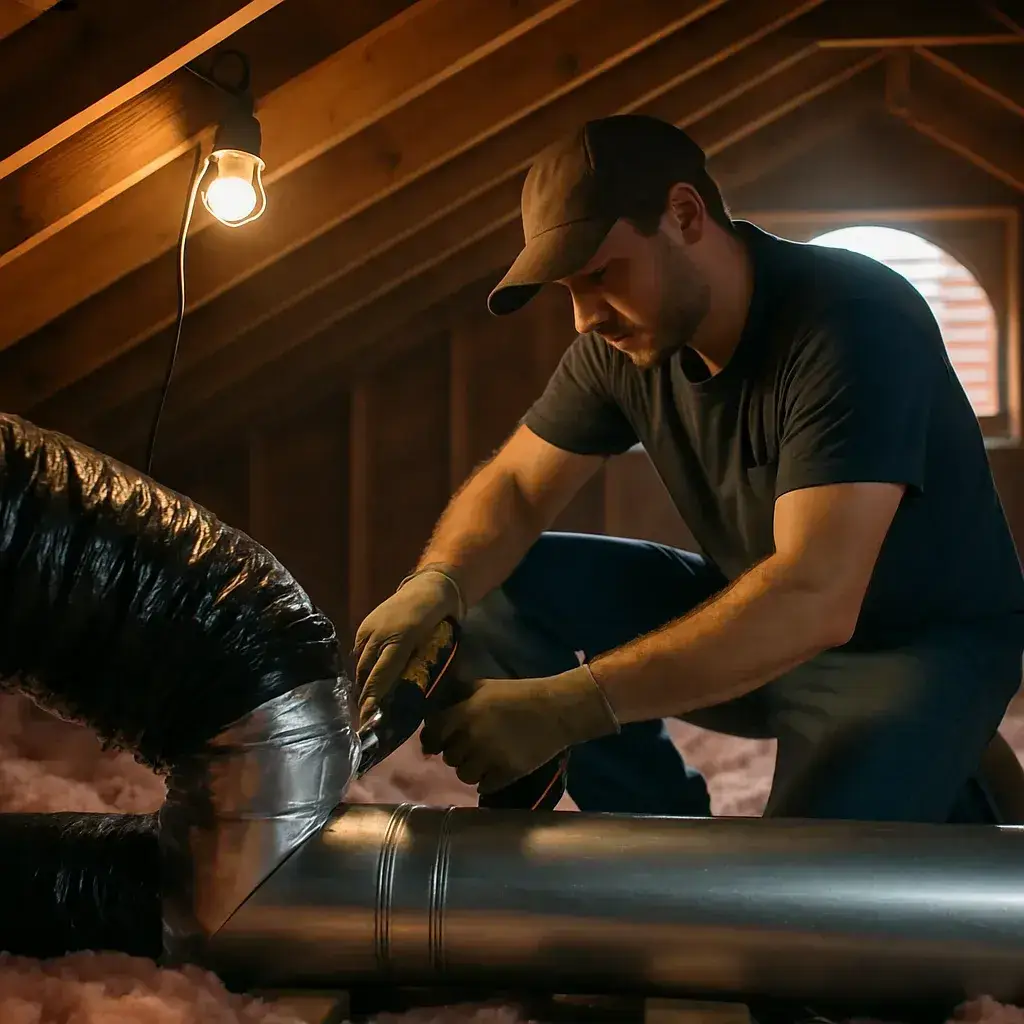
Here’s what a real install day looks like, start to finish. Most Sunnyvale homes run ductwork through the attic, and attic temps here can climb well past 130 degrees in summer. That heat is exactly why sealing and insulation matter so much, a poorly sealed joint up there bleeds cooled air before it ever reaches your vents.
- We check existing connections, supply and return sizing, and airflow to each room.
- Old or damaged duct sections get removed and hauled away.
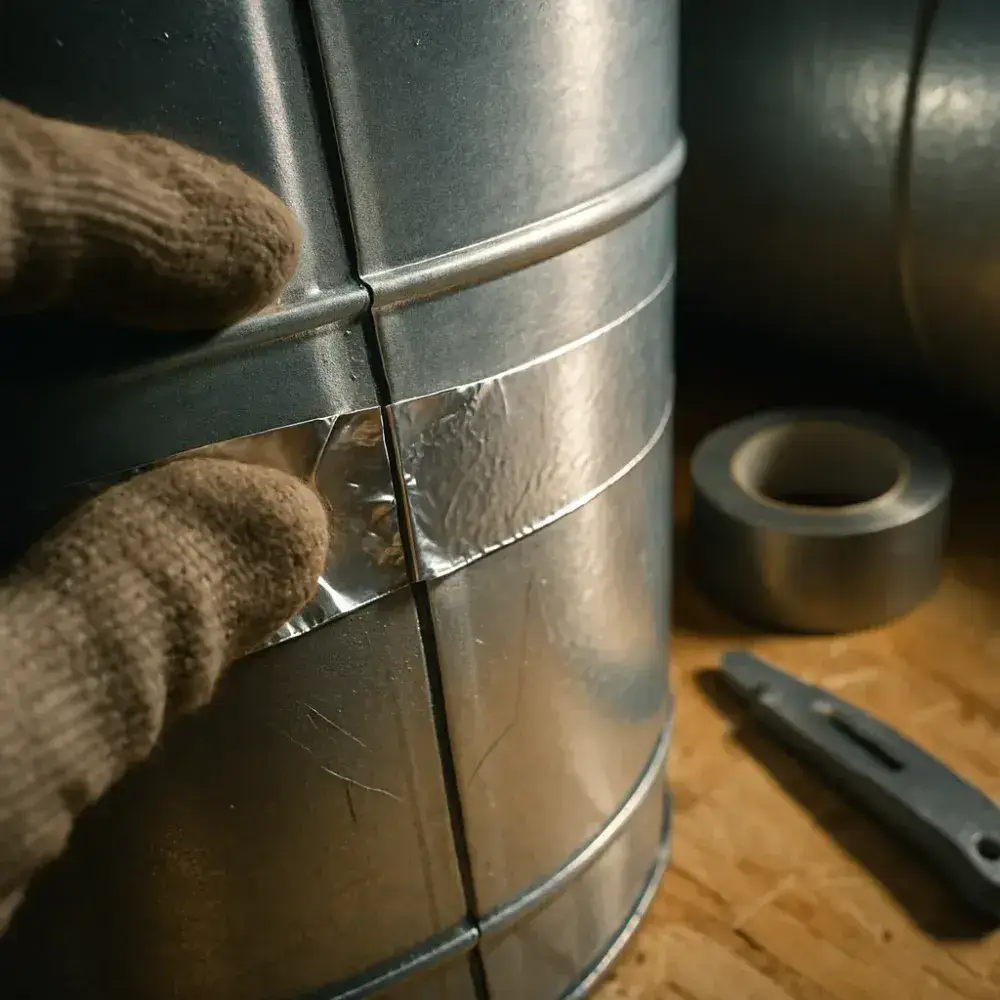
- New duct runs get connected, sealed at every joint, and supported so they don’t sag over time.
- Vents and registers get set in place and checked for airflow and fit.
- The whole system gets started up, tested, and checked room by room for even airflow.
- We walk the home with you and explain what we did, in plain English.
Nine times out of ten, the difference between a system that cools evenly and one that leaves a back bedroom stuffy comes down to steps two and three. Skip the sealing, skip the support, and you’ll be back to square one in a summer or two. A rushed crew can knock out connections in an afternoon, sure. But testing and balancing take real time, and that’s the part that keeps your bedrooms and living room at the same temperature come August.
How Airflow Is Tested After Installation
Installing the duct isn’t the finish line. We test it, every time, before we call the job done. A duct that looks right on paper can still leave one bedroom warm and another freezing if nobody checks the actual airflow moving through it.
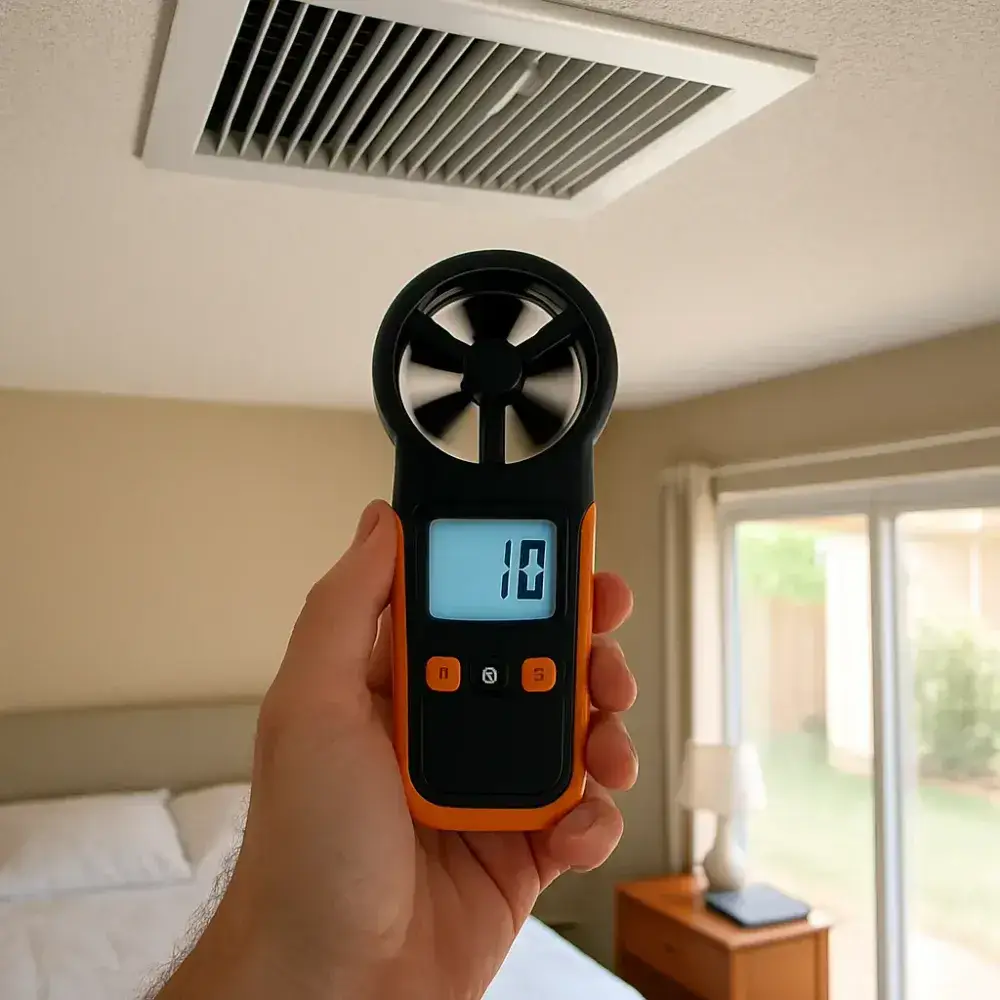
Here’s the truth: most airflow problems in Sunnyvale homes trace back to attic duct runs that lose air over long stretches. So we don’t guess. We measure.
- Check static pressure at the air handler to make sure the system isn’t straining against too much resistance
- Test airflow at every register with a flow hood, not just a hand held near the vent
- Balance the dampers so no single room is starving while another gets blasted
- Confirm return air volume matches what’s leaving the supply side
- Check the temperature split at the thermostat to confirm the system is cooling or heating the way it should
We see this every single week: a homeowner assumes weak airflow in the back bedroom means they need a bigger unit. Turns out it’s a damper that was never balanced. Testing catches that before you spend money on the wrong fix.
A single-sentence truth: if nobody measured it, nobody verified it.
We hand you real numbers, not a shrug and a handshake. That’s the difference between an install that looks finished and one that performs the way it should for years.
Frequently Asked Questions
Common questions about HVAC duct & vent installation
How long does duct and vent installation usually take?
Most full installs take one to two days, depending on your home’s size and attic access. A straightforward, like-for-like swap in a single-story home often wraps up in a day. Homes with tight attic crawlspaces or several rooms needing new runs can take longer. We test and balance airflow before we leave, so the extra time up front means you won’t be dealing with a stuffy back bedroom next summer.
How do I know if I need duct repair instead of full replacement?
If your ductwork is under 15 years old and only one or two rooms feel off, repair or sealing is usually the smarter fix. Full replacement makes more sense when ducts are old, undersized, or damaged in multiple spots. We’ve walked into plenty of Sunnyvale attics expecting a full job and found one loose connection instead. An inspection tells you which one you need, not a guess over the phone.
What should I expect when your technician arrives?
Your technician starts by checking your existing duct connections, sizing, and airflow to each room before touching anything. We’ll walk your attic with you and point out exactly what we’re seeing, in plain language. You’ll know what’s causing the problem before any work begins. Once the job’s done, we test airflow room by room and walk you through what changed, so you’re not left guessing why your bedroom finally cools down.
Why does one room in my Sunnyvale home always feel hotter than the rest?
Uneven cooling almost always points to a duct problem, not the AC unit itself. Many Sunnyvale homes built in the 80s and 90s route ductwork through attics that hit past 130 degrees in summer, which breaks down insulation and loosens metal seams over time. Cooled air leaks out before it reaches the vent. Replacing the AC unit won’t fix that. Sealing or repairing the actual duct run usually solves it.
How do you test airflow after a duct installation?
We check every room individually after startup to confirm air is reaching each vent at the right volume. This means walking the house with a meter, not just listening for the system to kick on. Skipping this step is why some installs leave one bedroom stuffy while the living room feels fine. Testing and balancing takes real time, but it’s the difference between an even house and one you’re still adjusting fans in come August.
Do I need a permit to replace ductwork in Sunnyvale?
Permit needs depend on the scope of your project, especially if the work involves code upgrades or changes to your existing system layout. A simple like-for-like duct swap often doesn’t trigger the same requirements as a full system redesign. We’ll flag upfront whether your job needs permitting so there are no surprises once work starts. It’s always worth asking before you book, not after the crew is already in your attic.
Ready to Get Started?
Call 972-288-2263 Today, Get Service Today.