


HVAC System Repair in Fort Worth: Get It Fixed Right the First Time
Repairs that fix the cause, not just the symptom – with quick checks to try first and a clear call on what can wait.
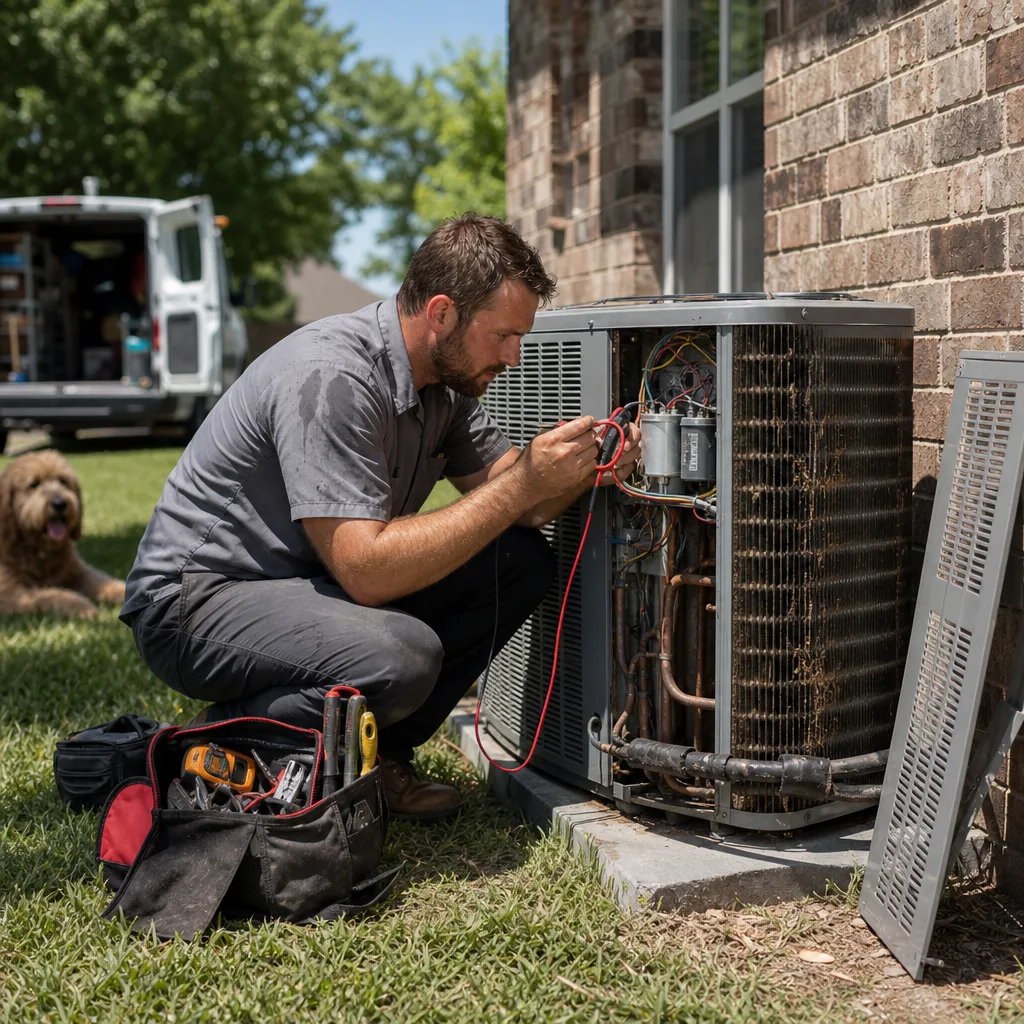
What’s Covered on This Page
- Signs Your HVAC System Needs Repair Now
- Check These Three Things Before You Call
- What Happens During a Repair Visit
- What HVAC Repair Costs and What’s Included
- Repair or Replace: How Equipment Age Factors In
- What is the $5000 rule for HVAC?
- Can I troubleshoot my HVAC system myself before calling someone?
Signs Your HVAC System Needs Repair Now
Your system usually tells you something’s wrong before it quits. The trick is knowing which signs mean a part is on its way out. Here’s what to watch for and what it usually means.
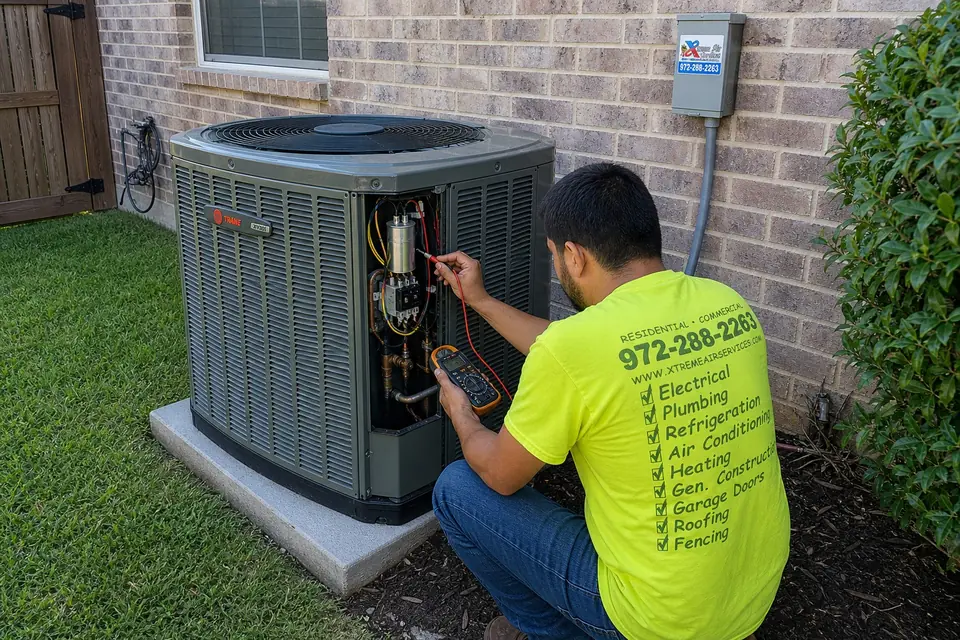
- Warm or lukewarm air from the vents. The system is running but not cooling. That often points to a weak capacitor, a refrigerant leak, or an outdoor fan that isn’t turning.
- Weak airflow. You can barely feel air at the register, even with the fan on high. A struggling blower motor, a frozen coil, or a duct problem can all cause this.
- New noises. Grinding, squealing, rattling, buzzing, or repeated clicking isn’t normal. Squeals and grinding often come from motor bearings or belts. Buzzing and clicking can mean an electrical part is failing.
- Short cycling. The system kicks on, runs a few minutes, and shuts off, over and over. That’s hard on the whole unit and often traces back to a sensor, a control board, or a refrigerant issue.
- Won’t turn on at all. The thermostat says cool or heat and nothing happens. The cause could be a thermostat fault, a tripped safety switch, or a failed electrical part.
- Ice on the copper lines or indoor coil. It sounds backward in the heat, but ice usually means low refrigerant or restricted airflow. Running it that way puts strain on the compressor.
- A burning or electrical smell. A hot, burnt, or plastic smell can mean a motor or wiring is overheating. Don’t wait on this one.
- Energy bills climbing for no reason. If your usage habits haven’t changed but the bill keeps rising, the system is working harder to do the same job.
If your system sits in the attic, as many North Texas homes do, watch for water. A clogged condensate drain line can back up and overflow the pan, and that water ends up in your ceiling. A brown spot on the ceiling below the unit, or a system that shuts itself off on a hot afternoon, can both trace back to that drain.
Heating has its own warning signs, and sudden cold fronts tend to expose them. A furnace that clicks but won’t light, a heat pump blowing cool air in heat mode, or rooms that never warm up evenly all mean a part needs attention. Ignitors, flame sensors, and blower motors are common culprits.
Timing matters more than most people think. In Texas heat, your system runs hard for long stretches. A small problem like a weak capacitor makes everything else work harder until something bigger gives out. Most repair calls come down to a single common failure that gets fixed on the first visit. Calling when you first notice a sign is how you keep it that way.
Check These Three Things Before You Call
Before you pick up the phone, take five minutes and check these three things. Some systems that seem broken aren’t broken at all. If one of these gets your air running again, that’s a good day. You keep your money, and you didn’t have to wait on anybody.
1. The thermostat. Make sure it’s set to Cool (or Heat in winter) and not Off. Set the temperature a few degrees past what the room is now, so it has a reason to run. Check that the fan is on Auto. If the screen is blank, swap the batteries if your model uses them. Smart thermostats can drop their Wi-Fi connection or follow a schedule you forgot you set, so look at the schedule too. Many systems also have a short built-in delay before the outdoor unit starts back up. Give it five minutes after you change a setting before you decide it isn’t working.
2. The breakers and power switches. Open your electrical panel and look for a tripped breaker marked AC, furnace, condenser, or air handler. A tripped breaker sits in the middle or the off position. Flip it fully off, then back on, one time. Then check the two places people forget:
- The disconnect box on the wall next to your outdoor unit. Make sure nobody has pulled it out or switched it off while mowing or doing yard work.
- The switch near your furnace or air handler. It often looks just like a light switch, and it’s easy to bump in a closet or an attic when you’re moving boxes.
If that breaker trips again, leave it off. A breaker that trips twice is telling you a part is pulling too much power, and flipping it over and over won’t fix that.
3. The air filter. Pull it out and hold it up to a light. If it’s gray, packed with dust, and you can’t see light through it, put in a new one. A clogged filter chokes the airflow, and that’s one of the most common reasons coils freeze up. Through a Texas summer your system runs long hours, so filters fill up faster than you’d expect. Checking it once a month during the hot season is a good habit.
If a new filter or a reset breaker solved it, you don’t need a technician today. Just keep an eye on it. If the same breaker trips again next week, or the filter clogs up much faster than it used to, that pattern is worth having looked at before it turns into something bigger.
What Happens During a Repair Visit
Here’s how a repair visit goes from start to finish. You’ll know what you’re paying for and exactly when you get to say yes or no.
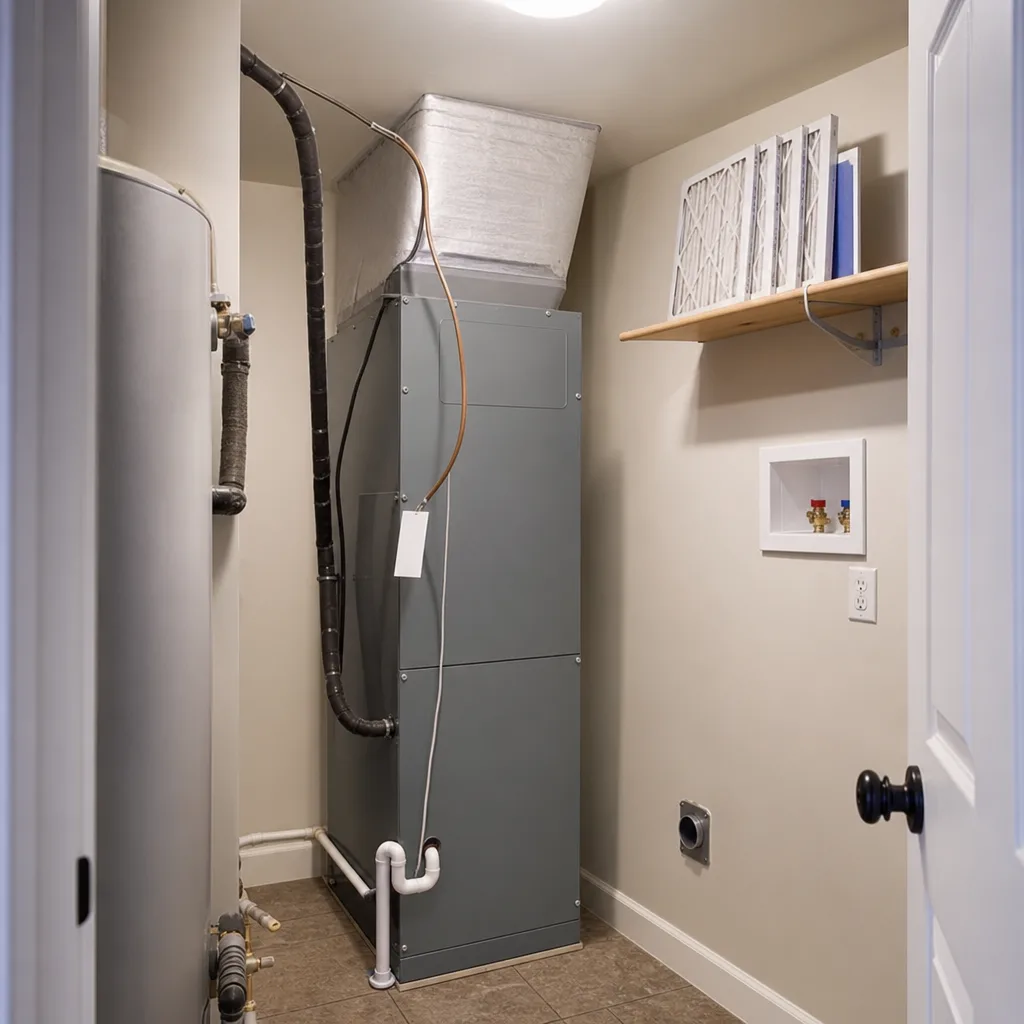
Before the technician gets there, a few small things save time. Clear a path to the attic hatch or the closet where your indoor unit sits. Unlock the side gate so the outdoor unit is easy to reach. Put pets in another room. Then jot down what you noticed: when it started, any sounds or smells, and whether a breaker tripped during the checks above. Those details help point straight to the problem.
The visit starts with finding the part that failed. That matters because one symptom can have several causes. Warm air from the vents might be a capacitor, a refrigerant leak, or a fan motor. A good diagnosis tests the parts instead of guessing, so you pay to fix the real problem and not the one that just looked likely.
Next, you get the price. We use upfront flat-rate pricing that you approve before any work starts. No meter is running while the technician works, and there’s no extra charge for nights or weekends. If your AC quits on a Saturday evening in August, the price is the same as it would be on a Tuesday morning. There’s a $26-$99 service-call fee, and it’s credited toward the repair if you go ahead with Xtreme Air Services.
Here’s what the repair price covers and what it doesn’t:
- Included: the diagnosis, the labor, and the standard replacement part, plus testing and cleanup when the job’s done.
- Not included unless quoted separately: additional failed parts, major components, code upgrades, or permits.
In plain terms, if the technician finds a second worn part or the problem turns out to be a major component like the compressor, you’ll hear about it and get a separate quote first. Nothing extra happens without your okay. Financing is available on larger repairs and replacements if a bigger job comes up.
Then the technician repairs or replaces the failed part and checks that the whole system runs correctly. That check is the part people sometimes skip, and it’s the part that tells you the job’s done. Most calls come down to a single common failure that gets fixed on the first visit. That’s the payoff for calling when you first spot a warning sign, before one tired part drags others down with it.
Before the technician leaves, ask three questions. What failed? Why did it fail? Are any other parts showing wear? Clear answers help you plan ahead instead of getting caught off guard next summer.
The person in your home will be one of our licensed and insured technicians. Every team member is background-checked and drug-tested. You’re letting someone into your attic, your closets, and your backyard, and you should feel good about who’s there.
Have questions? We’re happy to help.
Call Today, Get Service Today. Xtreme Air Services — Fort Worth is ready to help.
What HVAC Repair Costs and What’s Included
Most HVAC system repairs with Xtreme Air Services fall between $150-$700. The most common job is finding one failed part, repairing or replacing it, and making sure the system runs right. That usually runs $150-$400.
That lower range covers the kind of single-part failure that most calls come down to. It’s the price of catching a problem while it’s still one problem.
Where your repair lands in that range depends on a few things:
- How far the failure went. A part that just quit costs less to fix than one that ran rough for weeks and wore down what’s around it.
- The part itself. Some parts cost more than others, and some are harder to get. If a part has to be ordered, that can affect both the price and the timing.
- Your equipment’s age and make. Older systems can need parts that are harder to find. Your system’s make also affects which parts fit and what they cost.
- How many parts failed. One worn part is one repair. Two or three failed parts mean more parts and more labor.
- When you call. Many companies charge more after hours. We don’t. Nights and weekends cost the same as a weekday.
Here’s something worth knowing about how this trade prices work. Some contractors bill by the hour plus parts. That’s called time and materials, and you won’t know the total until the job’s done. Others use flat-rate pricing. With flat-rate pricing, you see one price for the whole repair before anyone picks up a tool. We use flat-rate pricing. As covered above, you approve that price before any work starts, so a slow job or a stubborn screw doesn’t cost you more.
Whoever you call, these questions will tell you a lot about the price you’re getting:
- Is the price a flat rate or an hourly rate?
- Is there a service-call fee, and does it count toward the repair?
- What isn’t included in this price?
- Will you stop and get my okay before doing anything extra?
- Do you charge more for nights or weekends?
- What’s your HVAC license number?
That last one matters more than people think. In Texas, HVAC contractors are licensed through the Texas Department of Licensing and Regulation. A real contractor will give you their license number without a fuss. Ours is TACLA29023C, and you’re welcome to look it up.
If the technician finds a bigger problem, such as a major component like the compressor, the price can go above that common range. You’ll get a separate quote first. Financing isn’t usually needed for a smaller repair, but it’s available on larger repairs and replacements if that’s where things end up.
Watch Our Video
See How We Handle HVAC system repair in Fort Worth
Xtreme Air Services — Fort Worth
Repair or Replace: How Equipment Age Factors In
Age alone doesn’t mean you need a new system. A well-kept older unit with one worn part is often worth fixing. The real question is what failed, how often things have been failing, and whether the repair buys you years or just months.
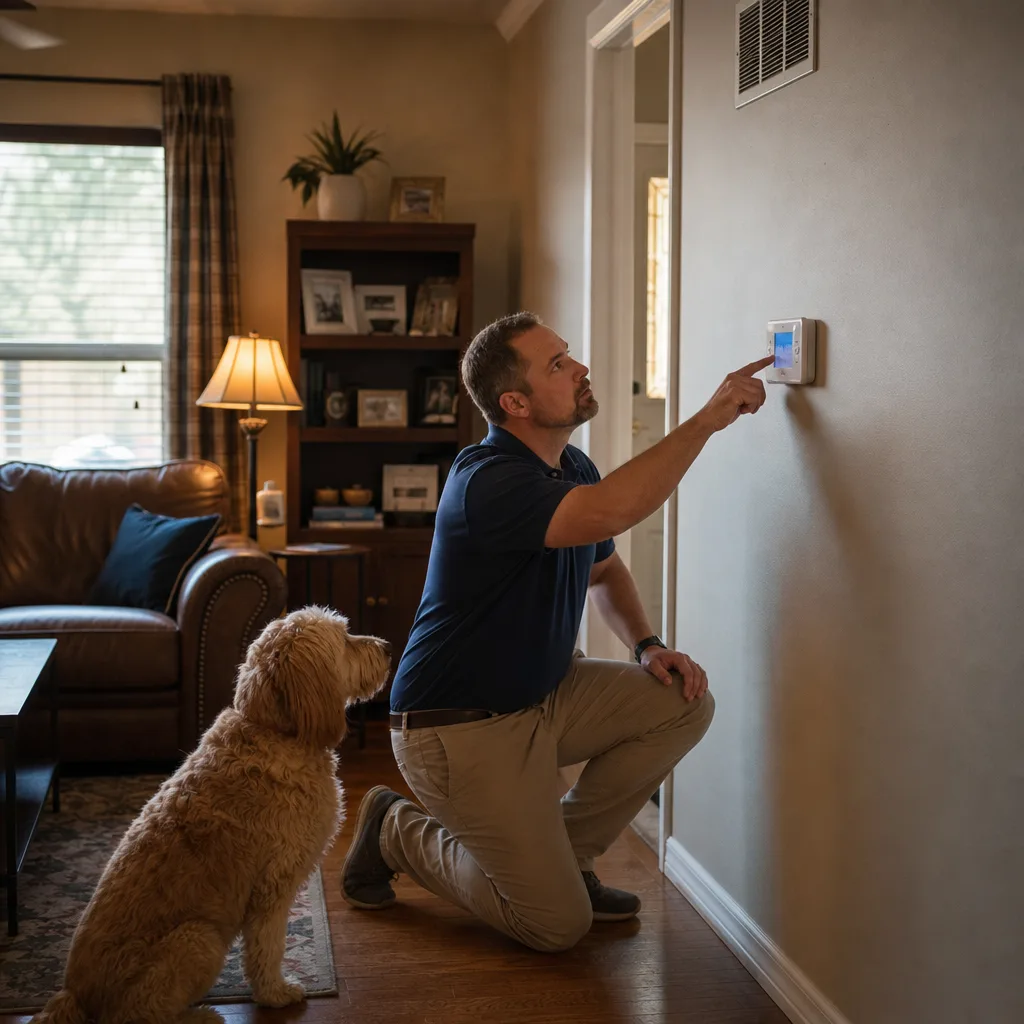
In Fort Worth, your system works harder than most. Long summers mean long run times, and units in the attic sit in some of the hottest air in the house. That wear adds up. A system that’s been through many Texas summers has earned some honest questions when it breaks down.
Repair usually makes sense when:
- The failed part is a smaller one, like a capacitor, a contactor, a flame sensor, an ignitor, or a drain line.
- This is the first real problem the system has had in a while.
- The system kept your home comfortable before it broke, with steady temperatures in every room.
- Your energy bills were holding steady before the problem showed up.
Replacement is worth talking about when:
- A major component failed on an older system. A compressor is the heart of your AC, and replacing one on an aging unit is a big spend on equipment that has other worn parts around it.
- You’ve paid for several repairs in the last couple of years, and each one feels like it’s just leading to the next.
- Your older system needs a refrigerant recharge. Some older units run on a refrigerant that’s no longer made, so recharging them gets expensive.
- Some rooms never cool down, the system runs all afternoon, or humidity stays high even when it’s working.
If you’re on the fence, ask the technician to show you the failed part and tell you what shape the rest of the system is in. Then ask the question most people don’t: if this were your house, would you fix it? A straight answer to that tells you a lot. You should never feel pushed into a new system because one part wore out.
Here’s a simple way to think about it. Picture the repair price next to how much life the system realistically has left. A modest repair on a system that’s otherwise running well is money well spent. A large repair on a system that’s already struggling may only buy you time until the next breakdown, often on the hottest week of the year.
If replacement does make sense, we’re a Trane Comfort Specialist, and we handle AC replacement and furnace replacement too. Newer high-efficiency systems can hold temperatures more evenly and pull more moisture from the air, which you’ll notice in a muggy Texas summer. As mentioned above, financing is available on larger repairs and replacements. Still, the goal is to fix what’s broken first and give you an honest read on the rest, so you can decide on your own timeline.
Call 817-677-1907
Frequently Asked Questions
Common questions about HVAC system repair
What is the $5000 rule for HVAC?
The $5000 rule is a simple way to decide between repair and replacement. Multiply the repair cost by the age of your system in years. If that number is above $5,000, replacement is usually the smarter choice. If it’s below $5,000, repair is often still worth it. It’s just one tool to use alongside what the technician finds when they look at the failed part and the rest of your system.
Can I troubleshoot my HVAC system myself before calling someone?
Yes, a few quick checks can fix some no-cool or no-heat calls without a technician. Make sure the thermostat is set correctly and the fan is on Auto, check your breaker panel and the disconnect switches near your outdoor and indoor units, and pull the air filter to see if it’s clogged. If one of those solves it, you’re done. If you smell burning, a breaker trips twice, or water is coming through the ceiling, stop and call instead of digging further.
Ready to Get Started?
Call (817) 677-1907 Today, Get Service Today.