


Commercial Refrigeration in Dallas: Protecting Your Inventory and Uptime
Walk-in coolers, freezers and ice machines repaired by licensed refrigeration technicians – usually one part, not a whole new system.
What’s Covered on This Page
- Commercial Refrigeration Failure Is a Compliance Problem, Not Just a Comfort Problem
- Signs Your Walk-In Cooler, Freezer, or Ice Machine Needs Service Now
- Check These Things Before You Call for Commercial Refrigeration Repair
- What Happens During a Commercial Refrigeration Service Call
- What Drives Commercial Refrigeration Repair Costs Up or Down
- How much do commercial refrigeration techs charge per hour in Dallas?
- Why does my walk-in cooler or ice machine keep breaking down in summer?
- Can I just add refrigerant myself if my cooler isn’t cold enough?
- Is it worth replacing an old ice machine instead of repairing it, since hard water causes so many problems?
Commercial Refrigeration Failure Is a Compliance Problem, Not Just a Comfort Problem
Commercial refrigeration isn’t like the AC in your office. If your thermostat runs a few degrees warm, people get uncomfortable. If your walk-in cooler runs a few degrees warm, your food may no longer be safe to serve. That changes everything about how fast you need help and what kind of repair you need.
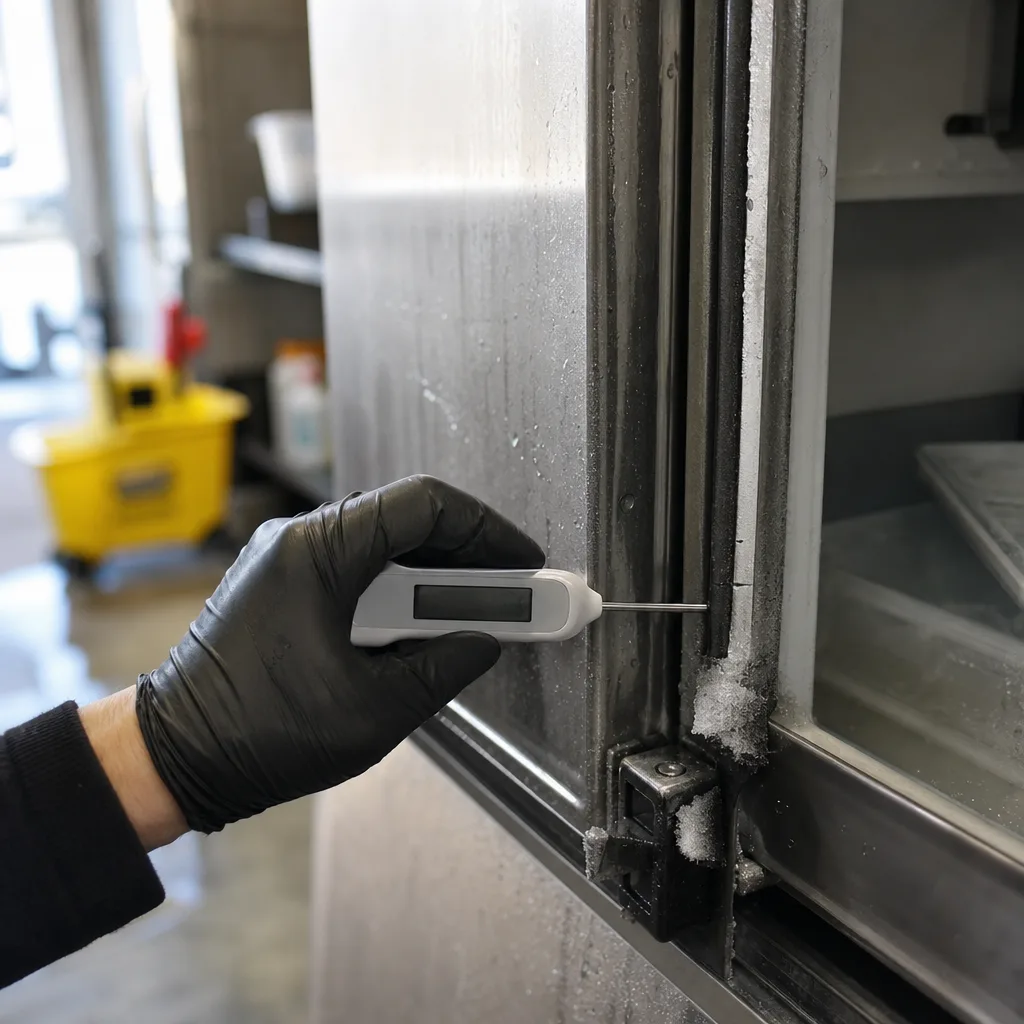
Think about what’s sitting in that box right now. Proteins, dairy, produce, prepped sauces, maybe thousands of dollars of product. Once a cooler or freezer can’t hold temperature, every hour puts more of it at risk. You also lose the ability to show a health inspector that you kept food cold, and that’s a problem no one wants to explain.
So the goal isn’t just to get the unit humming again. A compressor that restarts after a reset can quit again at 2 a.m. The repair that protects your business finds the part that failed, fixes or replaces it, and then confirms the system pulls down and holds temperature. That last step is the one that lets you stock the shelves again with confidence.
Dallas heat makes this harder. Condensers on rooftops and behind kitchens have to dump heat into long stretches of 100-degree afternoons. Add kitchen grease and dust on the coils, and a unit that worked fine in spring can start falling behind in July, right when your business is busiest.
Here are the early signs that your equipment is losing the fight:
- The thermometer reads higher every time you check it, even with the door closed
- Frost or ice is building up on the evaporator coil inside the box
- The compressor runs nonstop and never seems to shut off
- Water is pooling under the unit or around the walk-in door
- The condenser feels very hot or sounds louder than normal
- Door gaskets are torn or the door doesn’t seal tight
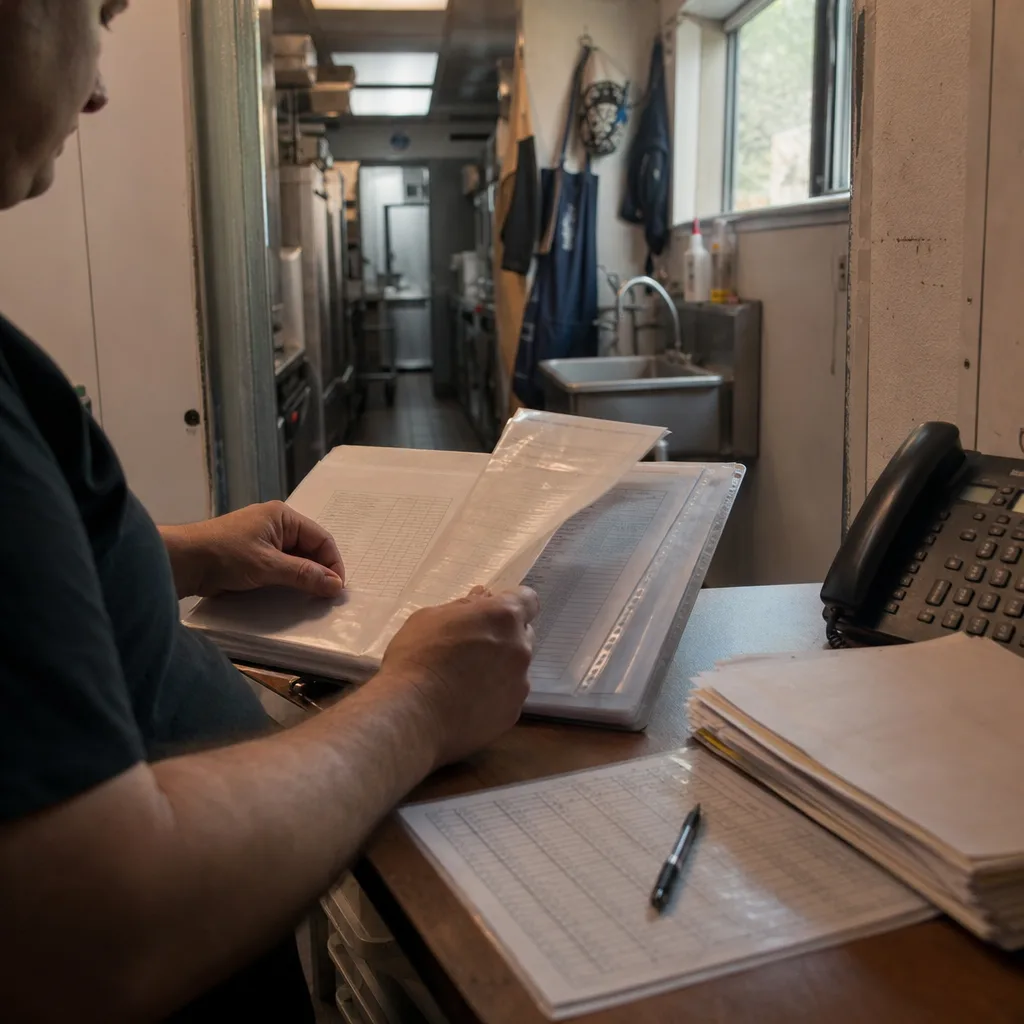
If you’re seeing any of these, keep writing down your temperatures. A simple log with the time and the reading helps your technician find the problem faster. It also gives you a record that you were watching your product and acted on it.
Timing matters too. Coolers don’t wait for Monday morning, and you shouldn’t pay a penalty because yours picked a Saturday night. Xtreme Air Services charges no extra for nights or weekends, so the price of getting help doesn’t change with the clock. Our licensed and insured technicians locate the failed part, repair or replace it, and verify the system runs correctly before they leave.
That’s the difference this page is about. A good commercial refrigeration repair keeps your food safe, your records clean, and your doors open.
Signs Your Walk-In Cooler, Freezer, or Ice Machine Needs Service Now
Not every warm reading means a broken part. Before you call anyone, take two minutes and rule out the easy stuff. Some problems are fixed the second you spot them.
- Make sure the door is closing. A box of produce, a mop handle, or a torn strip curtain can leave a walk-in leaking cold air all shift.
- Look at how the shelves are loaded. Cases stacked tight against the evaporator, the fan unit inside the box, block the airflow it needs to cool the room.
- Check the thermostat or controller. Sometimes a well-meaning employee bumps the setting.
- Check the breaker. If it tripped once, reset it one time. If it trips again, stop and call.
If one of those was the problem and the temperature starts dropping, you’re done. Keep logging readings for the rest of the day to make sure it holds. If everything checks out and the unit still can’t keep up, the problem is inside the system, and waiting usually makes it worse.
Each type of equipment shows trouble in its own way.
Some signs mean you should stop and get help today, no matter what day it is. A burning or electrical smell near the compressor or condenser. A breaker that keeps tripping. A hissing sound, or an oily film on refrigerant lines or fittings, which can point to a refrigerant leak. A compressor that hums and won’t start. A cooler or freezer whose temperature keeps climbing even after you’ve fixed the door and airflow.
Here’s a common scene. The closing manager notices the freezer reading is a little high, shrugs, and figures it’ll recover overnight. By morning the opener finds soft product and a log full of rising numbers. One phone call the night before is almost always cheaper than throwing out a freezer full of inventory.
Our team handles walk-in cooler repair, walk-in freezer repair, ice machine repair, and refrigeration leak detection. If what you’re seeing matches anything above, it’s worth having a technician look before it turns into a full shutdown.
Check These Things Before You Call for Commercial Refrigeration Repair
You’ve already checked the door, the shelves, the setting, and the breaker. If the box still won’t hold temperature, the next few minutes matter for two reasons. First, you need to protect what’s inside. Second, you want to give your technician what they need to fix it on the first trip.
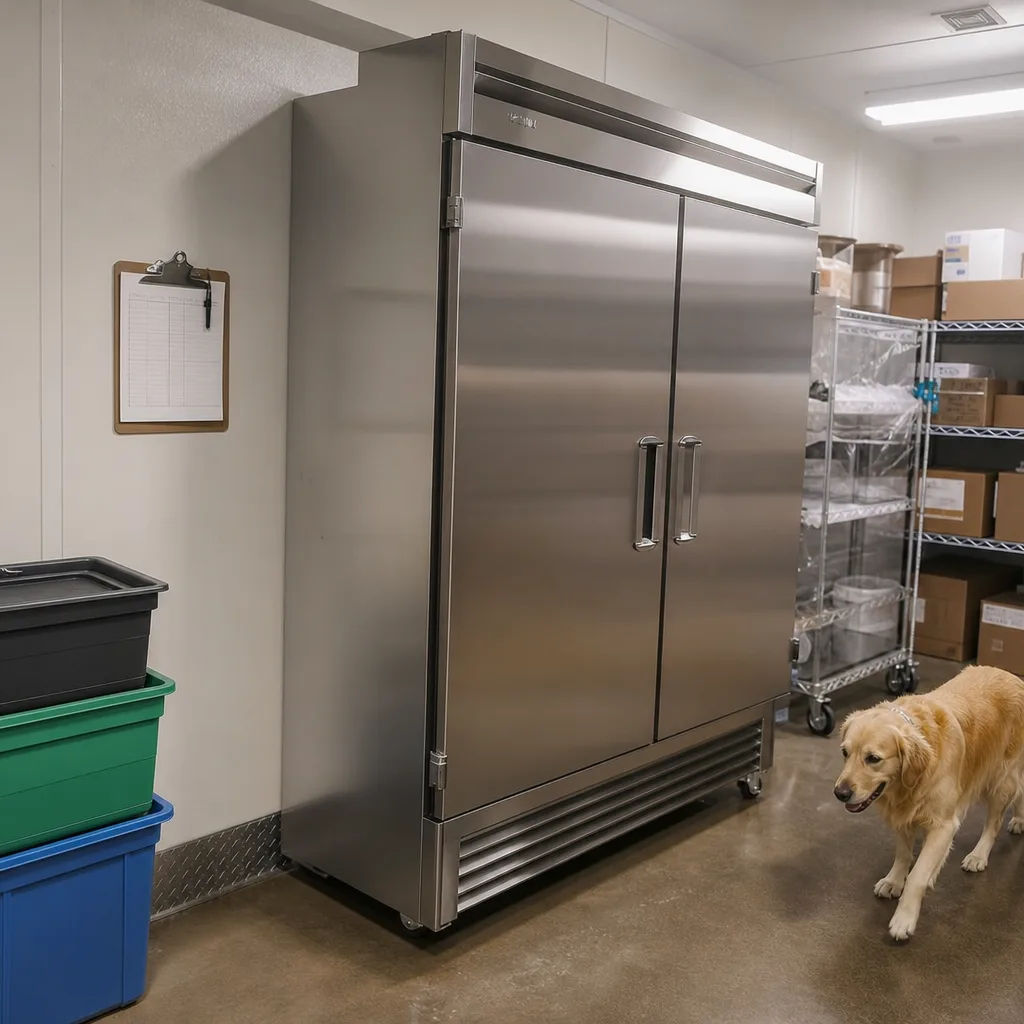
Start by protecting your product. Keep the door shut as much as you can, because every opening lets warm kitchen air rush in and makes the box work harder to recover. If you have another cooler or freezer that’s working, move your most expensive and most sensitive items there first. Keep writing down the temperature and the time.
Then gather this before you pick up the phone:
- The make, model, and serial number from the data plate. On a walk-in, look on the condensing unit outside or the evaporator inside the box. On an ice machine, check behind the front panel or on the back. A phone photo of the plate works great.
- Your temperature readings from the last day or two, even if they’re just notes on a clipboard.
- Any error code or flashing light on the controller or display.
- When the problem started and what changed around that time, such as a power blip, a storm, a big delivery stacked high, or a deep cleaning.
- Where the condensing unit sits (on the roof, behind the building, or in a back room) and how someone gets to it.
That last point saves more time than people expect. If the condenser is on the roof, tell us whether there’s a fixed ladder or a roof hatch, and who has the key. A locked roof hatch late at night can turn a quick fix into a long wait.
If it’s easy and safe to reach, take a quick look at the condenser. Is cardboard, trash, or a stack of crates blocking the air around it? Are the fins caked with grease or lint? Moving things out of the way so air can flow is something you can do yourself. Don’t hose it down, pull panels off, or touch any wiring. Coil cleaning, refrigerant checks, and electrical testing are jobs for a licensed technician.
Here’s why all this helps. Picture a manager who calls with a photo of the data plate, an error code, and six hours of readings. That gives the technician a real head start, and it raises the odds of having the right part in hand on the first trip instead of coming back tomorrow.
Last, know what to ask about cost before anyone starts work:
- What’s the service-call fee, and does it count toward the repair? With Xtreme Air Services, it’s a $26 to $99 service-call fee, credited toward the repair if you proceed with us.
- What does the repair price include? Ours covers diagnosis, labor, and the standard replacement part, plus testing and cleanup.
- What isn’t included? Additional failed parts, major components, code upgrades, or permits are quoted separately, so you approve the price before the work starts.
With those answers in hand, you’re not guessing. You know what you’re paying for and what happens next, and you can focus on running your business while the repair gets done.
Not sure what your Commercial refrigeration project needs? Ask us.
Call Today, Get Service Today. Xtreme Air Services — North Dallas is ready to help.
What Happens During a Commercial Refrigeration Service Call
A good service call does three things in order. It finds the part that failed. It fixes or replaces it. Then it proves the box is holding temperature again. The last step is the one that matters most to your business, and it’s the one that gets skipped when someone is in a hurry.
The first job is finding the real cause, not just the symptom. A warm walk-in can come from a dirty condenser, a dead evaporator fan, a stuck defrost timer, a failed contactor, a bad controller, or a refrigerant leak. Many of these look the same from the outside. A careful diagnosis checks the electrical side, the airflow on both coils, the defrost cycle, and the refrigerant system before anyone names a part. This is where the data plate photo and temperature log you gathered pay off. They point the technician in the right direction faster.
Once the problem is found, you get the price before any work starts. Xtreme Air Services uses upfront flat-rate pricing, and you approve it first. No meter is running while you decide. If a technician finds something you didn’t expect, like a second failed part, you hear about it and get a price before it’s added. You stay in control of the decision.
Next comes the repair. Most calls are a single common failure fixed on the first visit. When a repair takes longer, the usual reason is the part itself. Older equipment, less common brands, and major components can be harder to find the same day. If that happens, ask what you can do to protect your product in the meantime and when the part is expected. That way you can plan your menu, your orders, and your staff around a real timeline.
Then comes the step that protects you: verification. A repaired system should do more than turn on. It should pull the box back down to the right temperature and then hold it there. Here’s what a solid check looks like for each type of equipment:
- Walk-in cooler: the box drops to its set temperature, the evaporator fans run, and the compressor cycles on and off instead of running nonstop.
- Walk-in freezer: the box reaches freezing temperature, and the defrost cycle starts and ends the way it should, with no new ice forming at the door.
- Ice machine: it completes a full freeze and harvest cycle, and the cubes drop cleanly and come out clear and full.
Before you restock, write the after-repair reading in your log with the time. Keep checking for the rest of the day. That entry shows the problem started, you acted, and the system came back to safe temperature. It’s the kind of record you’ll be glad to have if an inspector asks.
Sometimes the honest answer is that a repair isn’t the best use of your money. That can happen when several parts have failed at once, or when an older unit needs a major component. In those cases, the major parts are quoted separately so you can compare your options side by side. If replacement makes more sense, flexible financing is available on qualifying installations and larger jobs, on approved credit. Either way, you decide with the facts in front of you, not under pressure.
Watch Our Video
See How We Handle Commercial refrigeration in Dallas
Xtreme Air Services — North Dallas
What Drives Commercial Refrigeration Repair Costs Up or Down
With Xtreme Air Services, commercial refrigeration repairs typically run $300 to $5,000. The most common job is finding a failed part, repairing or replacing it, and confirming the system runs right. That job runs $300 to $2,400. Most calls are a single common failure fixed on the first visit, so most bills land in that range.
Your exact price depends on a few things.
- How much failed. A dead evaporator fan motor or a burned-out contactor is a smaller job than a compressor that quit. The deeper the failure goes into the system, the higher the cost.
- Whether more than one part failed. One part often takes another down with it. A condenser that’s been running hot for weeks can wear out the fan motor and strain the compressor, so you can end up paying for two or three parts instead of one.
- What the part costs and how easy it is to get. Common parts are often easy to find. Specialty controllers, coils, and major components cost more and can take longer to arrive.
- The age and brand of your equipment. Older units and less common brands can need parts that are harder to source. Sometimes the right part has to be ordered rather than pulled from stock.
- When it breaks. With many companies, a Saturday night call costs more. With us, it doesn’t, since we charge no extra for nights or weekends.
Dallas summers play a part too. A condensing unit on a hot roof or behind a greasy kitchen exhaust works harder for months at a time. That steady strain is often what turns a small, cheap fix into a bigger one. A coil packed with grease and dust makes the compressor run longer and hotter. Mineral scale from hard water slowly chokes an ice machine until production drops or a part gives out.
You have more control over the bill than you might think. The biggest money saver is calling early. A unit that’s falling behind but still cooling usually has one problem. A unit that’s been pushed until it quits may have three. The temperature log and data plate photo you gathered also help, because they cut down diagnosis time and raise the odds the right part is on the truck.
Keeping your condenser clear of boxes and trash helps between visits. So does regular care from a pro. Our commercial preventive maintenance service puts coil cleaning and system checks on a schedule, so small wear gets caught before it costs you a full box of product.
If the number points toward replacing a unit instead of fixing it, you’ll see both options priced out before anything happens. Flexible financing is available on qualifying installations and larger jobs, on approved credit.
The point is simple. You should know what you’re paying and why before work starts. That’s how you protect your inventory and your budget at the same time.
Call now
Frequently Asked Questions
Common questions about Commercial refrigeration
How much do commercial refrigeration techs charge per hour in Dallas?
Hourly rates vary by shop and job type, so it’s hard to give one number that fits every call. That’s why we use upfront flat-rate pricing instead of a running hourly meter. You get a price before any work starts, so you know your total cost without watching the clock.
Why does my walk-in cooler or ice machine keep breaking down in summer?
Dallas heat is usually the reason. Condensers on rooftops or behind kitchens have to dump heat into long stretches of 100-degree afternoons, and grease or dust on the coils makes that job even harder. A unit that ran fine in spring can start falling behind right when your business gets busiest in July.
Can I just add refrigerant myself if my cooler isn’t cold enough?
No, refrigerant checks and recharging are jobs for a licensed technician only. A hissing sound or oily film on fittings usually points to a leak, and adding refrigerant without finding and fixing that leak just wastes money and lets the problem come back. Stick to things like clearing airflow around the condenser or checking the thermostat setting before calling for help.
Is it worth replacing an old ice machine instead of repairing it, since hard water causes so many problems?
It depends on how much has already failed and how old the unit is. Hard water across North Texas causes mineral scale on the evaporator plate and water lines, which slowly chokes production and wears out parts over time. If several parts have failed at once or the unit is older, major components get quoted separately so you can compare repair versus replacement side by side before deciding.
Ready to Get Started?
Call (469) 213-3107 Today, Get Service Today.