


Whole-Home Water Filtration Installation in Frisco
Point-of-entry filtration for every tap in the house, compared honestly with softeners and reverse osmosis.
What’s Covered on This Page
- What a Whole-Home Water Filtration Install Involves
- Why Frisco’s Water Supply Makes Filtration Worth Considering
- Softener vs. Whole-Home Filter vs. Reverse Osmosis
- Professional Installation vs. DIY Kits
- New Construction and Pre-Drywall Planning
- What are the downsides of installing a whole-home water filter?
- Is Frisco’s water hard or soft?
- Do I need a permit to install a whole-home water filtration system in Frisco?
What a Whole-Home Water Filtration Install Involves
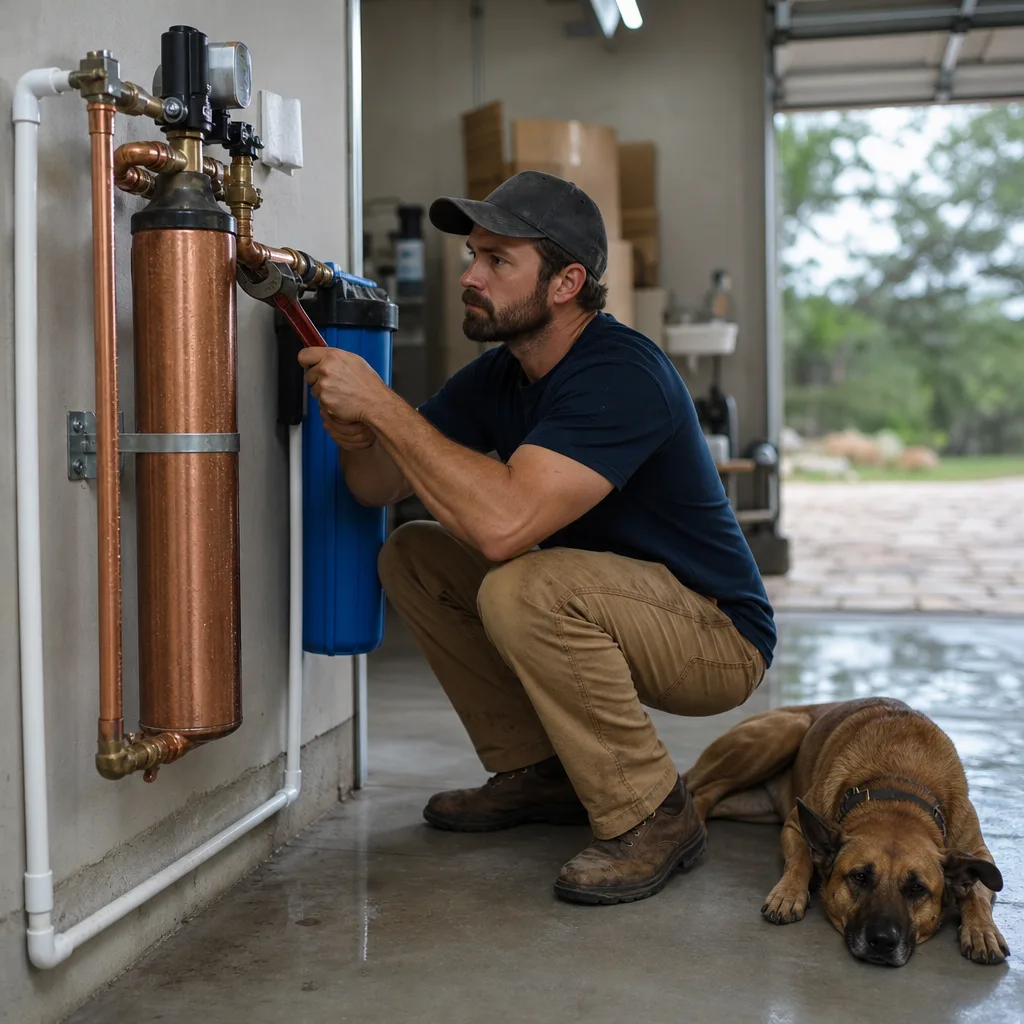
A whole-home system is what the trade calls point-of-entry. It sits where water comes into your house, before it splits off to the kitchen, the bathrooms, the water heater, and the washer. That’s the big difference from a pitcher or an under-sink filter. You’re treating all of your water once, right at the start.
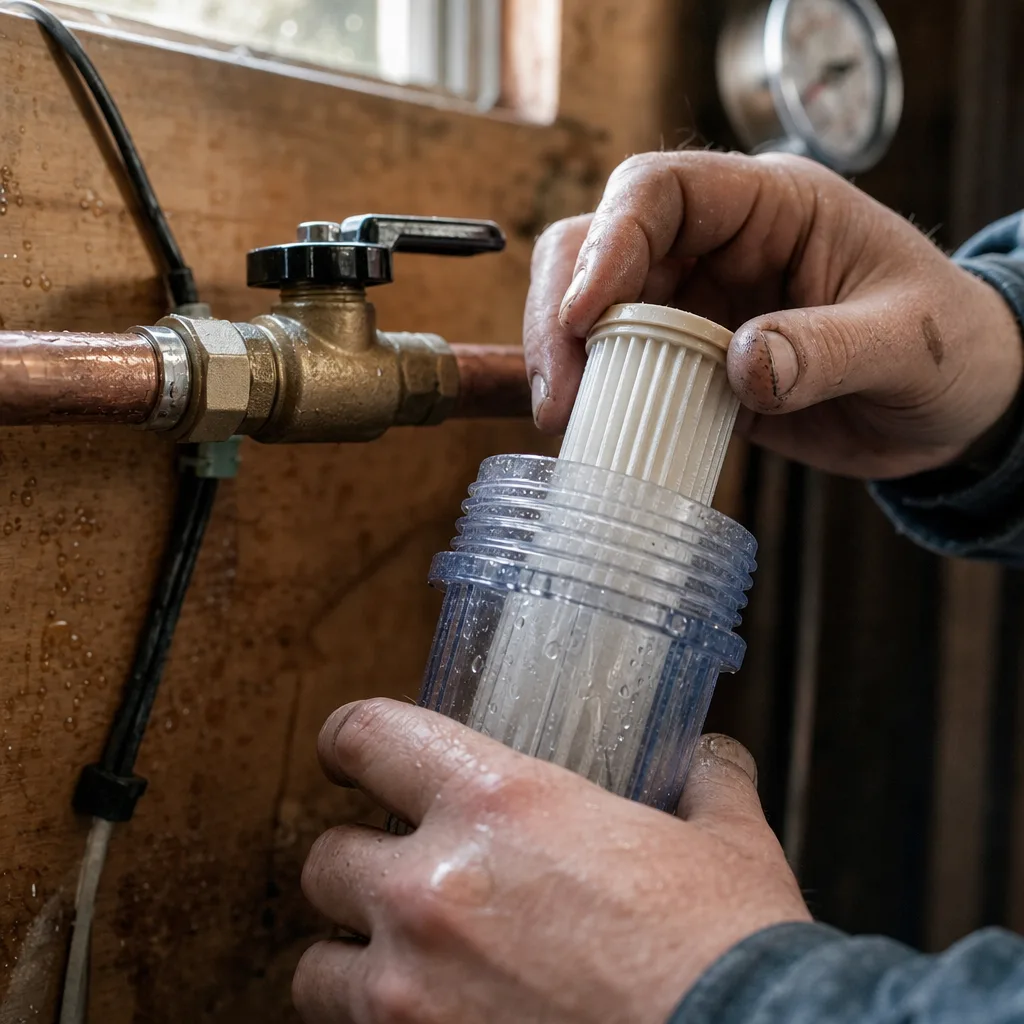
Before anything goes in, it helps to know what’s in your water. Some homes mostly need sediment and chlorine taste handled. Others need more stages. Water testing tells you which system makes sense, so you’re not paying for filtration you don’t need.
On install day, a typical job looks like this:
- Water to the house is shut off for the work. Plan for your taps to be off for part of the visit.
- The system is set in place at your main supply. Many homes have a water treatment loop, often near the garage, which makes this simpler.
- The filtration unit is connected to your plumbing. Most setups include a bypass valve, so water can still reach the house if the system ever needs service.
- If the system flushes or backwashes itself, it needs a drain nearby. How close that drain is matters.
- The system is started up, flushed, and tested to make sure it’s running right and nothing leaks.
- If you’re replacing an old unit, it’s hauled away so it’s not left sitting in your garage.
The included part of the job is clear. You get the system and materials, professional installation, the connections, startup and testing, and haul-away of the old unit.
A few things aren’t included unless your quote says so. You’ll want to know about them before work starts:
- A plumbing loop. If your home wasn’t built with one, it has to be added before a system can tie in.
- Electrical work. Some systems, like UV purification, need power nearby. Because we’re also an electrical contractor, one team can handle that, but it’s priced separately.
- Code corrections. If existing plumbing near the install point isn’t up to code, it may need fixing first.
- Permits, unless your quote lists them.
These are also the main reasons two installs can look so different on paper. Filtration type and number of stages, how much water the system has to handle at once, the condition of your existing plumbing, drain access, and any code upgrades all move the scope up or down. A clean loop and a nearby drain keep things simple. Older pipes or no loop add steps.
After startup, the change should be easy to notice. Water tastes and smells cleaner at every tap, not just the kitchen. Your shower, your ice maker, and your water heater all get the same filtered water.
Why Frisco’s Water Supply Makes Filtration Worth Considering
Frisco’s tap water is treated and safe to drink. A whole-home filter isn’t about rescuing you from bad water. It’s about the things city water can still bring into your home, even when it meets every standard, and whether those things bother you enough to fix at the main line.
City water has to stay clean as it travels miles of pipe to reach your house. To keep it that way, the water is treated with disinfectants. That’s a good thing, but it’s also why some people notice a pool-like taste or smell at the kitchen sink or in a hot shower. A carbon stage in a whole-home system is built to take that out. Then every tap gets the cleaner-tasting water, not just the fridge dispenser.
Here’s what Frisco homeowners tend to notice first:
- A chlorine taste or smell in drinking water, ice, or the shower
- Cloudy or gritty water after nearby line work, which a sediment stage helps catch
- White spots on glass shower doors, faucets, and dishes
- Crusty buildup on showerheads and around fixtures
Those last two are hard water, and hard water is common across North Texas. It’s worth being straight with you here. A standard filtration system handles taste, smell, and sediment well, but it doesn’t soften water. If spots and scale are your main complaint, a water softener is likely the better fit, or a softener paired with filtration. Hard water is also tough on your water heater over time, because the minerals settle inside the tank.
And if all you really care about is the water you drink and cook with, you may not need a whole-home system at all. An under-sink reverse osmosis system treats that one tap and costs less. We’d rather tell you that up front than sell you more equipment than your home needs.
A home test matters because the report covers the whole system, not your house. Your own pipes, your water heater, and how far you sit from the treatment plant can all change what comes out of your faucet. Testing your tap is how you avoid paying for stages you don’t need, or missing one you do.
Frisco’s housing also plays a part. Many homes here are in newer subdivisions, and if yours was built with a water treatment loop, adding a whole-home system is usually a simpler job. If you’re not sure, check your garage wall near where the water line enters, or have a technician look during your visit.
Softener vs. Whole-Home Filter vs. Reverse Osmosis
These three systems get lumped together, but each one does a different job. The easiest way to pick is to start with what’s bugging you, then match it to the equipment built for that problem.
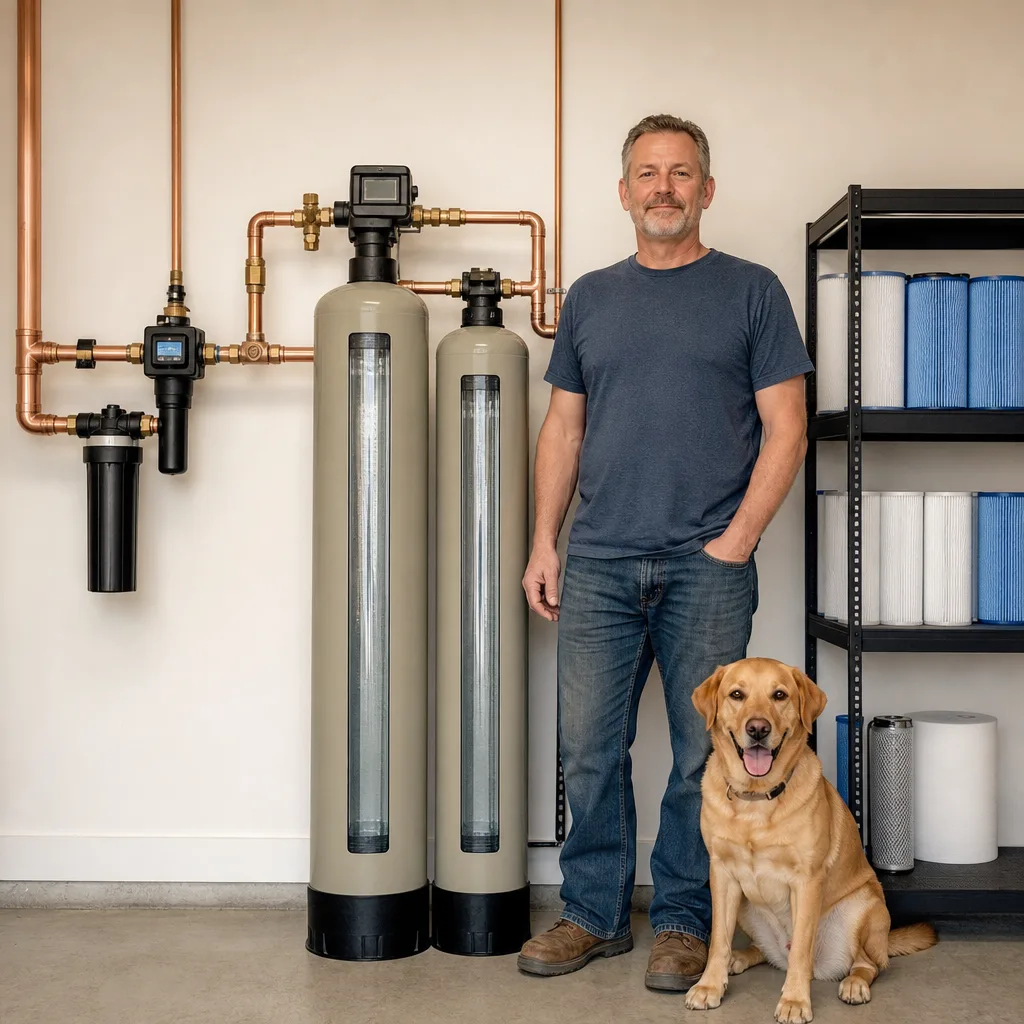
- Whole-home filter: Best for taste, smell, and grit. It works at every tap, so your shower, ice maker, and laundry get the same treated water as your kitchen. It’s the right fit when chlorine taste or cloudy water is the complaint and the rest of your water is fine.
- Water softener: Best for hardness. It pulls out the calcium and magnesium that leave white spots and crusty buildup. It doesn’t fix taste or smell. A softener needs a drain nearby and salt added from time to time, so plan for a little upkeep.
- Reverse osmosis (RO): Best for the water you drink and cook with. It pushes water through a very fine membrane and removes more than a standard filter does. It’s usually installed at one sink, it works slowly, and it sends some water down the drain as it runs. That’s why it’s rarely used for the whole house.
Plenty of homes don’t fit neatly into one box. Say you hate the chlorine smell in a hot shower, and you’re also scrubbing spots off your glass doors every week. That’s two problems, and a whole-home filter paired with a softener handles both. The filter goes in first, so sediment and chlorine are caught before the water reaches the softener. That helps protect the softener so it keeps doing its job.
Another common setup is a softener for the whole house plus an RO system under the kitchen sink. You get softer water everywhere and very clean drinking water at the one tap where it matters most. It’s a good fit if you buy bottled water now and want to stop.
Here’s a quick way to sort out what you need:
- Taste or smell everywhere, no spots: a whole-home filter.
- Spots and scale, taste is fine: a softener.
- Both: a filter and a softener together.
- You only care about drinking water: an under-sink RO system may be all you need.
- Drinking water plus hard-water trouble: a softener with RO at the kitchen sink.
A water test settles it if you’re stuck between two choices. It shows how hard your water is and what else is in it, so the system matches your home instead of a guess. Two houses on the same Frisco street can need different setups, because plumbing age and water heater condition change what reaches the tap.
We install all three, from water softener installation to reverse osmosis systems and whole-home filtration. That means we don’t have a reason to push one over another. If a softener alone solves your problem, that’s what we’ll tell you. If you need two systems, we’ll explain why each one earns its spot before anything goes on your main line.
Not sure what your Whole-home water filtration installation project needs? Ask us.
Call Today, Get Service Today. Xtreme Air Services — Frisco is ready to help.
Professional Installation vs. DIY Kits
Some people can install a whole-home filter themselves. It depends on the system you pick and what your plumbing looks like where it goes in.
A DIY kit can be a fair choice when all of these are true:
- It’s a simple cartridge system, like a sediment filter and a carbon filter in housings, with no backwash and no drain needed.
- Your home already has a water treatment loop with a clean spot to tie in.
- You’ve cut and joined water pipe before, and you know where your main shutoff is and that it works.
- Your water test showed basic taste, smell, or grit problems and nothing more.
If that’s you, go for it. Changing the cartridges later is a homeowner job either way. You don’t need anyone to come out for that.
It’s a different story once the job gets past a couple of filter housings. The hard part of a whole-home install isn’t hanging the unit on the wall. It’s everything around it:
- You’re cutting into the line that feeds your whole house. A weak joint there doesn’t drip under one sink. It leaks behind your garage wall at full pressure.
- A system that’s too small for your home’s flow slows every tap. Run the shower while the dishwasher’s going, and you’ll notice it right away.
- Backwashing systems need a proper drain connection. If the drain line is too far away or set up wrong, it can back up or flood.
- No loop, older pipes, or code problems near the install point turn a weekend project into real plumbing work.
- Some systems, like UV purification, also need power run to them, and that’s electrical work, not plumbing.
Before you start any version of this job, check with the City of Frisco about whether your project needs a permit. It’s a quick call, and it’s better to know first than to find out at a home inspection when you sell.
If you decide to have it done for you, here’s what Xtreme Air Services’ pricing looks like. Our whole-home water filtration installs run in a typical range of $1,500-$4,500. Our most common job is a point-of-entry system at the main supply, connected and tested, and that runs $2,100-$3,300. Where your home lands depends on the system type and the things covered earlier, like stages, flow, drain access, and the shape of your plumbing. There’s a $26-$99 service-call fee, and it’s credited toward the work if you go ahead with us. Flexible financing is available on qualifying installations, on approved credit.
Our technicians are licensed, insured, and background-checked. We’re also the same company that handles plumbing and electrical, so if your install needs a loop added or an outlet run, it’s still one team and one quote. We’ll tell you what it costs before any work starts.
And if your setup is simple enough to do yourself, we’ll say so.
Call 469-490-3595
Watch Our Video
See How We Handle Whole-home water filtration installation in Frisco
Xtreme Air Services — Frisco
New Construction and Pre-Drywall Planning
If your Frisco home is still being built, you’re in the best spot you’ll ever be in for water treatment. Right now, your pipes are out in the open. Once drywall goes up, every change means cutting, patching, and paying for it.
You don’t have to buy a filter from your builder to get the benefit. You only need the plumbing set up so a system can go in later without extra work. That’s often a small ask during the build. After closing, the same work can turn into the loop and code items we listed as outside a standard install.
Here’s what to ask your builder for while the framing is still bare:
- A water treatment loop on the main line, usually in the garage where the water comes into the house. Ask to see it on the plumbing plan, not just hear that it’s “standard.”
- A drain close to the loop. A softener or a backwashing filter needs one, and a nearby drain keeps the future install simple.
- An outlet near the loop. Some systems need power, like UV units or electronic control valves. An outlet roughed in now costs far less than running a new circuit through a finished garage.
- Clear wall and floor space around the loop. Plan room for a filter and a softener side by side, plus enough space to change cartridges without fighting a water heater or shelving.
- A cold-water line and some cabinet space under the kitchen sink if you think you’ll want reverse osmosis for drinking water.
Hard water is common across North Texas, so even if a filter is all you want today, ask for room for a softener too. Plenty of people change their minds after their first year of spotty shower doors.
Your pre-drywall walkthrough is the time to check all of this with your own eyes. Bring your phone and take photos of where the loop, drain, and outlet sit before the walls close. Look for the loop stubs coming out of the wall, often capped or tied together with a short piece of pipe. If you can’t find them, ask your site manager to point them out. Once the drywall is up, those photos tell you exactly where everything is.
Some builders offer a water treatment package as an upgrade. That can work. But you’re usually choosing from a short list, and you may not know yet what your water needs. A loop and drain with no equipment attached gives you more choice. You can move in, test your tap water, and then pick the system that fits. Testing in your new home also catches anything new plumbing adds, which a city report can’t show you.
Already closed on a new build and not sure what you got? Look on the garage wall where the main line comes in. Two capped pipes or a short U-shaped loop means you’re likely set up for an easy install.
Call Xtreme Air Services and talk to a real person about your new Frisco home. We’ll help you figure out what to ask your builder now, or what it takes to add filtration once you’ve moved in.
Frequently Asked Questions
Common questions about Whole-home water filtration installation
What are the downsides of installing a whole-home water filter?
The main downside is that a standard whole-home filter won’t soften hard water or remove every dissolved mineral. It’s built for taste, smell, and sediment, so if spots on your glass shower doors are your real complaint, you’ll still need a softener alongside it. Backwashing filters also need a nearby drain and use some water to flush themselves, which is worth planning for before install day. For most Frisco homes, these tradeoffs are minor compared to the cleaner water at every tap.
Is Frisco’s water hard or soft?
Frisco’s water is hard, like most of North Texas. Hard water leaves white spots on glass shower doors and faucets, and causes crusty buildup around fixtures over time. A standard whole-home filter handles taste and sediment but won’t fix hardness, so homes dealing with spots and scale usually need a water softener too. Testing your tap water tells you exactly how hard it is before you decide what to install.
Do I need a permit to install a whole-home water filtration system in Frisco?
It depends on your project, so it’s worth a quick call to the Town of Frisco before work starts. Permit rules can vary based on the scope of the job, especially if plumbing changes or electrical work are involved. Checking first means you avoid problems later, like issues coming up during a home inspection when you sell. This is especially true for larger jobs that go beyond swapping a simple cartridge filter.
Ready to Get Started?
Call (469) 490-3595 Today, Get Service Today.