


Reverse Osmosis System Installation in Frisco: Is It the Right Fix?
Find out if reverse osmosis fits your water problem before you buy – then a licensed installation.
What’s Covered on This Page
- Decide If Reverse Osmosis Is Right for Your Water
- When Reverse Osmosis Is Not the Right Call
- What Happens During Installation
- What Reverse Osmosis Installation Costs in Frisco
- Why a Licensed Plumber Matters for This Install
- Can I install a reverse osmosis system myself, or should I call a plumber?
- How long does it take before I can drink the RO water after installation?
- Will a reverse osmosis system lower my home’s water pressure?
Decide If Reverse Osmosis Is Right for Your Water
Start with the question that matters most. What’s bugging you about your water? Your answer tells you if RO is the right tool or just the one you’ve heard about most.
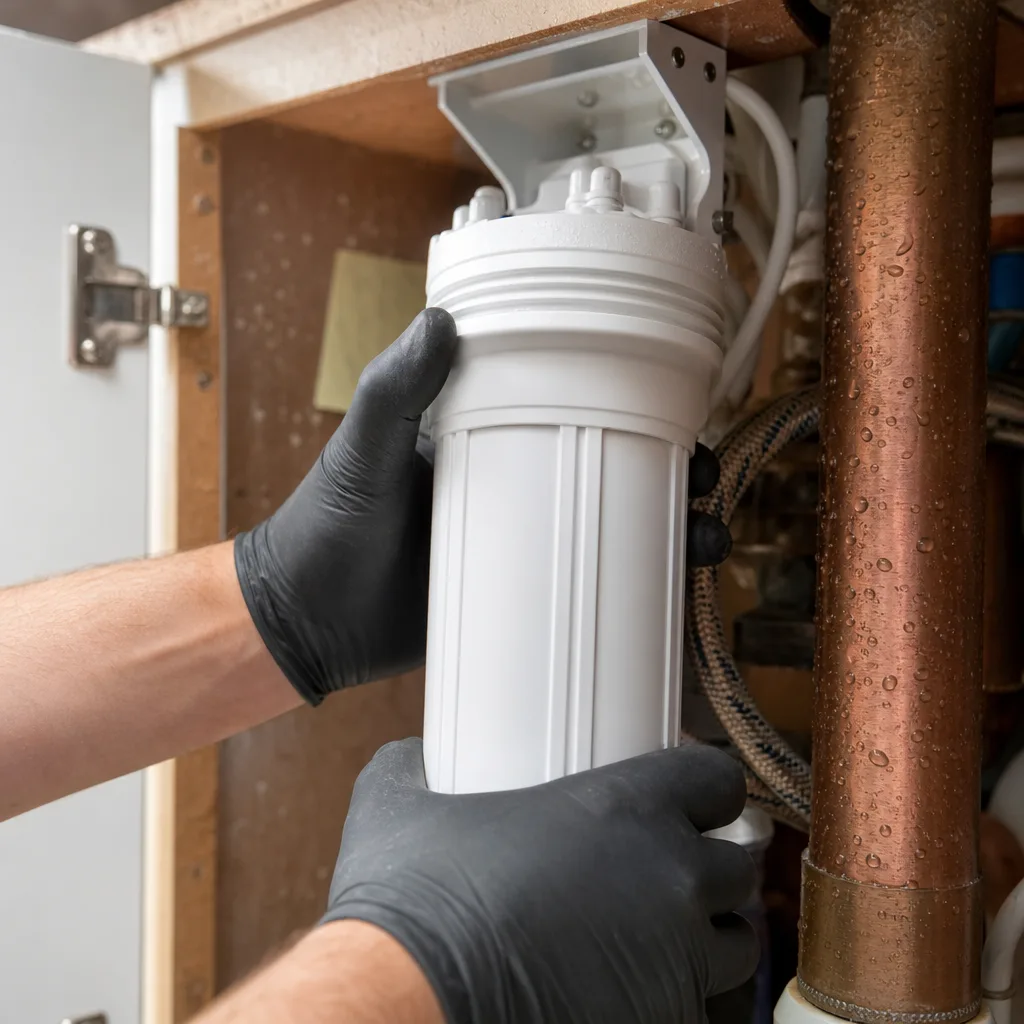
An under-sink RO system pushes your water through a very fine membrane. That membrane catches a lot of what a basic pitcher filter lets through, including dissolved minerals and salts. You get that water from a small faucet next to your main one. It’s for the water you drink, cook with, and pour into the coffee maker or the dog’s bowl.
RO usually makes sense for you if:
- You’re buying cases of bottled water and you’re tired of hauling them in from the car.
- Your tap water tastes or smells off, and a fridge filter hasn’t fixed it.
- You want fewer dissolved minerals in the water your family drinks every day.
- You make a lot of coffee, tea, or baby formula and want water that tastes clean and consistent.
- You have room under the kitchen sink for a few filter housings and a small tank, plus a drain line nearby.
Now the other side, and we’ll be straight with you. RO isn’t the answer for every home.
- If your real complaint is white spots on the shower glass, crusty faucets, or scale building up in your water heater, an under-sink RO won’t touch any of that. North Texas water tends to run hard, and that’s a whole-house problem. A water softener is the fix there.
- If all you notice is a chlorine taste, a simpler carbon filtration system may be all you need. It costs less and doesn’t need a drain connection.
- If you don’t know what’s in your water yet, get it tested first. Water testing tells you what you’re dealing with, so you don’t pay for the wrong system.
- If your sink cabinet is packed tight or the plumbing underneath is in rough shape, plan for that first. Those fixes come before the install, not after.
A few trade-offs are worth knowing before you choose RO. The membrane sends some water down the drain as it works, so it uses more water than the glass you fill. It also pulls out minerals like calcium and magnesium. Some folks find the water tastes a little flat. A remineralization stage adds a small amount of those minerals back for taste. It’s an add-on, so it’s one of the things that moves the price.
Plenty of Frisco homes end up with both systems. A softener protects the pipes, fixtures, and water heater across the whole house. An RO at the kitchen sink handles the drinking water. You don’t have to do both at once. Fix the problem that bugs you most, and add the other later if you want it.
If you read the first list and nodded along, RO is likely a good fit for your kitchen. If the second list sounded more like your house, that’s useful to know now, before you spend anything.
When Reverse Osmosis Is Not the Right Call
Sometimes the honest answer is to skip a new RO system, wait a while, or do the job yourself. The section above helps you match the system to your water problem. These are the other times a new under-sink install isn’t the best use of your money.
You already have an RO system and it’s just slowing down. A slow trickle from the RO faucet or a change in taste often means the filters are due. On many systems, the pre-filters and post-filters twist off by hand. A lot of homeowners swap them in a few minutes with the replacement set made for their system. A brand-new unit won’t fix what a fresh set of filters will.
Your water only looks or smells bad on the hot side. If rusty color or a rotten-egg smell shows up only when you run hot water, the problem usually lives in your water heater, not your water supply. An RO at the kitchen sink won’t help. Get the water heater checked instead.
You rent your home. An RO install means tying into the sink drain and often adding a faucet hole in the sink or countertop. Get your landlord’s okay in writing first. If that’s a no, a pitcher or countertop filter gets you better-tasting water without touching the plumbing.
You’re planning a kitchen remodel soon. If new cabinets, a new countertop, or a new sink are coming in the next few months, wait. Where the RO faucet goes depends on the new sink and counter. Installing now means you’ll likely pay to move parts of it later.
Your water pressure is low. An RO membrane relies on your home’s water pressure to push water through. When pressure is weak, the tank fills slowly, and you can end up with less drinking water for the same amount going down the drain. If every faucet in the house feels weak, sort out the pressure first. A worn-out pressure regulator is one common cause.
You know you won’t keep up with filter changes. RO filters need replacing on a schedule, and the membrane needs replacing less often. A system with clogged, old filters stops doing its job. If you’d rather not track that, a simpler filter you can change once in a while may serve you better.
You’re handy and comfortable with basic plumbing. Many under-sink RO kits are made for homeowners to install. If you can shut off a supply valve, read the instructions, and work in a tight cabinet, it’s a fair weekend project. A pro install earns its keep when something makes the job harder:
- Old or corroded shutoff valves that may not close all the way
- A stone or quartz countertop that needs a clean faucet hole drilled
- A garbage disposal or dishwasher line that makes the drain hookup tricky
- No good spot for the tank, or no supply line close by
If none of those apply, you can likely handle it on your own. And if one of the situations above fits your home right now, it’s fine to hold off. RO will still be an option when the timing makes sense.
What Happens During Installation
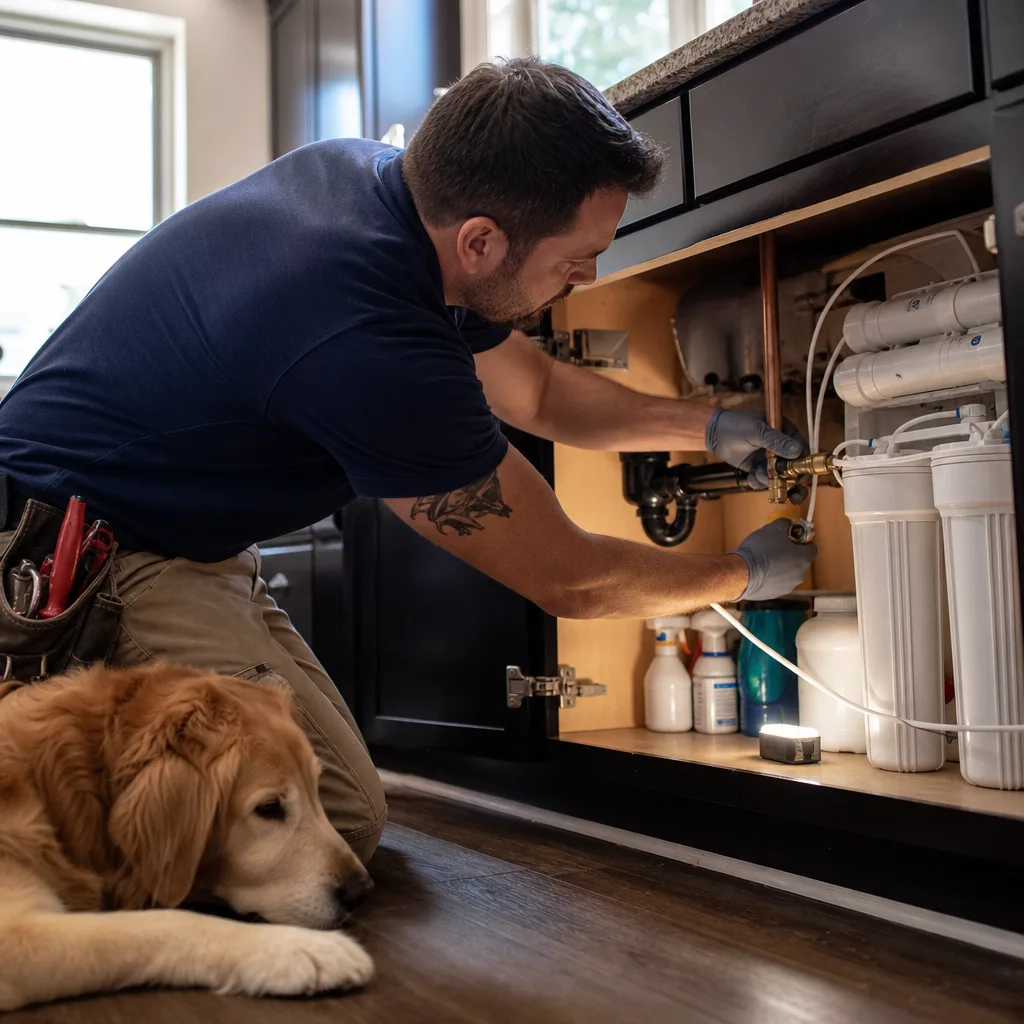
A standard under-sink RO install is a small plumbing job, not a remodel. Your kitchen stays usable, the water to the rest of your house stays on for most of the visit, and most jobs finish the same day. Here’s what’s going on under your sink while the work gets done.
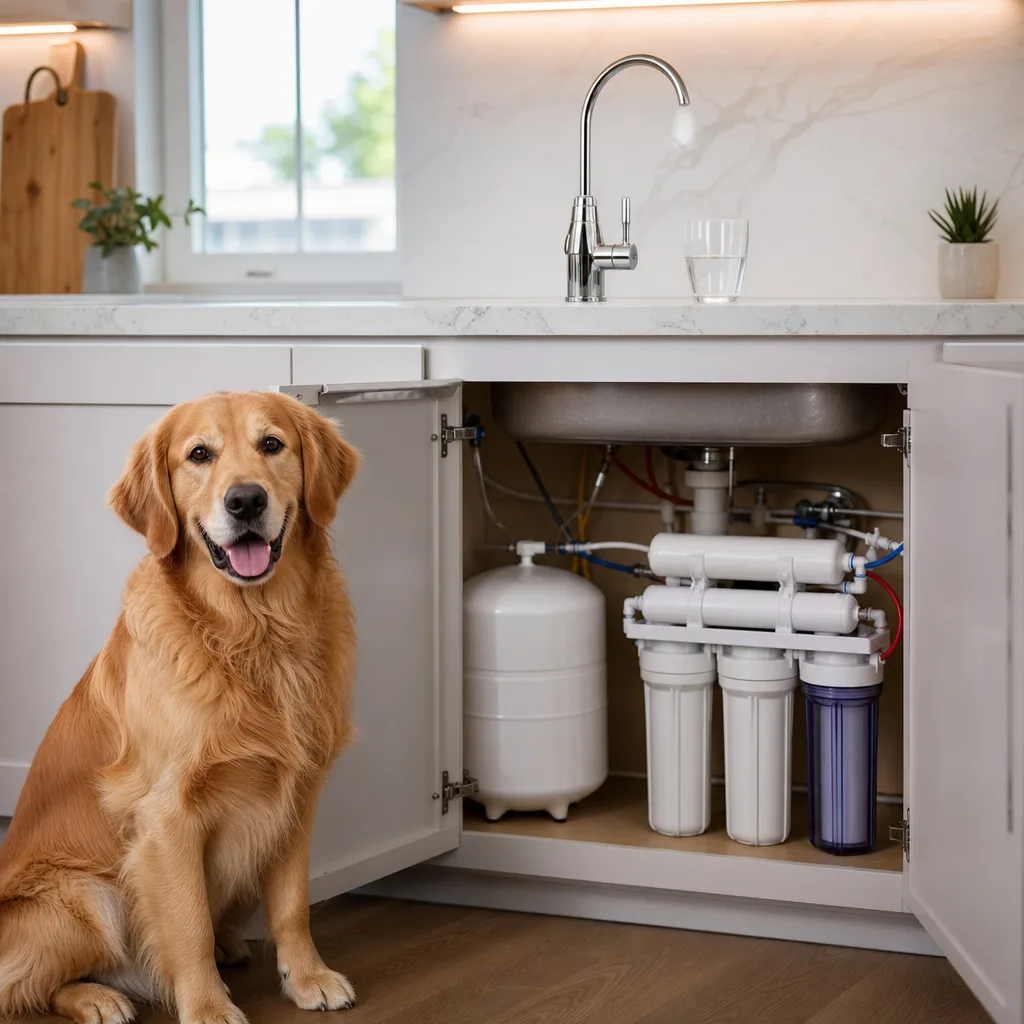
Before anything gets connected, the space gets checked. That means looking at where the cold water line comes in, where the drain runs, where the garbage disposal or dishwasher hose ties in, and where the tank can sit. It helps to clear out the cabinet before the visit so there’s room to work.
From there, a typical install goes in this order:
- Shut off the cold water. The cold supply valve under the sink gets closed, and the line is opened to add a fitting that feeds the RO system. Your main kitchen faucet keeps working the same way it always has.
- Mount the filter unit. The filter housings and membrane hang on the cabinet wall or sit on the cabinet floor, depending on the space. The small storage tank goes next to them.
- Set the RO faucet. The faucet goes in an open hole in the sink, often where a sprayer or soap dispenser used to be. If there’s no open hole, a new one gets drilled in the sink or countertop.
- Connect the drain. A small clamp, called a drain saddle, attaches to the sink drain pipe above the curved trap. This is where the system sends the water it rejects. It has to go in the right spot so the disposal doesn’t push waste back into the line.
- Run the tubing. Thin plastic lines connect the supply, filters, membrane, tank, faucet, and drain. Every fitting gets seated and tightened.
- Start it up and test it. The water comes back on, every connection gets checked for leaks, and the system is tested to make sure it’s putting out water the way it should.
One thing surprises a lot of people. A brand-new system usually needs to be flushed before you drink from it. Many manufacturers tell you to fill the tank and drain it at least once to clear out the new filters and membrane. Depending on your water pressure, the first full tank can take a few hours. So if you can’t pour a glass the minute the job wraps up, nothing is wrong. That’s normal.
With us, a standard install covers the RO system and materials, the professional installation, the faucet, all the connections, plus startup and testing. Some things fall outside that, and it’s better you hear about them now than halfway through the job:
- Running a dedicated water line, if the job turns out to be extensive
- Cabinet modifications to make the system fit
- Code corrections on existing plumbing
- Permits, unless stated
If your cabinet has one of the tricky setups covered above, ask about it when you call. That way you’ll know up front whether your job is a standard install or needs extra work, before anyone opens a cabinet door.
After the install, watch under the sink for a day or two. A dry cabinet floor and a steady flow from the RO faucet mean the system has settled in and is doing its job. A drip at a fitting or a slow faucet early on usually means a connection or setting needs adjusting, not that the system is bad.
Need help with Reverse osmosis system installation?
Call Today, Get Service Today. Xtreme Air Services — Frisco is ready to help.
What Reverse Osmosis Installation Costs in Frisco
Here’s the short answer. Our most common job is a standard under-sink RO system with its own faucet, membrane, and drain connection, tested for proper output. That job runs $475-$850. Across all the RO installs we do, the typical range is $300-$1,200. Most jobs finish the same day.
Where your job lands in that range comes down to your system and what’s under your sink. These are the things that move the price:
- System stages and capacity. More filter stages, or a system that makes more water per day, costs more than a basic setup.
- Faucet and tank type. A plain chrome faucet costs less than a nicer finish. The size and style of the storage tank matters too.
- Condition of your existing plumbing. Shutoff valves that won’t close or worn fittings may need work before the system can go in.
- Drain and supply access. A clear cabinet with the cold line and drain close by is the easy case. A crowded cabinet, a disposal in the way, or a long run to the water line adds time.
- Added remineralization. If you want that stage for taste, it adds to the total.
Two homes on the same Frisco street can land at very different spots in the range. Say one kitchen has a spare sink hole where the old sprayer used to be, a clear cabinet, and you want a basic system. That job sits near the low end. Another kitchen needs a new hole drilled through quartz, has a disposal crowding the drain, and the owner wants a higher-capacity system with remineralization. That one sits higher. Neither price is wrong. They’re just different jobs.
There’s a $26-$99 service-call fee to come out. If you go ahead with the install, that fee is credited toward the job. You don’t pay it twice.
You get upfront flat-rate pricing, and you approve it before any work starts. There’s no meter running while someone works under your sink, and no extra charge for nights or weekends. The items we listed as outside a standard install, like cabinet changes or code fixes, get flagged and priced before we start. They won’t show up as a surprise on the bill.
We don’t usually offer financing on a job this size. It’s available on larger repairs and replacements, like a whole-home water softener.
Before you hire anyone for an RO install, it’s smart to ask a few questions:
- Is the price flat, or is it hourly?
- Does the quote include the system, the faucet, and testing, or just the labor?
- What would make the price change once the cabinet is open?
- Is there a trip fee, and does it count toward the job?
You should get a clear answer to every one of those before anyone starts work. Our licensed and insured technicians work out of our office on Warren Parkway in Frisco, and your neighbors have given us a 4.8-star rating across more than 2,900 reviews.
Call now
Watch Our Video
See How We Handle Reverse osmosis system installation in Frisco
Xtreme Air Services — Frisco
Why a Licensed Plumber Matters for This Install
An RO system does something most kitchen gadgets don’t. It connects your drinking water and your sink drain in the same small cabinet. That’s why the person doing the work matters. If those two lines aren’t kept apart the right way, you could be drinking water that sat next to the waste side of your plumbing.

Here’s the part most people never think about. When the drain backs up, say from a clogged disposal or a slow kitchen line, dirty water wants somewhere to go. The RO’s drain line is one of those places. Many RO faucets include an air gap, a small break built into the faucet that keeps drain water from flowing back toward the system. It only works if it’s set up and routed the right way. A licensed plumber knows how to set it up and why it matters, not just where the tubing plugs in.
In Texas, plumbing is a licensed trade. That license means the person working on your water supply has been trained and tested on how drinking water and drain lines have to stay separate. Our plumbing work is backed by Master Plumber Larry Breedlove. When someone is tapping into the line your family drinks from, that’s the kind of name you want behind the job.
Leaks are the other reason. Most Frisco homes sit on slab foundations, so the kitchen cabinet sits right on the floor with no crawl space below it. A slow drip at one push-fit connection doesn’t show up as a puddle you’d notice. It soaks into the cabinet base, and many cabinet bottoms are made of pressed wood that swells and crumbles when it stays wet. By the time you smell it or see the warped panel, the damage is done. Getting every fitting seated right the first time is cheaper than replacing a sink base.
When you hire for this job, you’re also hiring for what happens if something goes wrong. Here’s what you get with our team:
- Licensed and insured technicians, so you’re covered if something goes sideways in your home
- Background-checked and drug-tested team members working in your kitchen
- A 100% satisfaction guarantee on the work
- One trusted team for plumbing, HVAC, electrical, and water treatment if the visit turns up something else
That last point helps more often than you’d think. Say the shutoff valve under your sink won’t close all the way. Or water testing shows your hard water is the real headache across the house. You don’t have to find and schedule a second company. The same people can talk you through a faucet repair or a water softener installation and price it up front.
Your neighbors have given us a 4.8-star rating across more than 2,900 reviews on Google, Angi, and HomeAdvisor. We’d like to earn the same trust at your kitchen sink.
Call 469-490-3595
Frequently Asked Questions
Common questions about Reverse osmosis system installation
Can I install a reverse osmosis system myself, or should I call a plumber?
You can install a basic under-sink kit yourself if you’re comfortable with simple plumbing, like shutting off a supply valve and working in a tight cabinet. It gets harder if you have old shutoff valves that won’t close, a stone countertop that needs a new faucet hole, or a disposal crowding the drain line. In those cases, calling a licensed plumber saves you from a leak or a drain hookup done wrong.
How long does it take before I can drink the RO water after installation?
Plan on a few hours, not minutes, before your first glass. Most manufacturers require the new tank to be filled and drained at least once to flush out the new filters and membrane, and that first fill depends on your home’s water pressure. A slow start right after installation is normal and doesn’t mean anything is wrong.
Will a reverse osmosis system lower my home’s water pressure?
Only at the one faucet it serves, and only if your pressure was already weak. The RO membrane depends on your home’s existing water pressure to push water through, so low pressure means the storage tank fills slower. If every faucet in your house already feels weak, it’s worth sorting that out, often a worn pressure regulator, before you install an RO system.
Ready to Get Started?
Call (469) 490-3595 Today, Get Service Today.