


Sewer Line Repair in Dallas: Spot Repair or Full Replacement?
Sewer line problems confirmed before anyone digs, with a step-by-step repair and a quote that shows what's included.
What’s Covered on This Page
- Signs You Need Sewer Line Repair, Not Just Drain Cleaning
- When a Simple Drain Clog Is the Real Problem
- How a Sewer Line Repair Visit Works
- Trenchless Repair vs. Dig-and-Replace
- What’s Included in Your Sewer Line Repair and What Costs Extra
- Can I fix a sewer line myself?
- Is it worth repairing a sewer line instead of replacing the whole thing?
Signs You Need Sewer Line Repair, Not Just Drain Cleaning
A clog means something is stuck inside the pipe. Damage means something is wrong with the pipe. Drain cleaning fixes a clog. It can’t fix damage. That’s why some homeowners pay for the same cleaning three or four times in one year and still have the problem.
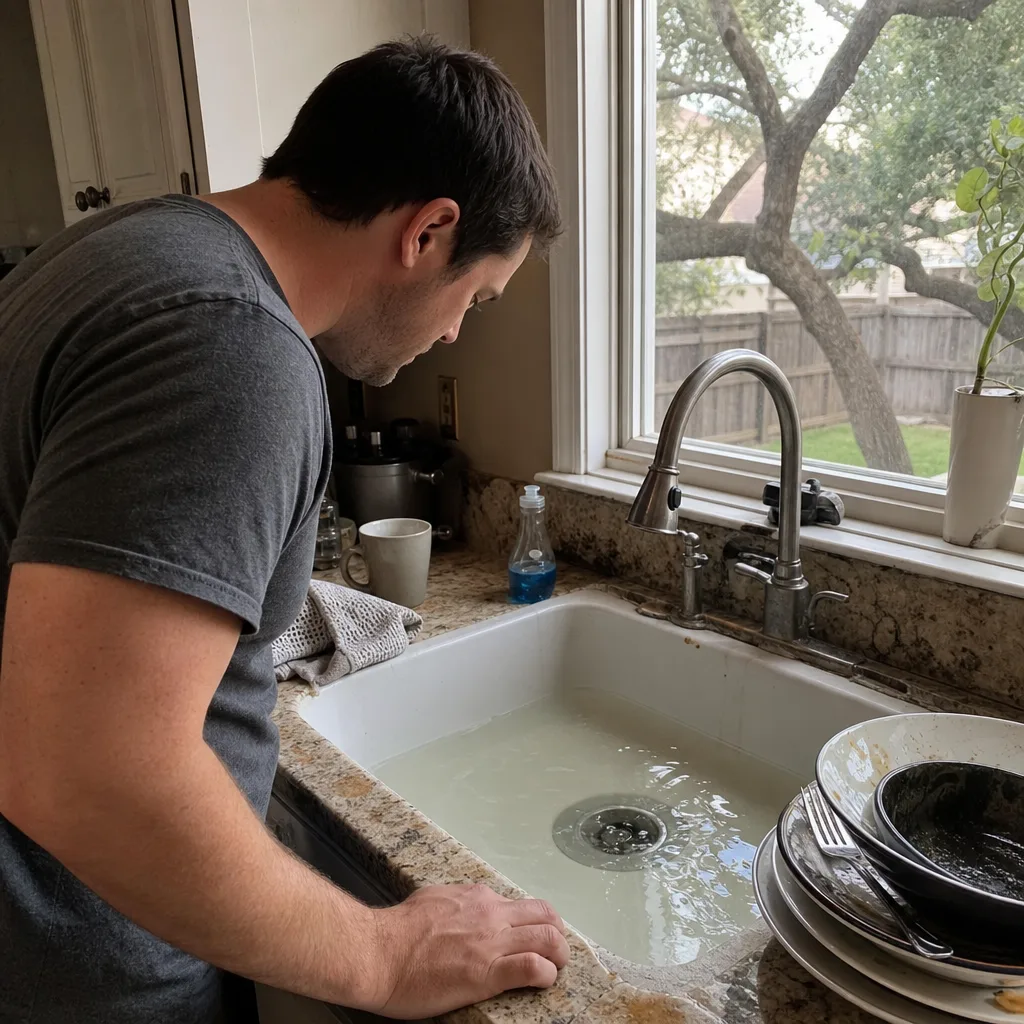
Start by noticing where the trouble shows up. If only your kitchen sink is slow, the clog is probably in that one branch line near the sink. Your main sewer line carries everything out of the house. When the main line is damaged, you’ll usually see symptoms at more than one fixture.
- More than one drain acts up at the same time. For example, the tub gurgles when the washer drains, or the toilet bubbles when someone runs the shower.
- Water comes up in a low drain, like a tub or floor drain, when you flush a toilet.
- The same backup comes back a few weeks after a cleaning.
- You smell sewage inside the house, or outside near the cleanout or in the yard.
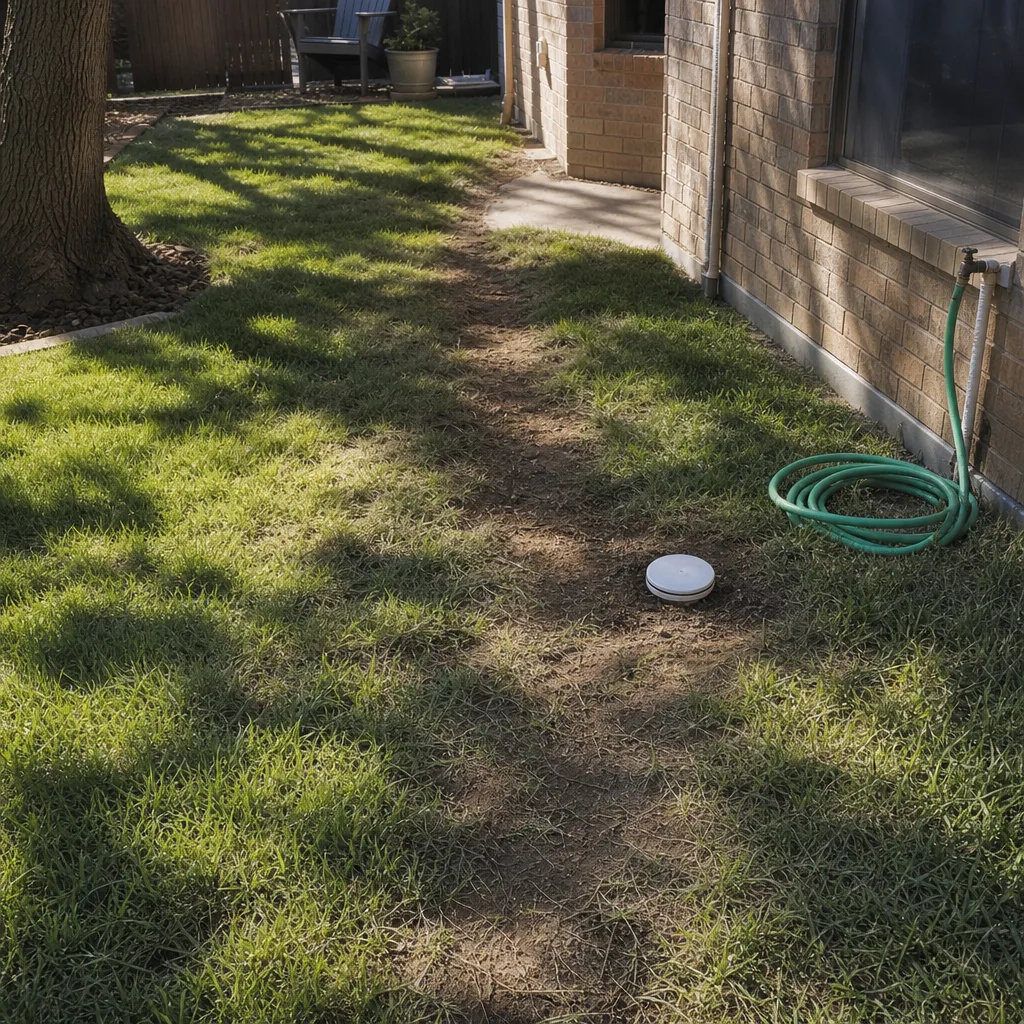
- One strip of grass over the sewer line stays green or soggy during a dry Dallas summer while the rest of the lawn turns brown.
- You see dips, soft spots, or small sinkholes in the yard along the path of the line.
- Roots keep turning up every time the line gets cleaned.
Dallas has its own reasons for sewer line damage. Much of the city sits on expansive clay soil. This clay swells when it’s wet and shrinks when it dries. After years of wet springs and hot, dry summers, all that movement can shift buried pipe, pull joints apart, or crack older lines. Many Dallas neighborhoods are full of slab-on-grade ranch homes built between the 1950s and 1990s. The sewer lines under those homes have lived through decades of that cycle, and older clay or cast iron pipe can crack or wear down with age.
Roots show why cleaning alone often falls short. Once a joint opens up, roots find the moisture and grow inside. A cleaning can cut them back and get water moving again. But the crack they came through is still there, so they grow right back.
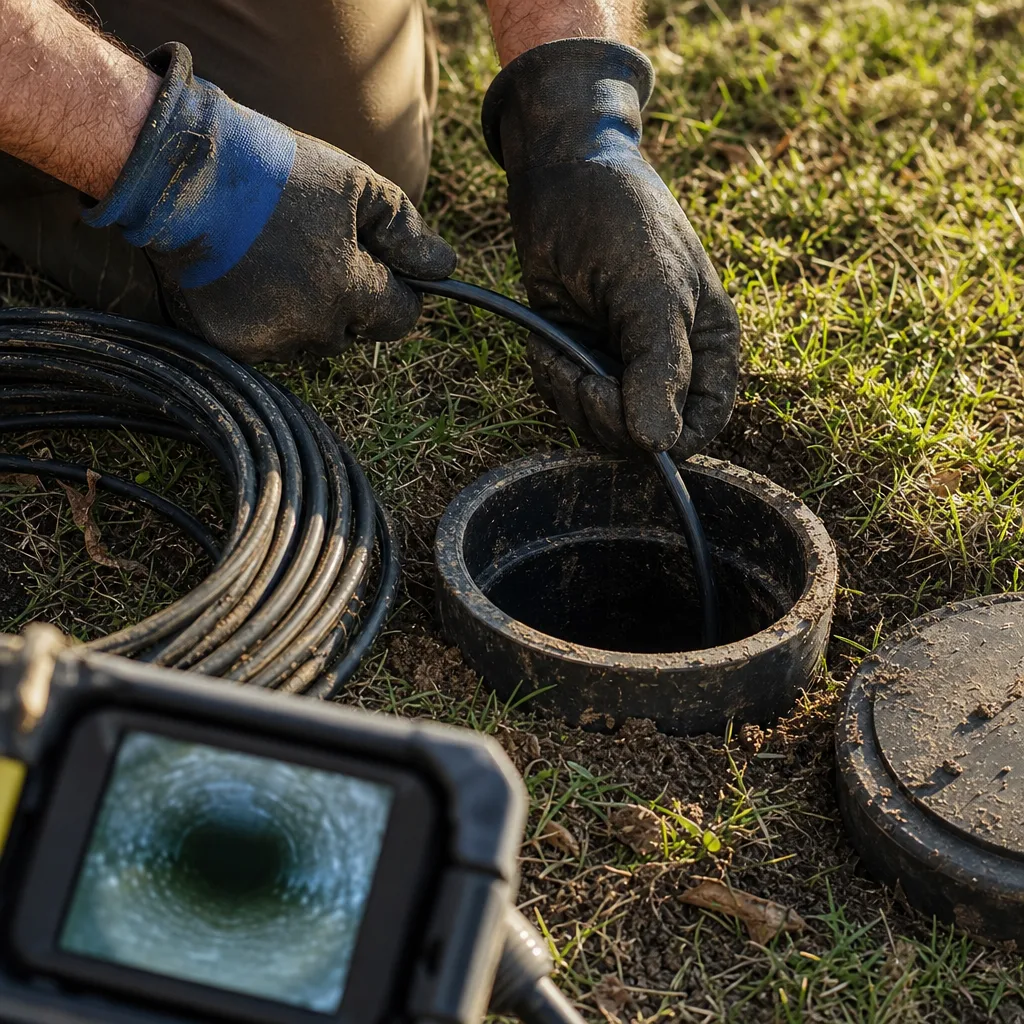
A sewer camera inspection answers the question. A small camera goes down the line and shows you exactly what’s going on: a clog, roots, a crack, a sag where water sits, or a collapsed section. It also shows where the problem is and how deep it sits. With that information, the repair can focus on the damaged section instead of guessing. The cost also lines up with what’s wrong.
Here’s the honest side. If you have one slow drain, no smell, and no history of repeat clogs, you probably don’t need sewer line repair. Lots of backups come from grease, wipes, or hair, and a drain cleaning is the right fix for those. If a plunger clears it and it stays clear, you may not need a pro at all.
When a Simple Drain Clog Is the Real Problem
Some problems look like a broken sewer line but aren’t. Before you start budgeting for a repair, rule out these common lookalikes. Each one has a simpler, smaller fix.
- A one-time backup after a heavy day. Maybe you had a full house over the holidays, ran four loads of laundry, and everyone showered back to back. A healthy line can still slow down when it’s overloaded. If one cleaning clears it and it stays clear for months, your pipe is probably fine.
- A gurgle at just one fixture. If only one sink or tub gurgles and nothing else in the house acts up, the cause is usually a partial clog in that branch line or a vent problem. It’s rarely the main sewer line.
- A soggy spot in the yard with no smell. During a hot Dallas summer, a cracked sprinkler line or broken sprinkler head can leave a wet, green patch that looks a lot like a sewer leak. Clean water doesn’t smell. A leaking sewer line almost always does.
- Water on the floor near your indoor AC unit or water heater. That’s usually a clogged AC drain line or a leaking tank, not the sewer. Both are separate, smaller repairs.
- Backups up and down your street. If your neighbors are having the same problem at the same time, the blockage may be in the public sewer main. In that case, call your city’s water utility first.
The age of your home matters too. Newer subdivisions usually have plastic sewer pipe. It holds up to clay soil movement better than the old clay and cast iron pipe found under many older ranch homes. Plastic pipe can still sag or get roots at a bad joint. But if your house is fairly new and you’ve got one stubborn clog, a damaged line is less likely than a simple blockage.
Sometimes the camera does find damage, and you still don’t need to fix it right away. Say it shows light root growth at one joint, or a small shift where two pipes meet. If water still flows well and there’s no smell, cleaning on a schedule can be a fair way to buy time. It won’t fix the pipe. Over time the roots will grow back and the joint can open wider. But it lets you plan the repair on your own timeline instead of rushing into it this week.
Waiting stops making sense once sewage is coming back into your home, the yard is sinking along the line, or the camera shows a collapsed or badly broken section. Cleaning can’t move water through a pipe that’s caved in. Those signs mean the pipe itself needs repair.
If none of that sounds like your home, a drain cleaning is likely all you need. You’ll spend far less, and nobody needs to dig up your yard.
How a Sewer Line Repair Visit Works
Sewer trouble doesn’t wait for a good day. When you call Xtreme Air Services, you talk to a real person, and our licensed technicians can get to you the same day. Here’s how the visit goes from that first call to water running freely again.
- We find the damaged section. Using what the camera shows, we pin down where the break, sag, or root problem is and how deep it sits. That tells us what really needs fixing, so we’re not tearing up your yard to hunt for it.
- You see the price before any work starts. We give you upfront pricing and explain the fix in plain English. Nothing gets dug until you say yes.
- We open access and repair the line. We dig down to the damaged section, then repair or replace that part of the pipe. If trenchless sewer repair fits your pipe and your property, we’ll tell you. If it doesn’t, we’ll explain why.
- We test the flow. Once the repair is done, we check that water moves through the line the way it should. We don’t call it finished until it drains.
Our service-call fee is $26 to $99. If you go ahead with the repair, that fee is credited toward the job. If you’d rather think it over, you’re only out the visit.
Most sewer line repairs we do run $1,500 to $4,000. That covers locating the problem, digging or opening access, the repair, and testing. Bigger jobs fall in our wider range of $1,500 to $7,000. Three things move the price the most:
- How deep the damaged pipe is and how long the bad stretch runs
- How hard it is to reach, and how much digging that takes
- Whether a trenchless method can be used
Some things aren’t in that price, and you should know them up front. Replacing your whole sewer line is a separate job. So is putting back landscaping or concrete after the dig, and so are permits unless your quote lists them. In Dallas, plenty of slab-on-grade ranch homes have the sewer line running under a driveway, a patio, or a flower bed. If yours does, plan ahead for that cleanup. We’ll point out where the dig will be before we start, so the cost of putting things back won’t catch you off guard.
If the repair costs more than you can cover at once, we offer flexible financing on qualifying larger jobs, on approved credit. You can ask about it when we go over the price.
The whole point is that you know what’s wrong, where it is, and what it costs before anyone picks up a shovel. You pay to fix the broken section, not to guess at it.
Call 469-269-6373
Need help with Sewer line repair?
Call Today, Get Service Today. Xtreme Air Services — Oak Lawn is ready to help.
Trenchless Repair vs. Dig-and-Replace
The right method depends on what the camera finds, not on which one sounds better. Trenchless repair works well when the old pipe still holds its shape and the problem is cracks, leaky joints, or root entry. Dig-and-replace is the right call when the pipe has collapsed, sagged, or shifted out of line. In those cases there’s nothing solid left to repair from the inside.
Trenchless means fixing the pipe without opening a long trench along its whole path. The two methods you’ll hear about most work like this:
- Pipe lining. A flexible liner coated in resin goes into the old pipe and hardens in place. It forms a new pipe inside the old one. It seals cracks and leaky joints, so roots can’t get back in.
- Pipe bursting. A new pipe gets pulled through the path of the old one. The old pipe breaks apart as the new one moves through. Usually this only takes a small access pit at each end.
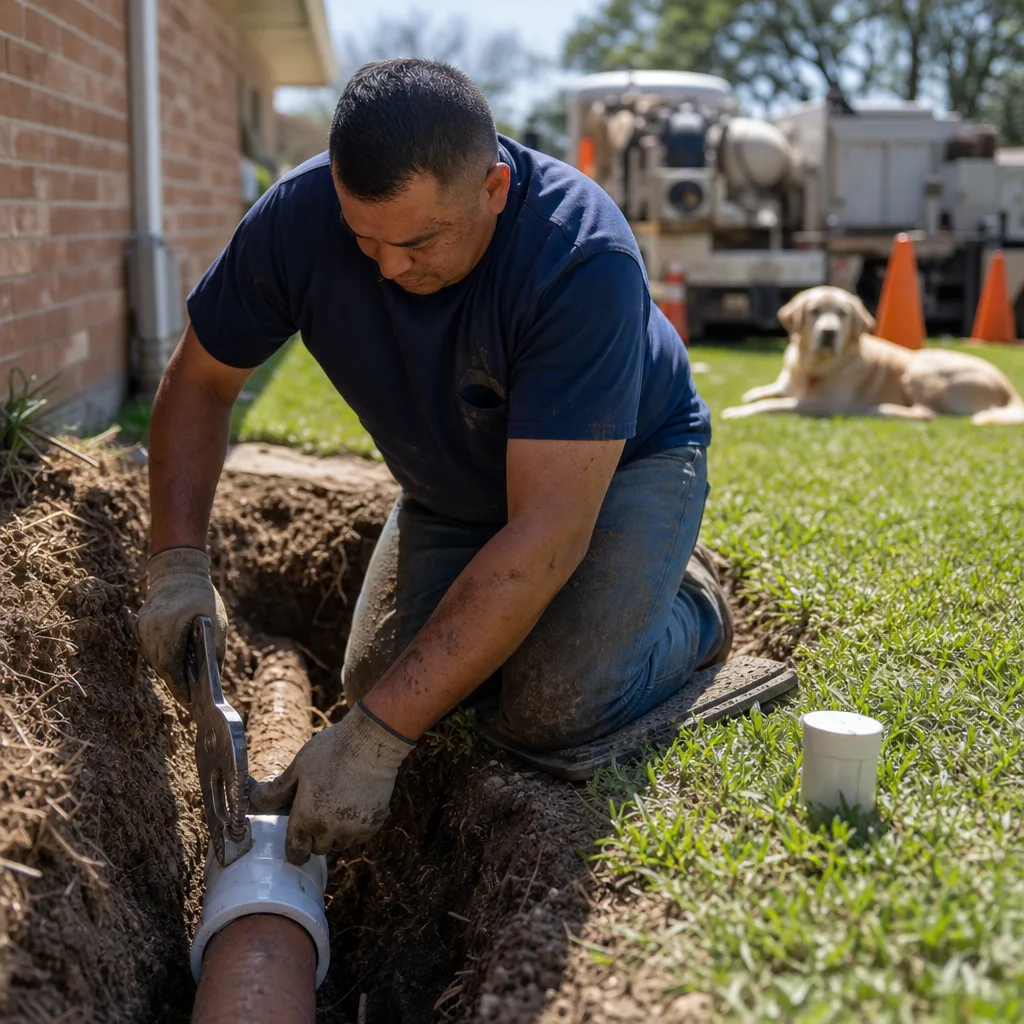
Dig-and-replace is just what it sounds like. We dig down to the damaged section, cut it out, and put in new pipe. It’s the most common sewer repair we do. It’s also the most direct fix when only one stretch of the line has failed.
Here’s a detail most people don’t hear until after the job. Dallas clay soil swells and shrinks, and that movement often causes a sag, or belly, in the line. A belly is a low spot where water and waste sit instead of flowing out. Lining can’t fix a belly. The liner follows the shape of the old pipe, so you’d end up with a brand-new pipe with the same low spot in it. To fix a sag, the pipe has to be dug up and re-laid at the right slope.
Trenchless repair tends to win when the damage sits under something you don’t want torn up. On many Dallas slab-on-grade ranch homes, the line runs under a driveway, a patio, or mature landscaping. Getting to that pipe without breaking concrete can save you a real restoration bill. That cost isn’t part of the repair price, as we covered above.
Digging tends to win when the bad section is short, easy to reach, and under plain lawn. Grass grows back. In that case, opening one small area and swapping out a few feet of pipe is often simpler than a trenchless setup.
So the honest answer to which one is better is this: it’s whichever one fits your pipe. A few questions help you check any recommendation:
- Can you show me on the camera footage why this method fits my damage?
- Is there a sag in the line, and will this method fix it?
- What will be dug up, and where exactly?
- What happens to the driveway, patio, or yard after the work?
You should get a clear answer to every one of those questions before anyone starts work. If trenchless won’t hold up in your line, you should hear that plainly, along with the reason.
Call now
Watch Our Video
See How We Handle Sewer line repair in Dallas
Xtreme Air Services — Oak Lawn
What’s Included in Your Sewer Line Repair and What Costs Extra
Your quote should tell you exactly which piece of pipe is getting fixed and what happens to your yard afterward. If it says “repair sewer line” and nothing more, ask for details before you sign. A clear quote is how you avoid a second bill.
Here’s what each included item gives you:
- Locating. You know where the damage is and how deep it sits. Your quote should name that spot, such as “8 feet of pipe, 4 feet down, 15 feet from the cleanout.”
- Excavation or access. This is the digging or the access points needed to reach that one section. It doesn’t cover putting the surface back afterward.
- The repair. This is the damaged section repaired or replaced. It’s not the whole line from your house to the street.
- Testing. This shows water moving through the fixed pipe the way it should. Ask whether the test includes a camera look after the repair so you can see the finished work.
The extras are where homeowners get surprised. You can plan for each one ahead of time.
Concrete and driveways. If your line runs under a driveway or patio, breaking and pouring concrete is a separate cost. Many homeowners get a quote from a concrete contractor before the dig so they know the full number. Say your sewer line runs under the driveway of a 1960s ranch home. The repair price covers the pipe. The new slab of driveway is its own bill.
Lawn, plants, and sprinklers. Plenty of Dallas yards have in-ground sprinkler systems, and a dig can cut right through a sprinkler line. Sod, shrubs, and sprinkler repairs aren’t part of the repair price. Mark your sprinkler heads and any plants you want to save so they can be worked around where possible.
Permits. Some sewer work needs a city permit and an inspection. Permits aren’t included unless your quote says so. Ask whether your job needs one and who pulls it, so it doesn’t hold up the work.
Full line replacement. Sometimes the camera shows damage in several spots, not just one. A section repair price won’t cover replacing the whole line. If the rest of the pipe is old clay or cast iron that’s already cracking, ask what the camera showed beyond the bad section. Then you can decide whether to fix one spot now or plan for more later. Either choice is fair as long as you make it with the facts in front of you.
Before you approve the work, check that your quote answers these questions:
- How many feet of pipe are being repaired, and where?
- What will be dug up, and what will it look like when the crew leaves?
- Is a permit needed, and is it in this price?
- Did the camera show any other weak spots I should plan for?
When you can answer all four, there’s no second bill waiting for you.
Call 469-269-6373
Frequently Asked Questions
Common questions about Sewer line repair
Can I fix a sewer line myself?
You can clear a simple clog yourself with a plunger or an auger, but you should not try to repair the pipe itself. Cutting out a damaged section, setting the right slope, and tying into the existing line takes the right equipment and know-how. A cracked or sagging pipe that’s patched wrong can leak underground for months before you notice, which often costs more to fix than doing it right the first time.
Is it worth repairing a sewer line instead of replacing the whole thing?
Yes, if the damage is limited to one section and the rest of the pipe is in decent shape. A camera inspection shows whether you’re dealing with one bad spot or several weak points along the line. If only one stretch has failed, fixing that section costs far less than replacing the whole run from your house to the street. If the camera finds cracking in multiple spots, especially in older clay or cast iron pipe, it’s worth planning for a fuller replacement instead of patching one area at a time.
Ready to Get Started?
Call (469) 269-6373 Today, Get Service Today.