


Slab Leak Repair in Dallas: Confirm It, Fix It, Verify It
Leaks under your slab located and fixed with a spot repair or a reroute – whichever is right for your home.
What’s Covered on This Page
- Confirm You Have a Slab Leak
- Rule Out Other Leak Types Before You Call
- Why Dallas Slabs Develop Leaks
- How a Slab Leak Gets Located and Repaired
- What Drives the Cost of Slab Leak Repair
- Is a slab leak covered by insurance?
- Who is responsible for water leaks?
- How much does a leaking water meter cost to fix?
Confirm You Have a Slab Leak
Most Dallas homes sit on a concrete slab, and the water lines run underneath it. You can’t see those pipes, so you have to read the clues your house gives you. Here’s what a leak under the slab tends to look like:
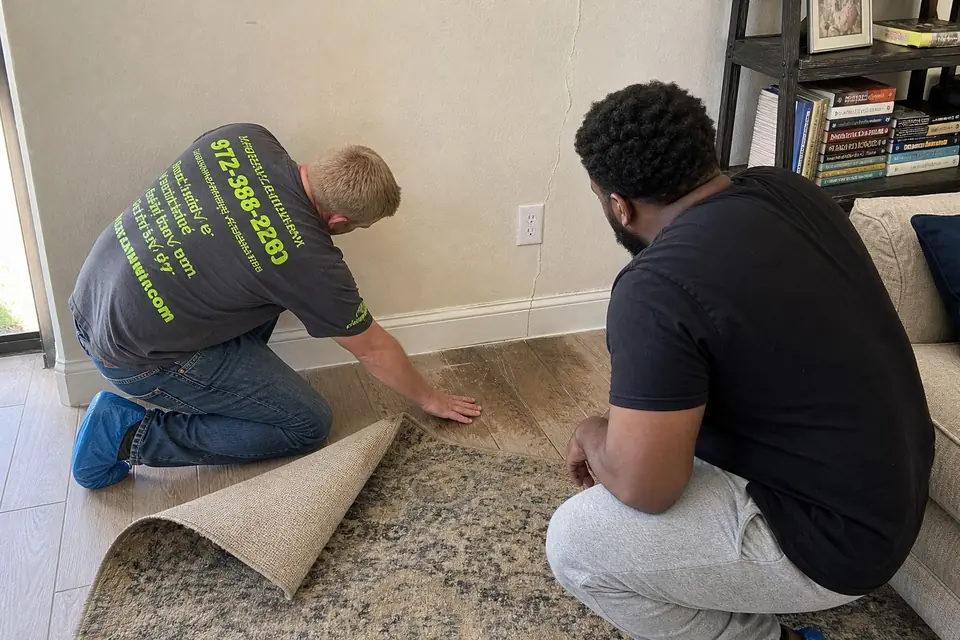
- A warm or hot spot on a tile or wood floor you can feel with bare feet. That often points to a hot water line.
- The sound of water running or hissing when every faucet, toilet, and appliance is off.
- A water bill that climbs month after month even though your habits haven’t changed.
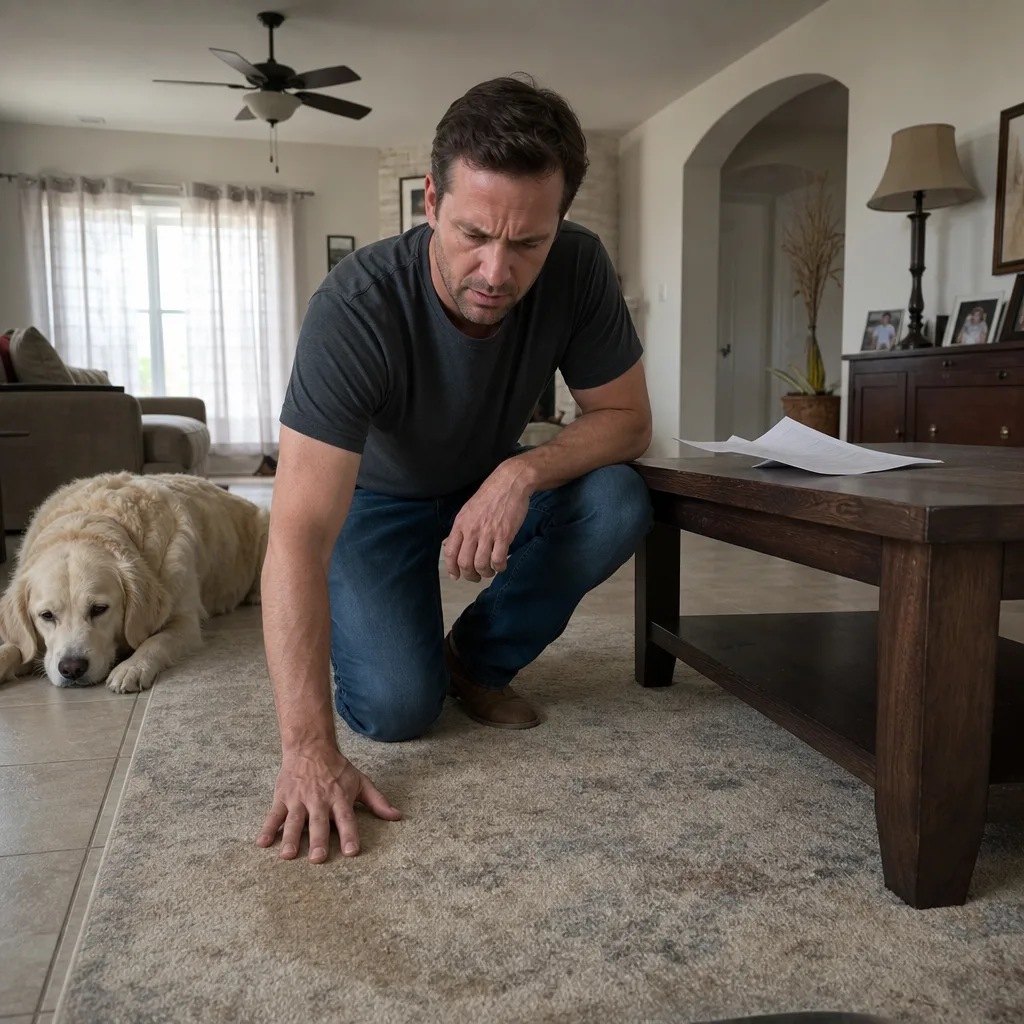
- Damp carpet, cupped wood floors, or cracked tile with no spill or pipe nearby to explain it.
- A water heater that seems to run all the time.
- Water pressure that drops for no clear reason, or a musty smell low to the floor.
Before you call anyone, try the water meter test. Turn off every faucet, the dishwasher, the washer, the ice maker, and your sprinklers. Find your meter, usually in a box near the curb, and write down the reading or watch the small leak indicator dial. Wait 15 minutes without using any water. If the numbers move or the dial spins, water is leaving your plumbing somewhere.
That doesn’t automatically mean the leak is under your slab. Plenty of other problems move the meter, and some are easy fixes you can handle yourself:
- A running toilet. Put a few drops of food coloring in the tank. If color shows up in the bowl within 15 minutes without flushing, the flapper is leaking.
- A dripping faucet or outdoor spigot.
- A leak in your sprinkler system or the line running out to it in the yard.
- A water heater relief valve that’s dripping into the drain pan or out the side of the house.
One more look-alike is common in North Texas homes. If you’ve got a wet spot on the floor near a hall closet or utility room, check your AC. A clogged condensate drain line can back up and soak the floor next to the indoor unit. That’s an AC drain line cleaning job, not a slab leak.
So why are slab leaks such a concern here? Dallas sits on expansive clay soil. It swells when it’s wet and shrinks during long, dry summers. That movement shifts the slab a little at a time, and it puts stress on the pipes running through and under it. Many slab-on-grade ranch homes built from the 1950s through the 1990s still have their original water lines, and years of soil movement can wear a pipe until it finally gives.
Here’s the honest answer. If your meter stays still with everything off, you probably don’t have a slab leak, and you don’t need to pay for slab leak detection. If the meter moves and you’ve ruled out toilets, faucets, sprinklers, and the AC drain, that’s when it makes sense to have a pro pinpoint where the water is going before anyone touches the concrete.
Rule Out Other Leak Types Before You Call
The meter test tells you water is escaping. It doesn’t tell you where it’s going. A few more simple checks can narrow it down, and some of them point away from your slab completely.
Start with the yard line. Find the main shutoff valve where the water line enters your house. It’s often near an outdoor hose bib or in the garage. Close it, then watch the meter again. If the meter still moves with the house shut off, the leak is in the line between the meter and your home, out in the yard. That means digging in dirt, not breaking concrete. Look for a soggy strip of lawn, or a patch of grass that stays green in August when everything around it is brown.
If the meter stops when you close the house valve, the leak is inside. Open that valve again, then close the cold water supply valve on top of your water heater. If the meter stops now, the leak is on the hot water side. That fits with a warm spot on the floor, and it gives whoever pinpoints the leak a big head start.
Not every leak under a slab is a water supply line. Your drain and sewer lines run under the concrete too. They aren’t under pressure, so a drain leak won’t move your meter at all. Watch for a sewer smell, slow or gurgling drains, or a wet spot that shows up after showers or laundry. That calls for a sewer camera inspection, which uses different tools and leads to a different fix than slab leak detection.
Other look-alikes can fool you, too:
- Attic water lines. Lots of North Texas homes run water lines through the attic. A leak up there can drip down inside a wall and show up as a wet baseboard or stained drywall near the floor. Check the ceiling and the upper wall above any damp spot.
- Appliance lines. Pull the fridge out and check the ice maker line. Look at the washer hoses and the supply line under the dishwasher. These small lines crack with age and can soak a floor slowly.
- Shower pans. If the wet spot sits right next to a shower and only shows up after someone uses it, the pan or drain may be leaking, not a pipe under the slab.
- Rainwater. Damp spots along an outside wall that show up after a storm and dry out between rains usually come from outside. Gutters, grading, or gaps at the slab edge let water in. Your meter won’t move for this one, because it isn’t your plumbing.
Jot down what you found before anyone comes out. Did the meter move with the house valve open? Did it stop when you closed it? Did it stop when you shut off the water heater? Those three answers save time, and they help make sure the repair you pay for matches the leak you have.
Why Dallas Slabs Develop Leaks
Once you know water is leaving your plumbing under the concrete, the next question is why. The answer matters more than you might think. The cause tells you whether you’re dealing with one bad spot or a whole line that’s wearing out, and that’s what decides the right repair.
You already know the clay soil here moves the slab a little at a time. That movement is the background stress. These are the ways it, and a few other things, put a hole in a pipe:
- Rubbing. Water lines under a slab sit against gravel, rebar, and the concrete itself. Every small shift slides the pipe back and forth across that rough surface. Over years, it can wear right through the pipe wall.
- Heat. A hot water line grows a tiny bit every time hot water runs through it, then shrinks as it cools. That happens dozens of times a day. Where the pipe touches something hard, all that motion adds up. It’s a big reason so many slab leaks show up on the hot side.
- Corrosion. Copper is a solid pipe material, but decades of minerals in the water and contact with soil and concrete can thin it out. The result is often a pinhole leak, a hole so small you’d never see it, spraying water under your floor day and night.
- How it was put in. A pipe that got kinked, dented, or nicked when the house was built can carry that weak spot for years before it finally fails. A joint buried under the slab is another place trouble can start.
- High water pressure. When the pressure coming into your home runs too high, every pipe works harder all the time. If a pro finds your pressure is high, a pressure regulator replacement can take some strain off the lines you still have.
Here’s why sorting this out comes before anyone picks up a jackhammer. Say a pro finds the leak where a hot line rubbed against a piece of rebar, and the rest of the pipe looks healthy. A spot repair at that one place can make sense. You fix the damage, test the line, and you’re done.
Now say the leak is a pinhole in copper that’s been under your house for 40 years. That pipe has likely thinned out along its whole length, not just at the hole. Patch it, and the next weak spot may give a few feet away. In that case, rerouting makes more sense. That means running a new line through your walls or attic so it skips the slab entirely. For a home where several lines are showing their age, repiping may be the better long-term answer.
That’s the whole point. A leak under your slab isn’t just a hole to plug. It’s a clue about the condition of the pipe around it. When you know what caused it, you can choose a repair that fits your home, instead of paying to open the floor once now and again next year.
Have questions? We’re happy to help.
Call Today, Get Service Today. Xtreme Air Services — Oak Lawn is ready to help.
How a Slab Leak Gets Located and Repaired
Finding a slab leak is about getting close enough that only a small patch of floor has to come up. Guessing costs you tile, wood floors, and time. Here’s how the work usually goes, from the first test to the final check.
- Isolate the line. A pro shuts off sections of your plumbing and pressure tests each one to see which line is losing water. The meter and water heater notes you took earlier make this step faster.
- Trace the pipe. Line tracing tools map where the pipe runs under your slab. It rarely goes in a straight path from where you’d expect, so this keeps anyone from digging in the wrong spot.
- Pinpoint the leak. Acoustic listening gear picks up the faint hiss of water escaping through the concrete. Thermal imaging can show the warm trail a hot water leak leaves on the floor. Used together, they narrow the leak down to a small area.
Once the spot is found, the repair follows from what caused the leak. These are the main ways it gets fixed.
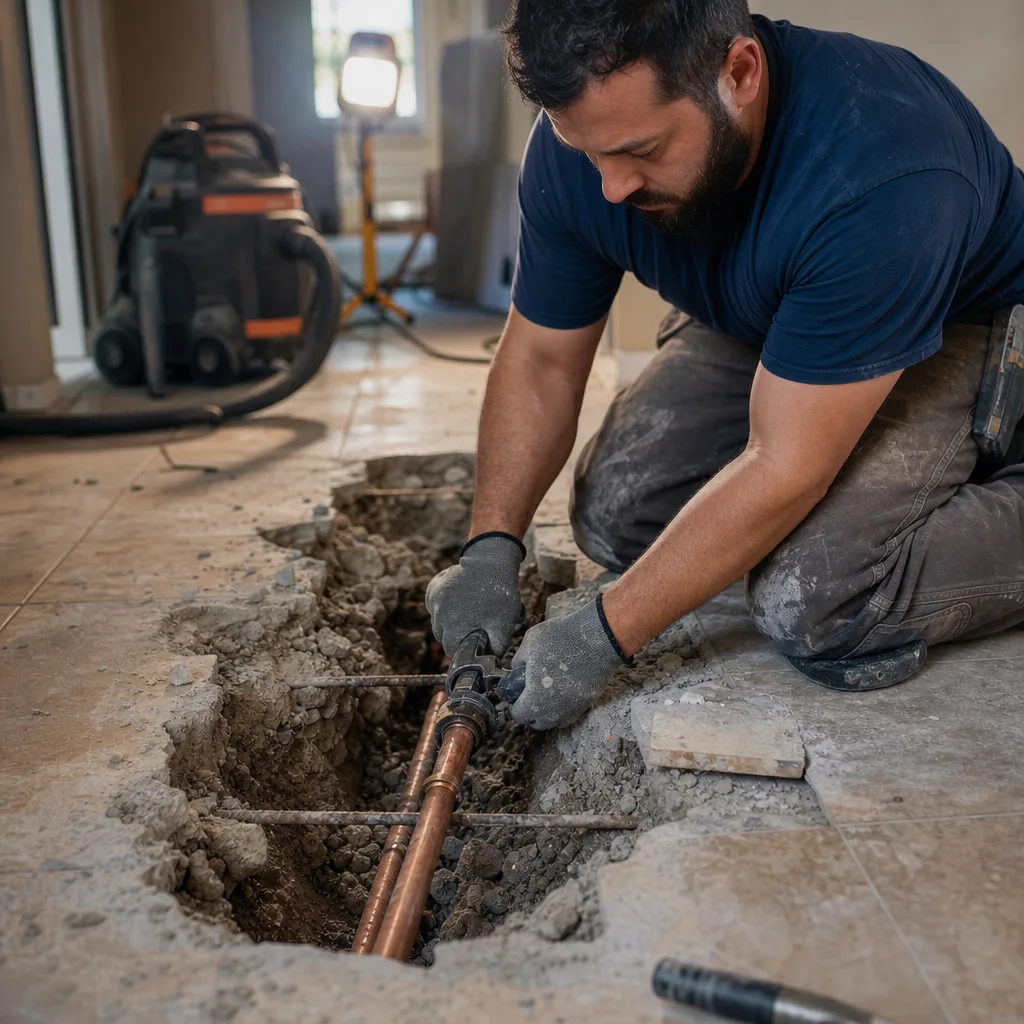
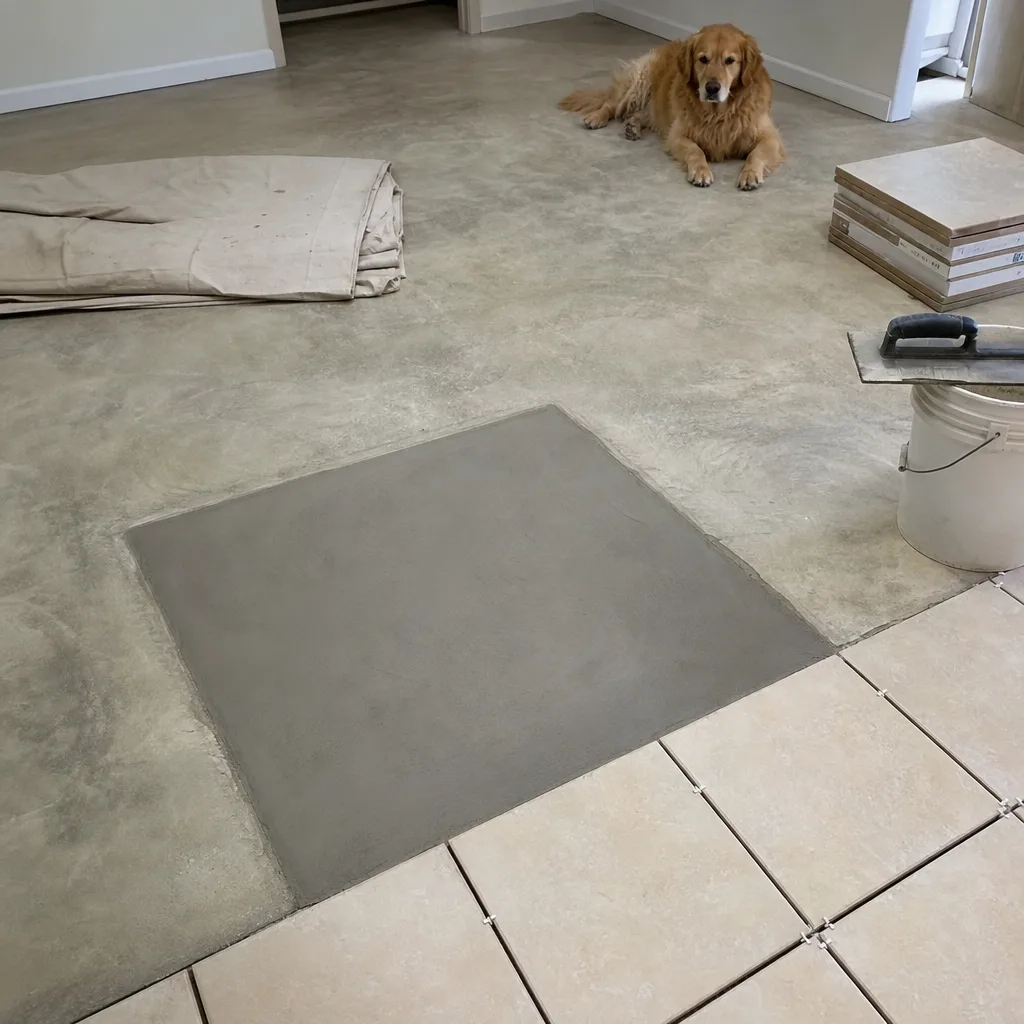
Spot repair through the slab. The floor covering over the leak comes up, a small section of concrete gets cut out, and the plumber digs down to the pipe. The damaged piece is replaced, tested, and the hole is filled and patched with new concrete. It’s direct, and when the pinpointing is good, the opening stays small.
Tunneling. When a leak sits near the middle of the house or under flooring you really don’t want disturbed, some jobs go under the foundation from outside instead. It’s a bigger dig and more labor, but your floors inside stay untouched.
Reroute. The old line under the slab gets capped and left in place, and a new line runs through your walls or attic to reach the same fixtures. No concrete gets broken. You’ll have a few small holes in drywall to patch. In North Texas, a new line in the attic has to be insulated well, because attics here go from blistering summer heat to hard winter freezes.
Whichever method fits, the job isn’t done until the line is tested again under pressure and holds steady. That test is your proof the leak is stopped, not just slowed down.
With Xtreme Air Services, leak location, the repair or reroute, and testing are all included in the job. Slab and flooring restoration isn’t included, and neither are additional lines or permits unless they’re stated in your quote. So if your tile or wood floor has to come up, plan on having that put back as a separate step.
Before anyone starts cutting, you should know four things. Ask which line is leaking, hot or cold. Ask where the leak sits and how big the opening will be. Ask whether a spot repair, tunnel, or reroute fits your situation, and why. And ask what your floor will look like when the plumbing work is finished. A good plumber can answer all four in plain English before you agree to anything.
Watch Our Video
See How We Handle Slab leak repair in Dallas
Xtreme Air Services — Oak Lawn
What Drives the Cost of Slab Leak Repair
Here’s the number you came for. Slab leak repair with Xtreme Air Services typically runs $2,000 to $6,000. Our most common job is finding the leak under the slab and then repairing or rerouting that line to stop it. That job usually falls between $2,000 and $3,800.
That’s a wide range, and there’s a reason for it. Two homes on the same Dallas street can have very different leaks. Three things decide where your job lands.
- Where the leak is and how deep it sits. A leak a few feet inside an outside wall is a lot less work to reach than one under the middle of your kitchen. Depth matters too. The farther down the pipe runs, the more digging it takes.
- Spot repair or reroute. Fixing one damaged section is a different job from running a new line through your walls or attic. Which one fits depends on what caused the leak and how the rest of the pipe looks.
- Getting through the slab. Cutting concrete, digging to the pipe, and working under the foundation all add labor. If you’re going under the slab instead of skipping it, that access is a big part of the price.
Here’s how that plays out. Say your meter test pointed to the hot side and the warm spot sits near an outside wall in a newer home. That’s the kind of leak that tends to stay toward the lower end. Now picture a 1970s ranch house with original copper pinholing under the den. That calls for a reroute, and it can climb higher. Neither one is a bad outcome. They’re just different jobs.
There’s also a $26 to $99 service-call fee to come out. If you go ahead with the repair with us, that fee is credited toward the job. Remember that floor restoration, extra lines, and permits aren’t part of the price unless your quote says so. Ask about those up front so your full budget is clear from day one.
Before you agree to any price, ask two money questions. Is this a set price for the whole job, or could it change once the floor is open? And if the plan switches from a spot repair to a reroute, how will you know before the work starts? You deserve straight answers to both.
If the number feels like a lot to cover at once, flexible financing is available on qualifying installations and larger jobs, on approved credit. Ask about it when you call.
Call 469-269-6373
Frequently Asked Questions
Common questions about Slab leak repair
Is a slab leak covered by insurance?
Sometimes, but it depends on your policy and what caused the leak. Many homeowner policies cover the cost to access and repair the plumbing itself, but not the slow pipe wear that caused it, and the slab or floor repair afterward may fall under a separate limit. Call your insurance agent before work starts and ask what your specific policy covers for sudden water damage versus gradual wear.
Who is responsible for water leaks?
You’re responsible for anything on your side of the water meter, including the lines running under your slab. The city or your utility is typically responsible for the main line up to the meter. That’s why the water meter test matters: it shows whether the leak is on your property or out toward the street.
How much does a leaking water meter cost to fix?
A leak at the meter itself, or in the line between the meter and your house, is usually a separate repair from a slab leak and often costs less since it doesn’t involve cutting concrete. If your meter test showed the leak stops when you close your main shutoff valve, that points to a yard line issue rather than a leak under your slab, and it’s worth asking your plumber for a separate quote on that line.
Ready to Get Started?
Call (469) 269-6373 Today, Get Service Today.