


EV Charger Installation in Carrollton: Will Your Panel Handle It?
Level 2 home chargers wired on their own circuit, with your panel checked first so the charger runs at full speed.
What’s Covered on This Page
- Panel Capacity Decides Your EV Charger Installation Cost
- What a Level 2 Home Charger Installation Includes
- Signs Your Panel May Need an Upgrade First
- When a Standard Outlet Is Enough and When It Isn’t
- How the Installation Visit Works
- How long does a Level 2 home charger installation take?
- Can I charge two electric cars from the same home setup?
- Is a permit required for EV charger installation in Carrollton?
- What happens if my breaker trips while the car is charging?
Panel Capacity Decides Your EV Charger Installation Cost
A Level 2 charger is one of the biggest loads you’ll ever add to your home. It pulls steady power for hours, often overnight. Your panel has to carry that on top of everything else you already run. That’s why two neighbors on the same street can get very different quotes for what looks like the same job.
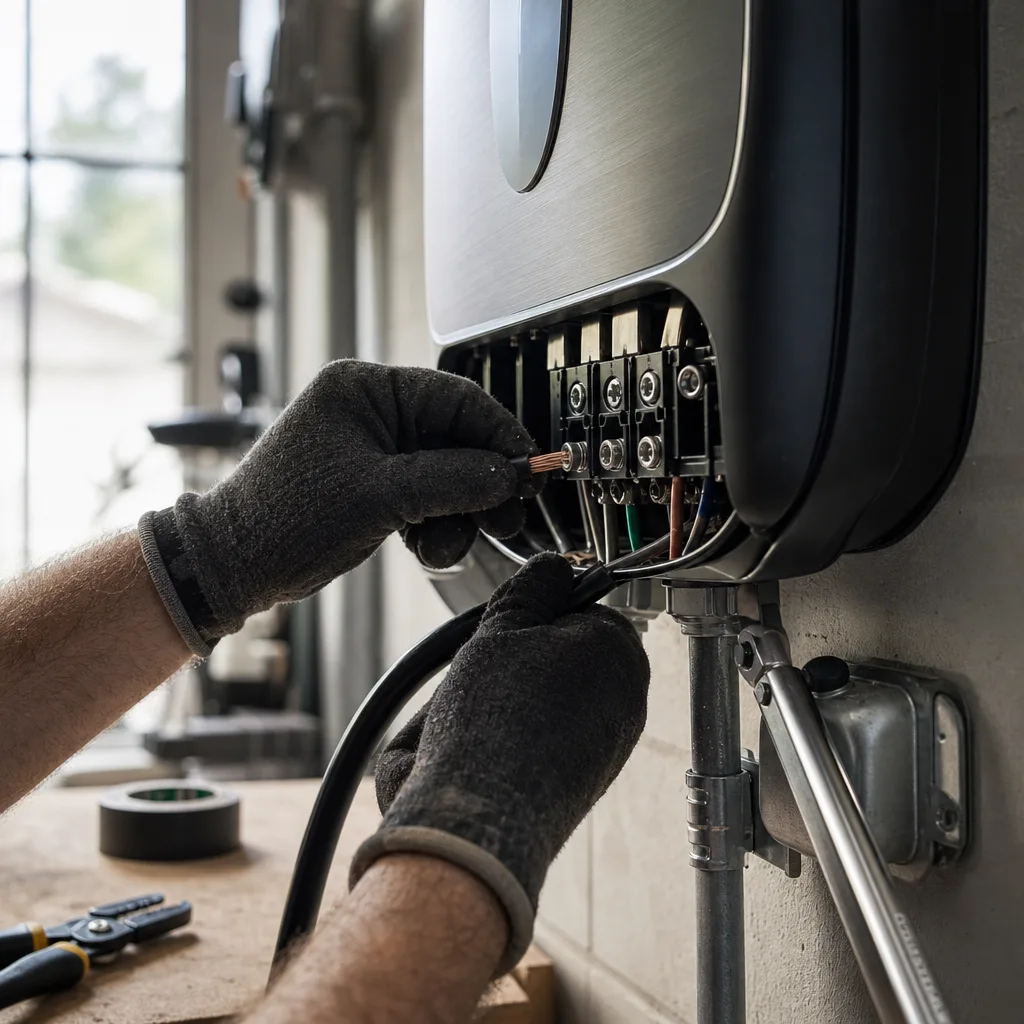
Our typical EV charger installation runs $500-$2,500. The most common job, a Level 2 charger on a dedicated circuit from the panel, mounted, connected, and tested, runs $900-$1,700. Panel upgrades aren’t included in that price, so your panel is what decides whether you stay in that range.
- Total panel size. Many newer homes have a 200-amp panel, which often has room for a charger. Older homes may have 100-amp or smaller service, which can get tight fast.
- Open breaker spaces. A charger needs a double-pole breaker, which takes two slots. A full panel may need rework even if it has enough total capacity.
- What’s already on it. An electric range, electric dryer, electric water heater, pool pump, or hot tub all eat into the room left for a charger.
- Panel condition. Rust, scorch marks, or breakers that trip often are signs the panel needs attention before it takes on a big new load.
In Carrollton, summer matters here. On a 100-degree evening, your AC is running hard right when most people plug in their car after work. A panel that seems fine in April can be close to its limit in August. A proper load check accounts for your heaviest season, not your easiest one.
If your panel is tight, you still have options, and an upgrade isn’t always the answer:
- Run the charger at a lower amperage. You’ll charge slower, but for many drivers it’s still plenty to start each morning full.
- Add a subpanel if you have capacity but not enough open breaker spaces.
- Upgrade the panel if your home truly needs more capacity. This costs more, and it helps if you’re also planning other big electrical additions.
You’d want to hear about a needed upgrade before the job starts, not halfway through. That’s why our upfront flat-rate pricing matters here. You’ll see the price and approve it first, with no meter running. If a larger job like an electrical panel replacement or upgrade makes sense, flexible financing is available on qualifying installations and larger jobs, on approved credit.
What a Level 2 Home Charger Installation Includes
Our most common job is a Level 2 home charger on a dedicated circuit from your panel, mounted, connected, and tested. Most of these jobs finish the same day. You park in the garage that evening, plug in, and wake up to a charged car.
Here’s what that price covers:
- A dedicated circuit. Your charger gets its own breaker and its own wire run. Nothing else shares it, so it won’t trip when the dryer kicks on.
- Professional installation. This is the wiring from your panel to the spot where you want to charge, done by a licensed and insured electrical contractor.
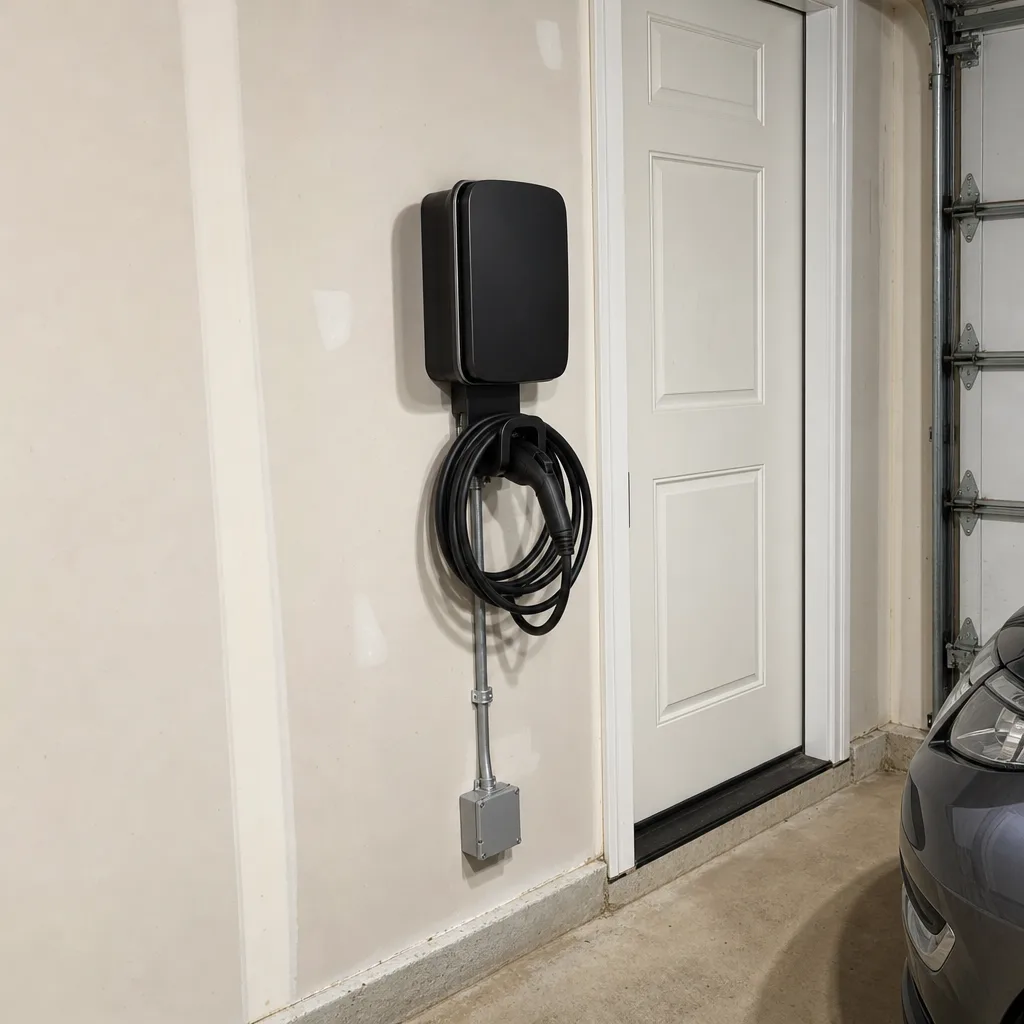
- Mounting. Your charger goes on the wall at a height and spot that make sense for where you park and how long your cord is.
- Startup and testing. Before we call it done, the charger is powered up and tested so you know it works with your car.
Some things aren’t included unless your quote says so. The charger itself isn’t included if you didn’t supply it. Panel upgrades, trenching, code corrections, and permits are also left out unless they’re stated. None of these is a trick. Each one depends on your home, and nobody can price them until they’ve looked at your setup.
Your home’s layout matters as much as the charger. Once panel capacity is settled, the biggest swing in cost comes from three things.
- Distance from the panel. If your panel is on the garage wall a few feet from where you park, the wire run is short. If it’s on the far side of the house, there’s more wire and more labor.
- Wall and conduit routing. Running wire through an open garage wall is quicker than fishing it through finished drywall or running it in conduit along the outside of the house.
- Charger amperage. A higher-amp charger fills your battery faster, but it needs a bigger breaker and heavier wire. Many drivers don’t need the top setting to start every morning full.
A detached garage or a carport out back is where trenching comes in. If the wire has to go underground across your yard, that’s extra work and isn’t part of the standard job. It’s better to know that on day one.
You’ll also want to decide between a plug-in charger and a hardwired one. A plug-in model uses a heavy-duty outlet, so you can take the charger with you if you move. A hardwired charger connects straight to the circuit with no outlet in between. Both work well. Which one fits depends on the charger you buy and how much power you want it to draw.
There’s a $26-$99 service-call fee to come out and look at your setup. That fee is credited toward the job if you go ahead with Xtreme Air Services. You’ll see the full price, including anything outside the standard job, and approve it before any work starts.
Signs Your Panel May Need an Upgrade First
You can spot most of the warning signs yourself in about five minutes with the panel door open. None of them mean you need an upgrade for sure. They just tell you, and your electrician, to look harder before a big new load goes on.
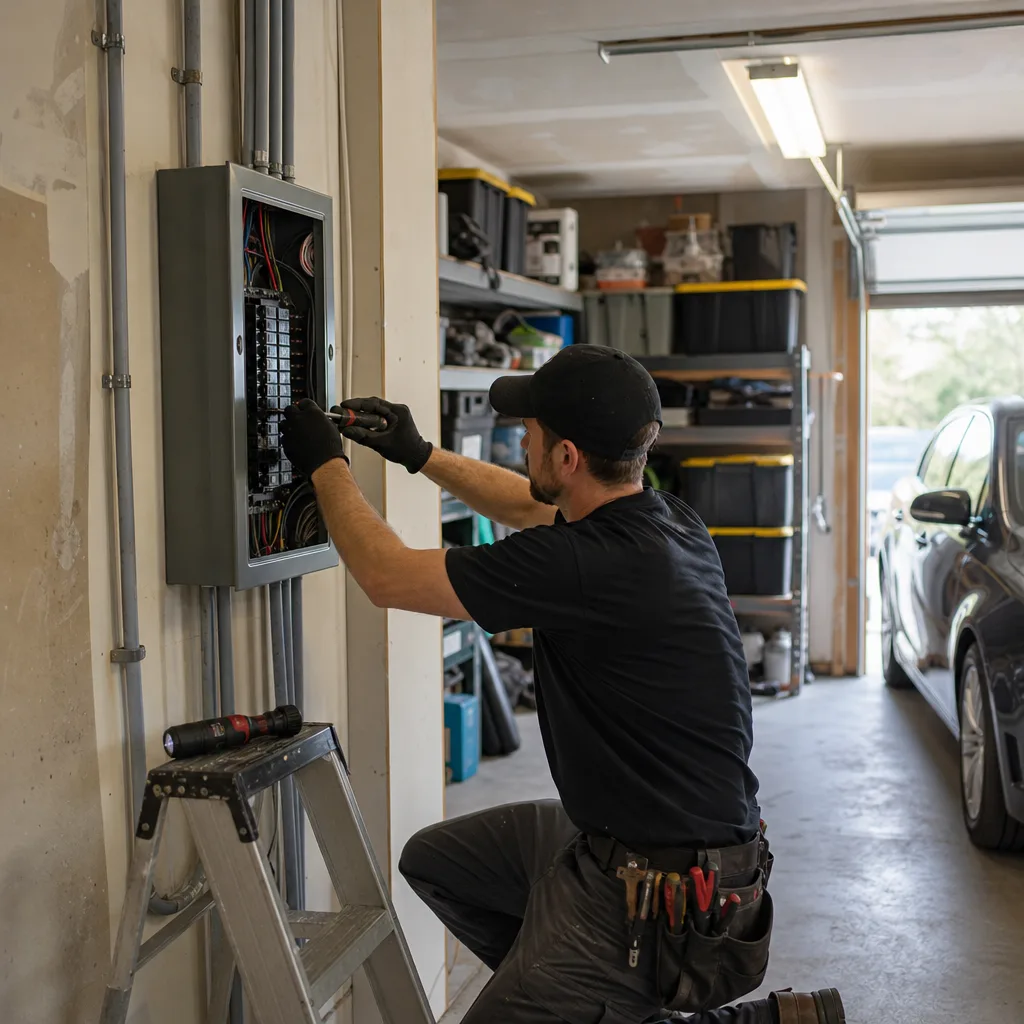
- Check the number on your main breaker. It’s the large breaker, usually at the top, with a number like 100, 125, 150, or 200 stamped on the handle. That number is your home’s total capacity. Knowing it before you call saves time.
- Look for fuses instead of breakers. If you open the box and see screw-in fuses, you’re not adding an EV circuit to it. That’s a panel replacement conversation, not a charger add-on.
- Watch your lights when the AC kicks on. A quick dim or flicker every time the compressor or dryer starts can mean your service is already working hard.
- Feel and listen. A panel cover or breaker that’s warm to the touch, a buzzing or crackling sound, or a hot plastic smell isn’t an EV question. It’s a safety issue. Turn off what you can and get it checked now.
- Spot the squeeze. Thin half-size breakers crammed into slots, or two wires under one breaker screw, are signs past owners ran out of room and got creative.
Some signs aren’t in the panel at all. They’re in your plans. If you’re thinking about a second electric car, a pool, a hot tub, or switching from gas to electric heat in the next few years, count those now. Sizing your panel once usually beats paying for two separate jobs.
Here’s the honest part. Plenty of homes don’t need an upgrade. A 200-amp panel with open slots and a gas range, gas dryer, and gas water heater often takes a charger with no trouble at all. Some chargers can also share power with the house, slowing down automatically when your home is pulling a lot and speeding back up when it isn’t. For a home that’s close but not over the line, that can be enough to skip a panel job completely.
If you do need an upgrade, plan for it to take longer than a charger install. A panel swap means your power is off for part of the day. It usually needs a permit and a city inspection. If your service size is going up, Oncor, the utility that delivers power in Carrollton, may need to disconnect and reconnect your service. That’s normal. It just means the work runs on a schedule you set ahead of time instead of same-day.
One easy tip before you call anyone: snap a clear photo of your open panel, the main breaker, and the label inside the door. It gives whoever you call a real head start on whether you’re looking at a simple circuit or a bigger job, and it helps you ask better questions about the quote.
Not sure what your EV charger installation project needs? Ask us.
Call Today, Get Service Today. Xtreme Air Services — Carrollton is ready to help.
When a Standard Outlet Is Enough and When It Isn’t
You might not need us at all. Many electric cars come with a cord that plugs into a regular household outlet. That’s called Level 1 charging, and for some drivers it’s all they’ll ever need.
The catch is speed. A regular outlet adds only a few miles of range for every hour your car is plugged in. Overnight, that can cover a short daily drive. It won’t refill a mostly empty battery by morning.
A standard outlet is often enough if:
- You drive a plug-in hybrid. Its battery is small, and a regular outlet can often fill it overnight.
- Your daily driving is short and steady, like a quick commute and errands, and your car sits parked for 10 hours or more most nights.
- You work from home or have charging at work, so the home outlet just tops you off.
- The garage outlet is in good shape and isn’t shared with anything that runs all the time.
Here’s an easy test. Use the cord that came with your car for two weeks. If you’re waking up with enough range for your day, every day, you’re set. Save your money.
A standard outlet starts to fall short when:
- You’re plugging in every night and still starting some mornings with less charge than you need.
- You have a long commute, drive for work, or take weekend road trips that drain the battery.
- Your household has two electric cars that both need to charge at home.
- You get home late and leave early, so the car doesn’t sit long enough to catch up.
There’s also the outlet itself to think about. Charging pulls power for hours without a break, which is harder on an outlet than a phone charger or a shop vac. Many garage outlets share a circuit with a freezer, a garage door opener, or the lights. If the breaker trips while your car is charging, the circuit is overloaded. Don’t just keep resetting it.
Stop using an outlet for charging if the plug or cover feels warm, looks melted or brown around the slots, or the plug fits loosely. Those are signs the outlet is worn out. Also check what your car’s owner’s manual says about extension cords and follow it.
There’s a middle step too. If Level 1 speed works for you but the outlet is shared or worn, a new dedicated 120-volt circuit for the garage is a smaller job than a full Level 2 setup. You keep the free cord and get a safer place to plug it in.
In Carrollton’s summer heat, your car’s battery cooling system can draw power while you charge. On a slow outlet, that leaves less of the overnight charge for actual miles. If Level 1 works fine for you in spring, check it again in July and August before you decide it’s enough.
Watch Our Video
See How We Handle EV charger installation in Carrollton
Xtreme Air Services — Carrollton
How the Installation Visit Works
Once your panel checks out, install day is usually the easy part. Most of our Level 2 jobs finish the same day. Your own part is mostly prep and a few minutes of checking at the end.
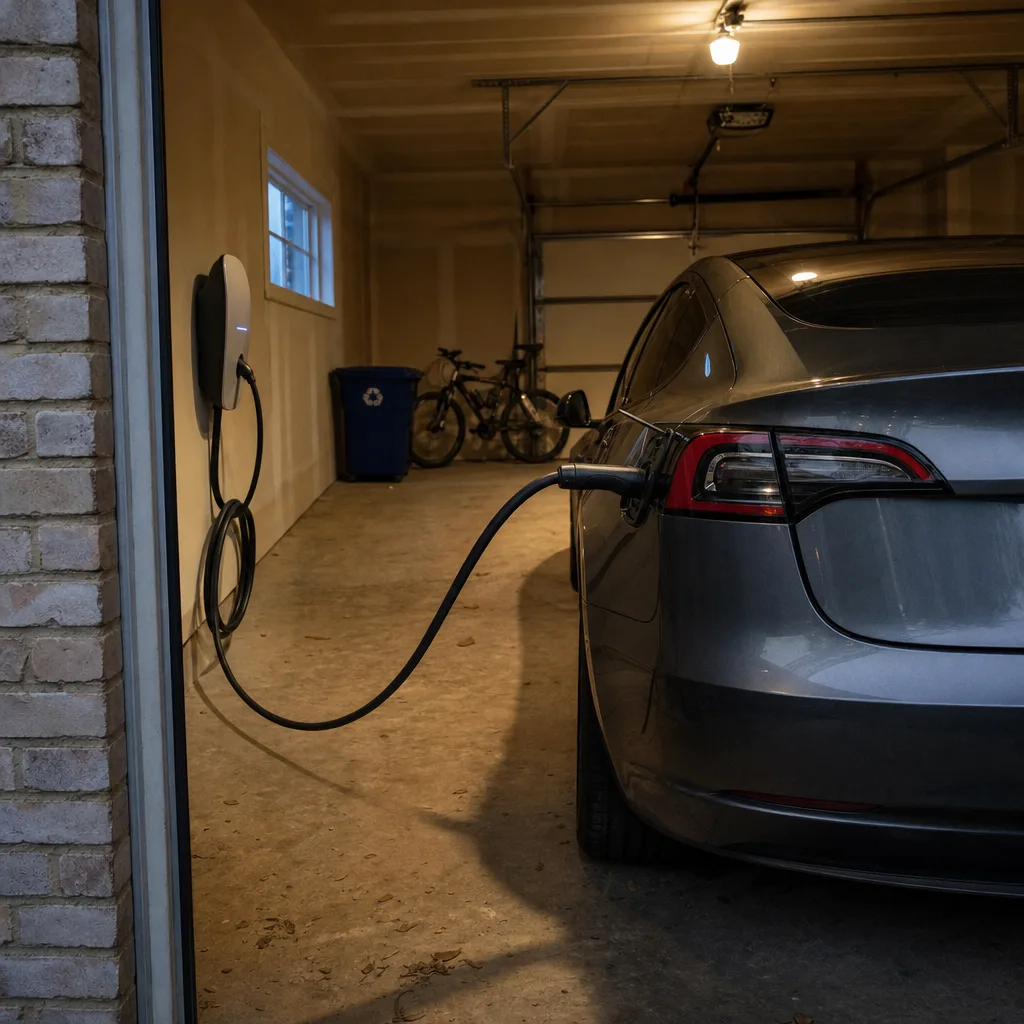
When you call, you’ll talk to a real person. Same-day service is available, and there’s no extra charge for nights or weekends. That helps if the car is already sitting in your driveway on a cord that can’t keep up. Before any work starts, you’ll see an upfront flat-rate price and approve it, so nothing new shows up on the bill afterward.
A little prep makes the visit go faster:
- Clear a path to your panel and to the wall where you want the charger. In a lot of Carrollton garages, that means moving shelves, bikes, or the extra fridge.
- Have the charger on site and still in the box if you’re supplying it. Keep the manual handy, because it lists the breaker size and wire the charger needs.
- Know where you park and which side of the car your charge port is on. That decides where the charger goes and whether the cord reaches without stretching.
- Check your Wi-Fi signal in the garage if your charger has an app. A weak signal is easier to fix now than after everything’s on the wall.
- Leave the car at home. The job isn’t really done until the charger has been tested with your car.
On a typical install, the electrician shuts off power at the panel, adds the new breaker, runs the wire to your charging spot, and mounts the charger. Plan on your power being off for part of the visit. Afterward, you may need to reset a few clocks and check the garage door opener and the freezer. Licensed and insured technicians do the work, and our team members are background-checked and drug-tested, so you don’t have to hover while someone’s in your home.
If your quote includes a permit, the city inspection may be scheduled for a later day, after the install is finished. Ask about timing up front so you’re not surprised by a second visit.
Before anyone packs up, take five minutes to make sure it’s right:
- Watch the car start charging. Startup and testing are part of the job, so you should see it pull power before the technician leaves.
- Ask what amp setting the charger is set to and make sure it matches the breaker. Many chargers have to be set by hand.
- Look for a clear label on the new breaker, so anyone opening the panel later knows what it runs.
- Ask how to reset the charger if it ever stops, and get the app paired while help is still standing in your garage.
That’s the whole visit. Most drivers plug in that same evening and leave the next morning with a full battery, which is the reason you made the call.
Call 469-269-6099
Frequently Asked Questions
Common questions about EV charger installation
How long does a Level 2 home charger installation take?
Most Level 2 charger installs finish in one day. Your electrician shuts off power at the panel, runs the new circuit, mounts the charger, then tests it with your car before leaving. If your panel needs an upgrade first, plan on that taking longer since it usually needs a permit, a city inspection, and sometimes a scheduled disconnect with Oncor.
Can I charge two electric cars from the same home setup?
It depends on your panel’s open capacity, so it’s worth mentioning when you first call. Two EVs charging at home is one of the biggest loads a house can carry, and it’s exactly the kind of future plan that should get sized into your panel check now, rather than paying for two separate jobs later.
Is a permit required for EV charger installation in Carrollton?
It depends on the scope of your job, and your electrician will tell you before work starts if one applies. A straightforward dedicated circuit install may not need the same inspection a panel upgrade does, since a panel swap typically requires a permit and a city inspection on a separate schedule.
What happens if my breaker trips while the car is charging?
A tripped breaker during charging means the circuit is overloaded, and you shouldn’t just keep resetting it. This is common on older garage outlets shared with a freezer, garage door opener, or lights. If it keeps happening, that outlet isn’t a safe long-term charging spot and a dedicated circuit is the fix.
Ready to Get Started?
Call (469) 269-6099 Today, Get Service Today.