


Dryer Vent Cleaning in Dallas: Is It a Fire-Safety Job or a DIY Fix?
The whole dryer vent line cleared, not just the opening – to cut fire risk and help your dryer dry.
What’s Covered on This Page
- Warning Signs Your Dryer Vent Needs Cleaning
- Lint Trap Cleaning vs. Full Vent Line Cleaning
- What a Professional Dryer Vent Cleaning Includes
- What Drives the Cost of Dryer Vent Cleaning
- Vent Routing in Older North Dallas Homes
- How often should I get my dryer vent cleaned?
- How long does a professional dryer vent cleaning take?
Warning Signs Your Dryer Vent Needs Cleaning
Most people don’t think about the vent until the dryer starts acting strange. The good news is that your dryer is pretty good at telling you when air can’t get out. You just have to know what you’re looking at.
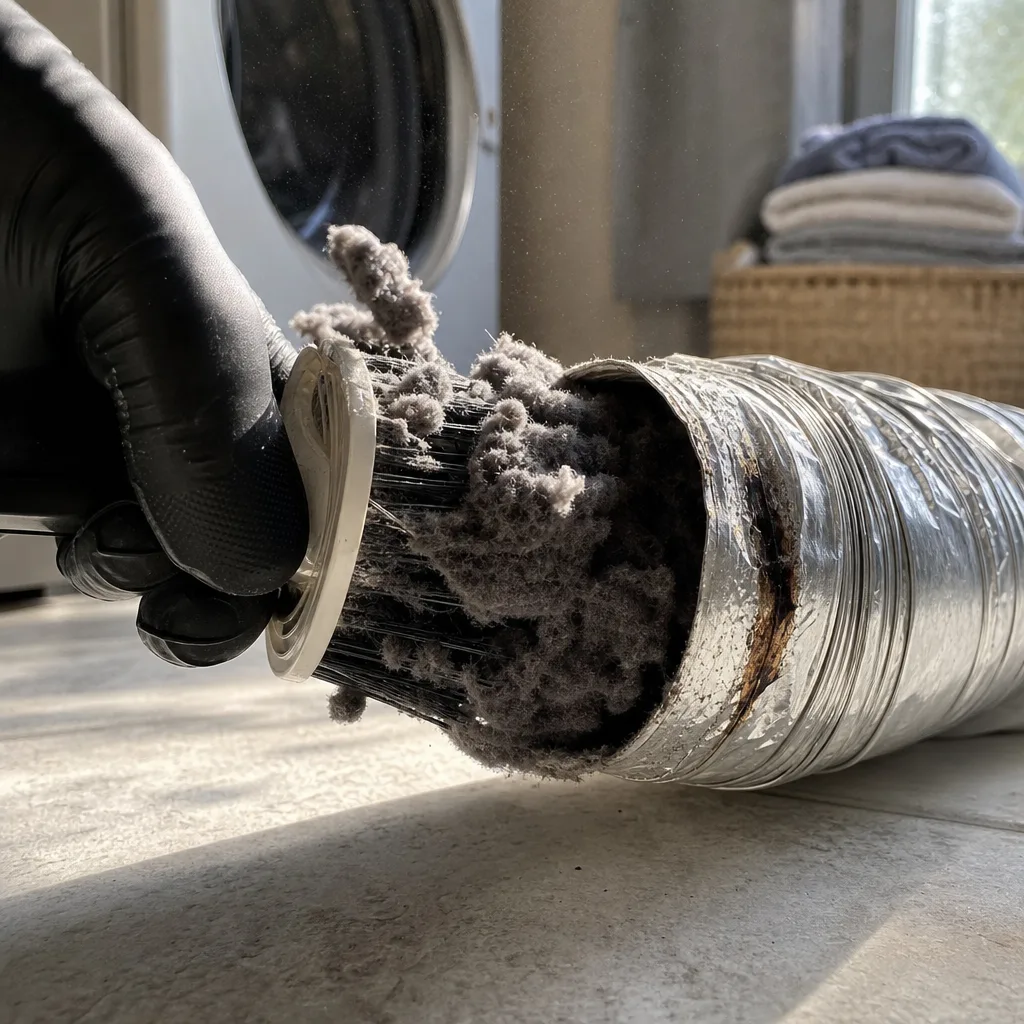
- Clothes take two or three cycles to dry. A load that used to finish in one run now comes out damp. Lint in the line traps moist air, so the dryer runs longer and still can’t finish the job.
- The dryer or the clothes feel too hot. If the top of the machine is hot to the touch, or towels come out scorching but still damp, the heat has nowhere to go.
- Your laundry room feels muggy or warm. That trapped moisture can leak back into the room. You might see fog on a window or feel the air get sticky while the dryer runs.
- You smell something burning. Lint is very easy to ignite. A hot, scorched smell during a cycle is a sign you shouldn’t ignore.
- Lint shows up where it shouldn’t. Look behind the dryer, around the door seal, or at the outside vent flap. Lint building up in those spots means the line is backing up.
- The outside flap barely moves. Go outside while the dryer runs. You should feel a strong, warm push of air. A weak breath, or a flap that stays shut, means the airflow is blocked somewhere in between.
- The dryer shuts off mid-cycle. Many dryers have a safety switch that cuts the heat when things get too hot. If yours keeps stopping early, a restricted vent is one of the first things to check.
One sign alone doesn’t always mean a clog. A damp load can come from an overstuffed drum, and a short cycle can be a dryer part. But when long dry times show up alongside a hot machine or weak air outside, the vent line is the place to look.
The layout of your home matters here, too. Many Dallas homes, especially older slab ranch houses, have the laundry room in the middle of the house. That means the vent can’t just pop straight out a wall. It often runs up through the attic and out the roof, with bends along the way. Every bend is a spot where lint likes to settle. A long run like that can clog well before you’d expect, and you can’t see it from inside the house.
Dallas summers add another layer. Your attic can get extremely hot, and a vent line running through it is already working in tough conditions. If that line is packed with lint, your dryer has to push even harder to move air out.
If you’ve checked the lint screen, you’re not overloading the drum, and you still see these signs, the problem is almost always farther down the line than you can reach. That’s when a full cleaning and an airflow check make sense.
Lint Trap Cleaning vs. Full Vent Line Cleaning
Cleaning your lint trap and cleaning your dryer vent are two different jobs. The lint screen catches most of the fuzz, but not all of it. The lint that slips past the screen ends up in the vent line, the duct that carries hot, wet air from the back of your dryer to the outside. Cleaning the screen after every load is a good habit. It just never touches that line.
That’s why you can be careful about the screen and still end up with a clogged vent. Fine lint builds up a little at a time inside the duct. It’s worst at bends and joints, and at the outside flap. You can’t see that buildup, and the screen can’t stop it.
Here’s what you can handle yourself:
- Clean the lint screen before or after every load.
- Wash the screen now and then with warm, soapy water. Dryer sheets and fabric softener can leave a film that blocks air even when the screen looks clean.
- Pull the dryer out a few inches and check the short flexible hose behind it. Make sure it isn’t crushed, kinked, or packed with lint.
- Go outside and clear any lint or debris from around the vent flap so it can open freely.
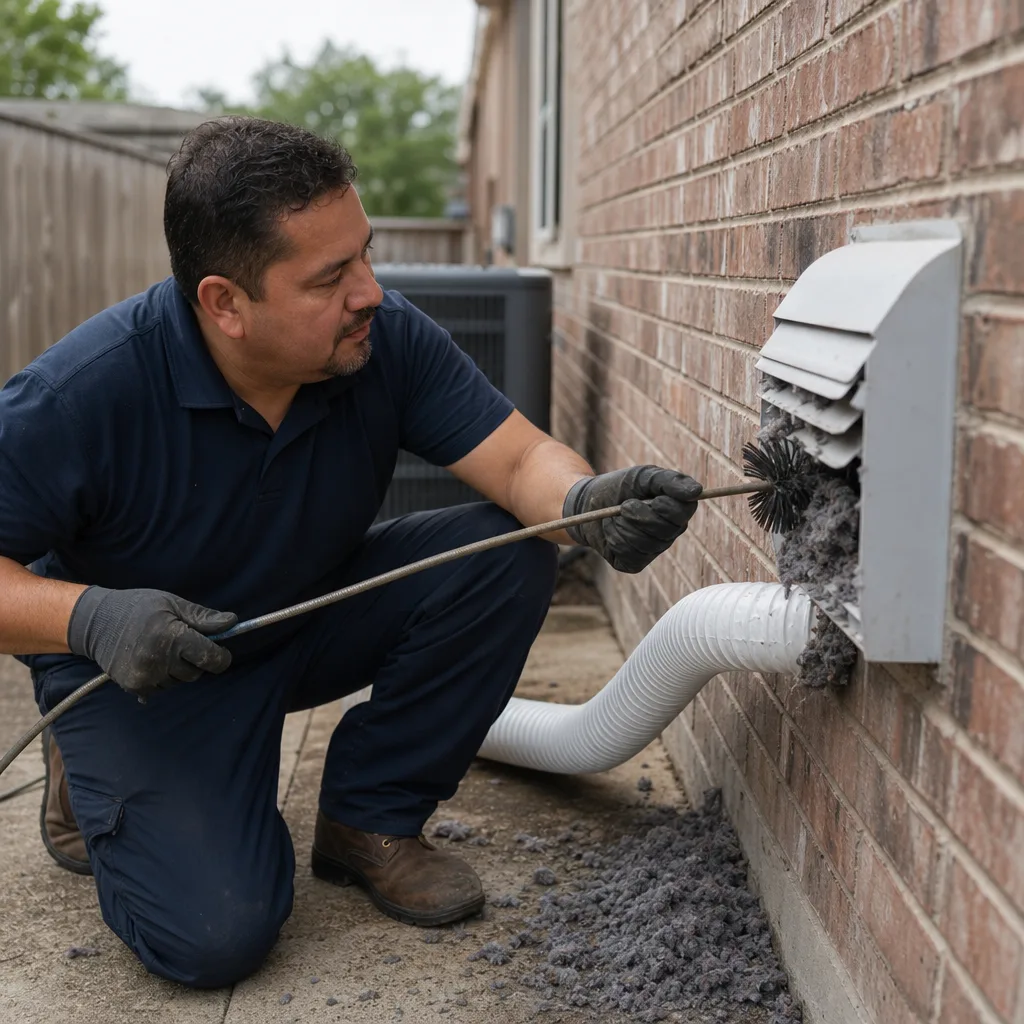
Let’s be straight about this. If your dryer sits against an outside wall and the vent runs a few feet straight out, you may be able to clean it yourself. A vent brush kit from the hardware store will often do the job. If that describes your laundry room and your dryer works fine afterward, you may not need us.
Many Dallas homes aren’t built that way. When the laundry room sits in the middle of a slab ranch house, the vent usually climbs into the attic, runs a long way with a few turns, and ends on the roof. A store brush kit isn’t made for that kind of run. You also can’t easily check it from the attic or the roof. Pushing a brush too hard through a long line can loosen a joint inside the attic. Then lint and moist air get dumped where you’ll never see them.
Full vent line cleaning is the right call when:
- Your vent goes through the attic or ends on the roof.
- The run is long or has more than one or two bends.
- You’ve cleaned the screen and the hose behind the dryer, and the dryer still struggles.
- You’ve never had the line cleaned, or you don’t know when it was last done.
When our team handles dryer vent cleaning, the visit includes a full cleaning of the vent line and an airflow and exhaust check. That way you know air is moving out of your home, not just that some lint got pulled loose. If we find a damaged, disconnected, or badly routed section, repair or rerouting isn’t part of the cleaning. We’ll show you what we found and quote that work separately, so you decide before anything else gets done.
What a Professional Dryer Vent Cleaning Includes
A professional dryer vent cleaning should clear the whole path your dryer’s air travels, not just the part you can reach. That path starts at the back of the dryer and ends at the flap outside your home. If any stretch gets skipped, the clog that was slowing your dryer can still be sitting there.
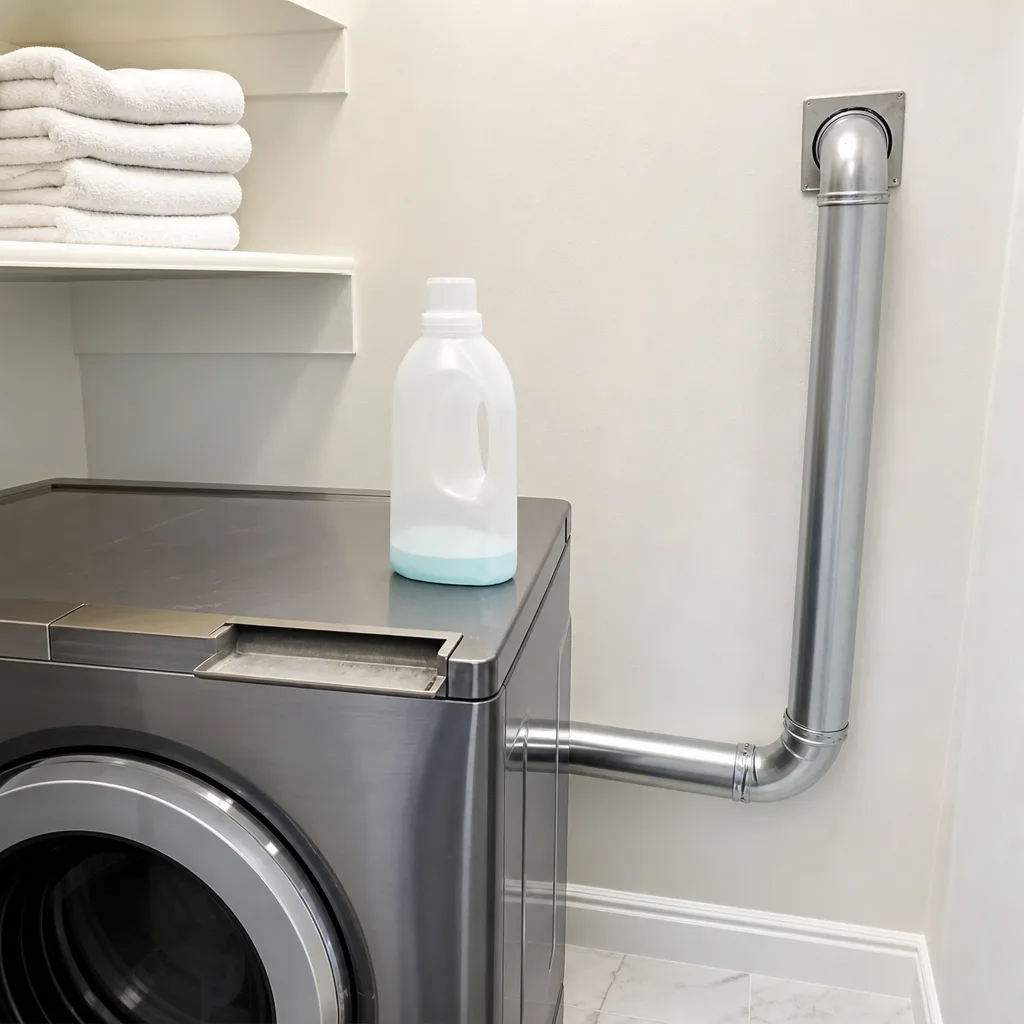
- The connection behind the dryer. The short hose and the spot where it meets the wall are where lint collects first.
- The full length of the duct. Every foot of the run gets cleared, including the bends where lint likes to settle.
- The outside end. Your vent may end on a wall or up on the roof. Either way, the cap and flap need to open freely so air can leave.
- An exhaust check at the end. A strong push of air at the outside vent is the proof the job worked.
That last step is the one people skip when they do it themselves. Pulling out a big pile of lint feels like success. But if a bend in the attic is still half blocked, your dryer is still working too hard. Testing the exhaust tells you the air is really getting out. That’s what brings your dry times back down and lowers the fire risk.
For most homes, our dryer vent cleaning runs $100-$175. Across all the dryer vent jobs we do, the typical range is $100-$250. Where your home lands depends on four things:
- Vent length and routing. A longer run with more turns takes more time to clear.
- Roof vs. wall termination. A vent that ends on the roof takes more work to reach than one that exits a wall a few feet from the dryer.
- Level of buildup. A line that’s never been cleaned holds more lint than one that was cleaned recently.
- Accessibility. A dryer squeezed into a tight closet, or a line that’s hard to get to, adds time.
That’s why the attic-to-roof runs in many Dallas slab ranch homes tend to land higher in the range than a short, straight wall vent. You’ll know which one you have before any work starts.
There’s also a service-call fee of $26-$99. If you go ahead with the work through Xtreme Air Services, that fee is credited toward the repair. Financing usually isn’t offered for a smaller job like this one. It’s available on larger repairs and replacements.
You’ll get upfront flat-rate pricing, and you approve it before work starts. There’s no meter running while we’re in your laundry room or up on your roof. Nights and weekends cost the same as any weekday, so you don’t have to wait until Monday to get your dryer breathing again. The person at your door is one of our licensed and insured, background-checked and drug-tested technicians who respects your home.
Ready when you are – get in touch today.
Call Today, Get Service Today. Xtreme Air Services — North Dallas is ready to help.
What Drives the Cost of Dryer Vent Cleaning
You’ve seen our price range and the four things that move it. The next question is how to tell whether one quote is really cheaper than another. Two companies can quote very different numbers for the same dryer vent and still both be fair. It usually comes down to how they price the job and what they leave out.
Dryer vent companies tend to price in one of three ways. Some charge a flat rate per vent. Some charge by the foot, so a long attic run costs more. Others bundle the vent with air duct cleaning or add extras once they’re on site. None of these is wrong. A low number just means less if the airflow check, the roof access, or the trip fee isn’t part of it.
The bigger cost question is what turns up once the line is open. A cleaning clears lint, but it can also uncover problems that a brush won’t fix:
- A crushed or kinked hose behind the dryer, or a thin foil or plastic hose that traps lint and crushes easily.
- A joint in the attic that has pulled apart, so moist air and lint spill into the attic instead of going outside.
- A roof or wall cap with a screen over the opening. Screens catch lint fast and can clog again soon after a cleaning.
- A bird or wasp nest packed into the outside end.
- A roof cap that’s been dented or cracked by hail, which North Texas storms can do.
Fixing any of these is separate work. You’ll see what we found before you decide anything, and you can say no.
Before you hire anyone, ask these questions so you’re comparing the same job:
- Is the price a flat rate, or does it go up per foot?
- Does it include the airflow check at the outside vent?
- Is there a trip or service-call fee, and does it count toward the work?
- Does reaching a roof vent cost extra?
- If you find a problem, will I get a price before any repair starts?
There’s also a cost to putting it off. It just doesn’t show up on an invoice. A clogged vent makes your dryer run two or three cycles for one load, and you pay for that electricity every time. The extra heat also wears on parts like the heating element and the safety switch that keeps shutting your dryer off. A cleaning won’t fix a dryer that’s already broken. But it can keep a healthy dryer from working itself into a repair.
With us, you get upfront flat-rate pricing, and you approve it before we start. There’s no extra charge for nights or weekends. If your clothes are still damp after a full cycle, call and talk to a real person. We’ll tell you what your vent needs and what it’ll cost.
Call now
Watch Our Video
See How We Handle Dryer vent cleaning in Dallas
Xtreme Air Services — North Dallas
Vent Routing in Older North Dallas Homes
If your home was built sometime between the 1950s and the 1990s, the vent route you have today may not be the one the builder planned. Many North Dallas homes are slab-on-grade ranch houses from those decades. Over 30, 40, or 60 years, remodels, added insulation, and new roofs all change the path your dryer’s air takes to get outside. Knowing what may have changed helps you understand why your dryer struggles and what kind of cleaning your home needs.
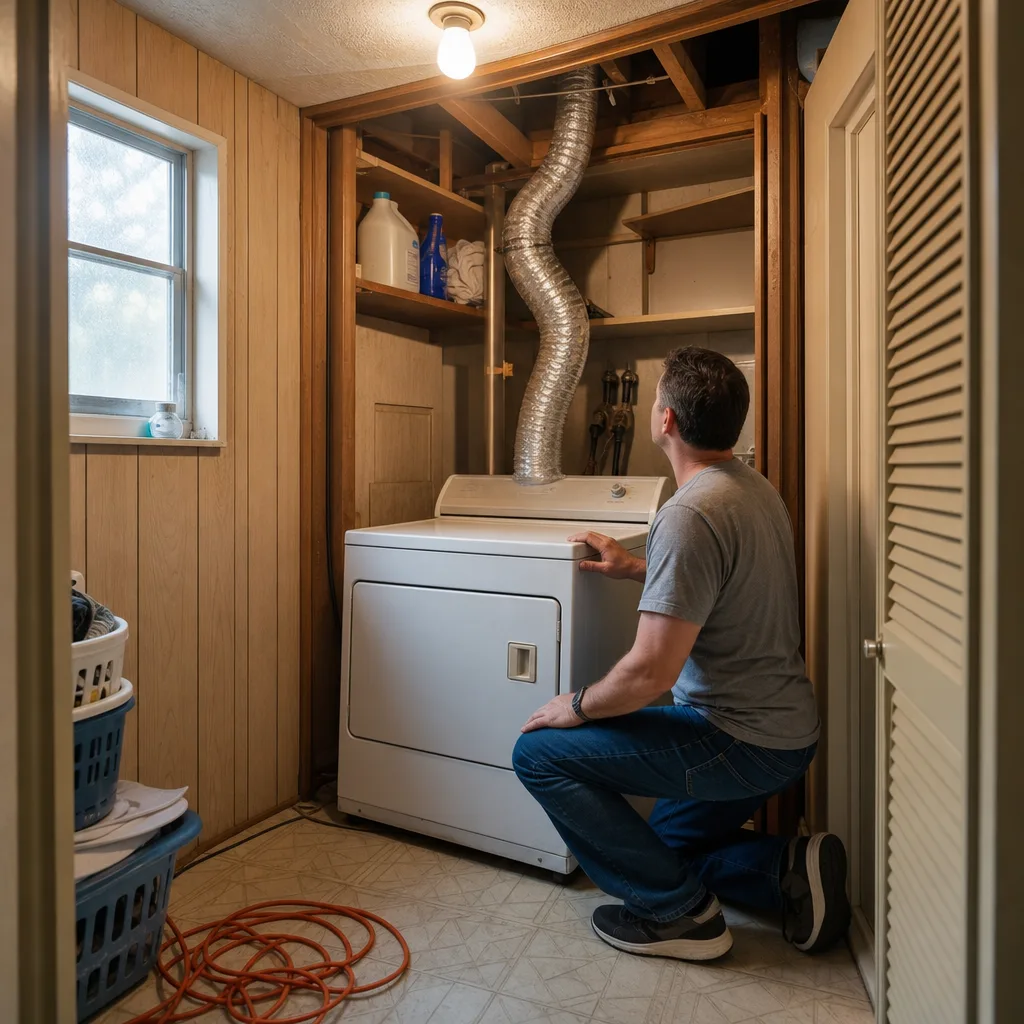
Here’s what tends to change in an older home over the years:
- The laundry moved. A garage laundry became a hall closet, or a closet became a laundry room during a kitchen remodel. Often the old vent got extended to reach the original exit point instead of being rerouted. That adds length and extra turns you never see.
- The duct got buried. Adding attic insulation is a smart upgrade for a Texas summer, but it can cover a vent line completely. A buried duct is harder to reach, and any sags or loose spots stay hidden.
- The line sags. A vent that dips between supports in the attic creates a low spot. Warm, wet air cools there, water collects, and damp lint packs in like paste. It doesn’t blow loose the way dry lint does.
- Old and new parts got mixed. Decades of small fixes can leave rigid metal in one stretch, flexible hose in another, and a few patch jobs in between. Every joint is one more place for lint to catch. Screws that poke into the duct snag lint, too.
- The roof was replaced. A new roof often means the vent cap gets pulled and reset. If the duct below it wasn’t reconnected snugly, you can end up with the attic problem described earlier and never know it happened.
None of this means your vent is in bad shape. It means a home with some history may have a longer or twistier vent than you’d guess from looking at the laundry room.
You can learn a lot about your own setup without climbing anywhere:
- Look behind the dryer. Notice whether the hose goes straight back into the wall or turns up toward the ceiling.
- Walk around outside while the dryer runs. Feel for warm air at a flap on an outside wall. If you can’t find one, the vent most likely ends on the roof.
- Think back on your home’s history. Has the laundry moved, a new roof gone on, or extra insulation been blown in since you bought the house? Did the last owner mention any of it?
- Check your dry times against the warning signs above. A long, changed route plus slow drying points to buildup deep in the line.
When you call, share whatever you found. A wall vent a few feet from the dryer is a very different job from a long attic run that ends on the roof, and those details are what move the price within the range we covered. If you don’t know where your vent goes, that’s okay. A full cleaning means clearing the whole path, wherever it leads, and checking that air comes out strong at the end. If that path turns out to need repair, you’ll see what we found and get a price before anything else happens.
Frequently Asked Questions
Common questions about Dryer vent cleaning
How often should I get my dryer vent cleaned?
Most homes do well with a cleaning once a year, but your household habits change that. If you do a lot of laundry, dry heavy loads like towels and bedding, or have a long vent run through the attic, you may need it more often. Watch for the warning signs like slow drying or a hot laundry room between cleanings, since those tell you the vent needs attention sooner than your usual schedule.
How long does a professional dryer vent cleaning take?
A typical visit takes well under an hour for a straightforward wall vent close to the dryer. A longer job, like a vent that runs through the attic and out the roof in an older slab ranch home, takes more time because every bend has to be cleared and the outside flap has to be tested for strong airflow. Either way, you’ll know the vent routing in your home before work starts, which gives you a good sense of how long the visit will run.
Ready to Get Started?
Call (469) 213-3107 Today, Get Service Today.