


Electrical Panel Replacement / Upgrade in Carrollton: Do You Need One?
Panel upgrades for homes that have outgrown their power, done by licensed electricians with the permit pulled.
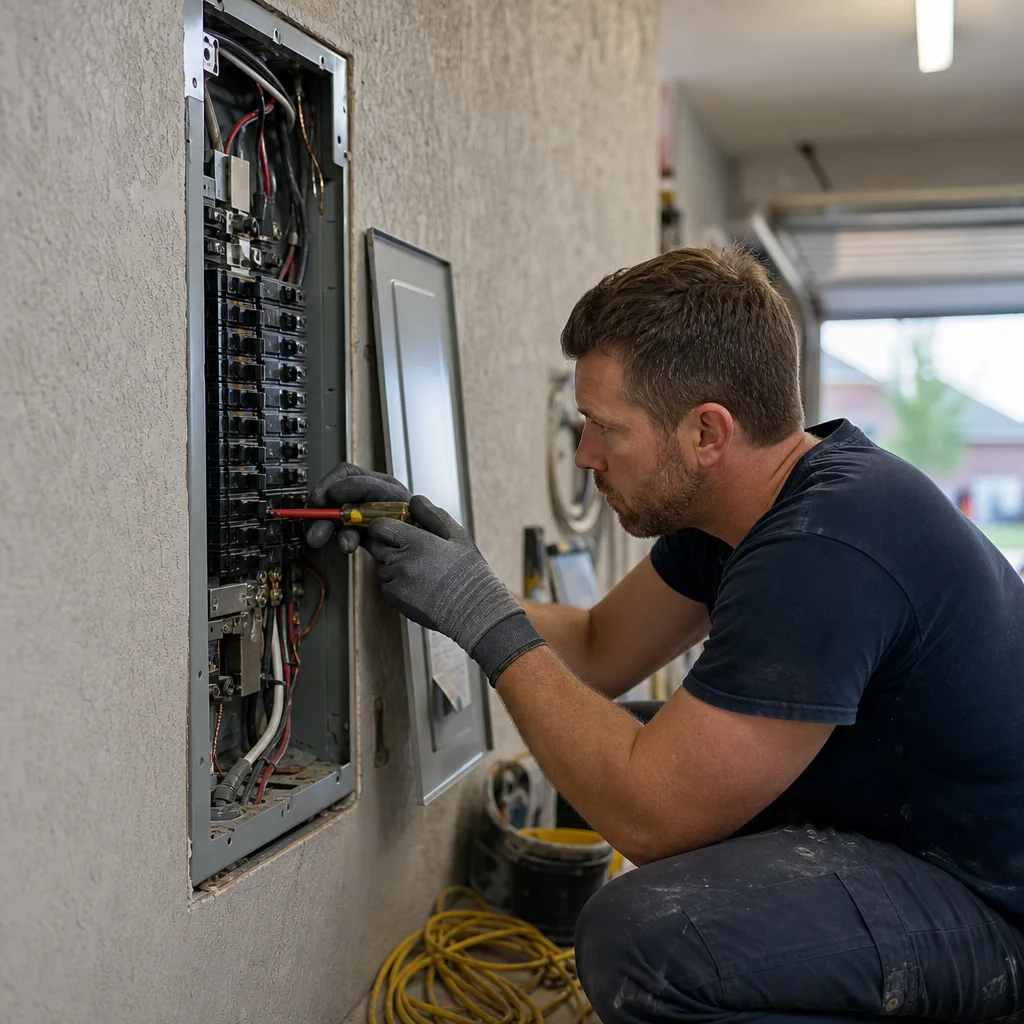
What’s Covered on This Page
- Signs Your Panel Needs Full Replacement
- When You Don’t Need a Full Panel Swap
- What Drives Panel Upgrade Decisions in Carrollton Homes
- Licensing and Permit Requirements for Panel Work
- What Happens During a Panel Replacement
- How long does a panel replacement take?
- Can I still use my home office or run medical equipment during the swap?
- What should I do if my breaker keeps tripping but my panel looks fine?
- Does my power have to go through Oncor before panel work can start?
Signs Your Panel Needs Full Replacement
Your electrical panel doesn’t fail all at once. It gives you clues first. Some clues point to wear and damage. Others point to a panel that’s working fine but can’t keep up with your home anymore. Either one can mean it’s time for a new panel.
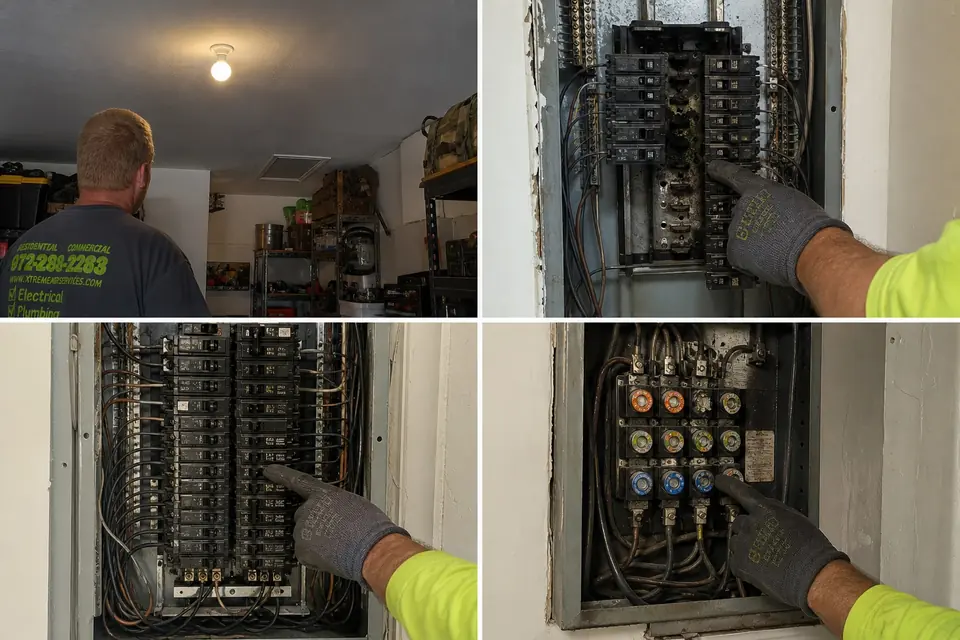
These are signs of damage or wear inside the box:
- The panel door or breakers feel warm when you touch them.
- You smell something hot or burning near the panel.
- You see dark scorch marks, melted plastic, or discolored wires.
- You hear buzzing, crackling, or sizzling from the box.
- There’s rust or corrosion inside the panel, often from moisture in a garage or a damp utility wall.
- Breakers won’t stay reset, or they feel loose when you flip them.
Heat, smells, and scorch marks are a different kind of problem than a breaker that trips now and then. They mean parts inside the panel may be breaking down. That’s the moment to have a licensed electrician look at it, not something to keep an eye on for a few more months.
These are signs your panel is too small for your home:
- Your lights dim or flicker when the AC, dryer, or microwave kicks on.
- The same breakers trip again and again when several things run at once.
- Every slot is full, and someone has crammed in extra breakers to make room.
- You still have a fuse box instead of breakers.
- You want to add an EV charger, a hot tub, a new heat pump, or a home addition, and there’s no room or power left to give.
This second group matters a lot in Carrollton. Many homes here were built decades ago, when a house didn’t run central air through a long Texas summer, two home offices, and a car charger in the garage. The panel that came with the house may still look fine. It just wasn’t sized for how you live now. That’s often when an upgrade, commonly to a 200-amp panel, makes sense.
Other moments can bring it up too. A home inspector may flag your panel during a sale. Your insurance company may ask about it. If you’re selling or buying in Carrollton, it’s better to know where your panel stands before it turns into a last-minute surprise.
Now for the honest part. Not every panel problem means a new panel. If one breaker keeps tripping on one circuit and the rest of the box looks clean, cool, and dry, the issue may be that single breaker or something plugged into that circuit. That’s often an electrical panel repair, and it costs far less. A good electrician should tell you which one you need and explain why, so you’re making the call with clear facts in front of you.
When You Don’t Need a Full Panel Swap
A lot of panel worries end with no new panel at all. If your box is cool, dry, and clean inside, and it isn’t flagged for anything, the fix is often smaller than you think. Sometimes there’s no fix needed.
Start with what you can safely check yourself. Keep the panel cover on while you do this.
- A breaker tripped once during a storm or when everything was running. Reset it one time. If it holds, that may be the end of it.
- A breaker trips only when one thing runs, like a space heater, hair dryer, or old window unit. Unplug that item and see if the trips stop. The problem may be the appliance, not your panel.
- Outlets in a bathroom, kitchen, or garage went dead. Look for a tripped GFCI outlet nearby. That’s the outlet with the test and reset buttons. Press reset before you assume the panel is to blame.
- The microwave and toaster trip the kitchen breaker together. Try running them on different outlets or at different times. Two big loads on one circuit is a habit problem, not a panel problem.
If a breaker won’t hold after one reset, stop there. Resetting it over and over isn’t safe, and that’s when it’s time for a licensed electrician.
Some problems need a pro but still don’t need a new panel.
- Your panel has enough power but no open slots. A subpanel can add the space you need without replacing the main box.
- One circuit is overloaded because it serves too much. Adding a dedicated circuit for a big appliance can spread the load.
- Lights flicker in one room only. That often points to a loose connection or a worn switch, which electrical troubleshooting can track down.
- One breaker is worn out on an otherwise healthy panel. As covered above, that’s a repair.
Think about something like an EV charger. You may assume you need a 200-amp upgrade. But your home’s real power use may leave room to spare. A load calculation adds up what your home draws at its busiest. It’s the honest way to answer the question, and it beats guessing based on the label on the panel door. If the math says your current panel can handle the charger, you keep your panel.
There are also times when it’s smart to wait. Say your panel is healthy and you’re only thinking about a hot tub or addition in a few years. You don’t have to upgrade today. When the plan is real, size the panel for the whole project at once. That way you aren’t paying for two upgrades.
Here’s the bottom line. A new panel makes sense when the old one shows damage, is unsafe, or truly can’t carry your home’s load. If none of that is true, you deserve to hear it plainly. Then you can spend your money where it helps.
What Drives Panel Upgrade Decisions in Carrollton Homes
Once you know your panel really needs replacing, the next question is simple: what will it cost, and why? The honest answer is that no two homes start from the same place. The panel is only one part of the job. What’s behind it, around it, and connected to it shapes the final price.
Here’s where our numbers land. An electrical panel replacement or upgrade with us typically runs $1,500 to $4,500. Our most common job is replacing an aging or undersized panel, usually with a 200-amp upgrade, new breakers, and proper grounding, then inspecting and testing it. That job usually falls between $2,100 and $3,300.
Where your home lands in that range comes down to a few things:
- Panel size. A bigger amperage panel costs more in parts and labor.
- The panel you choose. Different makes and models carry different prices.
- Your meter and service condition. If the equipment feeding your panel is worn, that adds work.
- Grounding. Older homes may need grounding brought up to today’s standards.
- Circuit count. More circuits mean more breakers and more connections to move over.
- Access. A panel in an open garage wall is easier to swap than one boxed in by cabinets or a finished closet.
- Utility coordination. Most panel swaps mean the power has to be shut off at the meter, which takes timing with Oncor.
- Code upgrades and permits. Bringing the install up to current code, and pulling the right permit, can add to the total.
That list explains a lot about Carrollton. A house built decades ago may need grounding work or a closer look at the meter and service, and that can push the price up. A newer home with a clean, easy-to-reach panel often stays toward the lower end. Same city, very different starting points.
It also helps to know exactly what you’re paying for. Our panel price includes the panel and materials, professional installation, breakers, grounding, startup and testing, and haul-away of your old panel. It doesn’t include service-entrance or meter work done by the utility, rewiring, code corrections, or permits unless your quote says so. If your home needs any of those, you should hear about it up front, not after the walls are open.
That’s why we use upfront flat-rate pricing approved before work starts. You see the number, you know what’s in it, and there’s no meter running while we work. If you want a few questions in your pocket for any electrician you talk to, ask these: Does the price include grounding? Who handles the permit? Does the quote cover the old panel’s removal? What happens if you find something unexpected?
To get a firm price, we need to see your panel. There’s a $26 to $99 service-call fee, and it’s credited toward the work if you go ahead with Xtreme Air Services. If the total is more than you planned for right now, flexible financing is available on qualifying installations and larger jobs, on approved credit. That way the timing of a safe, properly sized panel depends on your home’s needs, not just this month’s budget.
Have questions? We’re happy to help.
Call Today, Get Service Today. Xtreme Air Services — Carrollton is ready to help.
Licensing and Permit Requirements for Panel Work
A panel replacement isn’t a weekend project, and it isn’t a job for a handyman. In Texas, electrical work is licensed through the Texas Department of Licensing and Regulation, also called TDLR. A panel swap touches the main power coming into your home, so it should be done by a licensed electrician and checked by a city inspector when it’s finished.
That can sound like red tape. It’s really your protection. The license means the person working in your panel has proven they know the rules. The permit means someone outside the company comes to check the work before it’s covered up and forgotten.
Here’s how the steps usually fit together on a panel job in Carrollton:
- The permit is pulled with the City of Carrollton before work starts.
- The power is shut off at the meter, which takes timing with Oncor, as covered above.
- The old panel comes out, and the new panel, breakers, and grounding go in.
- A city inspector looks over the finished work.
- Power is restored once the work is approved, and the panel is started up and tested.
The inspection step matters more than most people think. Grounding, wire sizes, breaker types, and clearance around the panel all have rules. An inspector catches things you’d never spot by looking at a clean new panel door. It’s a second set of eyes, and it costs you nothing extra in effort.
Skipping the permit can come back on you later. Say you sell your home in a few years. The buyer’s inspector sees a newer panel and asks for the permit record. If there isn’t one, you may have to get the work inspected after the fact, open things back up, or explain it to the buyer at the worst possible time. Insurance companies can ask the same question. A permitted, inspected panel gives you a clean answer.
You don’t have to take anyone’s word for any of this. Here’s what you can do yourself:
- Look up the electrician’s license. TDLR has a public license search on its website. It takes a minute.
- Ask whether the permit is part of your quote. As we said earlier, permits aren’t included in our panel price unless your quote says so. Either way, you should know before work starts who is getting it.
- Ask for proof the job passed inspection, and keep it with your house papers.
- Be careful with anyone who says a permit isn’t needed for a panel swap. That’s a shortcut you end up paying for.
Our team is licensed and insured, and our technicians are background-checked and drug-tested. That’s the baseline you should expect from anyone working inside your panel. You’re letting someone into your home to work on the one box that controls every circuit in it. You should know exactly who they are and that their work will be checked.
One more honest note. Some homeowners are handy and want to save money by doing the swap themselves. We get it. But a panel replacement means working with the main power feed, coordinating with the utility, and passing inspection. This is the one job where the savings aren’t worth the risk to you or your family. Leave the panel to a licensed pro, and save your DIY energy for the safe checks covered earlier.
Watch Our Video
See How We Handle Electrical panel replacement / upgrade in Carrollton
Xtreme Air Services — Carrollton
What Happens During a Panel Replacement
Electrical panel replacement or upgrade work is a planned job, not a surprise. The biggest change for you is simple: your power will be off for part of the day while the old panel comes out and the new one goes in. A little planning makes that day go much smoother.
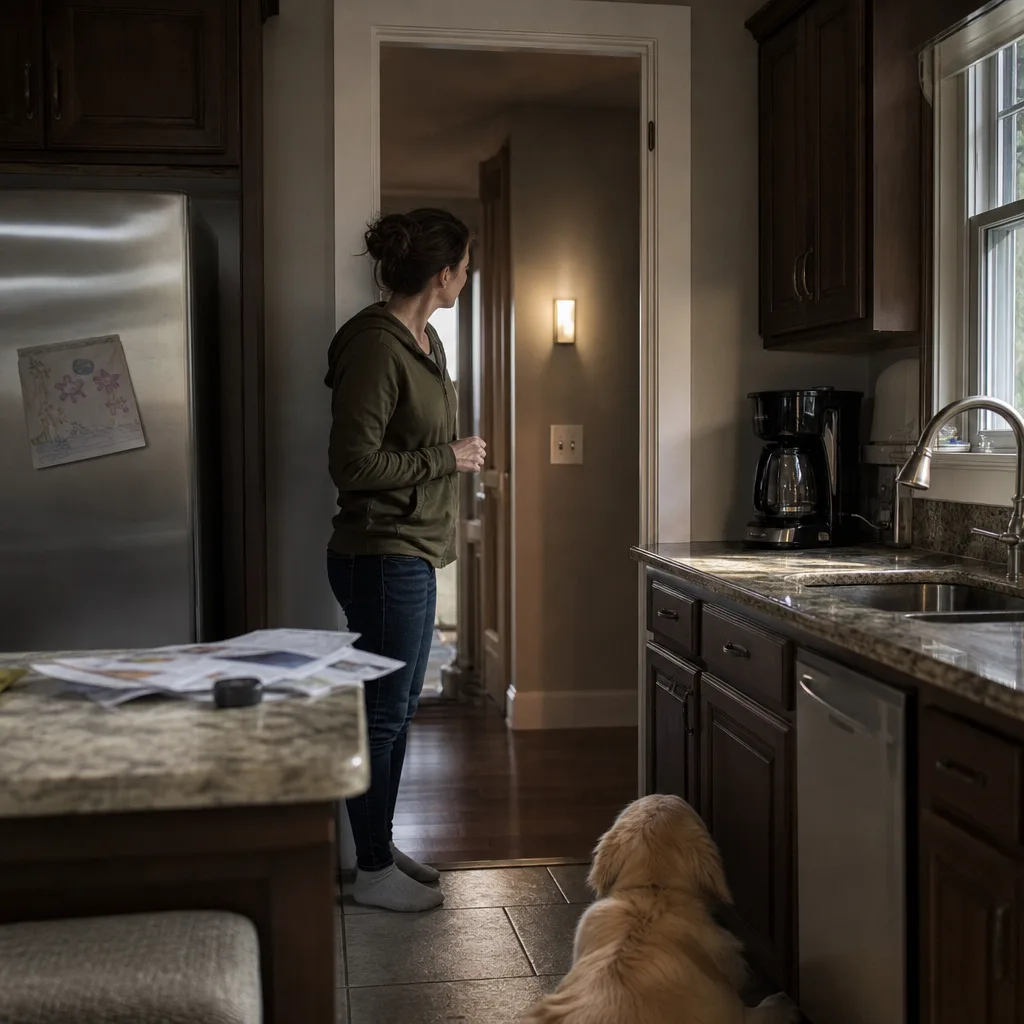
Here’s how to get your home ready before the electrician shows up:
- Clear a path to the panel. Move boxes, shelves, bikes, or anything stacked in front of it so the crew has room to work safely.
- Plan for the fridge and freezer. Keep the doors shut as much as you can, and they’ll hold their cold for a while.
- Think about anything that needs steady power, like medical equipment, a home office, or a fish tank. Make a backup plan or tell your electrician ahead of time.
- Learn the manual release on your garage door opener so you aren’t stuck if you need the car.
- Charge your phones, laptops, and tablets the night before.
- Keep pets and kids away from the work area.
In Carrollton, the time of year matters too. Shutting the power off means shutting off your AC, and a house can heat up fast in a Texas summer afternoon. If your panel shows signs of damage like heat or scorching, don’t wait for cooler weather. But if you’re upgrading to make room for a future project, it can be easier on your family to schedule it for spring or fall, or for the cooler part of the day.
On the day itself, the work follows the steps covered above. Each circuit is moved from the old panel to the new one, with new breakers and proper grounding put in. If something unexpected turns up once the old panel is open, like damaged wiring behind the box, you should hear about it and approve any extra work before it happens. That’s how upfront flat-rate pricing is supposed to work.
Before the electrician leaves, take five minutes and walk through a few things with them:
- Every breaker should be labeled so you know which one controls which room or appliance.
- Flip on lights and test outlets in a few rooms, plus the kitchen and garage.
- Make sure the AC, water heater, and other big appliances power back up.
- Confirm the old panel is gone. Haul-away is part of our panel price.
- Ask when the inspection is set, or whether it’s already been done.
Afterward, reset your clocks, your thermostat, and any smart devices that lost their settings. Some homes notice right away that lights no longer dim when the AC starts. That’s the whole point of a panel sized for the way you live.
Call 469-269-6099
Frequently Asked Questions
Common questions about Electrical panel replacement / upgrade
How long does a panel replacement take?
Most panel swaps finish in a single day, with your power off only while the old panel comes out and the new one goes in. The time depends on how many circuits need moving and whether the meter or grounding needs extra work. That’s why clearing a path to the panel and planning for the outage ahead of time helps the crew keep things moving.
Can I still use my home office or run medical equipment during the swap?
Not while the power is off, so you’ll need a backup plan for anything that needs steady power. Think through medical equipment, a home office setup, or even a fish tank before the day of the job, and tell your electrician ahead of time so they can plan around it. Charging phones and laptops the night before also helps you stay connected during the outage.
What should I do if my breaker keeps tripping but my panel looks fine?
Check what’s plugged into that circuit before assuming you need a new panel. If a breaker only trips when one appliance runs, like a space heater or hair dryer, unplug it and see if the trips stop. If the breaker won’t hold even after one reset, stop resetting it and call a licensed electrician instead.
Does my power have to go through Oncor before panel work can start?
Yes, most panel swaps require shutting off power at the meter, which takes coordinating with Oncor Electric Delivery. That coordination is part of why panel jobs are scheduled rather than done on the spot. Planning around your AC is worth it too, since a Texas summer afternoon can heat up a house fast once the power is off.
Ready to Get Started?
Call (469) 269-6099 Today, Get Service Today.