


Dryer Vent Cleaning in Dallas: Clear the Fire Risk, Not Just the Lint
The whole dryer vent line cleared, not just the opening – to cut fire risk and help your dryer dry.

What’s Covered on This Page
- Signs Your Dryer Vent Needs Cleaning
- What Is Included in a Professional Dryer Vent Cleaning
- Why Dallas Homes Are Prone to Vent Buildup
- What Drives the Cost of Dryer Vent Cleaning
- Lint Trap Cleaning vs. Vent Line Cleaning
- How often should I get my dryer vent cleaned?
- How long does a professional dryer vent cleaning take?
- Can I clean out my own dryer vent instead of calling a pro?
Signs Your Dryer Vent Needs Cleaning
Your dryer pushes hot, damp air through a vent line to the outside. When lint builds up in that line, the air has nowhere to go. The dryer runs longer and hotter to do the same job. Most folks notice it in their laundry before they ever think about the vent.
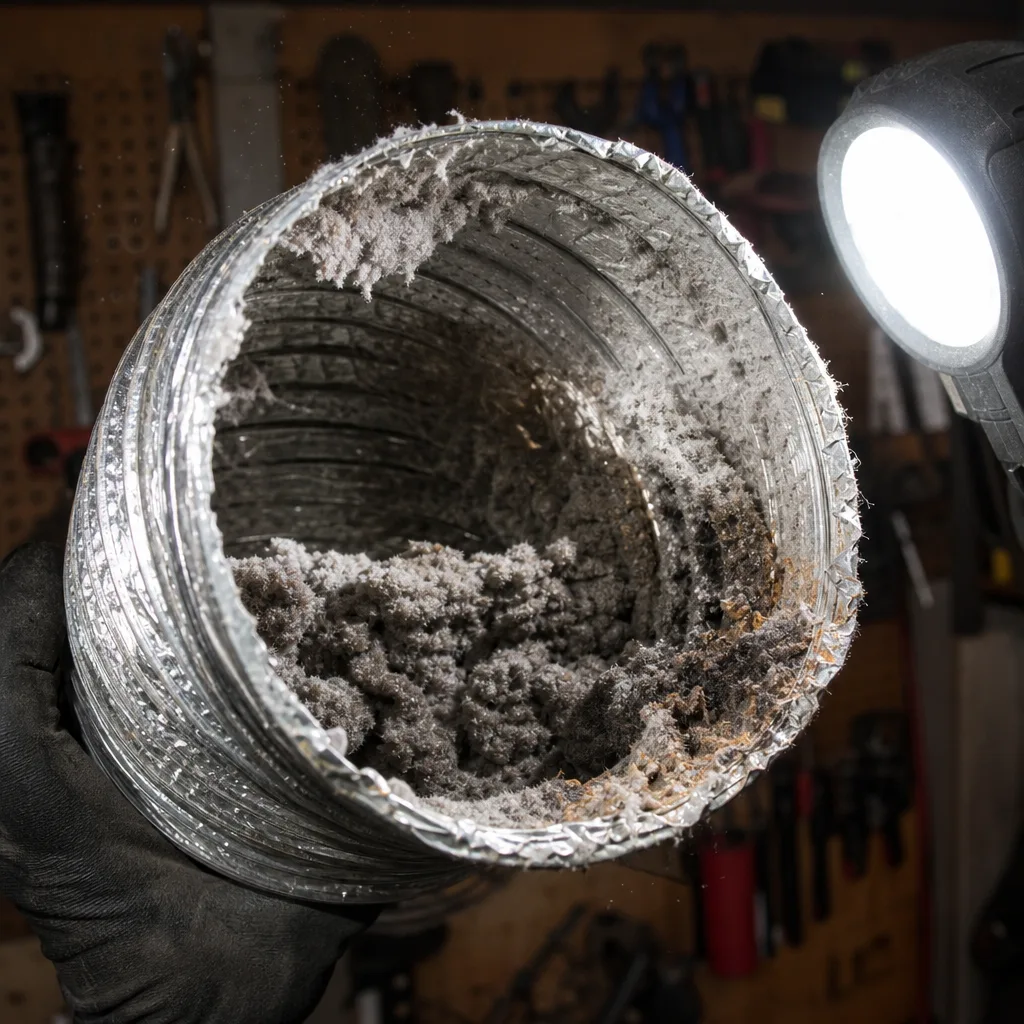
- A normal load now needs two cycles. Towels and jeans come out damp after a full run.
- The dryer’s top or sides feel much hotter than usual, or clothes are very hot to the touch when the cycle ends.
- Your laundry room turns warm and muggy while the dryer runs. That’s moist air backing up instead of leaving.
- You smell something burning or scorched. Trapped lint near a heat source is the fire risk this service is meant to reduce.
- You find lint behind the dryer, around the door seal, or collecting near the vent connection, even though you clean the lint screen.
- The dryer shuts off in the middle of a cycle. Many dryers have a safety switch that cuts the heat when things get too hot.
- Some newer dryers show a vent or airflow warning on the display.
- Outside, the vent flap barely opens, or you see lint, a bird’s nest, or debris packed around the vent cover.
Here’s a quick check you can do yourself. Start the dryer, then walk outside to where the vent comes out of your wall. You should feel a strong, steady push of warm air and see the flap open wide. If the air is weak, or you can’t feel anything at all, the line is likely blocked somewhere between the dryer and that opening.
That check doesn’t work as well if your vent ends on the roof. Roof vents are hard to see from the ground, and they often run longer through the attic with more bends. Every bend is another spot for lint to settle. If your dryer sits on an inside wall or the vent goes up instead of out, buildup can hide for a long time before the signs above show up. Roof versus wall termination and the length of the run are also part of what affects the cost of cleaning, which we’ll cover below.
Not every slow dryer has a vent problem, and we’d rather tell you that up front. If the dryer won’t heat at all, won’t spin, or makes grinding or squealing noises, the trouble is probably inside the machine. That’s a job for an appliance repair tech, not a vent cleaning. And if the outside airflow feels strong and your clothes dry fine after you clean the lint screen, you may simply have skipped a few screen cleanings. Keep up with it after every load and watch for a week.
When two or three of these signs show up together, especially longer dry times plus extra heat, the vent line is the place to look. A cleaning clears the buildup, and testing the exhaust afterward confirms the air is really moving out of your home again.
What Is Included in a Professional Dryer Vent Cleaning
A dryer vent cleaning from Xtreme Air Services covers two things: a full cleaning of your vent line, and an airflow and exhaust check when we’re done. The check is what makes the cleaning worth paying for. Pulling lint out of a vent is only half the job. You also need to know that hot, damp air is leaving your home the way it should.
Here’s what that means for you.
- Full vent cleaning. We clear lint and debris from the dryer vent line to restore airflow and cut down the fire risk that buildup creates.
- Airflow and exhaust check. Once the line is clear, we test for proper exhaust so you aren’t left guessing whether the problem is solved.
Sometimes the check turns up something a cleaning can’t fix. The vent might be crushed, disconnected, or routed in a way that keeps trapping lint. Vent repair, rerouting, and any other corrective work we find during the visit aren’t part of the cleaning. If we find something like that, we’ll show you what we found and quote it separately. You decide whether to go ahead. Nothing extra gets done without your approval.
On cost, a dryer vent cleaning usually falls between $100-$175. Our typical range for this kind of work is $100-$250. Where your job lands depends on four things:
- Vent length and routing. A short, straight run costs less than a long line with several bends.
- Roof or wall termination. A vent that ends on the roof takes more work to reach than one that exits a wall.
- Level of buildup. A line packed with years of lint takes more time than one that’s just starting to clog.
- Accessibility. A dryer tucked into a tight closet, or a vent run through a hard-to-reach spot, adds time.
There’s also a service-call fee of $26-$99. If you go ahead with the work, that fee is credited toward the job, so you aren’t paying it on top. Financing usually isn’t offered for a smaller job like this one. It is available on larger repairs and replacements.
You’ll get upfront pricing before any work starts, so there are no surprises. If you have questions, ask them before you say yes. A good company won’t mind. Our licensed, background-checked technicians will walk you through what they’re seeing and why it matters for your dryer and your home.
If your clothes are taking two cycles to dry, or your laundry room heats up every time the dryer runs, a cleaning with an exhaust check will tell you where things stand. Your neighbors across North Texas have given us a 4.8-star rating across more than 2,900 reviews on Google, Angi, and HomeAdvisor. We’d like to earn that same trust from you.
Call 469-269-6373
Why Dallas Homes Are Prone to Vent Buildup
If your dryer vent clogs faster than you’d expect, it probably isn’t because you’re careless with the lint screen. The way many Dallas homes are built makes vent lines longer, hotter, and harder to check than they look. Here’s what’s working against you.
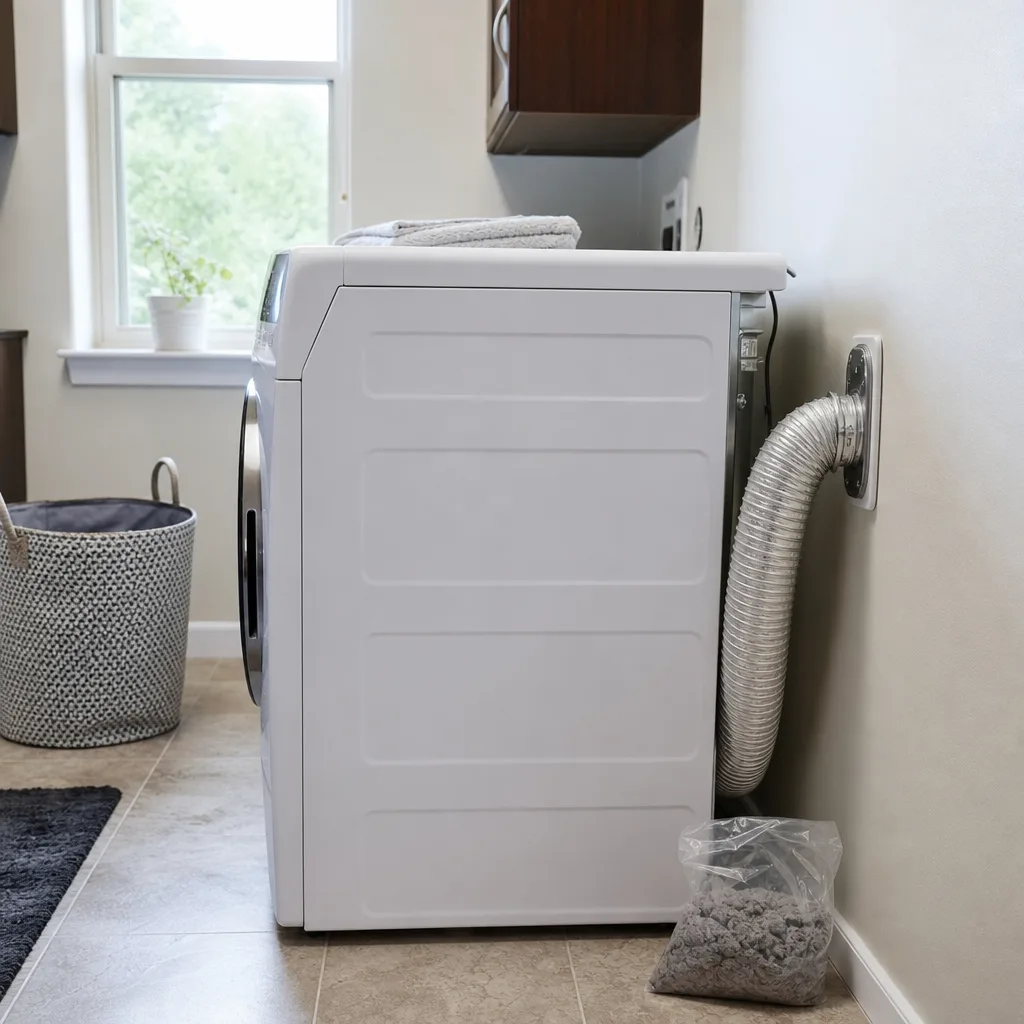
Slab foundations send vents up, not down. Most homes around Dallas sit on a concrete slab. That’s true of the 1950s through 1990s ranch homes and the newer subdivisions alike. With no basement or crawlspace below, a dryer on an inside wall can’t vent straight down and out. The line often climbs into the attic and runs over to the roof or a far wall. That makes a longer path with more turns, and you already know turns are where lint likes to settle.
Attic temperature swings work against the line. North Texas attics get very hot in summer and cold during hard winter freezes. When warm, wet air from your dryer moves through a cold attic duct, some of that moisture can turn to water inside the line. Damp lint sticks to the duct walls instead of blowing out, so buildup grows faster. In summer, the line sits in one of the hottest spaces in your home. That’s not a place you want packed lint sitting.
Storms take a toll on the roof cap. Hail and severe thunderstorms are part of life here. A dented vent cap or a flap that’s bent or stuck can choke the exhaust at the very end of the line. You can’t see it from the yard, so it can go unnoticed for a long time. A flap that won’t close all the way also gives birds and wasps an open door to build a nest right where your dryer air needs to escape.
Older homes often have patched-together vents. A house that’s been around for decades may have had the laundry room moved, remodeled, or updated more than once. You can end up with a mix of parts:
- Old metal duct in the attic with joints that have loosened or sagged over time
- A soft foil or plastic hose behind the dryer that gets crushed when the dryer is pushed back against the wall
- Sections added during a remodel that don’t line up cleanly with the original run
Every sag, loose joint, and pinched spot gives lint another place to catch. In a tight ranch-home laundry closet, crushing that hose behind the dryer is easy to do without ever knowing it.
Newer homes aren’t off the hook. Many newer subdivision homes put the laundry room upstairs or in the middle of the house. That’s handy on laundry day. But it can mean the vent travels a long way through the attic before it reaches the roof, with plenty of room for buildup along the way.
None of this means your home has a problem. It means that if your house fits one of these patterns, most of your vent line is hidden from view. A slow dryer here is often a sign of something you can’t see from the laundry room or the yard. That’s why cleaning the line and then testing the exhaust matters. It confirms the air is really making it all the way out.
Ready when you are – get in touch today.
Call Today, Get Service Today. Xtreme Air Services — Oak Lawn is ready to help.
What Drives the Cost of Dryer Vent Cleaning
You’ve already seen our price ranges and the four things that move them. The next question is simple: where will your home land? You can get a pretty good idea before anyone comes out, just by knowing a few things about your setup.
When you call, it helps to have these answers ready:
- Where the vent ends. Walk outside while the dryer runs. If you can’t find a vent on any wall, it most likely goes up to the roof.
- Which floor your laundry room is on. An upstairs or center-of-the-house laundry room usually means a longer run through the attic.
- How far the dryer sits from an outside wall. A dryer against an outside wall often has a short, simple line.
- When the vent was last cleaned. If the answer is “never” or “I’m not sure,” expect more buildup.
- How easy the dryer is to pull out. A stacked unit or a dryer squeezed into a tight closet takes more time to move safely.
- Anything odd at the vent cap, like a bent flap, lint around the opening, or signs of a nest.
Those answers won’t lock in a price over the phone, but they help you understand why one home costs more than another. A one-story ranch with the dryer on an outside wall is a very different job from a two-story home where the line climbs through the attic to the roof.
It also helps to know how companies in this trade charge. Some set a flat price for the job. Some charge by the hour. Others start with a base price, then add charges for extra feet of vent, a second story, or climbing on the roof. None of these is wrong on its own. But if you’re comparing quotes, make sure you’re comparing the same thing. With us, you get upfront flat-rate pricing that you approve before work starts, and there’s no extra charge for nights or weekends.
Whoever you call, ask these questions before you book:
- Is an airflow or exhaust test included, or is it just a cleaning?
- Is there a trip fee, and does it count toward the work?
- What happens if you find a crushed or broken vent? Will I see a separate price before anything is fixed?
- Will I approve the full price before you start?
Clear answers to those four questions will tell you a lot about a company. If a very low price comes with vague answers, that’s worth a second look.
Last, think about what waiting costs you. A clogged line makes your dryer run longer on every load. That means more power used, more wear on the heating parts, and more of your time spent on laundry. It also leaves lint sitting in a hot line, which is the fire risk this service is meant to reduce. A cleaning now is often the cheapest fix you’ll get, because it handles the problem before a part wears out or the vent needs bigger repairs.
Call now
Watch Our Video
See How We Handle Dryer vent cleaning in Dallas
Xtreme Air Services — Oak Lawn
Lint Trap Cleaning vs. Vent Line Cleaning
Cleaning your lint screen and cleaning your vent line are two different jobs. The screen is the part you can see and reach every day. The vent line is the part you can’t. Doing the first one well is great, but it doesn’t take care of the second.
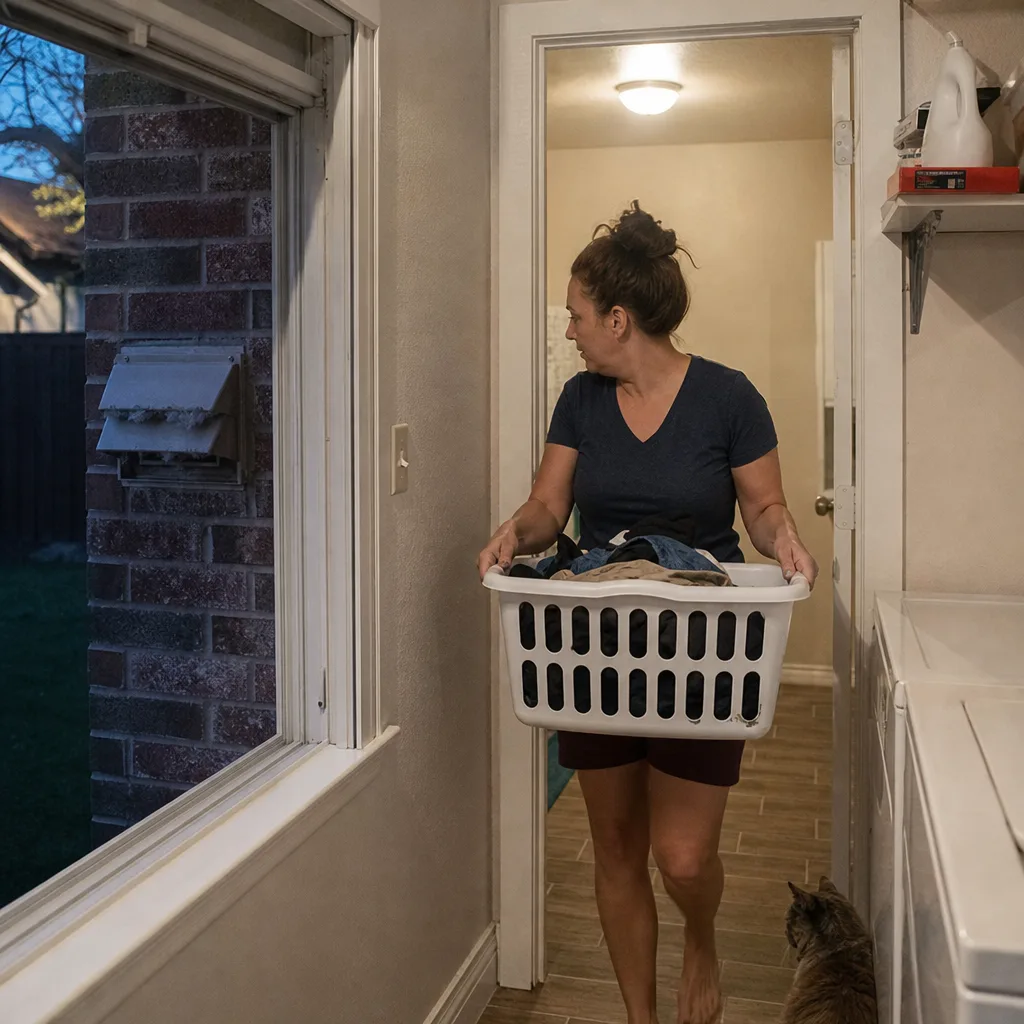
Your lint screen is a filter. It catches most of the lint as air leaves the drum. But it doesn’t catch all of it. Fine fibers slip through the mesh on every load and ride the hot air into the duct behind your dryer. Over months and years, that small amount adds up along the walls of the line, at every bend, and at the cap where the air finally leaves your home.
So you can be the most careful person on your block about the screen and still end up with a clogged vent. That isn’t a sign you did something wrong. It’s just how dryers work.
Here’s the simple way to think about who handles what:
- The lint screen is yours. Clean it after every load. It’s free, it takes seconds, and it slows down how fast lint reaches the line.
- The short hose right behind the dryer is often yours too. If your dryer pulls out easily and the hose runs a few feet straight to an outside wall, a lot of homeowners can check that piece on their own and clear out any loose lint they find.
- The hidden line is where a pro helps. That’s the duct inside your walls, across the attic, or up to the roof. You can’t see it, you can’t reach most of it, and you can’t tell from the laundry room whether it’s clear.
If your setup is a short, straight run out a wall and your dryer is working fine, you may not need us right now. Keep the screen clean, keep an eye on that hose, and do the outside airflow check from earlier now and then. That’s an honest answer, and it’s the right one for some homes.
It’s a different story once the line gets long or goes somewhere you can’t follow. A vent that climbs into the attic or ends on the roof has more length and more turns for lint to settle in. Store-bought brush kits can reach part of the way. But it’s hard to know if you cleared the whole run or just pushed a clump farther down the line, where it can pack in tighter. You also won’t know if the cap at the far end is stuck or blocked.
That’s the real difference. Cleaning the screen keeps the front end tidy. A vent line cleaning clears the whole path, and the exhaust check afterward shows that the air makes it out. If all you can see is the front end, you’re guessing about the rest.
One quick tip: if your clothes are drying slower even though the screen is spotless, don’t keep cleaning the screen harder. The screen isn’t the problem. Look farther down the line.
Frequently Asked Questions
Common questions about Dryer vent cleaning
How often should I get my dryer vent cleaned?
Most homes need it about once a year, but your situation may call for more. If your laundry room is upstairs or your vent runs through the attic to the roof, lint builds up faster because the line is longer and has more bends. Big households doing several loads a day should also lean toward yearly cleanings rather than stretching it out.
How long does a professional dryer vent cleaning take?
A straightforward cleaning with a wall vent and short run usually takes under an hour. Jobs take longer when the vent climbs through the attic to a roof termination, when there’s years of built-up lint, or when the dryer is hard to access in a tight closet. We always finish with an airflow and exhaust check, so the extra few minutes confirm the job fixed the problem.
Can I clean out my own dryer vent instead of calling a pro?
You can handle the lint screen and the short hose right behind the dryer yourself if it’s a simple setup. Clean the screen after every load and check that hose for loose lint now and then. But once the line runs into the attic or up to the roof, store-bought brush kits often can’t reach the whole way, and you can’t confirm the air is moving out the other end without an airflow check.
Ready to Get Started?
Call (469) 269-6373 Today, Get Service Today.