


Dryer Vent Cleaning in Plano: Know When You Need It
The whole dryer vent line cleared, not just the opening – to cut fire risk and help your dryer dry.
What’s Covered on This Page
- Signs Your Dryer Vent Needs Professional Cleaning
- What Counts as Dryer Vent Cleaning Versus Lint Trap Maintenance
- What a Standard Dryer Vent Cleaning Visit Includes
- What Changes the Cost of Dryer Vent Cleaning
- Why Dryer Vent Cleaning Is a Fire-Safety Service, Not Just Maintenance
- How many times a year should I clean my dryer vent?
- Can I clean a dryer vent that runs through the wall myself?
- Is dryer vent cleaning really necessary if I already clean the lint screen?
- Is dryer vent cleaning the same as air duct cleaning?
Signs Your Dryer Vent Needs Professional Cleaning
Your dryer pushes hot, wet air out through the vent line to the outside of your home. When lint builds up inside that line, the air can’t get out fast enough. The heat and moisture stay trapped, so your dryer works harder and takes longer. Most people notice the change in their laundry before they ever think about the vent.
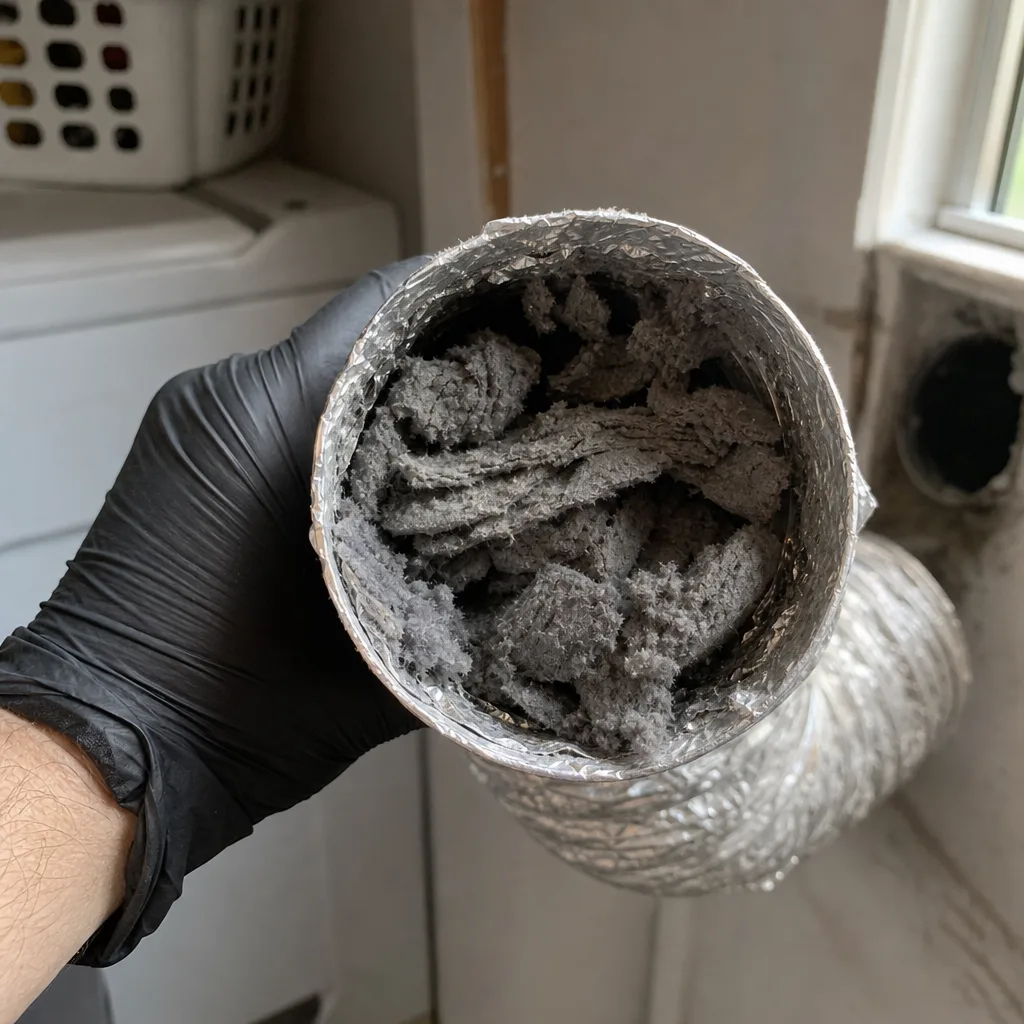
Here’s what a clogged vent usually looks like day to day:
- Towels and jeans come out damp after a full cycle, so you’re running the dryer twice.
- The top or sides of the dryer feel much hotter than they used to.
- Your laundry room gets hot and sticky while the dryer runs.
- You find lint on the floor behind the dryer or around the door seal, even though you clean the lint screen.
- The flap on the outside vent cover barely opens, or doesn’t open at all, when the dryer is on.
- You see lint, a bird’s nest, or other debris stuck in the outside vent hood.
- You notice a hot or burning smell when the dryer runs.
That last one matters most. A burning smell means lint near the heat source may be getting too hot. Don’t let that one ride for another few weeks. Get the vent checked soon.
Here’s a simple test you can do today. Start the dryer on a heat setting, then go outside and find where the vent comes out. Hold your hand near the cover. You should feel a strong, warm push of air. If it feels weak or you can barely tell it’s running, something is blocking the line.
To be fair, not every slow dryer needs a pro. Before you call anyone, try these:
- Clean the lint screen before every load. A clogged screen alone can slow drying.
- Pull the dryer out and look at the flexible hose behind it. If it’s crushed, kinked, or pulled loose, straighten it or reconnect it.
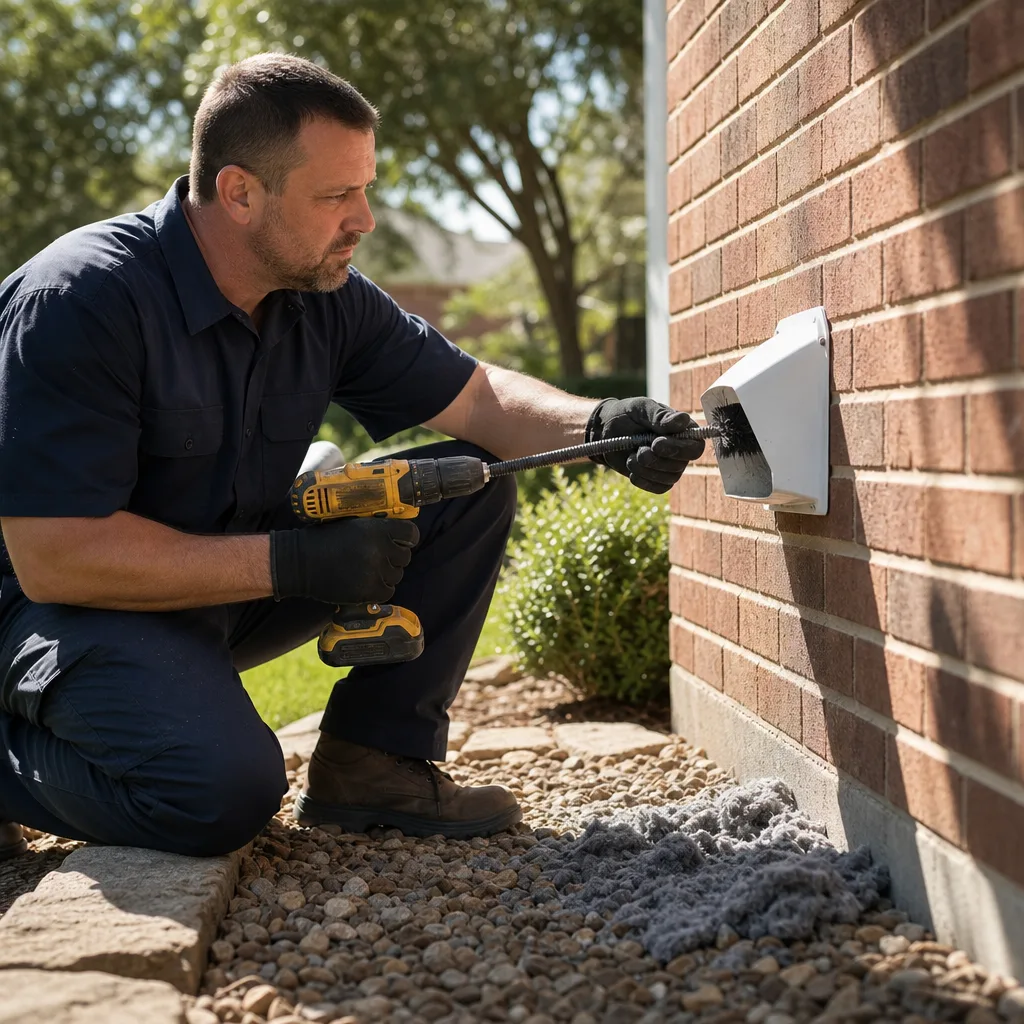
- If your outside vent sits low on a wall and you can reach it safely, clear any lint or debris you see at the cover.
If drying times go back to normal after that, you’re done. Nobody needs to come out.
If the problem comes back, the clog is deeper in the line, where you can’t reach it. That’s common when the vent runs a long way through walls or the attic, has several turns, or exits through the roof instead of a side wall. Lint tends to settle at those bends and in long runs. North Texas summer heat also makes your attic very hot, which is one more reason you don’t want a long, packed vent line running through it.
A full cleaning clears the whole line from the dryer to the outside. Then the exhaust gets checked so you know the air is really moving again, instead of just guessing.
What Counts as Dryer Vent Cleaning Versus Lint Trap Maintenance
A lot of people tell us, “I clean the lint trap every time, so my vent should be fine.” That’s a good habit. It’s just not the same job. The lint screen catches what it can at the front door. A dryer vent cleaning deals with everything that slipped past it.
No lint screen catches it all. Fine lint gets through with every load and rides the hot, damp air into the vent line. Over months, it sticks to the walls of the duct and piles up wherever the air slows down. You can’t see any of this from the laundry room, and that’s why a slow dryer can surprise people who keep a clean screen.
Here’s the simple way to split it up.
Lint trap maintenance is the part you handle yourself:
- Emptying the lint screen before each load
- Washing the screen now and then if dryer sheets leave a film on it
- Checking the short hose behind the dryer and the outside cover you can reach, as covered above
Dryer vent cleaning covers the whole path the air travels, from the back of your dryer to the spot where it leaves your home:
- The connection and hose behind the dryer
- The hidden duct running through your wall, ceiling, or attic
- Every turn and joint where lint likes to settle
- The vent hood at the end, whether it’s on a side wall or the roof
Then the exhaust gets tested. That step matters. A clean-looking vent hood doesn’t prove the line is open. Checking the airflow at the end of the visit tells you the air is really moving again, so you aren’t left guessing.
With Xtreme Air Services, a dryer vent cleaning includes a full vent cleaning and an airflow and exhaust check. That’s the job, start to finish.
It’s just as important to know what isn’t part of a cleaning. Sometimes clearing the line turns up a bigger problem. The duct might be crushed inside a wall, a joint might have pulled apart in the attic, or the vent might be routed in a way that keeps trapping lint no matter how often it’s cleaned. Fixing those things is vent repair or rerouting, not cleaning. With us, any corrective work found during the visit is quoted separately, so you see the price and decide before anything else gets done. You’re never stuck with a surprise add-on.
So if you already keep up with the lint screen, keep doing it. You’re doing your part. A professional cleaning picks up where you can’t reach, which is the long stretch of duct that does most of the work and gets almost none of the attention.
What a Standard Dryer Vent Cleaning Visit Includes
You already know what the job covers: the whole vent line gets cleaned, then the airflow and exhaust get checked. The next thing most people want to know is what it’ll cost and why one home’s price can differ from the house next door.
With Xtreme Air Services, a standard dryer vent cleaning usually runs $100-$175. Our broader range for dryer vent work is $100-$250. Where your home lands depends on how your vent is built, not on how much we feel like charging.
Four things move the price up or down:
- Vent length and routing. A short, straight run out a side wall is quicker to clear than a long line that snakes through walls or the attic with several turns.
- Roof vs. wall termination. A vent that exits through the roof takes more work to reach than one that comes out low on an outside wall.
- Level of buildup. A line with a light coat of lint is a different job from one that’s packed tight or has a nest in the hood.
- Accessibility. If the dryer is tucked into a tight closet or the vent path is hard to get to, it takes more time.
There’s also a service-call fee of $26-$99. If you go ahead with the work, that fee is credited toward the job, so you aren’t paying twice just for us to show up.
You’ll get upfront pricing with no surprises. You hear the price before any work starts, and you decide. If the cleaning turns up a crushed duct or a joint that’s come apart, that repair is quoted on its own, as covered above. Nothing gets added to your bill without your say.
Since this is a smaller job, financing isn’t usually offered for a vent cleaning. It’s available on larger repairs and replacements if you ever need it.
A few minutes of prep helps you get a clear price on the phone and makes the visit go smoother:
- Find where your vent comes out. Look for the vent cover on an outside wall, or check whether it’s up on the roof. Telling us that when you call helps us give you a more accurate idea of cost.
- Think about the path. If your laundry room is in the middle of the house or upstairs, the line likely runs a long way. That’s useful to mention.
- Clear some space. Move baskets, shelves, or stored items away from the dryer and the area around the outside vent so the technician can get to both ends of the line.
- Note what you’ve noticed. Long dry times, a hot dryer, or a burning smell all help the technician know what to look for.
The person at your door is a licensed, background-checked technician who’ll treat your home with respect. Our phones are answered around the clock, and we work to get to you the same day. Your neighbors in Plano can reach our local office on W Park Blvd, and there’s no extra charge for nights or weekends. When the visit’s done, you’ll know the line is clear because the airflow was checked, not because someone said so.
Ready when you are – get in touch today.
Call Today, Get Service Today. Xtreme Air Services — West Plano is ready to help.
What Changes the Cost of Dryer Vent Cleaning
The price of a dryer vent cleaning mostly comes down to your house, not the visit. The four factors covered above, length and routing, roof or wall exit, buildup, and access, are what decide whether you land near the low end or the high end. It helps to picture how they stack up in a real home.
A simpler job usually looks like this. Your laundry room sits on the first floor against an outside wall. The vent runs a few feet straight out to a cover you can see from the yard. The line was cleaned a year or so ago, so there’s only a light coat of lint.
A bigger job usually looks like this. Your laundry room is upstairs or in the middle of the house. The vent climbs through the attic with a couple of turns and exits through the roof. It hasn’t been cleaned in years, and lint has packed in at the bends. Each of those adds time, and together they push the job toward the top of the range.
Here’s the part you have some control over. You can’t change where your builder put the laundry room, but you can change how much lint piles up. A line that gets cleaned on a regular schedule stays a lighter job. A line that’s left alone keeps packing tighter, and a packed line takes more work to clear. Waiting doesn’t save money on this one. It usually just moves the cost later and makes it bigger.
If you’re comparing quotes from more than one company, make sure you’re comparing the same job. A lower number can mean a smaller job. Ask these questions before anyone starts:
- Does the price cover the whole line, from the back of the dryer to the outside cover, or just the hose behind the dryer?
- Is the airflow tested after the cleaning, so you know the line is really open?
- Is there a trip or service-call fee, and does it go toward the job if you move ahead?
- Is the price set before work starts, or does it depend on how long the technician is there?
- If they find a crushed duct or a loose joint, will they quote it and wait for your okay before fixing it?
With us, the answers are simple. You get the full line cleaned and the exhaust checked. You hear the price before any work begins. The service-call fee is credited toward the job if you go ahead. Any repair is a separate quote that you approve or turn down. And there’s no extra charge for nights or weekends, so a Saturday visit costs the same as a Tuesday.
The fastest way to get a clear number is to call and tell us where your vent comes out and where your laundry room sits. That gives our team enough to point you toward the right part of the range before a licensed, background-checked technician ever shows up at your door.
Call 469-217-9095
Watch Our Video
See How We Handle Dryer vent cleaning in Plano
Xtreme Air Services — West Plano
Why Dryer Vent Cleaning Is a Fire-Safety Service, Not Just Maintenance
Most people think of a dryer vent cleaning the way they think of an oil change. It’s something you get around to when the car starts acting up. That’s the wrong way to look at it. A clogged vent doesn’t just slow down your laundry. It puts heat, airflow, and a pile of dry fuel in the same small space, and that’s a fire-safety problem.

Here’s why. Lint is made of tiny, dry fibers from your clothes and towels. It lights easily and burns fast. Your dryer makes a lot of heat to dry each load. As long as the air keeps moving, that heat gets carried outside along with the lint. When the line is packed, the air slows down. Heat builds up in the drum and the duct, the dryer runs longer to finish the job, and lint keeps collecting close to where things are hottest.
That’s the part that catches people off guard. A dryer can still dry your clothes, just slowly, while the vent line behind the wall is getting more dangerous every week. You don’t need to wait for a problem you can see before the risk is real. That’s why we treat this as a key fire-safety service, not a convenience call.
Where the vent runs matters too. The risky spots are usually the ones you never see:
- The flexible hose behind the dryer, which can get crushed when the dryer is pushed back against the wall
- Bends and joints inside the wall or ceiling, where lint slows down and settles
- Long runs through a hot attic, where the duct is already sitting in heat for much of the year
- A roof vent hood, where lint and nests can build up out of sight
If you have a gas dryer, there’s one more reason to keep the line open. A gas dryer sends combustion gases out through the same vent as the lint and moist air. A blocked line can make it harder for those gases to leave your home the way they should. If that’s a worry for you, we also offer carbon monoxide testing, and that’s its own service.
This is also why the airflow check at the end of the visit matters more than it sounds. Pulling out some lint and calling it done doesn’t tell you the line is safe. Proving that air is moving strongly from the dryer all the way outside does. Strong airflow means the heat and the lint are leaving your home, which is the whole point.
None of this means you should panic about your dryer. Millions of people use theirs every day without trouble. It just means the vent deserves a spot on the same list as testing your smoke alarms and changing your HVAC filter. Those are small, regular jobs that protect your family. Keep the lint screen clean, keep an eye on drying times, and have the full line cleaned and checked on a regular schedule. That’s how a vent stays a quiet part of your home instead of a risk hiding in the wall.
Frequently Asked Questions
Common questions about Dryer vent cleaning
How many times a year should I clean my dryer vent?
Most homes do fine with a cleaning once a year. If your laundry room sits far from an outside wall, your vent runs through the attic, or you dry a lot of loads for a big family, you may need it twice a year. Watch for longer dry times between visits. That’s a sign lint is building back up faster than expected.
Can I clean a dryer vent that runs through the wall myself?
You can handle the easy parts, but the hidden sections inside the wall are hard to reach safely. You can clean the lint screen, check the flexible hose behind the dryer, and clear the outside cover if it’s low enough to reach. The duct hidden inside your wall, ceiling, or attic needs the right tools to clean without damaging the line, which is where a professional cleaning takes over.
Is dryer vent cleaning really necessary if I already clean the lint screen?
Yes, because the lint screen only catches part of the lint your dryer produces. Fine lint slips past the screen with every load and settles inside the duct, especially at bends and long runs. That buildup is invisible from the laundry room, which is why a dryer that’s slow to dry can surprise even careful homeowners who never skip the lint screen.
Is dryer vent cleaning the same as air duct cleaning?
No, they’re separate systems and separate jobs. Your dryer vent carries hot, damp exhaust from one appliance straight outside. Your air ducts carry heated and cooled air through your whole home. Cleaning one doesn’t clean the other, so don’t assume a duct cleaning covers your dryer vent too.
Ready to Get Started?
Call (469) 217-9095 Today, Get Service Today.