


Electrical Troubleshooting in Fort Worth: Find the Fault Before You Pay for a Fix
The fault traced to where it starts, with a clear written summary before any repair begins.
What’s Covered on This Page
- What Electrical Troubleshooting Includes
- Signs the Problem Needs a Professional Now
- When You Don’t Need a Service Call
- Why the Wrong Trade Sometimes Gets Called First
- What the Diagnostic Visit Costs and What’s Included
- What exactly counts as electrical troubleshooting versus a repair?
- How can I tell if a problem in my house is electrical?
What Electrical Troubleshooting Includes
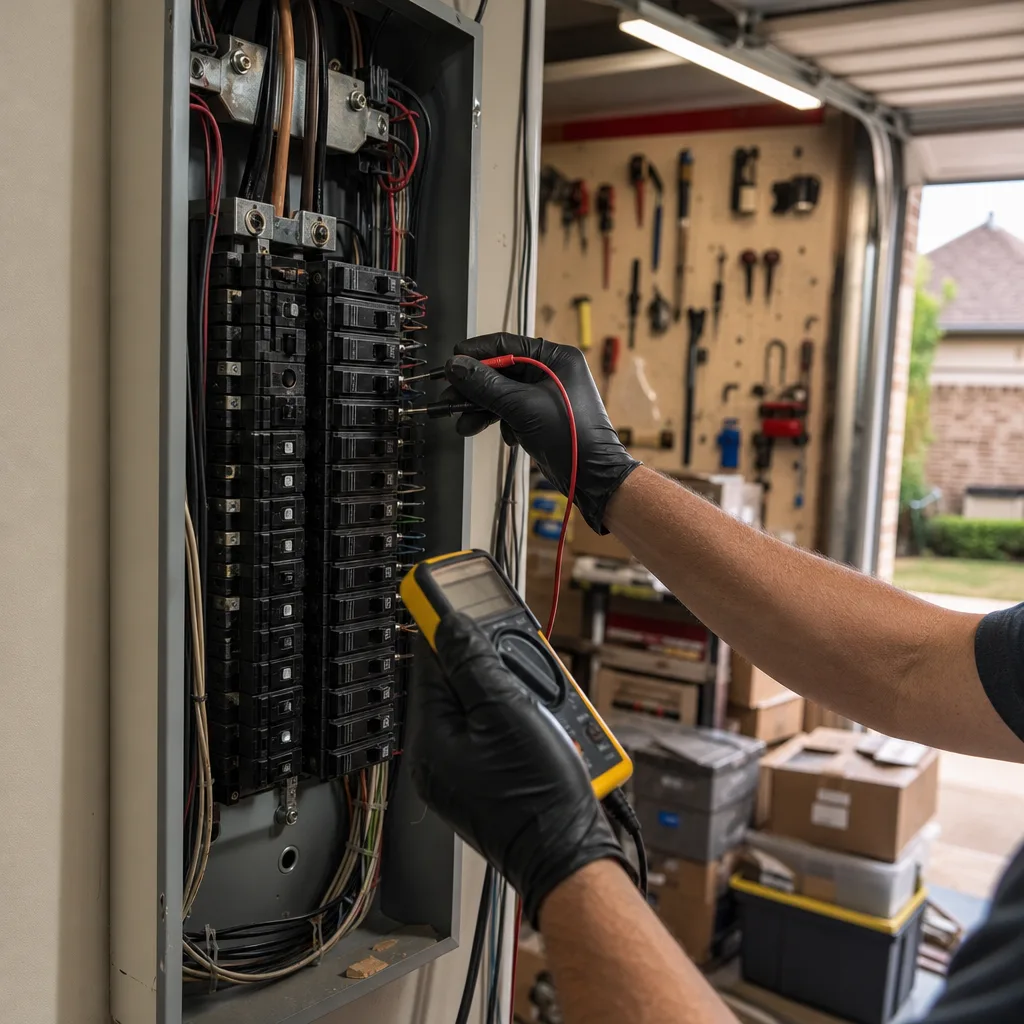
When something electrical stops working, the part you can see is rarely the part that’s broken. A dead outlet in the living room can trace back to a loose connection two rooms away. A breaker that trips every evening might point to one appliance, a worn wire, or a circuit that’s doing more work than it should. Troubleshooting is the work of following that trail back to the source.
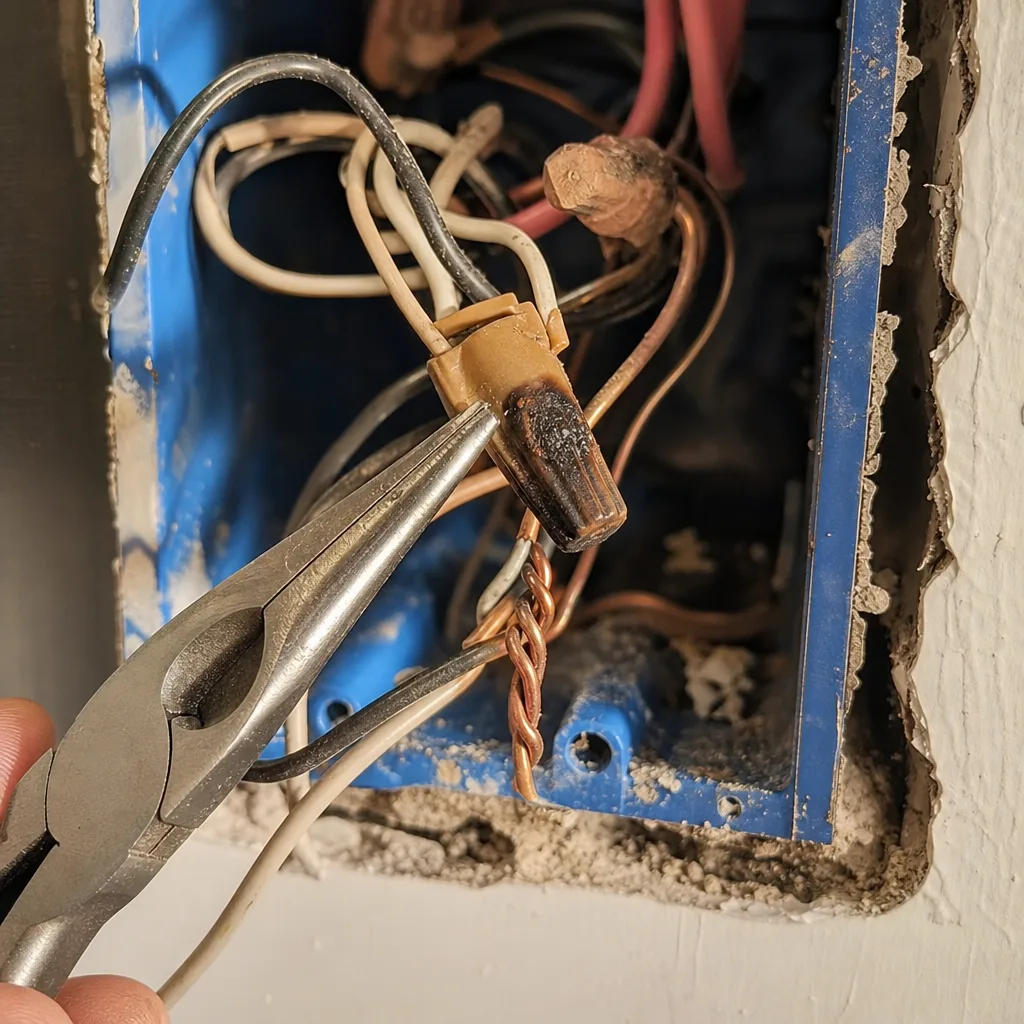
Most of the calls that fall under this service look like one of these:
- A dead outlet or switch that won’t come back, even after you reset the breaker.
- A breaker that keeps tripping, whether it happens right away or only at certain times of day.
- An intermittent fault, like lights that flicker, power that drops in and out, or a problem that’s there one day and gone the next.
Intermittent problems are often the hardest to pin down. They don’t always show up on cue, so finding them takes patience and a careful, step-by-step approach. A good diagnosis narrows the problem one circuit at a time until the cause is clear. Swapping parts and hoping isn’t troubleshooting.
Here’s exactly what you get. The visit includes an on-site diagnosis and a clear written summary of findings and recommendations. It doesn’t include any repairs or corrective work. That split matters. You aren’t signing up for a repair before you know what’s wrong, and you walk away with something in writing you can read, keep, and ask questions about.
On cost, our typical price range for troubleshooting is $100-$350. The most common job, which is diagnosing a dead outlet, tripping breaker, or intermittent fault and tracing it to the source, runs $100-$200. There’s also a $26-$99 service-call fee, and that fee is credited toward the repair if you go ahead with Xtreme Air Services.
Four things push the price up or down:
- How complex the fault is. A single dead outlet is usually quicker to trace than a problem that comes and goes.
- Home size and circuit count. More circuits mean more ground to cover.
- Access. Wiring behind finished walls or in tight spaces takes longer to reach.
- Specialized test equipment. Some faults need tools beyond the basics.
Financing isn’t typically offered for a smaller job like this. If the diagnosis turns up something bigger, such as a panel that needs replacing or a circuit that needs rewiring, financing is available on larger repairs and replacements. Either way, you’ll know what the problem is and what fixing it involves before any repair work starts.
Signs the Problem Needs a Professional Now
Some electrical problems can wait for a convenient appointment. Others shouldn’t. The difference usually comes down to heat. When electricity goes where it shouldn’t, it makes heat, and heat is something you can smell, see, and feel.
Get a professional out soon if you notice any of these:
- A burning or hot plastic smell near an outlet, switch, light, or your panel, and you can’t find another cause.
- An outlet, switch plate, or plug that feels warm or hot to the touch.
- Brown or black scorch marks, or melted plastic, on an outlet or cover plate.
- Sparks when you plug something in, beyond a tiny flash.
- Buzzing, crackling, or sizzling from a wall, a switch, or the panel.
- A breaker that trips again right after you reset it, or one that won’t reset at all.
- Lights that dim or flicker in several rooms at once, not just one bulb.
- A shock or tingle when you touch an appliance or a switch.
A breaker that trips is doing its job. It’s telling you something on that circuit is wrong. Flipping it back on over and over won’t fix the cause. If it trips right away, leave it off until the problem has been found.
North Texas summers add their own pressure. Your AC, fridge, and fans run hard for months, so a circuit that was fine in April can start tripping in July as the load stacks up. Wiring and connections that run through a hot attic also take a beating from those temperature swings. If a breaker starts tripping every afternoon, have it checked before it turns into a dead circuit.
Age matters too. If your Fort Worth home is a few decades old, its wiring was planned for far fewer devices than most families plug in today. Flickering, warm outlets, or breakers that trip under normal use are worth a closer look in an older house.
Not everything needs a call, though. Here’s what you can check first:
- A dead outlet in a bathroom, kitchen, garage, or outdoors. Look for a GFCI outlet nearby, which is the kind with the test and reset buttons, and press reset. If the power comes back and stays on, you’re done.
- A breaker that tripped once while the microwave and a space heater ran together, then held after you reset it. That’s likely a simple overload. Spread those loads across different circuits. If it keeps happening, that’s when to call.
- Your whole street is dark after a storm. That’s a utility outage. Oncor handles the lines that bring power to your home, so report it to them, not an electrician.
If the power comes back after a storm but some outlets or lights act strange in your home only, that’s a different story and worth a diagnosis.
When something on that first list shows up, you don’t have to wait until Monday. Same-day service is available, and there’s no extra charge for nights or weekends. Our licensed and insured technicians will trace the problem and show you exactly what they found.
When You Don’t Need a Service Call
Not every dark lamp or quiet outlet is an electrical problem. A few minutes of checking can save you a service-call fee. The GFCI reset and the one-time overload trip are covered above. Here are other common things that look like a wiring fault but usually aren’t.
- The bulb is dead. Put in a bulb you know works before you blame the fixture or switch. With LED bulbs, make sure the bulb is screwed all the way into the socket.
- The outlet runs off a wall switch. Many bedrooms and living rooms have an outlet controlled by a switch, and sometimes only the top or bottom half is switched. If a lamp won’t come on, try the switches by the door.
- The device is the problem. Plug a lamp or phone charger you trust into the outlet you think is dead. If it works, the outlet is fine. The item you unplugged has the fault.
- The power strip tripped. Most surge strips have their own switch or reset button. Press it, or plug straight into the wall to test.
- LED bulbs flicker on a dimmer. If one fixture flickers only when you dim it, the bulbs may not match the dimmer. Bulbs labeled dimmable often fix it. Flicker in several rooms at once is a different problem, covered in the list above.
- One appliance trips the breaker wherever you plug it in. If it happens on every outlet and every circuit, the appliance itself likely has the fault. An appliance repair shop is the right call for that.
- The AC or heat won’t start, but everything else works. Check the thermostat first. Dead batteries or a wrong setting can look like a power problem.
Some things are fine to wait on. If a light blinked once during a thunderstorm and has behaved since, you can keep an eye on it. Lights that dip for a split second when the AC kicks on during a Fort Worth summer are also common and aren’t a reason to call by themselves. If the dip gets longer, gets worse, or starts happening with smaller appliances, that changes things.
If you rent, check your lease and tell your landlord or property manager before you call anyone. Wiring inside a rental home or apartment is usually theirs to handle, and they may already have someone they use.
Know where the easy checks stop. Swapping bulbs, flipping switches, testing a plug, and pressing reset buttons are all reasonable things to do yourself. Taking off cover plates or opening the panel to look at wires is different. That’s the point where a quick check turns into real troubleshooting.
Here’s a simple test. If one of these checks fixes the problem and it stays fixed, you’re done, and you didn’t need us. If the problem comes back in a day or two, or none of these checks change anything, the cause is somewhere you can’t see. That’s when a diagnosis earns its cost.
Not sure what your Electrical troubleshooting project needs? Ask us.
Call Today, Get Service Today. Xtreme Air Services — Fort Worth is ready to help.
Why the Wrong Trade Sometimes Gets Called First
Lots of problems in your home sit right on the line between two trades. Your AC, your furnace, and an electric water heater all run on power. When one of them quits, it’s natural to call the company that works on that machine. Sometimes the machine is fine. The trouble is in the wiring that feeds it.
Here are a few common mix-ups:
- The outdoor AC unit sits dead on a hot afternoon. It could be a bad part inside the unit. It could also be a tripped breaker, a worn wire, or a problem at the disconnect box, the small gray box mounted on the wall next to the unit.
- The water heater stops making hot water. On an electric model, the cause can be the breaker, the wiring, or a heating element inside the tank. One of those is plumbing work and the others are electrical.
- The furnace won’t start on the first cold night. Even a gas furnace needs power to run its fan and light its burner. If no power reaches it, it looks broken when it isn’t.
- An attic fan or air handler stops. In many Fort Worth homes the air handler sits in the attic, where summer heat is hard on the wires and connections running to it.
Here’s why this matters to your wallet. Say you call an AC company because the unit won’t run. The tech comes out, charges a trip fee, and finds the AC is fine but the circuit feeding it isn’t. Now you need an electrician. That means a second call, a second fee, and maybe another hot day of waiting. It also works the other way. An electrician might confirm the power is reaching the unit and tell you to call someone else for what’s inside it.
That’s the real job of troubleshooting. It finds where the problem lives before anyone starts fixing things. A good diagnosis doesn’t stop at “it’s not my trade.” It tells you what failed and where.
This is one place where calling a company that handles more than one trade can save you time. Xtreme Air Services handles HVAC, plumbing, and electrical under one roof. You don’t have to guess which kind of company to call first. If the cause turns out to be on the other side of the line, you’re still dealing with the same company and the same phone number. And because the service-call fee is credited toward the repair when you go ahead with us, finding the true cause doesn’t mean paying twice to get started.
A quick tip before you call anyone: tell them every symptom you’ve noticed, not only the one that bugs you most. A breaker that tripped last week, a light that dims when the system starts, or a burning smell near the unit are all clues. Those details point toward the wiring, and they help whoever comes out start in the right place.
Watch Our Video
See How We Handle Electrical troubleshooting in Fort Worth
Xtreme Air Services — Fort Worth
What the Diagnostic Visit Costs and What’s Included
You already know the numbers from the top of this page. The fee buys you an answer, and the repair is a separate choice. What’s worth knowing now is how to make sure that answer is a good one, and how to keep the visit on the lower end of the range.
Before you book with anyone, ask a few plain questions. A good company won’t mind answering them on the phone.
- What does the diagnostic fee cover, and is the service-call fee separate?
- Will I get the findings in writing, or only a verbal answer?
- If I go ahead with the repair, does any part of the fee come off the bill?
- Will I see the repair price before any work starts?
- Does a night or weekend visit cost more?
With Xtreme Air Services, you’ll hear the same answers every time. You get a written summary of findings and next steps. The service-call fee is credited toward the repair if you go ahead with us. Pricing is upfront and flat-rate, and you approve it before any work starts. There’s no extra charge for nights or weekends.
Time spent hunting for the problem is part of what moves the cost. A little prep on your end helps the technician start in the right place.
- Write down when it happens. Note the time of day, the weather, and what was running. “The breaker trips around 4 p.m. when the AC and dryer are both on” is a strong clue.
- Note which breaker. If you know which one trips, put a piece of tape on it. Don’t keep resetting it to find out.
- Make a list of everything that’s dead. Walk the house and check outlets and lights in nearby rooms. Problems often touch more than one spot.
- Clear the way. Move boxes away from the panel. If your air handler or wiring runs through the attic, as it does in many Fort Worth homes, clear a path to the attic hatch.
- Have the history handy. Mention any recent remodel, a new appliance, a storm, or work another contractor did.
When the visit is done, read the written summary before you decide anything. It should tell you what failed, where it is, and what fixing it involves. If something isn’t clear, ask. That’s what the summary is for.
The summary is also yours to keep. If you rent, you can hand it to your landlord. If you’d like to think it over, sleep on it, or get a second price, you can. You paid for the diagnosis, and the decision about the repair stays with you.
If you’re ready to find out what’s really going on, our licensed and insured technicians can trace it to the source and put the answer in writing. Same-day service is available.
Call 817-677-1907
Frequently Asked Questions
Common questions about Electrical troubleshooting
What exactly counts as electrical troubleshooting versus a repair?
Troubleshooting means finding the cause of a problem, not fixing it. A technician traces a dead outlet, tripping breaker, or flickering light back to its source and gives you a written summary of what’s wrong. Repair work, like replacing a breaker or rewiring a circuit, is priced and decided separately once you know what caused the fault.
How can I tell if a problem in my house is electrical?
Look for patterns that point to wiring instead of a single bad part. A bulb that’s simply burned out or a lamp plugged into a switched outlet isn’t an electrical fault, but a breaker that trips repeatedly, outlets that feel warm, or flickering that happens in several rooms at once usually is. If a basic check like swapping the bulb or pressing a GFCI reset doesn’t fix it and stay fixed, the cause is likely hidden in the wiring and worth a professional look.
Ready to Get Started?
Call (817) 677-1907 Today, Get Service Today.