


Electrical Panel Replacement / Upgrade in Fort Worth
Panel upgrades for homes that have outgrown their power, done by licensed electricians with the permit pulled.
What’s Covered on This Page
- Signs Your Panel Needs Replacement, Not Just a Repair
- When a Repair Is Enough and Replacement Can Wait
- What Drives the Cost of a Panel Upgrade
- Panel Relocation and Older Home Upgrades
- What to Ask Before You Hire an Electrician
- How long does a panel replacement take?
- Can I add an EV charger without a full panel upgrade?
- Will my grandmother’s older home need the panel moved to a new spot?
- What if my breaker keeps tripping but my panel seems fine?
Signs Your Panel Needs Replacement, Not Just a Repair
Not every panel problem means a new panel. A single breaker that keeps tripping or a loose wire on one circuit can often be fixed without replacing anything else. We’d rather tell you that up front than sell you something you don’t need. The real question is whether the trouble is limited to one part or tied to the panel as a whole.
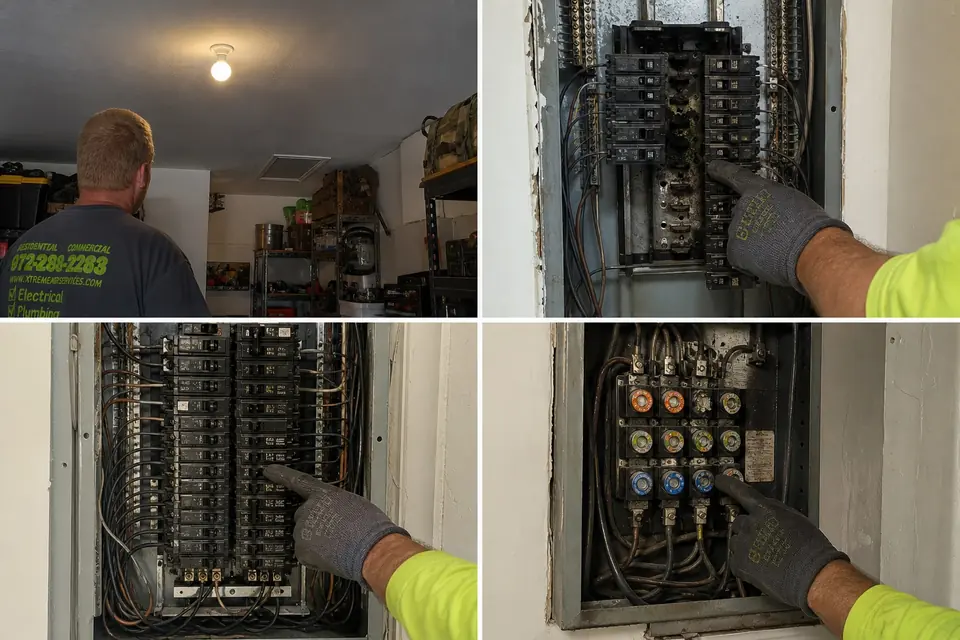
These signs usually point to replacement:
- You still have a fuse box. Fuses did their job for a long time, but most older fuse panels weren’t built for the load a modern home puts on them.
- Breakers trip all over the house, not just on one circuit. That pattern usually means the panel is too small for what you’re asking it to do, not that one breaker is bad.
- There are no open slots left. If adding a new circuit would mean doubling up wires or squeezing in extra breakers, you’ve outgrown the panel.
- You’re adding a big load. An EV charger, a hot tub, a larger AC system, or a home addition can push an older, smaller panel past what it can safely handle.
- You see rust, corrosion, or moisture inside the box. Corrosion weakens connections, and you can’t fix that by swapping a breaker or two.
- The panel feels warm, buzzes, or smells like something’s burning. These are signs of heat building up at connections, and they’re worth having checked soon.
- Lights dim or flicker when big appliances kick on. Now and then it’s no big deal. If it happens all the time, it can mean the panel or service is struggling to keep up.
Heat makes all of this easier to spot. When your AC runs hard through a Fort Worth summer, an undersized panel gets pushed harder than it does any other time of year. If your breakers seem to trip more in July than in March, that’s useful information. Tell your electrician about it.
On the other hand, a repair is often enough in these cases:
- One breaker keeps tripping, and the problem follows that one circuit.
- A breaker is worn out but the panel is in good shape and has room to spare.
- A connection is loose, and nothing shows heat damage or corrosion.
Age by itself isn’t a reason to replace a panel. Age plus any of the replacement signs above is a different story. Some older panel models have known reliability problems too, so it’s worth having a licensed electrician look at yours if you aren’t sure what you have.
Sometimes the panel isn’t the only issue. If the house still has original aluminum branch wiring, that’s a separate job. A new panel won’t fix the wiring that runs out to your outlets. A good inspection should tell you which problem you have, so you pay for the fix that solves it.
When a Repair Is Enough and Replacement Can Wait
If your panel is in good shape, has the room you need, and handles your home’s load, you don’t need a new one. You need the right small fix, and sometimes you need nothing at all. Here’s where that’s true.
The trouble may not be in the panel at all. A breaker that trips is doing its job. It’s cutting power because something on that circuit is pulling too much or shorting out. A worn-out space heater, a failing appliance, or a bad outdoor outlet that gets wet after a storm can trip a breaker again and again while the panel itself is fine. Good electrical troubleshooting finds the real cause. Replacing the panel wouldn’t fix any of those problems, and the breaker would keep tripping.
You might be out of slots but not out of power. A full panel and a too-small panel aren’t the same thing. If your main service has enough capacity and the panel is sound, a subpanel can give you more room for new circuits without replacing the main panel. It’s a smaller job, and for a garage, workshop, or addition it’s often the better fit.
Adding a big load doesn’t always mean upgrading. Many homes built in the last few decades already have a 200-amp panel. Before you add an EV charger or a bigger AC system, ask for a load calculation. That’s simply adding up what your home draws at its busiest, like a July afternoon with the AC running, the dryer going, and the oven on. If the numbers work, you may only need a dedicated circuit. If they don’t, you’ll know why before you spend anything.
Waiting can be the smart choice if your panel is working, shows none of the warning signs above, and you’ve got big changes coming. Maybe you’re planning an addition, a pool, or a new AC system in the next year or two. Sizing the panel once for everything is usually better than upgrading now and again later. Tell your electrician what’s on your list so the plan fits where your home is headed, not just where it is today.
Cost matters here too. When you have us come out to look at a panel problem, there’s a $26-$99 service-call fee, and it’s credited toward the repair if you go ahead with Xtreme Air Services. So if the answer turns out to be a breaker, a tight connection, or a circuit that needs work, you aren’t paying for a trip on top of the fix.
The fair question to ask any electrician is simple: is this a part problem or a panel problem? You should get a clear answer and a reason you can understand. If the panel has years left in it, you deserve to hear that.
What Drives the Cost of a Panel Upgrade
Most panel replacements and upgrades we do fall between $1,500 and $4,500. The most common job is swapping an aging or undersized panel for a 200-amp panel with new breakers and proper grounding, then inspecting and testing it. That job typically runs $2,100-$3,300.
Where your home lands in that range depends on what we find once we open things up. Here’s what moves the price:
- Panel amperage. A bigger panel costs more than a smaller one. Going from an old 100-amp panel to 200 amps is a bigger job than replacing a 200-amp panel with another 200-amp panel.
- Brand. Panels and breakers vary in price by manufacturer. We’ll tell you what we’re installing and why.
- Meter and service condition. If the meter base or the wires coming into your house are worn or damaged, that adds work.
- Grounding upgrades. Many older homes don’t have grounding that meets today’s standards. Bringing it up to standard is part of doing the job right.
- Circuit count. More circuits mean more breakers and more connections to move over and label.
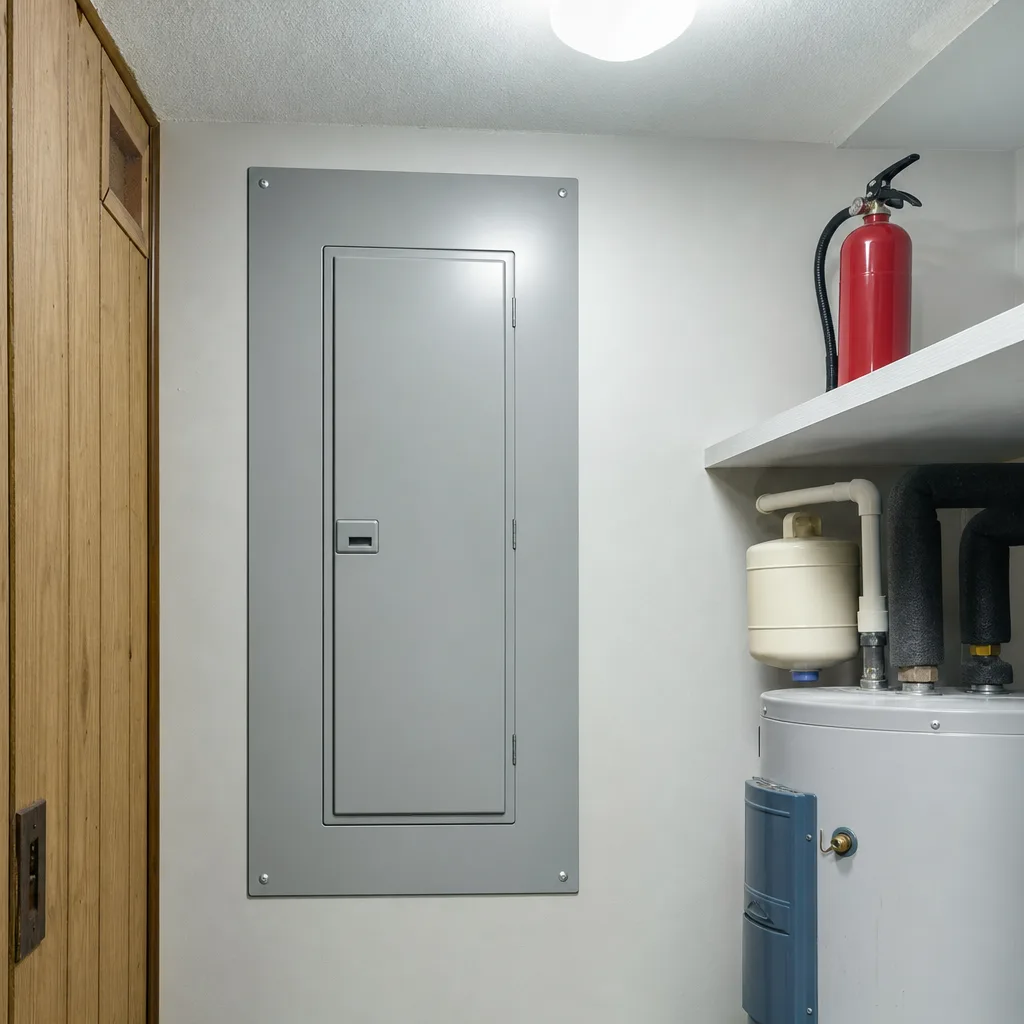
- Ease of access. A panel on an open garage wall is quicker to replace than one tucked behind cabinets or in a tight closet.
- Utility coordination. Most panel swaps mean the power has to be cut at the meter. In Fort Worth that means working with Oncor, and scheduling around them can affect the timeline and the cost.
- Code upgrades. When a panel is replaced, other parts of the system may need to be brought up to current code.
- Permits. Panel replacements generally need a permit and an inspection, and permit fees are part of the real cost.
It helps to know what you’re paying for. Our price includes the panel and materials, professional installation, breakers, grounding, startup and testing, and haul-away of your old panel.
Some things aren’t included unless your quote says they are: service-entrance or meter work done by the utility, rewiring, code corrections, and permits. Some of those come up on every job and some never come up at all. Older homes are more likely to need code corrections or grounding work than newer ones, so that’s worth asking about if your house has a few decades on it.
You’ll get upfront flat-rate pricing approved before any work starts. You see the number and say yes before we pick up a tool, so there’s no meter running while we work. If we find something that changes the scope, we’ll stop, show you, and explain it before anything else happens. That service-call fee we mentioned earlier gets credited toward the job too.
If the number is bigger than you planned for, you have options. Flexible financing is available on qualifying installations and larger jobs, on approved credit. That can let you fix a panel that’s tripping or running hot now instead of putting it off until you’ve saved up.
When you compare quotes from any electrician, ask the same few questions. Is the permit included? Is grounding included? What happens if the meter base needs work? Who coordinates with Oncor? A low quote that leaves those out can end up costing more than a complete one.
Have questions? We’re happy to help.
Call Today, Get Service Today. Xtreme Air Services — Fort Worth is ready to help.
Panel Relocation and Older Home Upgrades
If you’re replacing your panel anyway, it’s the best time to ask whether it’s in the right spot. Moving it later means paying for much of the same work twice. In an older home, it’s also the time to deal with any other problems the new panel will be wired into.
A panel is worth moving when where it sits causes a real problem, not just because it looks bad. Common reasons include:
- It’s in a closet, a bathroom, or behind shelves, so you can’t get to it fast when a breaker trips or the power needs to be shut off.
- Cabinets, a water heater, or stored stuff crowd the space in front of it. Code requires clear working room around a panel, and a crowded one may not pass inspection after the swap.
- A remodel or addition is about to cover the wall it’s on.
- It’s outside or in a garage spot that sees water, and you’re seeing rust or moisture inside the box.
Relocation is a bigger job than a swap in the same spot. Every circuit has to reach the new location, which can mean extending or running new wire. If the panel moves far enough, the meter or the service wires coming into the house may need to move too. That part means working with Oncor, which adds scheduling time. Utility service-entrance and meter work isn’t part of our standard panel price, so a relocation quote should spell out who handles it.
Sometimes the honest answer is to leave it where it is. If the panel is reachable, has clear space in front of it, and stays dry, a same-spot replacement keeps the job simpler and the price lower. Moving it should solve a problem you have.
Older homes bring a few more questions. Opening up an old panel shows how the rest of the system was built, and a few things tend to come up together:
- Two-prong outlets with no ground wire. The new panel can be grounded correctly, but those outlets still aren’t grounded until the circuits are updated or protected another way.
- Older wiring that’s worn, overloaded, or added on by past owners. A new panel works best when the wires it feeds are sound.
- Code corrections the inspector flags once a permit is pulled. These are separate from the panel itself and are quoted on their own.
None of this means you have to fix everything at once. It means you should know what’s there before you sign off on a number, so a needed correction doesn’t show up as a surprise halfway through. Ask your electrician to list what’s in the panel quote, what may come up once the walls and box are open, and what can safely wait.
If you’re planning a remodel, an addition, or a big new load like an EV charger, bring it up now. Your new panel can be sized and placed for where your home is headed, and the work gets done one time.
Call now
Watch Our Video
See How We Handle Electrical panel replacement / upgrade in Fort Worth
Xtreme Air Services — Fort Worth
What to Ask Before You Hire an Electrician
A new panel feeds every circuit in your home, so who installs it matters as much as what gets installed. These are the questions worth asking any electrician before you say yes. A good contractor will answer them without hesitating.
Are you licensed for electrical work in Texas? Electricians in Texas are licensed through the Texas Department of Licensing and Regulation (TDLR). Ask for the license number and look it up yourself. It takes a couple of minutes. Also ask who’ll be in your home doing the work, and whether a licensed electrician will be there or overseeing it.
Are you insured? If something goes wrong during a panel swap, you want the contractor’s insurance to cover it, not your homeowner’s policy. Don’t be shy about asking for proof.
Who pulls the permit and meets the inspector? We covered why permits matter in the cost section. The question here is who handles it. If an electrician suggests skipping the permit to save you money, that’s your sign to keep looking. An unpermitted panel can cause trouble when you sell your home or file an insurance claim.
How did you decide on the panel size? You want to hear that they looked at your home’s actual load and your future plans, like the load calculation we described earlier. “Everybody gets 200 amps” isn’t an answer. Sometimes 200 amps is exactly right. You should still know why.
What’s in writing? Before work starts, you should have a written scope that lists:
- The panel’s brand and amperage
- How many breakers and circuits are being moved over
- Whether grounding work is included
- What’s excluded, such as utility meter work, rewiring, or code corrections
- The total price, approved by you before anyone picks up a tool
How long will my power be off? Most panel swaps mean a stretch of time with no power at all. Plan around it. Think about your fridge and freezer, anyone who works from home, and any medical equipment that needs power. In a Fort Worth summer, it also means no AC for a while. If you can, ask for a morning start, before the house heats up.
How will you test it, and will the circuits be labeled? When the job’s done, every breaker should be tested and clearly labeled. When a breaker trips at 10 p.m., you shouldn’t have to guess which one runs the kitchen.
What happens if the inspector flags something? Ask how corrections get handled and priced, so a failed inspection doesn’t turn into a surprise bill.
With Xtreme Air Services, you get licensed, background-checked technicians, upfront flat-rate pricing you approve before work starts, and straight answers to every question on this list. Your neighbors across North Texas trust us with their homes, and we’ll treat yours like family.
Call 817-677-1907
Frequently Asked Questions
Common questions about Electrical panel replacement / upgrade
How long does a panel replacement take?
Most panel swaps take about a day, but your power will be off for a stretch of that time. Plan around your fridge, freezer, and anything that needs steady power. In a Fort Worth summer, that also means no AC for a while, so asking for a morning start can help beat the afternoon heat.
Can I add an EV charger without a full panel upgrade?
Maybe. Many homes already have a 200-amp panel with enough room for a dedicated EV charger circuit. Before assuming you need a new panel, ask for a load calculation that adds up what your home draws at its busiest, like a summer afternoon with the AC and dryer both running. If the numbers work, a dedicated circuit may be all you need.
Will my grandmother’s older home need the panel moved to a new spot?
Only if the current location causes a real problem, like being crowded by cabinets or sitting somewhere water gets in. Moving a panel means extending wiring to the new spot, and if it moves far enough, the meter or service wires may need to move too, which involves Oncor. If the panel is reachable, has clear space around it, and stays dry, keeping it in the same spot keeps the job simpler.
What if my breaker keeps tripping but my panel seems fine?
A tripping breaker is often doing its job by cutting power to something pulling too much current, not a sign the panel itself is bad. A worn-out space heater, a failing appliance, or an outdoor outlet that gets wet in a storm can trip the same breaker again and again. A proper inspection finds the real cause before anyone talks about replacing the panel.
Ready to Get Started?
Call (817) 677-1907 Today, Get Service Today.