
Most homeowners can find the bathroom but couldn’t tell you where their main shut-off valve is. Understanding what is home plumbing system means more than knowing water comes from a faucet. Your home has two interconnected plumbing networks doing completely different jobs, dozens of components working in concert, and a handful of control points that can save you thousands of dollars when something goes wrong. This guide breaks it all down clearly so you can maintain your system, catch problems early, and stop guessing when something sounds or smells off.
Table of Contents
- Key Takeaways
- What is home plumbing system: the two core subsystems
- How the water supply system works
- Understanding drainage and venting
- Plumbing materials and components you should recognize
- Maintenance tips and basic troubleshooting
- From experience: what no one tells you until it is too late
- When to call in a professional
- FAQ
Key Takeaways
| Point | Details |
|---|---|
| Two systems, one home | Every home has a water supply system and a drain-waste-vent system that work together but serve opposite purposes. |
| Know your shut-off valves | Locating your main and fixture shut-off valves before an emergency can prevent major water damage. |
| Pipe material matters | Older galvanized or corroded copper pipes cause low pressure and water quality problems that PEX or new copper can fix. |
| P-traps block sewer gases | These small curved pipes hold a water seal that keeps dangerous sewer gases out of your living space. |
| Small leaks cost big money | A single dripping faucet can waste over 3,000 gallons per year, making prompt repair a smart financial decision. |
What is home plumbing system: the two core subsystems
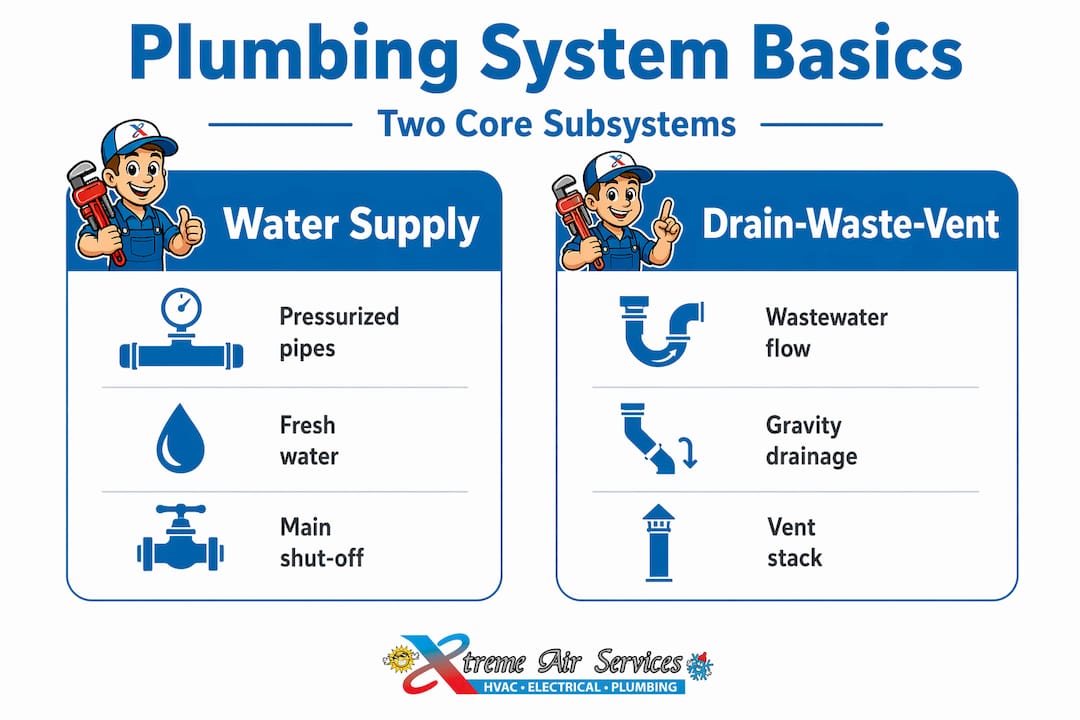
The term “home plumbing system” refers to the complete network of pipes, valves, fixtures, and vents that brings clean water into your home and removes wastewater from it. Rather than one unified system, it actually consists of two distinct subsystems that work side by side.
The water supply system operates under pressure. Water enters your home from a municipal main or a private well, travels through a network of pipes, and arrives at every faucet, toilet, shower, and appliance on demand. Pressure is what makes this work. Without it, water would not reach a second-floor bathroom or fill a washing machine in under five minutes.
The drain-waste-vent (DWV) system works the opposite way. It relies entirely on gravity. Once water is used, it flows downward through sloped drain pipes, carries waste to a main sewer line or septic system, and leaves your home for good. Venting pipes connected to your roof keep the drainage flowing freely by balancing air pressure inside the pipes.
Here is how the two systems interact during a typical moment at your kitchen sink:
- Pressurized water arrives through the supply line and exits the faucet
- Used water drains down through a P-trap, which holds a water seal
- The drain pipe slopes toward the main stack
- Vent pipes allow air in so water drains without creating a vacuum
- Waste exits the home through the main sewer line
Understanding these two systems as separate but connected is the foundation of all home plumbing basics. Everything else builds on this framework.
How the water supply system works
Water enters your home in one of two ways: from a municipal water main under the street, or from a private well on your property. Either way, the water arrives under pressure and immediately meets your home’s first major control point, the main shut-off valve.
The main shut-off valve
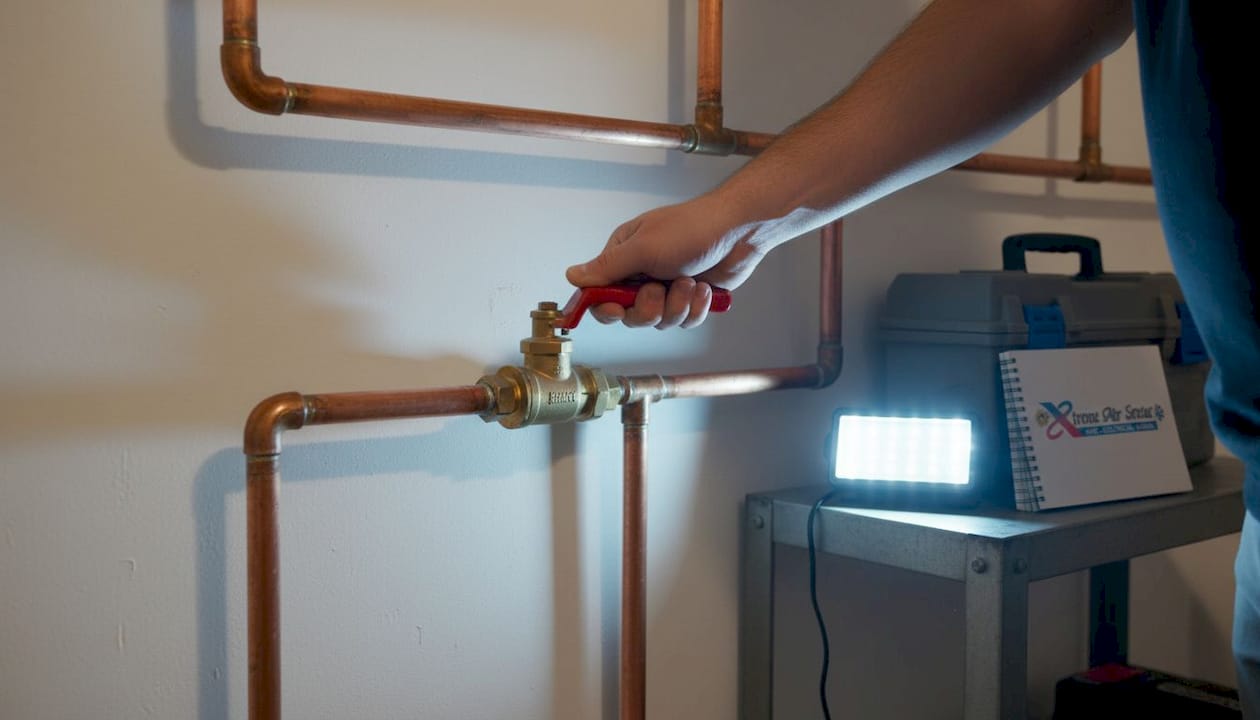
This valve is the single most important piece of hardware in your entire plumbing system. It controls every drop of water entering your home. You will typically find it near the water meter, in a basement, crawl space, or utility room. Shut-off valves exist at both the main supply line and at individual fixtures, and knowing both locations can prevent serious water damage during a leak or burst pipe.
Pipes that carry your water
From the main valve, water travels through a network of pipes that branch throughout your home. The three most common pipe materials in American homes are:
- PEX (cross-linked polyethylene): PEX is flexible and color-coded, with red indicating hot lines and blue for cold. It costs less than copper, resists freezing better, and installs faster.
- Copper: Durable, long-lasting, and trusted for decades. Copper handles heat well and resists bacteria, but it costs more than PEX and requires soldering for connections.
- Galvanized steel: Found in homes built before the 1970s. It corrodes from the inside out over time, causing rust, reduced flow, and poor water quality. If you have galvanized pipes, replacement is worth considering.
Cold and hot water delivery
Once past the main valve, the supply line splits. Cold water travels directly to every fixture and appliance. A separate branch runs to your water heater, where it is heated and then sent out through dedicated hot water lines to the same fixtures. The supply system delivers cold water directly while hot water travels through separate lines after passing through the heater. This is why your hot water arrives a few seconds after you turn the handle. The hot water sitting in the pipe between the heater and the fixture has to clear out first.
Pro Tip: If you are waiting more than 30 seconds for hot water at a fixture, your water heater may be undersized or located too far from that fixture. A plumber can assess whether a recirculation pump would help.
Water pressure in a typical home should sit between 40 and 80 psi. Anything below 40 often signals corroded pipes, sediment buildup, or a failing pressure regulator. Low water pressure in older homes frequently comes from exactly these causes, and upgrading pipes makes a noticeable difference in daily comfort.
Understanding drainage and venting
Getting water in is half the job. Getting it out safely is the other half. The drain-waste-vent system handles wastewater removal and does it without any pump or pressure, relying entirely on gravity and smart pipe design.
How drain pipes work
Every drain in your home connects to a sloped pipe that angles downward at a consistent rate toward the main drain stack. This central vertical pipe runs from your roof to the lowest point in your home, where it exits through the foundation to reach the municipal sewer or your septic tank. The slope matters. Too flat and waste sits in the pipe. Too steep and water races ahead, leaving solids behind to cause blockages.
The P-trap: the unsung hero of your plumbing
Look under any sink and you will see a curved pipe shaped like the letter P. That is a P-trap, and it does something that most homeowners never think about until something smells wrong. P-traps hold a water seal that physically blocks sewer gases from traveling back up through your drains. Every fixture in your home has one. Toilets have a built-in trap you cannot see.
Drain traps are required by plumbing codes because they serve two purposes: blocking gases and pests, and catching small objects before they go deep into your pipes.
| Drain component | Function | Common problem |
|---|---|---|
| P-trap | Holds water seal to block sewer gases | Evaporation from unused drains causes odor |
| Drain pipe | Carries wastewater to main stack via slope | Clogs from grease, hair, and debris buildup |
| Main stack | Central vertical pipe connecting all drains | Blockages affect multiple fixtures at once |
| Vent pipe | Balances air pressure in drain system | Blocked vents cause gurgling and slow drains |
Vent pipes and why they matter
Here is something most people never learn until they have a problem. Every drain in your home needs air behind the water to drain properly. Without air, the water creates a vacuum that slows drainage and can actually suck the water seal right out of P-traps. Vent pipes connect to the roof and allow fresh air into the drain system, keeping pressure balanced so water flows freely and trap seals stay intact.
Pro Tip: If you hear gurgling sounds after flushing a toilet or draining a sink, a blocked vent stack is often the cause. A plumber can snake the vent from the roof to clear it.
Plumbing materials and components you should recognize
Walking through your home and understanding what you are looking at gives you a real advantage when something goes wrong. Here is a comparison of the most common pipe materials you will encounter.
| Pipe type | Typical lifespan | Best use | Key concern |
|---|---|---|---|
| PEX | 40 to 50 years | New construction, remodels | Cannot be used outdoors, UV sensitive |
| Copper | 50 to 70 years | Supply lines, hot water | Higher cost, soldering required |
| Galvanized steel | 20 to 50 years | Older homes (pre-1970) | Corrosion reduces flow and water quality |
| PVC / ABS | 25 to 40 years | Drain and vent pipes | Not suited for hot water supply lines |
Older piping materials cause corrosion and system inefficiency over time, which is why upgrading the plumbing in an older home is one of the best investments you can make.
Beyond pipes, a few other components are worth knowing:
- Pressure relief valve: Found on your water heater, this safety valve releases pressure if the tank overheats. If it drips constantly, have it inspected.
- Angle stop valves: These small shut-off valves sit under sinks and behind toilets. They let you turn off water to a single fixture without cutting off the whole house.
- Ballcock or fill valve: Inside your toilet tank, this controls water refill after each flush. A constantly running toilet often means this valve has failed.
- Fixture aerators: Screw-on screens at faucet tips that mix air into the water stream. They reduce water use and are the first thing to check when a faucet has low flow.
Signs your plumbing materials are aging and causing problems include discolored water, visible rust on pipes, knocking or banging sounds, and consistently low pressure. These are not cosmetic issues. They indicate physical deterioration inside your pipes.
Maintenance tips and basic troubleshooting
Taking care of your plumbing does not require a license. It requires knowing what to look for, where to look, and when to stop trying and call a professional.
- Locate your shut-off valves now, not during a flood. Walk your home and find the main valve plus the angle stop valves under every sink and behind every toilet. Label them if needed. Seconds count when a pipe bursts.
- Fix leaks immediately. A dripping faucet wasting 3,000 gallons per year is not a minor annoyance. It is a budget problem. Running toilets can waste hundreds of gallons daily.
- Use a plunger correctly before calling anyone. For a clogged toilet, use a flange plunger that seals the drain hole completely. For sinks, a cup plunger works better. Slow drains without full blockage respond well to a drain snake before you reach for chemical cleaners.
- Run water through unused drains monthly. Guest bathrooms, utility sinks, and floor drains that go weeks without use can lose their P-trap water seal and begin allowing sewer gases into the room. Running water for 30 seconds refills the trap.
- Listen for water hammer. Water hammer is a banging noise caused by pressurized water reversing direction suddenly when a valve closes fast. Left unaddressed, it weakens pipe joints over time. A plumber can install a water hammer arrestor to solve it.
- Check under sinks and around the water heater seasonally. Small leaks at supply connections often start as minor drips that are easy to miss until they cause mold or cabinet damage.
Pro Tip: Before attempting any DIY repair beyond a basic plunger, take a photo of the area with your phone. If the repair goes sideways and you need a plumber, that photo can save significant time diagnosing what you changed.
From experience: what no one tells you until it is too late
I have seen firsthand what happens when homeowners treat plumbing as an invisible system. They ignore it completely, right up until a pipe bursts at midnight on a Friday or a sewer smell takes over the guest bathroom before a holiday. And every single time, the frustration is the same: “I didn’t know that was something I needed to check.”
What I have learned working in home services is that plumbing problems rarely appear without warning. A slow drain gets slower for weeks before it stops completely. A toilet runs for a month before the owner notices the water bill. A P-trap dries out over several weeks of a guest room sitting unused. The signals are always there. Most homeowners just don’t know what they are hearing or smelling.
The homeowners who have the best outcomes are the ones who spend twenty minutes walking through their home with a flashlight and a basic checklist twice a year. They know where their main shut-off valve is. They know what copper versus PEX looks like. They notice when a drain starts running slower than it used to.
My honest take: understanding your home’s plumbing system is not about becoming your own plumber. It is about being informed enough to catch problems early, describe them accurately to a professional, and make smart decisions about repairs versus replacements. That knowledge alone can save you from a $4,000 water damage claim.
— Xtreme
When to call in a professional
Even with solid knowledge of home plumbing basics, there are situations where a licensed plumber is the right call. Persistent low pressure throughout the home, sewer odors that do not go away after checking P-traps, visible pipe corrosion, water heater issues, or any leak near the main line are all situations that go beyond what most homeowners should handle on their own.

At Xtreme Air Services, the plumbing team handles everything from routine maintenance inspections to full pipe replacements and emergency repairs for both homes and businesses. Whether you have discovered corroded galvanized pipes, a water heater that needs replacing, or a drain issue affecting multiple fixtures at once, having a licensed plumber assess the system correctly the first time prevents the kind of secondary damage that multiplies costs fast. You can explore plumbing services and support at Xtreme Air Services to schedule service or get answers to specific concerns before a small problem becomes an expensive one.
FAQ
What does a home plumbing system include?
A home plumbing system includes two main networks: the water supply system, which delivers pressurized fresh water to all fixtures, and the drain-waste-vent system, which removes wastewater through gravity-fed pipes and routes it to the sewer or septic system.
How do I find my main water shut-off valve?
Your main shut-off valve is typically located near the water meter, in a basement, crawl space, or utility closet. In warmer climates, it may be on an exterior wall or in a ground-level box near the street.
Why does my drain smell like sewer gas?
Sewer odors usually mean the water seal in a P-trap has evaporated. This happens most often in drains that go unused for long periods. Running water through the drain for 30 seconds refills the trap and stops the smell.
What is the difference between PEX and copper piping?
PEX is flexible, color-coded, and less expensive than copper, making it the preferred choice for new construction and remodels. Copper lasts longer and handles heat well, but costs more and requires soldering. Both are significant upgrades over older galvanized steel pipes.
How much water does a leaking faucet actually waste?
A faucet dripping at just one drip per second wastes over 3,000 gallons annually. A running toilet can waste hundreds of gallons per day, making prompt repair one of the easiest ways to reduce your utility bill. The EPA notes that fixing easily correctable household leaks can save the average home about 10% on water bills.