

Plumbing code compliance means meeting the technical standards that state or local authorities legally enforce. These standards govern how plumbing systems are designed, installed, and maintained.
Every pipe, fitting, fixture, and drain in your home must conform to these requirements. Compliance protects your health, your property, and your legal standing.
The two dominant model codes in the United States are the International Plumbing Code (IPC) and the Uniform Plumbing Code (UPC). Understanding what plumbing code compliance means goes far beyond passing an inspection. It determines whether your home is safe, insurable, and sellable.
What does plumbing code compliance mean for your home?
Plumbing code compliance means your plumbing system meets the technical standards in effect when your local authority issues a permit. Every detail has a reason rooted in engineering and public health.
Those standards cover several core parts of your system:
- Pipe materials
- Fixture placement
- Venting configurations
- Water pressure
- Drainage slope
The industry term for this process is “code compliance.” It applies to both new construction and renovation work.
You must meet the current adopted code when you replace a water heater, add a bathroom, or repipe a section of your home. Designing to an older version of the code risks inspection failure, even if the work looks correct.
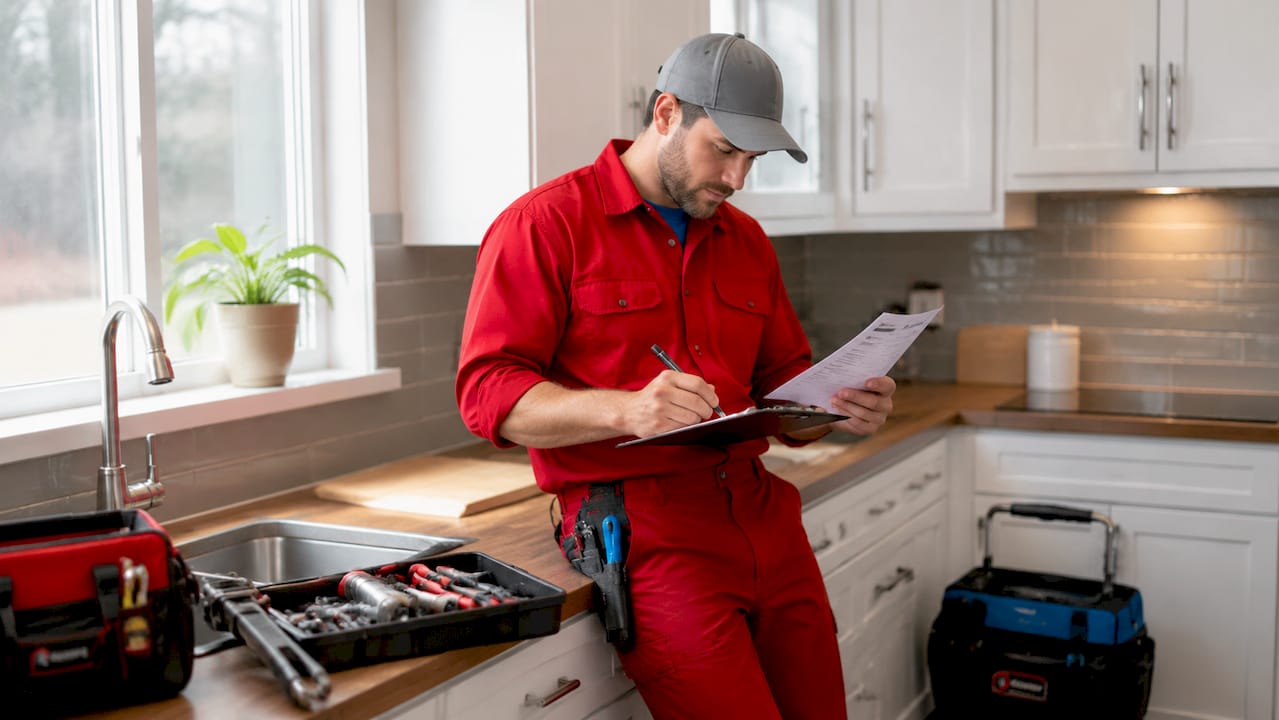
Plumbing codes protect public health by preventing contamination, sewer gas intrusion, and drainage failures. A properly vented drain stack, for example, stops sewer gas from backing up into your living space. That is not a bureaucratic requirement. It is an engineering safeguard with direct health consequences.
Understanding your local home plumbing system basics makes code requirements easier to follow. When you know how water supply, drainage, and venting work together, the rules stop feeling arbitrary and start making sense.
How are plumbing codes developed and updated?
Plumbing codes are developed by national standards organizations, then adopted by state and local governments, often with amendments. Your city or county does not write them.
The two primary model codes are:
- International Plumbing Code (IPC): Published by the International Code Council (ICC). The IPC is used in 37 states and covers residential and commercial plumbing with a focus on flexibility in venting methods.
- Uniform Plumbing Code (UPC): Published by the International Association of Plumbing and Mechanical Officials (IAPMO). The UPC is adopted in 13 states, primarily in the western United States, and is known for stricter cleanout and expansion tank requirements.
Both codes follow a three-year update cycle. A new edition is published every three years, but your jurisdiction may still be enforcing an older one.
California, for example, often adopts the UPC with state-specific amendments that differ from the base document. Texas jurisdictions largely follow the IPC. The gap between a code’s publication date and its local adoption can span several years.
Plumbing codes reference over 200 technical standards. These include NSF/ANSI 61 for drinking water components and ASSE standards for backflow prevention devices. That number reflects how many product categories and installation methods are regulated.
Pro Tip: Before starting any plumbing project, call your local building department and ask which code edition is currently adopted. Do not assume the latest published version is in effect in your area.
The role of IAPMO and ICC extends beyond writing the codes. Both organizations run training programs, publish commentary documents, and maintain certification programs for inspectors. That infrastructure is what makes consistent enforcement possible across thousands of jurisdictions.
How is compliance enforced through permits and inspections?
The permit and inspection process is the primary mechanism for enforcing plumbing code requirements. Skipping it is the most common and costly mistake homeowners make.
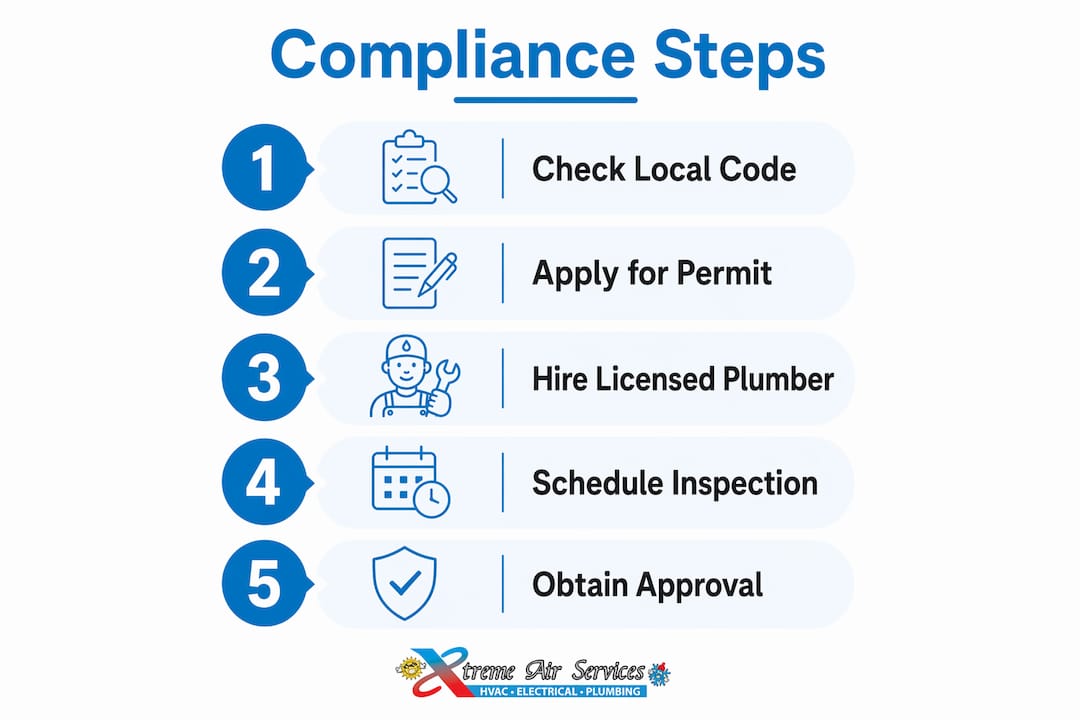
The typical process follows these stages:
- Permit application. You or your licensed plumber submit plans and a description of the work to the local building department. Residential permit fees typically run $75–$400, depending on the scope of work and the jurisdiction. Some cities allow homeowners to pull their own permits; others require a licensed contractor.
- Rough-in inspection. Before any walls are closed or pipes are concealed, an inspector visits the site. The inspector checks pipe sizing, slope, venting, and support. Rough-in tests require pressure testing for leaks, with a standard water test run at 10 psi for 15 minutes.
- Pressure and leakage testing. Water supply lines and drain systems are tested separately. Failures at this stage require repairs and a re-inspection before work can proceed.
- Final inspection. After fixtures are installed and the system is operational, a final inspection confirms everything matches the approved plans and meets code.
“Permits and inspections legally document major plumbing work. Without that documentation, you have no proof the work was done correctly — and no legal protection if something goes wrong later.”
Minor repairs are generally exempt from permit requirements. Replacing a faucet cartridge or a toilet flapper does not require a permit.
Moving fixtures, adding new drain lines, or replacing a water heater typically does. Always verify local requirements before starting work, because cities vary significantly on what triggers a permit obligation.
Product compliance is a separate layer of the enforcement process. Plumbing fixtures and components must carry certifications from accredited listing agencies.
NSF/ANSI 61 certification confirms a product is safe for contact with drinking water. ASSE certifications cover backflow preventers and pressure-reducing valves.
Inspectors check for these markings on installed products. A fixture without the correct certification marking can cause a failed inspection, even if the installation itself is perfect.
Pro Tip: Keep a folder with your permit approvals, inspection sign-off sheets, and product spec sheets for every major plumbing project. That file is worth real money when you sell your home.
IPC vs. UPC: which code applies to your property?
Which code applies depends on your state and local jurisdiction. The IPC and UPC are not interchangeable, and they differ in technical requirements that affect how your plumber designs and installs your system.
| Feature | IPC (International Plumbing Code) | UPC (Uniform Plumbing Code) |
|---|---|---|
| Primary adopting states | 37 states, including Texas and Florida | 13 states, including California and Oregon |
| Air admittance valves | Broadly permitted under specific conditions | More restrictive; limited to certain applications |
| Thermal expansion tanks | Required when backflow prevention is present | Required more broadly on closed systems |
| Cleanout placement | Fewer required locations | More cleanouts required at specific intervals |
| Trap arm lengths | Slightly more flexible | Stricter maximum distances from trap to vent |
These differences matter in practice. A plumber licensed in Texas who relocates to California cannot simply apply the same installation methods.
The UPC’s stricter cleanout requirements mean more access points must be built into the system. The IPC’s broader allowance for air admittance valves gives more flexibility in bathroom additions where running a full vent stack is difficult.
Legal compliance depends on the code version adopted at permit issuance, not the version your plumber learned in school or used on the last job.
Say your jurisdiction adopted the 2021 IPC, but the 2024 edition is now published. Your permit is still governed by the 2021 version. That distinction matters when a code change affects a specific installation method.
Pro Tip: When hiring a plumber for a remodel, ask directly which code edition your local building department currently enforces. A plumber who cannot answer that question without looking it up is a risk.
Remodeling projects carry a specific trap. When you add a bathroom to an older home, the new work must meet current code even if the existing plumbing does not.
You are not required to bring the entire house up to current code, but the new addition must comply fully. That line between existing and new work is where many inspection disputes begin.
Why does plumbing compliance matter beyond avoiding fines?
Plumbing compliance matters because non-compliance reaches far beyond a single fine. Its consequences touch your insurance coverage, your home’s resale value, and your family’s health.
The health risks are direct and serious:
- Sewer gas intrusion. Improper venting allows hydrogen sulfide and methane to enter living spaces. Both gases are toxic at elevated concentrations.
- Backflow contamination. Without proper backflow prevention, irrigation water, pool water, or chemical solutions can siphon back into your drinking water supply.
- Lead exposure. Older homes with lead solder or lead service lines require specific remediation steps under current code. Non-compliant repairs can reintroduce lead contact points.
- Water damage from improper drainage. Incorrect pipe slope or undersized drain lines cause slow drains, backups, and eventually structural water damage.
Skipping permits can void manufacturer warranties, create insurance claim denials, and block home sales. A home inspector will flag unpermitted water heater replacements or repiping as a red flag.
Buyers’ lenders often require those issues to be resolved before closing. The cost of retroactively permitting and inspecting unpermitted work is almost always higher than pulling the permit in the first place.
Insurance implications are equally serious. If a pipe bursts and your insurer discovers the installation was unpermitted, the claim can be denied.
That denial applies even if the pipe failure had nothing to do with the unpermitted work. Insurers look at the overall compliance picture, not just the specific failure point.
Codes define minimum safety floors. Exceeding code in your project specs can improve longevity and performance, adding measurable value.
Upgrading to a larger drain line than code requires, or using higher-grade pipe materials, costs a small amount more during installation and pays back over decades of reliable service. Reviewing your home plumbing maintenance checklist regularly keeps compliant systems performing at their best.
Water efficiency is another benefit of current code compliance. The IPC and UPC both reference WaterSense standards for fixture flow rates.
A compliant bathroom remodel today uses significantly less water per fixture than one installed 20 years ago. That reduces utility costs over the life of the home.
Key takeaways
Plumbing code compliance protects your health, your home’s value, and your legal standing. It requires all plumbing work to meet enforceable technical standards at the time of permit issuance.
| Point | Details |
|---|---|
| Compliance is tied to permit date | The code edition in effect when your permit is issued governs your project, not the latest published version. |
| IPC vs. UPC differences are real | Venting rules, cleanout placement, and expansion tank requirements differ between the two codes and affect your installation. |
| Permits protect your investment | Unpermitted work can void warranties, trigger insurance denials, and block home sales. |
| Product certifications matter | Fixtures must carry NSF/ANSI 61 or ASSE markings; missing certifications cause inspection failures regardless of installation quality. |
| Code is a floor, not a ceiling | Exceeding minimum code requirements in pipe sizing and materials improves system longevity and adds property value. |
What I’ve learned after years of plumbing compliance work
Most homeowners treat plumbing code as a bureaucratic hurdle. That framing leads to the most expensive mistakes I see.
The permit process is not designed to slow you down. It exists because plumbing failures are invisible until they become catastrophic.
A slow sewer gas leak does not announce itself. A backflow event does not send a warning. The inspection process is the only independent check that catches these problems before walls are closed and the system is buried.
The single most common pitfall I see is homeowners hiring the cheapest plumber and discovering later that no permit was pulled. The work looks fine. The price was right.
Then the home goes on the market, and a home inspector finds unpermitted work on the disclosure form. The sale either falls through or the seller absorbs the cost of remediation. That outcome is entirely avoidable.
My honest advice: communicate with your local building department early. Call before you hire anyone. Ask which code edition is in effect, what work requires a permit, and whether a homeowner can pull the permit directly. That 10-minute conversation saves weeks of confusion later.
Understanding plumbing codes’ engineering intent, not just the literal wording, separates a safe installation from a minimal one.
When your plumber understands why a vent is sized a certain way or why a cleanout sits in a specific location, they can defend those decisions during an inspection. They can also adapt when field conditions require a creative solution. That depth of knowledge is what you are paying for when you hire a licensed professional.
Document everything. Keep your permit, your inspection sign-offs, your product spec sheets, and your plumber’s license number in one folder. That file is your proof of compliance. It is also your protection if an insurance claim or a buyer’s attorney ever questions the work.
— Xtreme
Professional plumbing services that know your local code
Navigating permit applications, inspection stages, and product certification requirements takes real expertise. One wrong material choice or a missed cleanout location can mean a failed inspection and a costly re-inspection delay.
Programs like the EPA WaterSense initiative also reinforce why code-compliant fixtures matter for water safety and efficiency.

Xtremeairservices provides licensed plumbing services in Dallas with direct knowledge of local IPC requirements and building department procedures. Our team handles permit applications, coordinates rough-in and final inspections, and installs only certified products that meet NSF/ANSI and ASSE standards.
Property managers with multi-unit buildings can also rely on our residential plumbing expertise to keep every unit compliant and documented. When compliance is handled correctly from the start, you avoid the delays, costs, and legal exposure that come from cutting corners.
FAQ
What does plumbing code compliance mean in simple terms?
Plumbing code compliance means your plumbing system meets the technical standards legally required by your state or local authority at the time a permit is issued. It covers materials, installation methods, venting, drainage, and fixture certifications.
Do I need a permit for every plumbing repair?
Minor repairs like replacing a faucet or toilet flapper are typically exempt from permit requirements. Work that moves fixtures, adds new drain lines, or replaces a water heater generally requires a permit in most jurisdictions.
What happens if plumbing work is done without a permit?
Unpermitted plumbing work can void manufacturer warranties, result in insurance claim denials, and create legal complications when selling your home. Retroactively permitting and inspecting the work typically costs more than pulling the permit originally.
What is the difference between the IPC and UPC?
The IPC is used in 37 states and allows broader use of air admittance valves. The UPC is used in 13 states and requires more cleanouts and thermal expansion tanks. Both follow a three-year update cycle but are adopted by jurisdictions on different timelines.
How do I know which plumbing code applies to my home?
Contact your local building department and ask which code edition is currently adopted in your jurisdiction. The answer depends on your state and city, and the edition in effect at permit issuance governs your specific project.