


AC Capacitor Replacement in Sunnyvale: Get Your Cooling Back Fast
Fast capacitor testing and replacement across Sunnyvale, usually finished in a single visit.
What’s Covered on This Page
- Warning Signs Your AC Capacitor Is Failing
- Quick Checks to Rule Out Simple Fixes First
- What Drives the Cost of AC Capacitor Replacement
- Inside a Professional Capacitor Replacement Visit
- Why North Texas Heat Wears Out Capacitors Faster
- How fast can I get someone out to look at my AC in Sunnyvale?
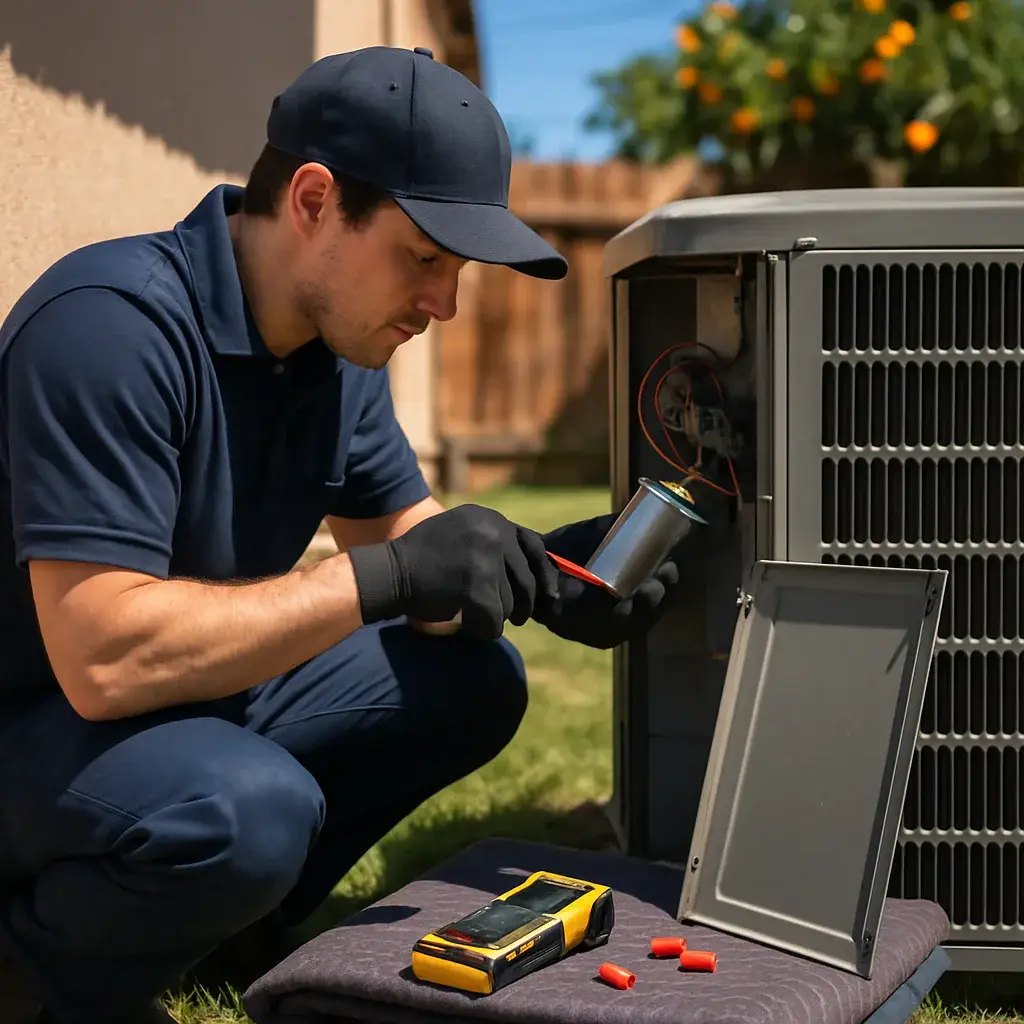
- What happens when the technician shows up for a capacitor check?
- Why do AC capacitors fail so often during Sunnyvale summers?
- Can I tell if it’s the capacitor or something else before calling?
- Is it safe to keep resetting my breaker if my AC won’t start?
- Does it matter what type of capacitor my Sunnyvale home needs?
Warning Signs Your AC Capacitor Is Failing
Here’s what we hear most on the phone. Your outdoor unit hums but the fan just sits there, not spinning at all, or it spins slow, like it’s fighting to get going. That’s a classic capacitor symptom. The capacitor’s job is to give the motor a jolt of energy to start up, and when it’s weak or dead, the motor can’t kick on. It is easily the most common part we replace on Sunnyvale service calls.
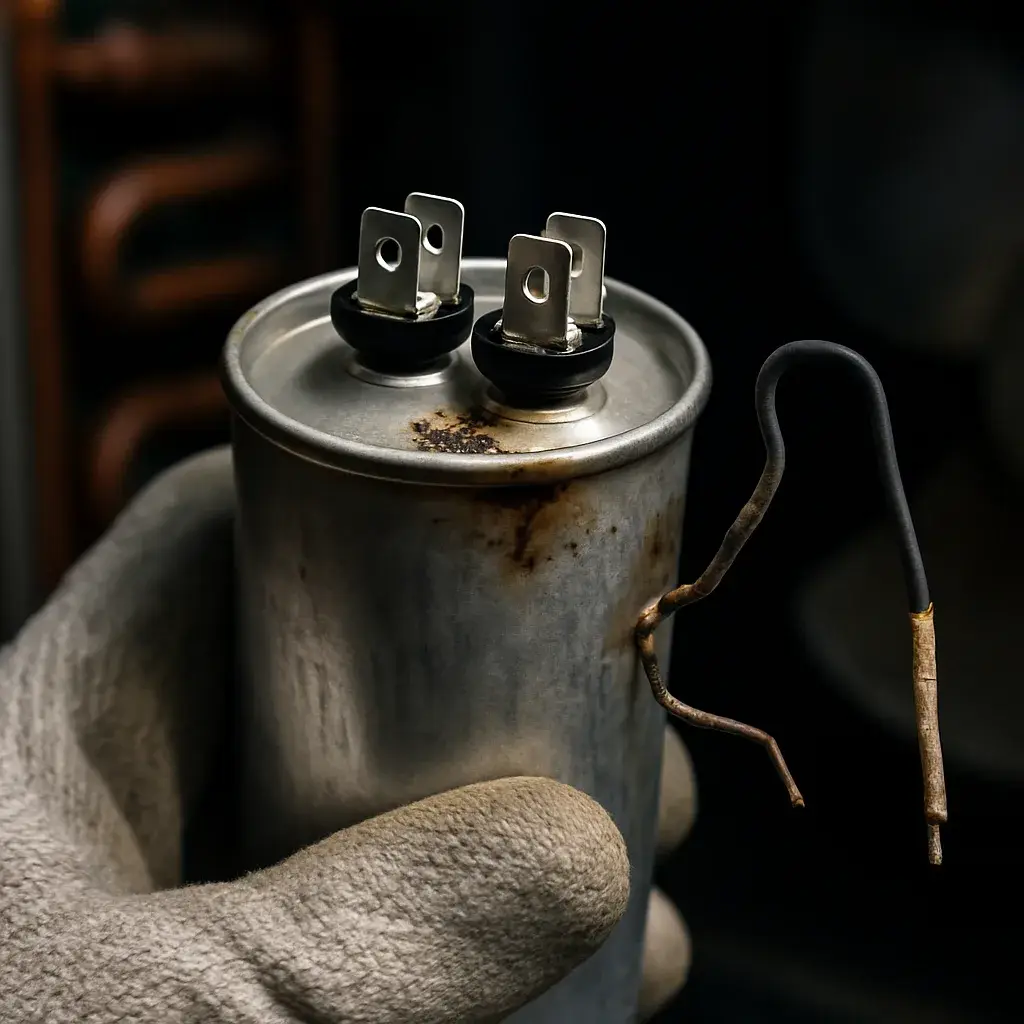
Clicking is another one. A repeated click-click-click from the outdoor unit, followed by silence, usually means the system is trying to start and failing. Some homeowners notice the breaker trips every time the AC tries to cycle on. In Sunnyvale’s triple-digit August afternoons, that strain shows up fast. Capacitors work overtime just keeping up with the heat load, and a weak one won’t survive a heat wave.
- Outdoor fan not spinning, or spinning slower than normal
- A humming noise from the condenser with no airflow
- Repeated clicking when the system tries to start
- Breaker trips when the AC kicks on
- Warm air blowing even though the thermostat calls for cooling
Sometimes the capacitor itself looks off, swollen on top or leaking a little oil. You won’t always see that without pulling the access panel, and we don’t recommend doing that yourself. Any one of these signs points straight to the capacitor, not something bigger.
Quick Checks to Rule Out Simple Fixes First
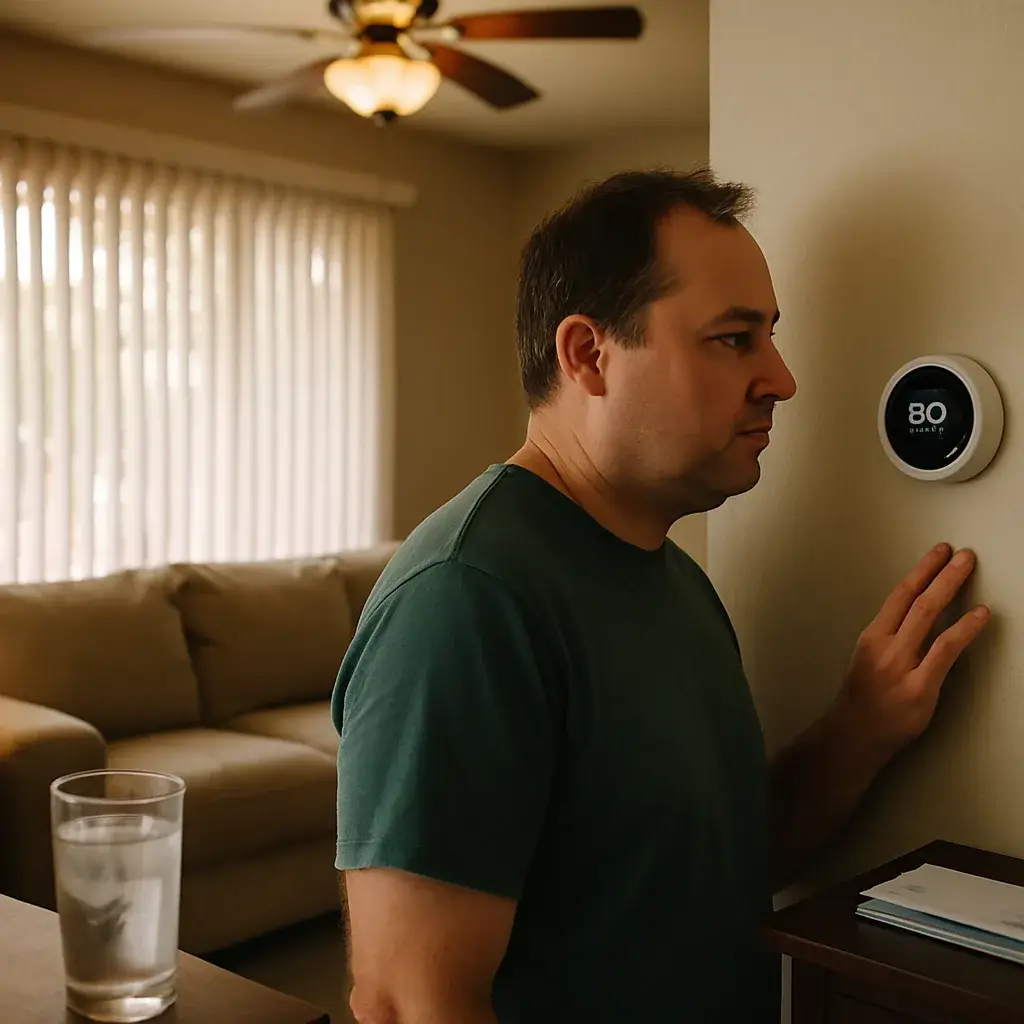
Before scheduling a technician visit or assuming your AC capacitor has failed, spend five minutes ruling out the simpler culprits. Sunnyvale summers push HVAC systems hard, and sometimes what looks like a dead compressor or a failed start is really a thermostat setting, a tripped breaker, or a filter so clogged it choked airflow. These checks cost nothing and can save you a service call if the fix turns out to be trivial.
- Confirm the thermostat is set to Cool, not Fan or Off, and that the set temperature is a few degrees below current room temperature.
- Check that the thermostat display is lit and has power; dead batteries or a blank screen point to an electrical issue unrelated to the capacitor.
- Locate your electrical panel and look for a tripped breaker labeled AC, condenser, or HVAC. Reset it once by flipping fully off, then on.
- Pull the air filter and hold it up to a light. If you cannot see light through it, replace it. A severely clogged filter can cause the system to shut down on safety limits, mimicking capacitor symptoms.
- Check any disconnect switch near the outdoor condenser unit to confirm it has not been accidentally bumped to the off position.
- Listen for a faint humming sound from the outdoor unit when the thermostat calls for cooling. Humming without the fan spinning often does point to a capacitor problem, while total silence suggests something else.
If the breaker trips again immediately after resetting, stop. Do not keep flipping it. A breaker that will not hold usually signals a short, a failing compressor, or a wiring issue, and repeated resets can create a fire risk. If the unit stays completely silent even after confirming thermostat settings and power, the issue may be a bad contactor, a wiring failure, or a dead capacitor with no residual charge to even attempt a hum. Either scenario calls for a proper diagnostic visit rather than guessing. Sunnyvale’s long cooling season is hard on capacitors, which is why we carry them on every truck.
What Drives the Cost of AC Capacitor Replacement
Most Sunnyvale HVAC companies price capacitor replacement one of two ways: a flat diagnostic-plus-repair fee that bundles the service call and the fix into one number, or a diagnostic-fee-plus-parts-and-labor model where the technician quotes the repair separately once the bad capacitor is confirmed. Swapping a capacitor is one of the fastest, lowest-complexity repairs in residential HVAC work. Most licensed technicians can complete it in under an hour, and pricing reflects that simplicity compared to compressor or coil repairs.
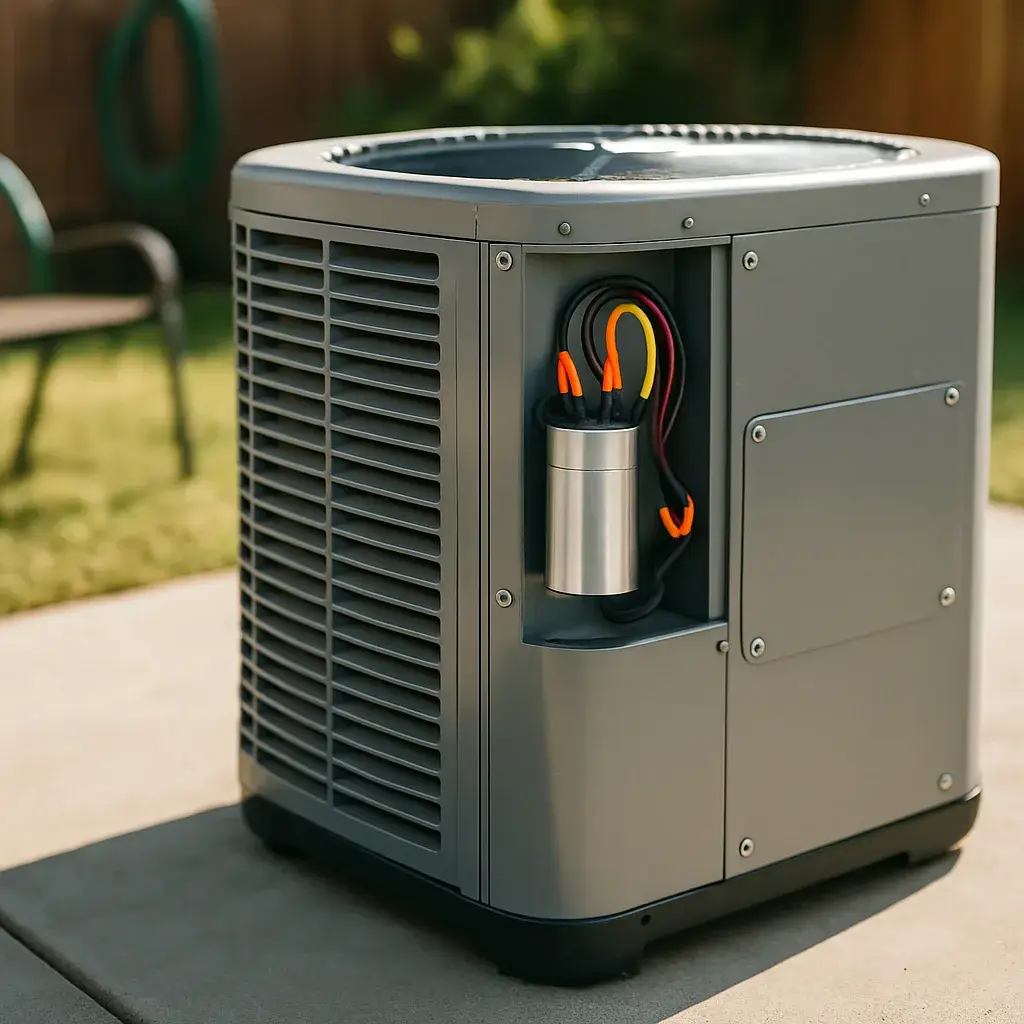
Several factors still shift the final price up or down. The type of capacitor matters, since dual-run capacitors that serve both the compressor and fan motor typically cost more than single-run units. Getting the correct microfarad rating and voltage match matters too; installing the wrong specification can shorten the life of the compressor or fan motor, so technicians price in the correct OEM-grade or high-quality aftermarket part rather than a generic substitute. Physical accessibility also plays a role. A capacitor tucked inside a tightly packed condenser cabinet or an attic air handler takes longer to reach safely than one in an open side-panel unit. If the technician discovers other worn components while testing the system, such as a failing contactor, frayed wiring, or a motor showing early signs of strain, that additional finding can add to the scope and cost of the visit.
- Capacitor type: single-run versus dual-run units
- Correct microfarad and voltage match for the specific system
- Part accessibility within the condenser or air handler
- Discovery of other worn or failing components during diagnosis
Based on typical service data from Sunnyvale providers, a straightforward capacitor replacement runs between 150 and 250 dollars total, including the part and labor. The initial service-call fee generally falls between 26 and 99 dollars, and most companies credit that fee toward the repair cost if the homeowner approves the work on the spot, so the diagnostic visit does not become a sunk cost. Nights, weekends, and same-day appointments typically carry no additional surcharge for this type of repair, which is good news for anyone dealing with a system that quits during a heat spell. Because the total cost is relatively low, financing plans are not commonly offered or needed for a capacitor swap the way they might be for a full system replacement.
Need help with AC capacitor replacement?
Call Today, Get Service Today. Xtreme Air Services is ready to help.
Inside a Professional Capacitor Replacement Visit
Here’s what happens once we knock on your door. We’re not guessing. We already know what we’re looking for before we even open the electrical panel on your outdoor unit.
- We check the outdoor unit first, since that’s where most capacitors live and fail.
- We test the capacitor with a meter to confirm it’s weak or dead, not just guess.
- We match the replacement part to your system’s brand and specs, no shortcuts.
- We swap the part, seal the panel back up, and power the system on.
- We run the AC through a full cycle and check the amps to make sure it’s pulling power correctly.
- We walk you through what we found before we leave, plain English, no jargon.
That whole visit, start to finish, usually takes less time than you’d think. This is a common, fast repair, and that’s good news for your wallet. That heat load is exactly why Sunnyvale systems wear these parts out faster than the rating suggests.
The most common capacitor job runs $150 to $250, and the full range for this kind of visit is $150 to $400 depending on the part and what else we find. That price covers diagnosis, labor, the standard replacement part, testing, and cleanup. It does not cover additional failed parts, major components, or code upgrades, those get quoted separately if we find them. Our service-call fee runs $26 to $99, and it’s credited toward the repair if you move forward with us that same visit.
Our technicians are licensed and insured, so you’re not letting a stranger poke around your equipment. You’re letting someone qualified fix it right the first time. We stock them specifically because of how often Sunnyvale homes need one in July.
Why North Texas Heat Wears Out Capacitors Faster
North Texas summers are not just hot, they are relentlessly hot for months at a stretch. National Weather Service climate records from the DFW International Airport station show that during peak summer, daytime temperatures are consistently in the 90s, often reaching or exceeding 100 degrees. That kind of sustained heat does not give an air conditioning system any real downtime. Compressors and condenser fans end up running longer cycles, more frequently, day after day, and every extra run hour puts additional electrical stress on the AC capacitor that gets the compressor and fan motors started and keeps them running.
A capacitor is a small energy reservoir built from layers of foil and film. Heat is the number one enemy of that internal material. As ambient temperatures climb into the upper 90s and 100s, the air inside a condenser cabinet sitting in direct sun can run even hotter, and that thermal load accelerates the slow breakdown of the capacitor’s internal dielectric. Add in the extra electrical cycling from longer run times, and a capacitor that might have lasted several more years in a milder climate instead weakens and fails years ahead of schedule.
This is why service calls for AC capacitor replacement in Sunnyvale and across the greater DFW area cluster heavily from June through September. Systems that limped through spring on a marginal capacitor often reach a tipping point the first time a real heat wave hits, leaving homeowners with a compressor that hums but will not start, or a fan that stalls out on the hottest afternoon of the week.
- Longer daily compressor run times during peak summer add cumulative electrical stress
- High ambient and cabinet temperatures accelerate breakdown of capacitor materials
- Older or marginal capacitors often fail suddenly during the first major heat wave
- Failure calls spike sharply between June and September across the DFW region
- A pre-summer capacitor check can catch weak capacitance before peak heat arrives
Because the failure pattern is so predictable, the smartest move is scheduling a capacitor check before the heat ramps up rather than waiting for a breakdown. A technician can measure actual capacitance against the rated value and spot a component that is drifting toward failure while it is still an easy, inexpensive fix rather than an emergency same-day repair.
Frequently Asked Questions
Common questions about AC capacitor replacement
How fast can I get someone out to look at my AC in Sunnyvale?
Most capacitor issues can be diagnosed and fixed in a single visit, often the same day you call. Since a dead capacitor means your AC can’t start at all, we treat these calls as priority, especially during Sunnyvale’s triple-digit August afternoons when a broken system can’t wait. When you call, tell us if the outdoor fan is humming or silent. That detail helps us bring the right parts on the first trip instead of needing a return visit.
What happens when the technician shows up for a capacitor check?
The technician tests the capacitor’s charge with a meter before touching anything else, since guessing can damage your system. They’ll also check the contactor, wiring, and breaker, because a silent unit or a breaker that won’t hold can point to problems beyond the capacitor. If the capacitor is confirmed bad, replacement usually takes under an hour. You’ll get a clear explanation of what failed and why before any part gets swapped.
Why do AC capacitors fail so often during Sunnyvale summers?
Sunnyvale’s triple-digit August heat forces your capacitor to work overtime every time the compressor and fan motor need to start. That constant strain wears down a weak capacitor faster than milder weather would. If your system has run for several summers without a capacitor swap, a heat wave is often when it finally gives out. Homes with older condenser units or attic air handlers tend to see this fail sooner, since heat builds up around the equipment too.
Can I tell if it’s the capacitor or something else before calling?
Yes, a few quick checks can narrow it down. If the outdoor fan hums but won’t spin, or spins slowly, that points to a capacitor problem. If the unit stays completely silent even after you reset the breaker once, the issue may be a bad contactor or wiring instead. Check your thermostat setting and air filter first too, since a clogged filter can mimic capacitor symptoms by tripping the system’s safety limits.
Is it safe to keep resetting my breaker if my AC won’t start?
No, you should only reset it once. If the breaker trips again right away, stop flipping it and call a technician. A breaker that won’t hold usually means a short, a failing compressor, or a wiring issue, not a simple capacitor fix. Repeated resets on a real electrical fault can create a fire risk. A licensed technician needs to find the actual cause before any part gets replaced.
Does it matter what type of capacitor my Sunnyvale home needs?
Yes, getting the right type matters more than most homeowners expect. Dual-run capacitors serve both the compressor and fan motor, while single-run units only handle one. Installing the wrong microfarad rating or voltage match can shorten the life of your compressor or fan motor down the road. That’s why technicians match the replacement part to your system’s exact specs instead of using a generic substitute.
Ready to Get Started?
Call 972-288-2263 Today, Get Service Today.