


What Problems Come Up Most Often With AC Replacement?
Equipment sizing, ductwork condition, electrical panel capacity, the permits and inspections that come with the job, and the refrigerant change now affecting new equipment.
What’s Covered on This Page
- Equipment Sizing Is the First Thing That Can Go Wrong
- Ductwork Condition Can Change What a Replacement Involves
- Electrical Panel Capacity Is Part of the Picture
- Permits and Inspections Are a Normal Part of the Job
- Refrigerant Type Is Changing for New Equipment
- Related Links
- Is a bigger AC unit always better for cooling my home?
- Will I need a new electrical panel to replace my AC unit?
- What’s the biggest mistake homeowners make when planning an AC replacement?
- Do you check my ductwork even if I’m only asking about a new outdoor unit?
- Are your technicians qualified to handle electrical and ductwork issues, not just the AC unit itself?
Equipment Sizing Is the First Thing That Can Go Wrong
The most common sizing mistake we see across North Texas homes is guessing based on square footage alone. Or just matching the old unit’s tonnage. A 1980s slab home in Mesquite with old windows and thin attic insulation doesn’t cool the same as a newer home in Forney. Even if they have the same square footage. Ductwork condition, insulation levels, window count, and how much of the system runs through a hot attic all change the real cooling load.
When a unit is too big, it cools the air fast. But it shuts off before it pulls humidity out of the house. That leaves rooms feeling cold and clammy at the same time. This extra cycling adds wear on the compressor and electrical components over the life of the unit. When a unit is too small, it runs nearly nonstop on 100-degree days and still can’t keep up.
We handle this with a cooling load calculation before we write up equipment options. That step looks at your home’s square footage, insulation, duct layout, window exposure, and sun direction. It produces the tonnage and capacity your house needs. (And it flags cases where existing ductwork is undersized for a properly sized unit.) A right-sized system paired with ductwork that can’t move enough air still leaves rooms uneven.
This is also where SEER2 rating and equipment brand come into the decision. A higher-efficiency unit changes the airflow and static requirements. We walk through those options with you in plain terms. If you want to see how sizing and equipment choice affect what a replacement runs, our AC replacement pricing guide breaks down what drives the range.
We won’t quote equipment off a phone call or a square-footage guess. If a homeowner wants us to swap in the same tonnage as the failing unit without a load calculation, we’ll walk through why that’s a real gamble for comfort and the electric bill.
Ductwork Condition Can Change What a Replacement Involves
Your ductwork’s shape and condition change what an AC replacement involves. It’s one of the first things we look at before writing a quote. A new outdoor unit and coil can be a straight swap in one house. And a bigger project two streets over. It all depends on what’s already running through the attic.
People usually notice this when a room that always ran a little warm still runs warm after the new system goes in. Or when we mention duct sizing during the visit, and they weren’t expecting it. Ductwork was built to match the tonnage and airflow of the system it was originally paired with, sometimes decades ago.
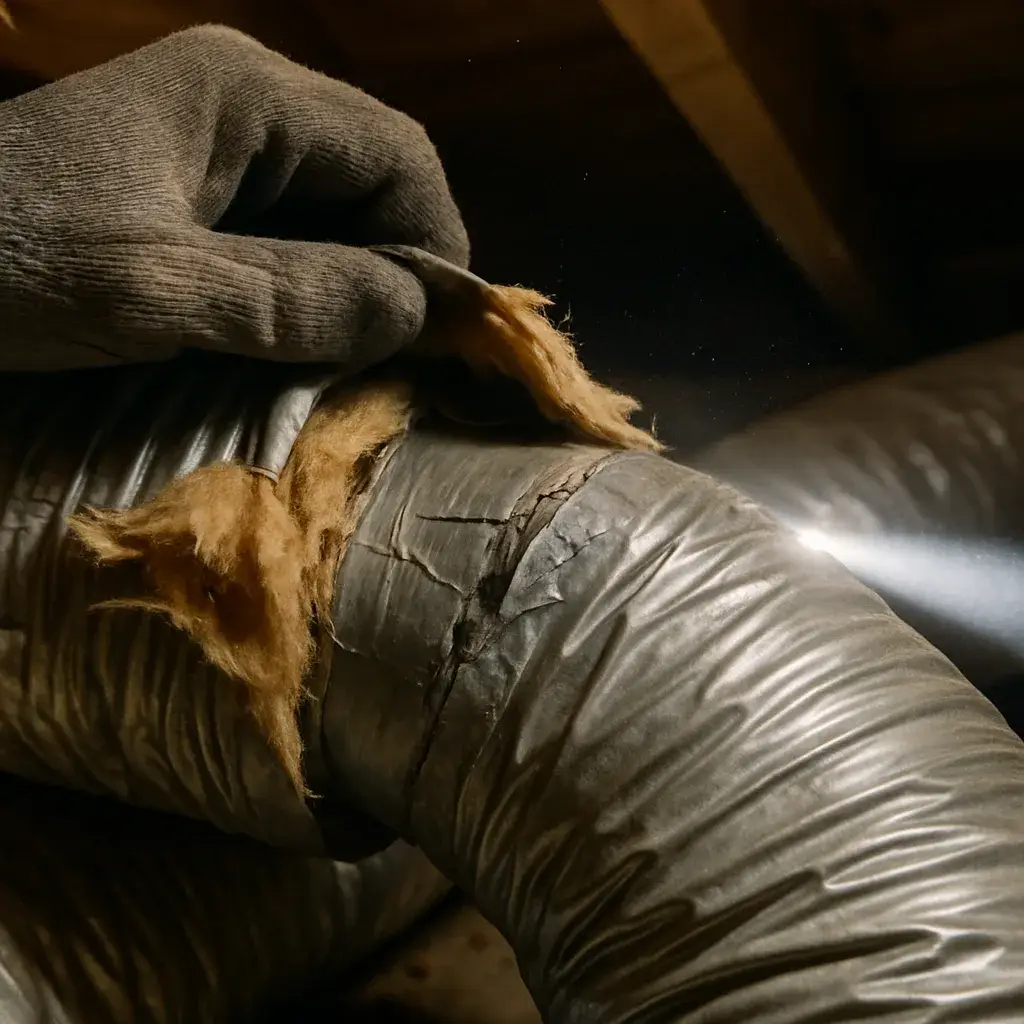
Many homes across Sunnyvale and the surrounding DFW area were built in the last couple decades. They have metal or flex duct runs sitting in attics. These attics swing from freezing in a winter cold front to well over a hundred degrees in July. That heat cycling breaks down duct insulation and seals over time, even if nothing feels obviously wrong. Newer subdivisions have their own issue. Builder-grade duct systems are often sized to a budget, not how the home is used. This leaves one wing of the house short on airflow, no matter what condenser sits outside.
When we size a replacement, we run a cooling load calculation. We do this for the house rather than just matching the old equipment’s tonnage. If that calculation or a look at the attic run shows undersized, leaky, or damaged ductwork, we’ll say so before any work starts. A standard installation covers the equipment, standard connections, startup, and testing. It doesn’t automatically include duct modifications, electrical changes, or code corrections. These depend on what’s already in the house.
Repair-or-replace decisions on the ductwork itself come up separately from the equipment decision. Sometimes sealing a few joints solves the airflow complaint. Other times a section of duct genuinely needs to be replaced alongside the new system. This gets you the performance you’re paying for. We’ll walk you through both options in writing as part of the flat-rate quote. You’ll approve everything with the full picture, not guessing at what’s behind the drywall.
If you want to see how these factors show up in real numbers, our AC replacement page breaks down what typically drives the total cost up or down.
Electrical Panel Capacity Is Part of the Picture
A new AC system needs a certain amount of electrical capacity to run safely. Older panels don’t always have room to spare. This comes up more than you’d think once a technician opens the panel door.
Homes built in the 1960s through the 1980s across Dallas County and Kaufman County often have panels sized for a smaller AC unit. Or fewer major appliances than the home runs today. Add a bigger condenser, a heat pump, or a variable-speed system, and the panel can be running close to its rated limit.
What you’ll notice, if this applies to your home, isn’t usually a dramatic problem. It’s more often a breaker that’s sized too small for the new equipment. Double-tapped circuits from past additions are also common. Or a panel that’s simply full with no open slots for a dedicated circuit. This means the new AC system needs a clean, correctly sized circuit to run on. The existing panel may or may not have one available.
- A dedicated circuit for the new condenser, sized to the equipment’s actual electrical draw
- Enough open breaker space in the panel, or room to add a subpanel if not
- Wiring that meets current code for the amperage and distance to the outdoor unit
- A disconnect box at the condenser that matches the new system’s rating
During a cooling load calculation and site visit, our technician checks the panel. They also check the ductwork and equipment placement. All three affect how the installation goes. If the panel needs a dedicated circuit added, that’s electrical wiring installation work done to code. Permits are pulled when the jurisdiction requires it. Dallas County and Kaufman County can differ slightly on inspection timing. We handle that coordination as part of the install.
If a panel is genuinely maxed out, a full electrical panel replacement or upgrade is sometimes a better answer. It’s better than trying to squeeze one more circuit onto an already crowded board. We won’t recommend that unless the panel needs it. You can see how this fits into the bigger install on our AC replacement page. We walk through equipment sizing and the full process step by step.
Most panels handle a new system fine. But it’s worth knowing that the panel is part of what gets checked, not an afterthought discovered halfway through installation day.
Thinking about AC replacement? Let’s talk.
Call Today, Get Service Today. Xtreme Air Services is ready to help.
Permits and Inspections Are a Normal Part of the Job
A full AC replacement in Sunnyvale or anywhere else in the DFW area can trigger a permit. This depends on what the job involves and which side of the county line the property sits on. Sunnyvale sits in Dallas County, right at the Kaufman County line, and we work both sides of it. Permit authority can differ depending on which side your home falls on. We handle that step as part of the job when it’s required, not as an add-on we spring on you after the fact.
A like-for-like swap, same location and connections and electrical setup, often moves through with less paperwork. This differs from a job that changes the equipment’s size, moves refrigerant lines, or touches the electrical circuit feeding the unit. Bigger changes tend to draw more scrutiny. The local code office wants to confirm the new setup is safe and sized right.
We won’t skip a required permit to save you a step or shave a few days off the timeline. If a job needs one, we pull it. And we schedule the inspection that goes with it. That’s part of doing the work to code with a licensed technician. It’s one of the things we won’t bend on, regardless of what a customer prefers.
This shows up early in how we scope a job. Our process starts with a same-day diagnostic visit. A technician looks at the actual install site, not just the equipment. Access, existing ductwork, and the electrical setup all factor into whether the job needs a permit. You get that answer in plain language before any work starts. It’s part of the written, flat-rate quote we put together for the AC replacement itself.
If someone wants a job done specifically to avoid a required permit, or to skip an inspection the code calls for, we’ll pass on it. A job that skips a required step isn’t one we can stand behind. Our workmanship guarantee is meant to work a certain way.
Most permit and inspection steps run alongside the installation timeline. We walk you through what applies to your job before you approve anything.
Refrigerant Type Is Changing for New Equipment
New central air conditioners sold today use a different refrigerant than most systems installed even five years ago. R-410A, the refrigerant that’s been standard for two decades, is being phased down under EPA rules tied to the American Innovation and Manufacturing Act. New equipment now ships with lower global-warming refrigerants, most commonly R-454B.
This isn’t an Xtreme Air Services policy. It’s a federal manufacturing requirement. So it applies no matter who installs your new system. If your current AC still runs on R-410A, it can still be serviced. But new equipment coming off the line doesn’t use it anymore.
People ask us if the new refrigerant is safe. R-454B is classified as mildly flammable. Manufacturers build systems around that with specific components, sensors, and installation practices. It’s not the same handling process as the old refrigerant. This is one reason a licensed, trained technician matters more during a switch.
R-410A and R-454B systems don’t mix. You can’t add new refrigerant to an old system. And you can’t pair an old condenser with new indoor equipment expecting them to work together. If a full AC replacement is on the table, the whole system, outdoor unit and indoor coil, gets matched and sized as a set.
- R-410A is being phased down under federal rules, not discontinued for repair overnight
- New AC equipment now uses R-454B or similar low-impact refrigerants
- The two refrigerant types are not interchangeable in the same system
- New refrigerants require specific handling and installation practices
- A full replacement means matching indoor and outdoor components as one set
We install equipment we can source, verify, and stand behind. This is part of how our workmanship guarantee works. It’s also why we don’t do labor-only installs on customer-supplied units. We can’t back parts we didn’t select or verify. If you’re weighing your options, our AC replacement page walks through how we size and match a full system. Financing is available on qualifying installations if the timing of a full-system swap is a question for you.
Frequently Asked Questions
Common questions about AC replacement
Is a bigger AC unit always better for cooling my home?
No, a unit that’s too big cools the air fast but shuts off before it pulls humidity out of the house. That leaves rooms feeling cold and clammy at the same time. We size every replacement to your home’s actual cooling load, not just square footage or the old unit’s tonnage. This also cuts down on the extra wear that short cycling puts on the compressor over the life of the system.
Will I need a new electrical panel to replace my AC unit?
Not always. It depends on your panel’s age and how much capacity it has left. Homes built between the 1960s and 1980s across Dallas County and Kaufman County often have panels sized for smaller equipment. Our technician checks the panel during the site visit to confirm there’s a clean, correctly sized circuit for the new system. If the panel doesn’t have room, we’ll tell you before any work starts.
What’s the biggest mistake homeowners make when planning an AC replacement?
The most common mistake is asking us to match the new unit’s size to the old one without a cooling load calculation. That old tonnage number may never have matched the house correctly, especially in older slab homes with thin attic insulation. We won’t quote equipment off a square-footage guess or a phone call. Skipping this step is a real gamble for comfort and the electric bill, so we run the calculation on every job.
Do you check my ductwork even if I’m only asking about a new outdoor unit?
Yes, ductwork condition is part of every site visit before we write a quote. We look at duct sizing, insulation, and seals in the attic, since heat cycling in North Texas attics wears these down over years. If we find undersized or damaged duct sections, we’ll walk you through the options in writing as part of the quote. You approve everything with the full picture before any work begins.
Are your technicians qualified to handle electrical and ductwork issues, not just the AC unit itself?
Yes, our technicians are NATE-certified and work under our HVAC license, TACLA29023C, and our electrical license, TECL34249. Every technician is background-checked and drug-tested before they’re sent to a home. This matters because an AC replacement often touches panel capacity and duct sizing, not just the outdoor unit. We check both during the site visit so nothing gets missed once equipment is picked.
Ready to Get Started?
Call 972-288-2263 Today, Get Service Today.