


Air Quality Testing in Sunnyvale: Know What’s Really in Your Home’s Air
Particulate, humidity, and VOC readings taken room by room, with a written result that tells you whether the problem is filtration, ventilation, or moisture.
What’s Covered on This Page
- Musty Smells, Allergies, and Other Signs Your Home Needs Air Testing
- How Indoor Air Quality Testing Is Priced and What Drives Cost
- When You Don’t Need a Full Air Quality Test
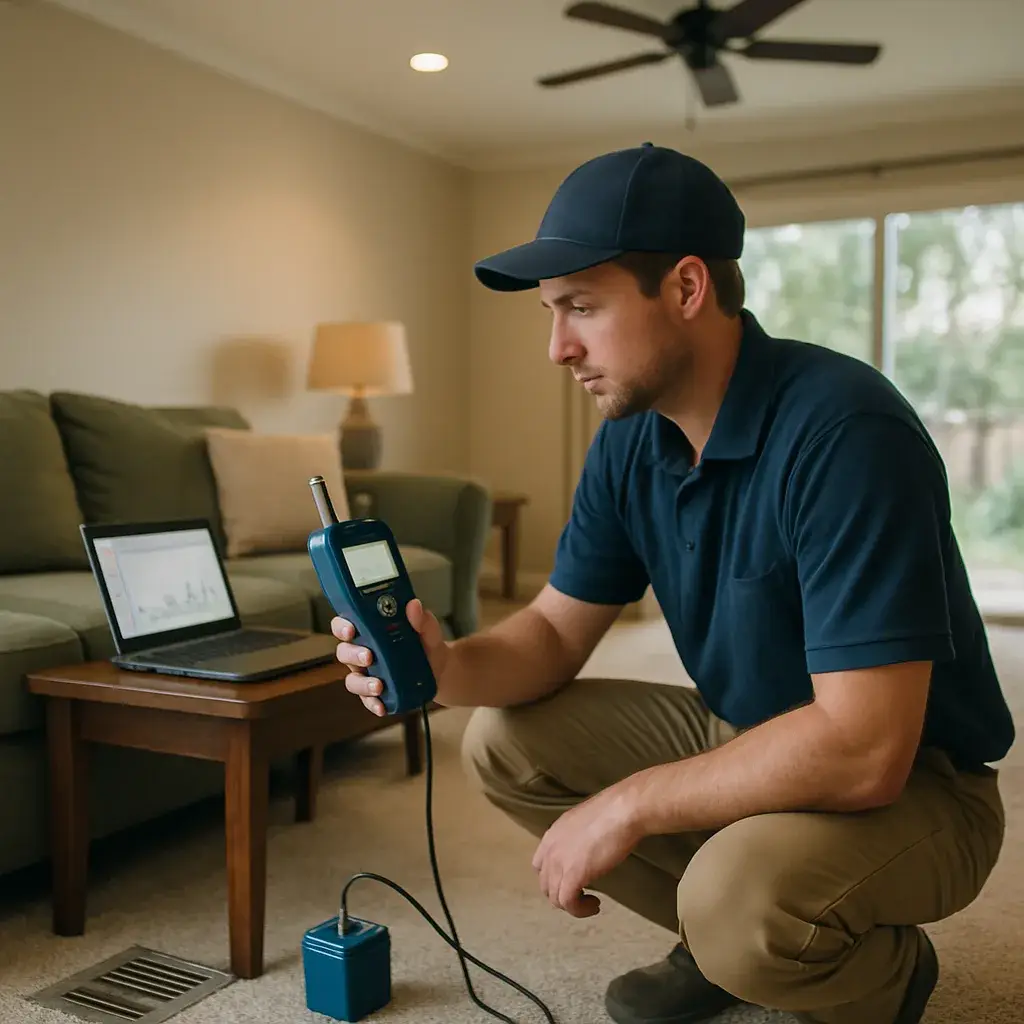
- What Happens During an Air Quality Test at Your Sunnyvale Home
- Turning Your Test Results Into a Fix
- How fast can you get out to test my Sunnyvale home?
- What happens when your technician shows up for a test?
- Why do older Sunnyvale homes seem more prone to musty attic smells?
- How do I know if it’s a real air quality problem or just seasonal allergies?
- What happens after the test? Do I get a written report?
Musty Smells, Allergies, and Other Signs Your Home Needs Air Testing
So how do you know it’s time to test instead of just cracking a window? Your nose usually knows first. A musty smell that won’t go away, especially after our North Texas humidity spikes, often means moisture is sitting somewhere it shouldn’t.
We see this a lot in older Sunnyvale homes with attic-mounted HVAC systems, the temperature swings up there can lead to condensation around ductwork, and that moisture feeds mold you can’t see from the living room.
But smell isn’t the only clue. Your body sends signals too. Waking up congested, kids with worse allergies indoors than outdoors, headaches that ease up the second you leave the house, these are worth paying attention to.
- A musty or stale odor that lingers even after cleaning
- Family members with unexplained coughing, sneezing, or watery eyes at home
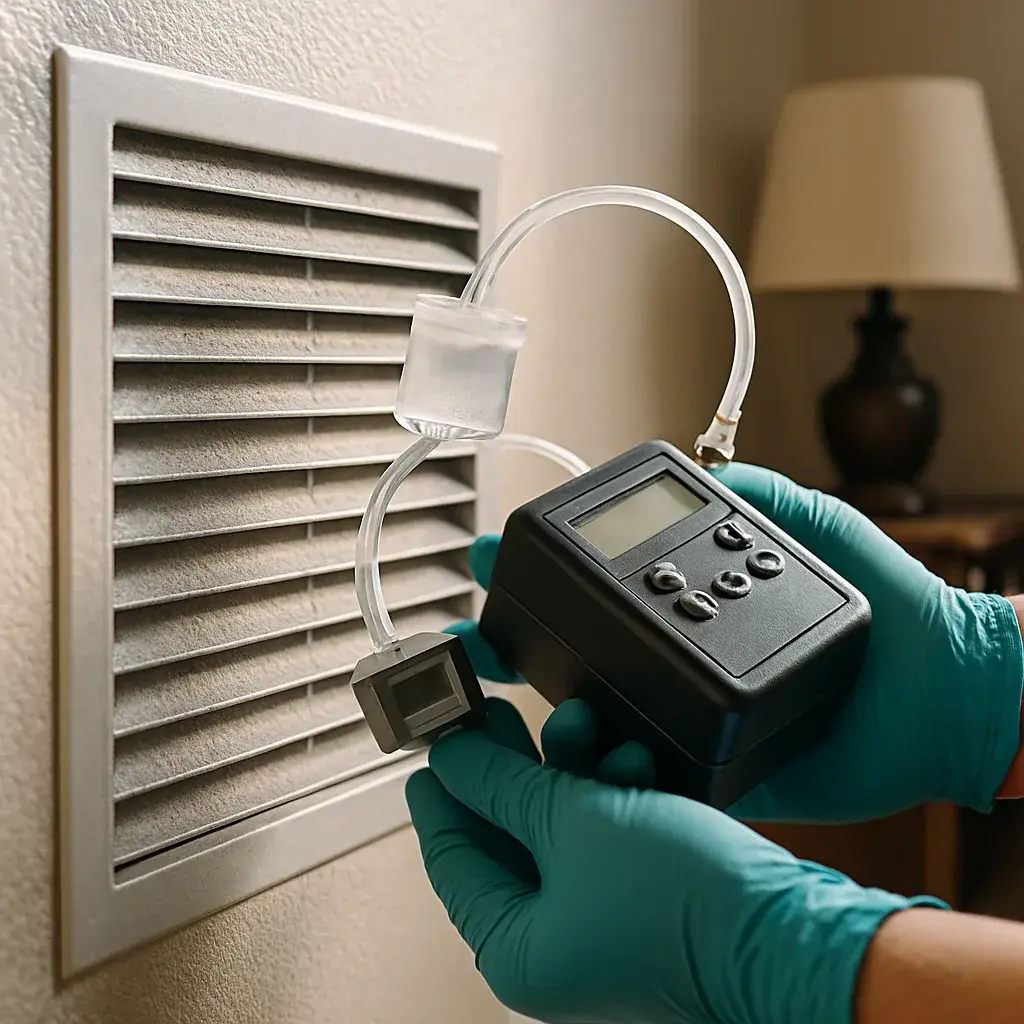
- Visible dust buildup around vents or a layer that returns fast after dusting
- Humidity that feels sticky no matter what the thermostat says
- Recent water damage, a roof leak, or a slow plumbing leak nearby
Not sure if what you’re noticing counts as a real problem or just a normal Texas summer? That’s a common question, and it’s exactly what testing answers.
How Indoor Air Quality Testing Is Priced and What Drives Cost
Here’s the honest breakdown. Air quality testing in Sunnyvale typically runs $200 to $600, and most jobs, the standard indoor air check for a single home, land between $200 and $375. That’s not a teaser number, it’s the real range folks pay for a full on-site test and a written summary of what we find.
So why the spread? A few things move the price.
- Property size. A small ranch home takes less time to test than a big two-story with multiple air handlers.
- Number of samples or test points. Testing one room is different from checking the whole house.
- Whether lab analysis is needed. Some findings, mold spores especially, need outside lab work and that’s billed separate from the on-site visit.
- Equipment required. Certain particulate or VOC readings call for specialized meters, and that adds time on site.
We charge a service call fee of $26 to $99 to come out. If you move forward with Xtreme Air Services on any follow-up work, that fee gets credited toward it. You’re not paying twice.
One thing we won’t do is quote you a number before we’ve walked the house. Attic ductwork, older insulation, a recent flood, these change what needs testing. And we’d rather tell you straight what’s involved than guess low and surprise you later.
Financing isn’t typically part of a testing visit, it’s a smaller job. If testing turns up something that needs bigger corrective work, financing options open up at that point.
When You Don’t Need a Full Air Quality Test
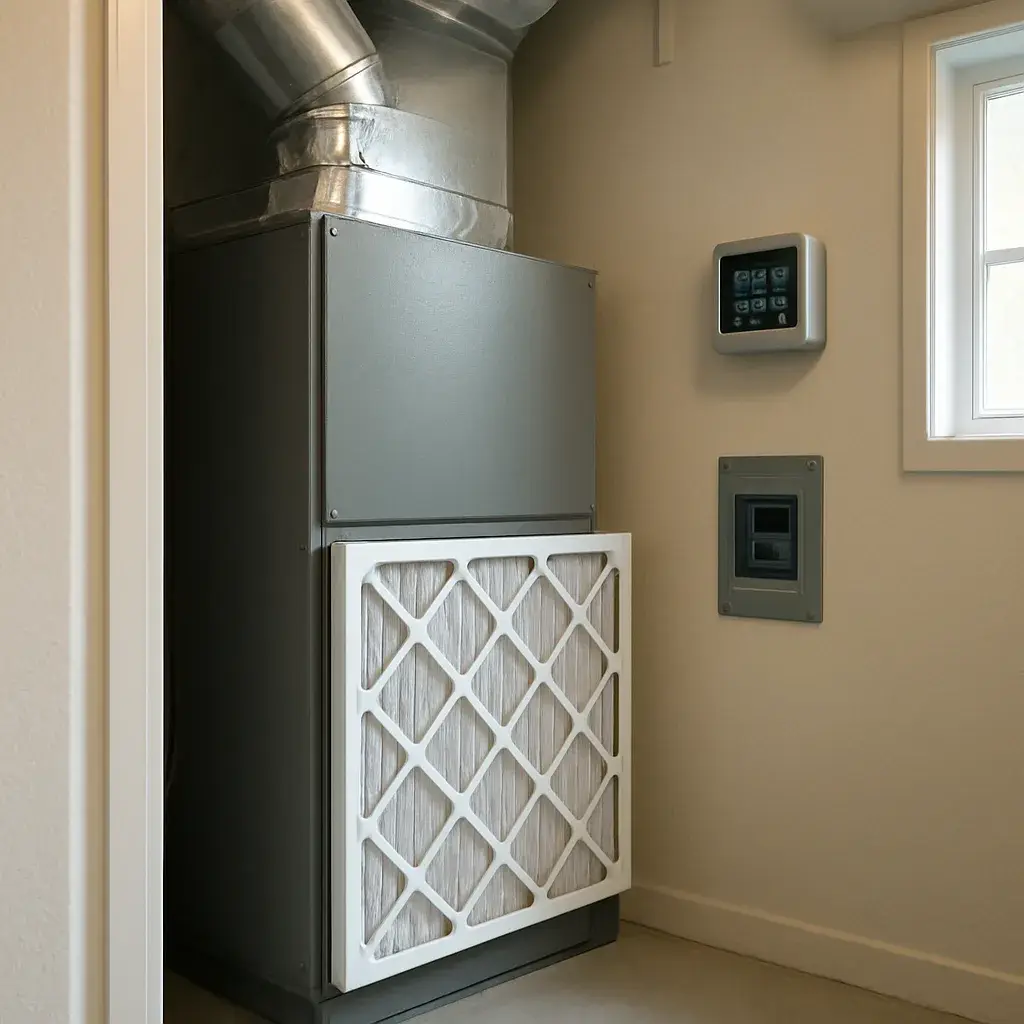
Not every dusty room needs a professional look. If you just changed your filter and the house still smells a little stale, give it a few days. Filters need time to catch up, especially in older Sunnyvale homes with attic-mounted systems where dust cycles through slower than you’d think.
Seasonal allergies acting up in spring? That’s usually pollen coming in through doors and windows, not a hidden air quality problem inside your ducts. We get calls every spring from folks worried something’s wrong, and it’s just oak pollen doing what oak pollen does.
- You can see dust on vent covers but there’s no musty smell or visible mold
- One room feels stuffy but the rest of the house is fine
- You just had duct cleaning done and want to confirm it worked (ask about a quick recheck instead)
- Your only symptom is dry skin or static, which usually points to low humidity, not contamination
- You haven’t changed your filter in over three months, that’s the first fix, not a test
So how do you know the difference? Look for patterns that don’t go away. A smell that lingers after cleaning, symptoms that show up only at home, or visible mold near a vent, those are worth a real look. A little dust after a windy day off U.S. 80 isn’t.
Fixing the small stuff yourself first is smart, and honestly, we’d rather you save the money.
Thinking about Air quality testing? Let’s talk.
Call Today, Get Service Today. Xtreme Air Services is ready to help.
What Happens During an Air Quality Test at Your Sunnyvale Home
Here’s what we don’t do: show up, sniff around for five minutes, and hand you a guess. A real air quality test takes a little time because we’re checking several things, not just one.
Most homes in Sunnyvale run the HVAC system through the attic, and that attic space swings hard between summer and winter. That temperature swing matters, because it affects humidity levels inside the ductwork and can push moisture into places it shouldn’t be. So we don’t just test one room and call it done.
- We walk the home first and ask what’s been going on, allergies acting up, musty smell, dust that won’t quit.
- We set up equipment in the main living areas and near the return vents, since that’s where the whole house is pulling air from.
- We measure particulates, humidity, and VOC levels, and check for signs pointing to mold.
- If your ductwork runs through the attic, we look at that too, since attic heat and moisture can affect what’s circulating through your vents.
- We put it all in a written summary, plain numbers, plain findings, no guessing games.
- We go over it with you before we leave, so you understand what it means, not just what it says.
That’s it. No pitch tacked onto the end, just what we found and what it means for your home.
Turning Your Test Results Into a Fix
So you’ve got the results. Now what? We walk you through the written summary in plain language, not lab jargon. If your air quality testing turns up high particulates, we’ll usually point to airflow problems or dirty filters first, that’s the cheapest fix and often the right one. If humidity is high, a dehumidifier install might solve it. If VOC readings are elevated, we’ll talk about ventilation and source control before anything else.

Here’s something worth knowing. A lot of homes around Sunnyvale still run ductwork through the attic, and attic temperature swings can stress those seams over the years. Loose duct joints pull in attic dust and insulation fibers, and that shows up in a particulate test almost every time. Duct sealing is a common fix once we trace it back that far.
- Elevated particulates: filter upgrade, duct sealing, or air duct cleaning
- High humidity or mold indicators: dehumidifier installation or improved ventilation
- VOC concerns: source identification plus air filtration system installation
- Ongoing allergy or odor complaints: UV air purifier installation as a next step
One thing we hear a lot is worry that testing is just an upsell in disguise. It’s not. The fee for the assessment gets credited toward any follow-up work you decide to do with us, so you’re not paying twice to fix the same problem.
Frequently Asked Questions
Common questions about Air quality testing
How fast can you get out to test my Sunnyvale home?
We can usually schedule a visit within a few days of your call. Sunnyvale sits along U.S. 80 between Dallas and Mesquite, and we cover homes throughout that area along with nearby towns like Forney, Balch Springs, and Rockwall. If you’re dealing with a strong musty smell or recent water damage, tell us when you call so we can prioritize getting there sooner. A quick call gets you a real appointment window, not a vague promise.
What happens when your technician shows up for a test?
We start by walking through your home and asking what you’ve noticed, whether that’s allergies, a lingering smell, or dust that keeps coming back. Then we set up equipment in the main living areas and near your return vents, since that’s where the whole house pulls air from. We measure particulates, humidity, and VOC levels, and check attic ductwork if your system runs up there. You’ll get a plain-language summary before we leave, not just numbers on paper.
Why do older Sunnyvale homes seem more prone to musty attic smells?
Attic-mounted HVAC systems are common in older Sunnyvale homes, and our North Texas heat swings hard between summer and winter. That temperature swing causes condensation around ductwork, and moisture sitting in the attic can feed mold you’ll never see from inside the house. If the smell shows up after a humidity spike and doesn’t clear with cleaning, that’s a sign worth testing rather than ignoring.
How do I know if it’s a real air quality problem or just seasonal allergies?
Look at where symptoms happen and whether they stick around. Spring allergy flare-ups are usually oak pollen coming in through doors and windows, not a hidden problem in your ducts, and that clears up on its own. A real concern looks different: a smell that lingers after cleaning, symptoms only at home, or visible mold near a vent. If you just changed your filter, give it a few days before assuming something’s wrong.
What happens after the test? Do I get a written report?
Yes, you’ll get a written summary with plain numbers and plain findings, no lab jargon. We go over it with you in person before we leave so you know what it means for your home, not just what the readings say. If results point to something like dirty filters or airflow issues, we’ll walk you through what fixing that usually involves before any bigger work gets discussed.
Ready to Get Started?
Call 972-288-2263 Today, Get Service Today.