


Repair or Replace: When Commercial Generator Installation Makes Sense
How we decide between repairing an existing unit and a new commercial install in Sunnyvale, TX.
What’s Covered on This Page
- What Factors Decide Repair vs. Replace
- When We’d Recommend Repair
- When We’d Recommend Replacement
- What a Replacement Costs – And Why It’s More Than Just the Generator
- How We Help You Decide
- How do you decide between repair and replace for a commercial generator?
- What do businesses get wrong when comparing repair and replace costs?
- When would you recommend replacement even if a repair is still possible?
- How does the service call fee affect a repair-or-replace decision?
- Can I finance a generator replacement instead of paying for repairs out of pocket?
What Factors Decide Repair vs. Replace
A commercial generator install runs $42,000 to $96,000 for most jobs, inside a wider market range of $15,000 to $150,000. That’s a big spread, and it’s a real one. A single-family restaurant with a 20kW unit on a straightforward pad site pays a fraction of what a medical building or a manufacturing site with paralleling switchgear pays.
Generator size in kW is the first number that moves the price. A bigger building with more critical loads needs more capacity, and capacity costs money in the unit itself before installation even enters the picture. Fuel type matters too. Natural gas hookups, diesel tanks, and propane systems all connect differently, which changes both labor and materials.
Switchgear and paralleling needs are where costs jump the most on larger commercial jobs. If your building needs multiple generators working together, or an automatic transfer switch system built to handle complex loads, that calls for specialized equipment and specialized labor. Site and pad work matters just as much. A generator going on an existing concrete pad next to the electrical room costs less than one that needs new civil work, a longer conduit run, or a hard-to-reach location.
- Generator size (kW) needed for your critical loads
- Fuel type: natural gas, diesel, or propane
- Switchgear and paralleling needs for multiple units
- Site and pad work, including access and distance to service
- Code upgrades and permit requirements for your building
Here’s the plain version: if your existing generator is undersized for a building that’s grown, or it’s old enough that parts are getting hard to find, replacement usually makes more sense than another repair. If it’s a newer unit with a failed part we can source, repair keeps you running for less. We won’t push a full install on equipment that just needs a repair, and we won’t recommend a repair on a unit that isn’t going to carry your building’s actual load.
Here’s what’s included in that installation price: the generator itself, transfer equipment, professional installation, all connections, and startup and testing. Here’s what’s not: major electrical service or switchgear upgrades beyond the original scope, fuel storage, site civil work, code corrections, and permits, unless we’ve priced those in up front. We put this in writing before any work starts, so you’re not left guessing at what’s covered.
We also offer financing on qualifying installations for businesses that want to spread out a larger job, on approved credit.
When We’d Recommend Repair
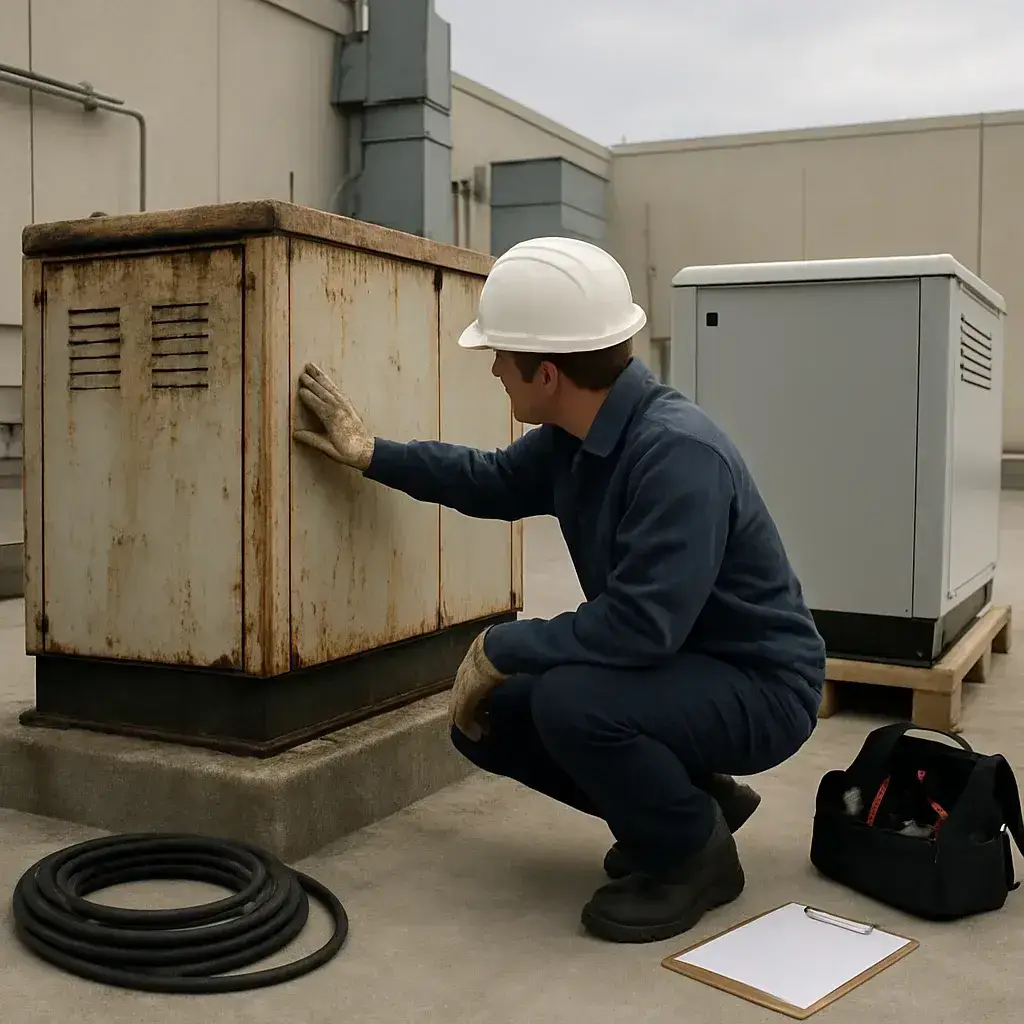
If your commercial generator still runs and the problem comes down to one part, repair is usually the right call. We see this most with units under 10 years old where a single component failed, a transfer switch, a control board, a fuel line fitting, but the engine and alternator are still sound. Generator repair and load testing tell us whether the core machine has years left in it. If it does, replacing the whole system to fix one part wastes your budget.
- The generator starts and runs, but a specific part failed (transfer switch, control board, sensor)
- The unit passes a load test at or near its rated output
- The engine and alternator show no major wear during inspection
- Fuel supply and switchgear are original and functioning correctly
- The generator is under 10 to 12 years old and has a maintenance history
Our generator maintenance and annual service visits catch a lot of this early. A unit that’s had regular oil changes, battery checks, and load tests tends to fail in small ways instead of all at once. That’s the case where a repair call, not a new installation, gets you back to full backup power fastest.
Here’s the part we won’t dress up. If a business has skipped maintenance for years and the generator hasn’t been load tested, we can’t always promise a repair will hold. Sometimes we open a unit expecting one fix and find the alternator or engine block worn past a reasonable repair cost. In that case we’ll tell you straight that a repair is a short-term patch, not a fix, before you spend money on it.
Cost matters here too. Our service call fee runs $26 to $99, and it gets credited toward the repair if you move forward with us. That’s a small number next to a full commercial generator installation, which typically runs $42,000 to $96,000 depending on generator size, fuel type, and switchgear needs. If a repair gets your existing system back to reliable, tested output, it’s almost always the cheaper and faster path.
For businesses in Sunnyvale and the surrounding DFW area comparing options, our page on Commercial Generator Installation in Sunnyvale walks through what a full install involves, so you can weigh it against a repair estimate before deciding.
When We’d Recommend Replacement
We’d recommend replacement when the generator, transfer equipment, or switchgear can no longer support your building’s actual load, or when parts for the existing unit are hard to source. A full install runs $42,000 to $96,000 for most jobs we do, and your building’s kW need is usually the biggest factor in where you land in that range.
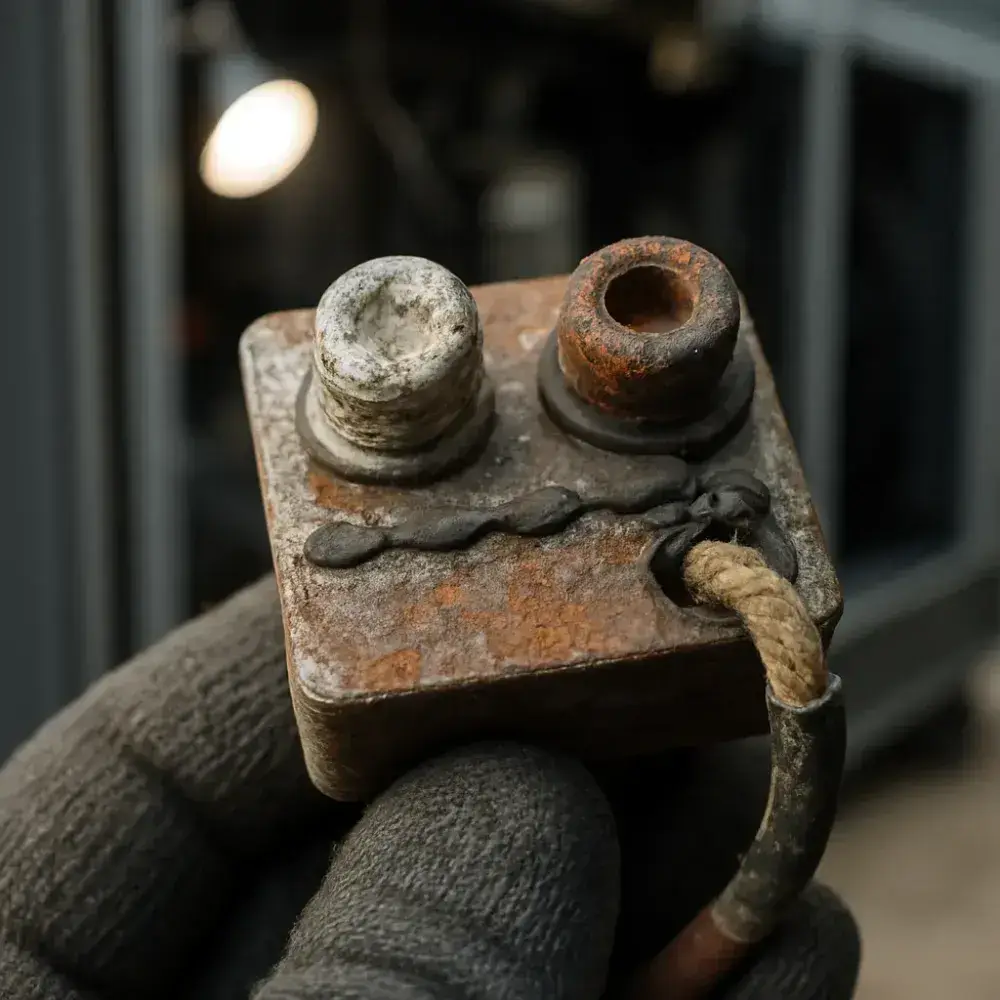
- Your kW requirement has grown past what the current unit can deliver, often after an expansion or added equipment load
- You need paralleling or new switchgear to run multiple units together, which changes the scope from a repair to a system build
- The fuel source is changing, say from diesel to natural gas, which touches the fuel line connection and often the pad and site work too
- Code upgrades are required for the site regardless of what you do to the existing generator
- The distance and site conditions mean a new placement makes more sense than reworking the old one
None of that means every aging unit needs to go. If your generator still meets your load, still passes a load test, and the transfer switch works the way it should, repair is usually the right call, and the cheaper one. We won’t push a full replacement on a business when the existing equipment still does the job it’s sized for. That’s a call we make after a look at your site, not before.
Generator sizing and a load assessment are part of how we scope any commercial generator installation, and pricing reflects what your site needs rather than a flat number. Included in every install: the generator, transfer equipment, professional installation, connections, startup and testing. Site civil work, fuel storage, code corrections, and major switchgear upgrades beyond the original scope get billed separately since they vary so much by property. Financing is available on qualifying installs if the upfront number is the sticking point.
Ready when you are – get in touch today.
Call Today, Get Service Today. Xtreme Air Services is ready to help.
What a Replacement Costs – And Why It’s More Than Just the Generator
A commercial standby generator install typically runs $42,000 to $96,000 for us, and the full range across every job we quote is $15,000 to $150,000. That’s a wide spread, and it’s wide for a reason. The generator itself is only part of the bill. Switchgear, fuel supply, transfer equipment, pad work, and permits all add up around it.
Generator size in kW is the first thing that moves the number. A unit sized for a small office is a different animal than one built to carry a restaurant’s kitchen equipment or a medical building’s critical loads. Fuel type matters too. Natural gas, diesel, and propane setups each need different tanks, lines, and code compliance.
- Generator size (kW) and how many circuits or systems it needs to carry
- Fuel type, and whether gas lines or fuel storage need to be added or upgraded
- Switchgear and paralleling needs, especially for buildings running more than one generator
- Site and pad work, including how the ground is prepped and where the unit sits
- Distance to service, since a longer run of conduit or fuel line adds labor
- Code upgrades and permits, which vary by jurisdiction and building type
Here’s what’s included in our number: the generator, the transfer equipment, professional installation, all the connections, and startup and testing so the system is proven to work before we leave. Here’s what’s usually not included: major electrical service or switchgear upgrades beyond the scope of the job, fuel storage, site civil work, and code corrections or permits, unless we’ve already accounted for them in your quote.
That last part trips people up. A building with an older electrical service sometimes needs panel or switchgear work done first, and that’s a separate cost from the generator project itself. We’d rather tell you that up front than let it surface as a surprise mid-project. If your site needs civil work for the pad or fuel storage, that gets scoped and priced separately too, since it depends on the site, not the generator.
We offer flexible financing on qualifying installations and larger jobs, on approved credit, which helps spread a project this size out instead of paying it all at once.
How We Help You Decide
A commercial standby generator job runs anywhere from $42,000 to $96,000 installed, and the plain answer to ‘what will mine cost’ is that it depends on a short list of real factors, not guesswork. We walk through generator size in kW, fuel type, whether you need switchgear or paralleling equipment, how much pad or site work the location needs, how far the unit sits from your electrical service, and whether any code upgrades or permits apply. Two buildings the same square footage can land $20,000 apart once you factor in fuel line distance or an older electrical service that needs attention first.
- Generator size (kW) based on what circuits and equipment need to stay powered during an outage
- Fuel type, since natural gas, diesel, and propane each change the installation and connection work
- Switchgear and paralleling needs if the building requires automatic transfer or multiple units working together
- Site and pad work, including how much concrete, clearance, or structural prep the location needs
- Distance from the generator pad to your existing electrical service and fuel supply
- Code upgrades and permits that may apply to your building or jurisdiction
What’s included in that price range is the generator itself, the transfer equipment, professional installation, all connections, and startup and testing before we hand it over. What’s not included is anything beyond that scope: a major electrical service or switchgear upgrade, fuel storage tanks, site civil work like grading or drainage, or code corrections your building needed before we ever showed up. We’d rather tell you that up front in our commercial generator installation consultation than let it surface as a surprise line item halfway through the job.
One thing worth knowing: we generally don’t do labor-only installs of a generator you sourced somewhere else. Our workmanship warranty only covers equipment we install and can stand behind, so if the unit shows up with an unknown history, that’s a job we’d pass on. For a lot of businesses, financing is what makes the decision easier once the scope is clear, and we offer flexible financing on qualifying installations for larger jobs, on approved credit. If you want to see how these factors apply to a system built for your building, our generator installation page has more on sizing and consultation.
See our full commercial generator installation in Sunnyvale for what the complete job involves.
Frequently Asked Questions
Common questions about Commercial Generator Installation in Sunnyvale
How do you decide between repair and replace for a commercial generator?
We start with a load test on the existing unit. If it runs at or near its rated output and the engine and alternator show no major wear, repair usually makes sense. If the generator can’t carry your building’s actual load, or key parts are hard to source, replacement is the better path. The decision comes down to what the equipment can still do, not just whether it currently runs.
What do businesses get wrong when comparing repair and replace costs?
The most common mistake is assuming a generator that still runs doesn’t need replacing. A unit can start and run fine during a quick check and still be undersized for a building that’s grown, or too old to find parts for. We look at kW capacity and maintenance history, not just whether the engine turns over, before we recommend either option.
When would you recommend replacement even if a repair is still possible?
We’d recommend replacement when a repair would only mask a bigger problem, not fix it. If a unit hasn’t had regular maintenance and a load test shows it can’t hold its rated output anymore, putting money into one more repair rarely pays off. That’s the point where a full installation, sized correctly for your building, is the more reliable choice going forward.
How does the service call fee affect a repair-or-replace decision?
Our service call fee runs $26 to $99, and we credit it toward the repair cost if you move forward with us. Since that’s a small amount next to a full installation, which typically runs $42,000 to $96,000, it’s worth having us look at the unit first. That evaluation gives you a real load test result before you commit either way.
Can I finance a generator replacement instead of paying for repairs out of pocket?
Yes, financing is available on qualifying installations, on approved credit. This gives businesses a way to spread out the cost of a full installation instead of comparing it dollar-for-dollar against a smaller repair bill. It’s worth asking about financing options before ruling out replacement based on upfront cost alone.
Ready to Get Started?
Call 972-288-2263 Today, Get Service Today.