


Commercial Generator Installation in Sunnyvale: Keep Your Business Powered Through Any Outage
Backup power for businesses that cannot afford to close, sized and installed to keep operations running through an outage.
What’s Covered on This Page
- Signs Your Sunnyvale Business Needs Standby Power
- Sizing a Generator for Commercial Loads
- When a Portable Hookup Is Enough
- What Happens Before Installation Day
- The Installation Process, Step by Step
- How long does it take to install a commercial generator in Sunnyvale?
- What should I expect when your crew arrives for a generator install?
- Why do Sunnyvale businesses need backup power more than they used to?
- How do you decide what size generator my business needs?
- Can I just install a portable generator hookup instead of a full standby system?
- What’s the biggest mistake Sunnyvale business owners make when planning a generator install?
Signs Your Sunnyvale Business Needs Standby Power
Most business owners don’t think about backup power until the lights go out mid-shift. Then it’s freezer inventory melting, a walk-in cooler creeping past 40 degrees, or a server room going dark in the middle of a transaction. Sound familiar? That’s usually when the phone rings.
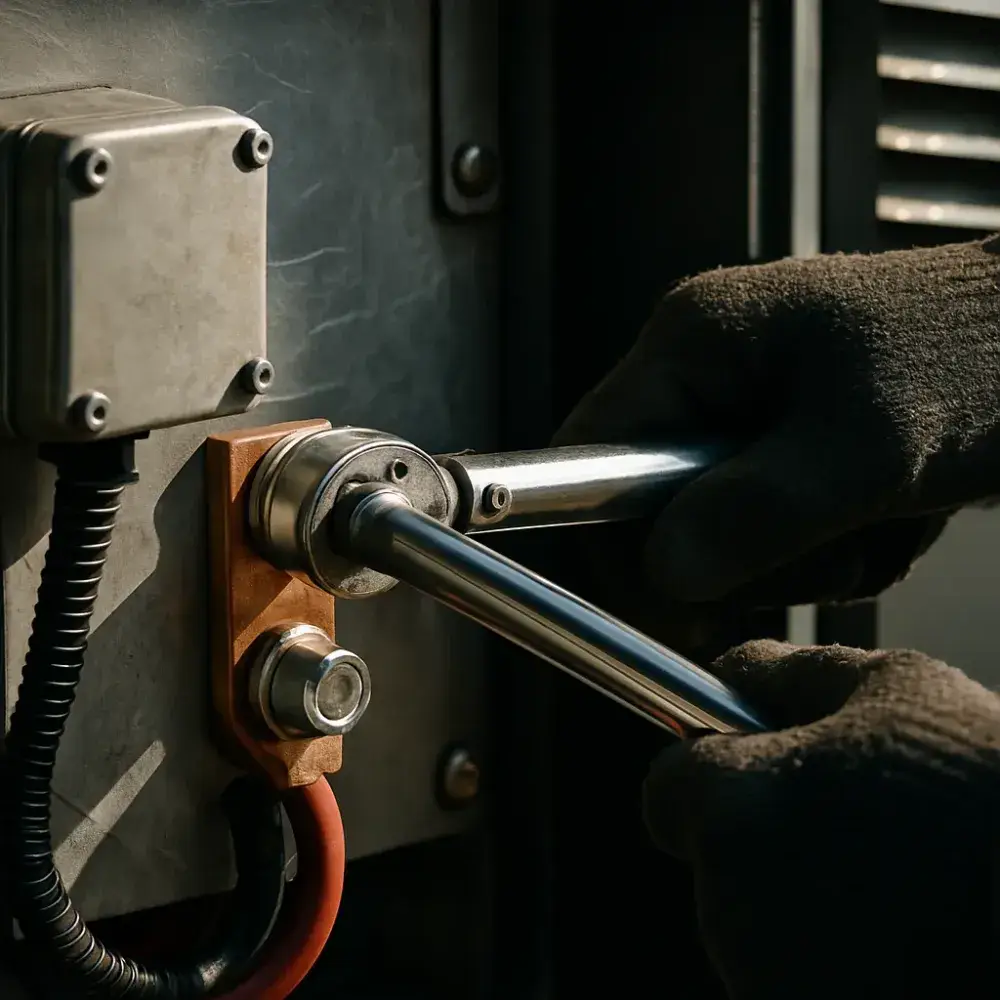
Sunnyvale sits in a stretch of North Texas that gets hit hard by spring storms and the occasional ice event, and older commercial buildings here weren’t always built for today’s electrical loads. A power blip that used to just reset a clock now takes down point-of-sale systems, security cameras, and HVAC controls all at once.
Here’s what tells us a business is a real candidate for a standby generator:
- You’ve had two or more outages in the past year that cost you real money, not just an inconvenience.
- You run refrigeration, freezers, or anything perishable that can’t sit without power for more than an hour or two.
- Your business depends on servers, security systems, or medical equipment that has to stay on no matter what.
- You’ve got tenants or customers relying on you, and a dark building sends them somewhere else.
- Your current setup is a portable generator you drag out and hope starts.
We get calls after a storm knocks out a whole industrial park for six hours, and the businesses without standby power lose a full day of revenue while the ones next door barely notice. If any of those signs sound like your building, it’s worth a real conversation, not a guess.
Sizing a Generator for Commercial Loads
Get the size wrong and everything else falls apart. Too small, and your generator trips offline the second the walk-in cooler compressor kicks on with the rooftop units already running. Too big, and you’re paying for fuel and maintenance on capacity you’ll never touch. That same load-first approach drives our Generator Installation Service in Sunnyvale on residential jobs.
So how do we get it right? We start with a real load calculation, not a guess. That means walking your building and adding up what needs power when the grid goes down: HVAC compressors, refrigeration, lighting, servers, point-of-sale systems, maybe an exhaust hood or a walk-in freezer. Motors matter here. They draw a big surge of power just to start, way more than they use once running. A generator sized only for steady-state load will stall out the moment a compressor cycles on.
We also ask what has to stay on versus what can wait. A restaurant kitchen and a small office building have completely different priorities during an outage. Some businesses only need life-safety and refrigeration covered. Others, especially anywhere with a server room or medical equipment, need the whole building live within seconds. That decision drives kW size, transfer switch type, and whether you need paralleling gear to combine multiple units.
This is exactly why generator size, fuel type, and switchgear needs are the biggest cost drivers on a commercial job, alongside site work and any code upgrades a building might need before installation. A strip mall on an older slab might need pad work a newer build wouldn’t. Skipping this step is the most common mistake we see, business owners buying based on square footage alone instead of an actual load study.
If you want the full breakdown of how we handle sizing, transfer switches, and fuel connections, our Generator Installation Service in Sunnyvale | Xtreme Air Services page walks through the whole process. Get the sizing right the first time, and everything downstream, permits, pad, fuel line, just falls into place.
When a Portable Hookup Is Enough
Not every business in Sunnyvale needs a full commercial standby system with switchgear and a concrete pad. Let’s be honest about that first.
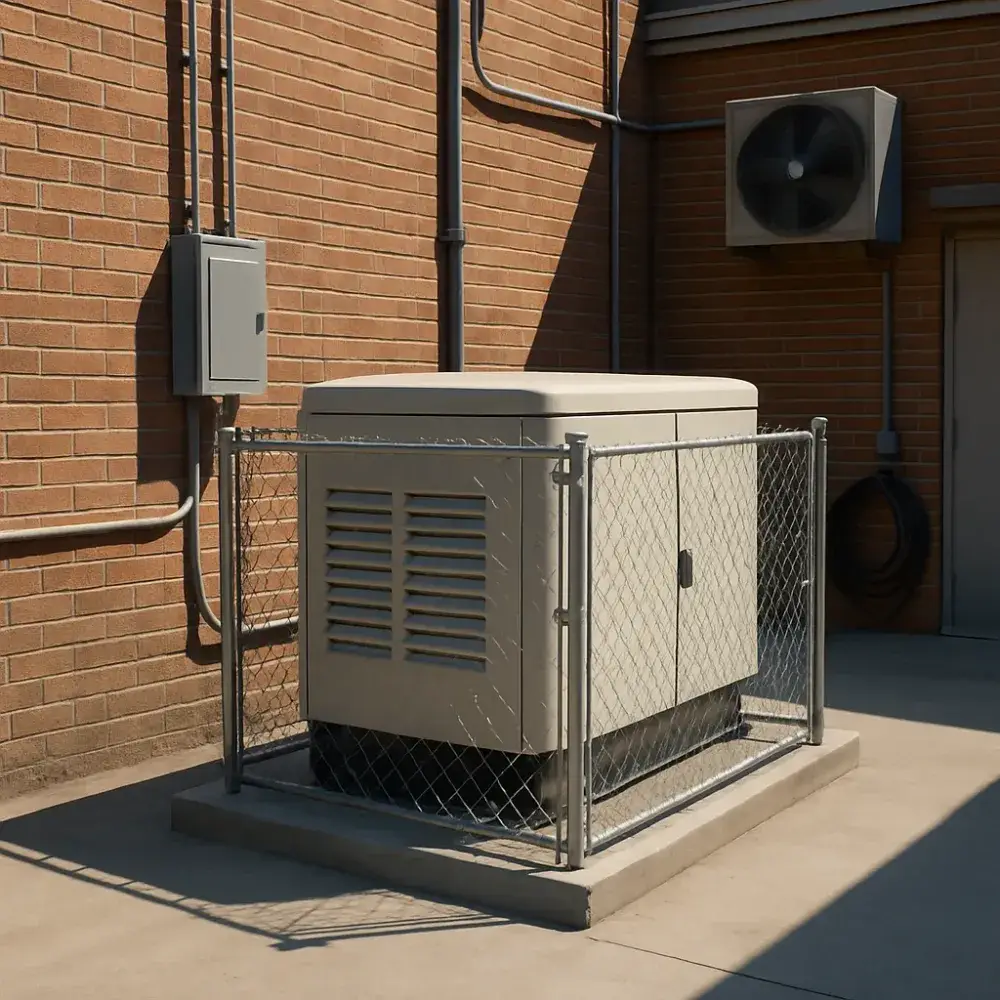
If you run a small office, a retail spot, or a shop that just needs to keep a few lights on and a router running during a storm, a portable generator hookup might cover you fine. We install these too – a proper inlet box and manual transfer switch let you roll a portable unit up, plug in, and power your priority circuits without running extension cords through a window. It’s a fraction of the scope of a standby install, no fuel line, no automatic transfer gear, no paralleling.
So when does portable make sense? A few honest markers:
- Your building only needs a handful of circuits kept alive, not the whole panel
- You can accept someone showing up to start the generator manually during an outage
- You’re not running refrigeration, medical equipment, or life-safety systems that can’t tolerate a gap
- Your budget or timeline doesn’t support a full electrical service upgrade right now
But here’s where it stops making sense. If your Sunnyvale property houses a walk-in cooler full of inventory, a server room, or any process that can’t sit dead for even a few minutes while someone drives over and starts a portable unit, you need automatic backup. Same goes for any building where code requires life-safety power to kick in within seconds, not minutes.
We’ll tell you straight if portable covers your risk. Plenty of small commercial spaces don’t need six figures of switchgear and paralleling gear sitting outside. Sizing this right the first time saves you from buying more generator than your building will ever ask for.
Watch Our Video
See How We Handle Commercial generator installation in Sunnyvale
Xtreme Air Services — Serving Sunnyvale and surrounding areas
Not sure what your Commercial generator installation project needs? Ask us.
Call Today, Get Service Today. Xtreme Air Services is ready to help.
What Happens Before Installation Day
Here’s the truth: the generator itself is the easy part. What happens before we ever set a unit on your property is what decides whether this project goes smooth or turns into a mess three months down the road.
First, we walk the site. For a commercial building in Sunnyvale, that means checking your electrical service, your available space, and how far the generator will sit from your building for noise and code clearance. Older commercial spaces sometimes have panels that can’t handle a new transfer switch without an upgrade. We catch that here, not on install day. We also look at your fuel options, natural gas, diesel, or propane, because that choice affects the pad, the lines, and how the unit gets fed during an outage.
Next comes the load calculation. This tells us the actual kW size your building needs, not a guess. Undersize it and your generator trips under load the first time you really need it. Oversize it and you’re paying for capacity you’ll never use.
From there, a few things happen in order:
The Installation Process, Step by Step
Here’s the truth: a commercial generator install isn’t a one-and-done job. It’s a sequence, and skipping a step is how you end up with a generator that won’t kick on the one night you need it. We walk every commercial customer through the same process, no shortcuts.
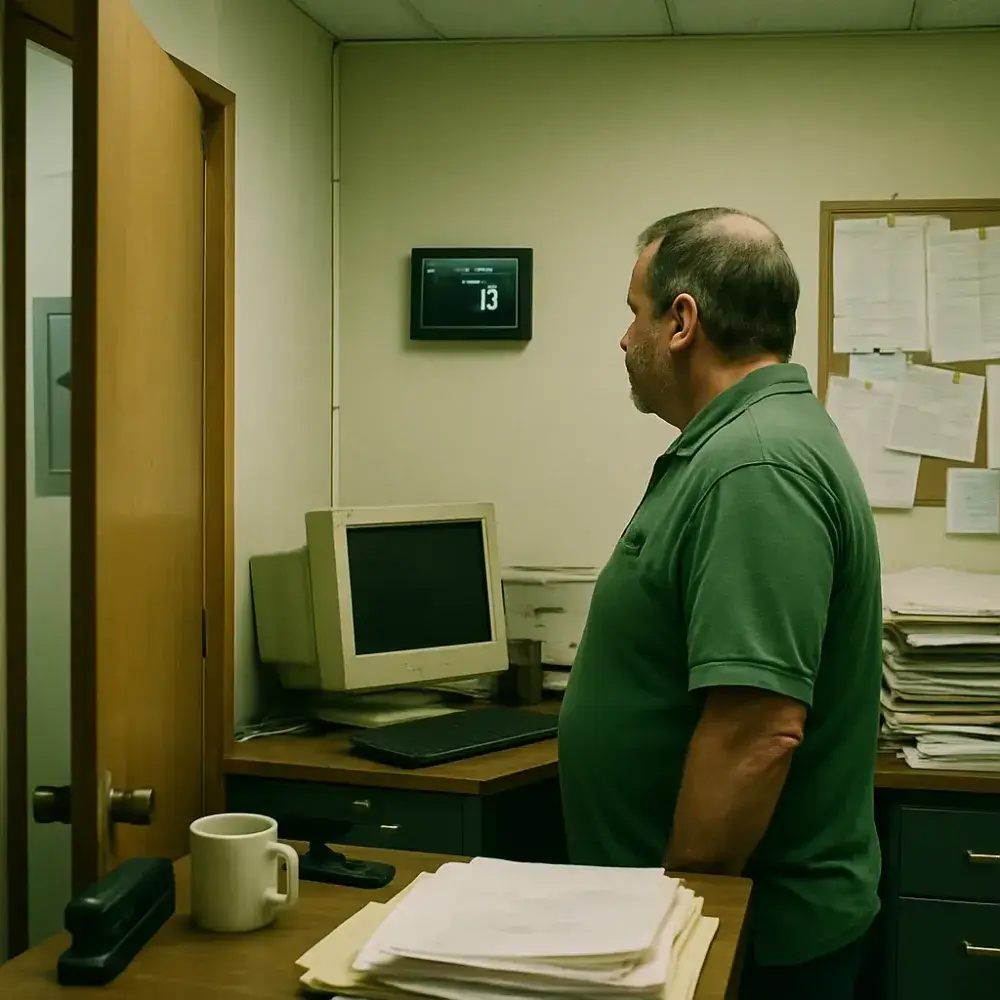
- Site visit and load assessment. Our team walks your building, checks your electrical panel, and figures out what needs backup power, not just what sounds nice.
- Sizing and fuel selection. We calculate the kW your operation needs and talk through natural gas versus propane, based on what’s already running to your building.
- Permits and code review. Sunnyvale properties range from older slab-built shops to newer construction near Hwy 80, and each one can trigger different code requirements for pad placement and clearances.
- Pad and site prep. The generator needs solid, level ground, and sometimes that means extra work before the unit ever arrives.
- Switchgear and transfer equipment installation. This is where your generator gets wired into your building’s power, so the switch happens automatically.
- Fuel line connection. Gas or propane gets run and pressure-tested before we move forward.
- Startup, testing, and commissioning. We run the unit under load, confirm the transfer switch works, and don’t walk away until it’s proven out.
Frequently Asked Questions
Common questions about Commercial generator installation in Sunnyvale
How long does it take to install a commercial generator in Sunnyvale?
Installation timelines depend on your building’s electrical setup and how much site work is needed first. We always start with a full site walk to check your panel, available space, and clearance from your building. Older Sunnyvale commercial buildings sometimes need a panel upgrade before we can even set the transfer switch. Once sizing and permitting are done, the actual install moves fast. The prep work takes the real time, and skipping it is how projects run into surprises later.
What should I expect when your crew arrives for a generator install?
You can expect us to walk your entire site before touching any equipment. We check your electrical service, look at where the generator will sit, and measure clearance from your building for noise and code. We ask what has to stay powered, like refrigeration, servers, or security, and what can wait. Older buildings around Sunnyvale sometimes need a panel upgrade first, so we flag that right away. You’ll know exactly what your building needs before we schedule the install.
Why do Sunnyvale businesses need backup power more than they used to?
Spring storms and occasional ice events hit this part of North Texas hard, and older commercial buildings weren’t built for today’s electrical loads. A power blip that used to just reset a clock now takes down point-of-sale systems, security cameras, and HVAC controls all at once. We’ve seen a whole industrial park lose power for six hours after a storm, with businesses lacking standby power losing a full day of revenue. Two or more costly outages a year is a clear sign to look at standby power.
How do you decide what size generator my business needs?
We start with a real load calculation, not a guess based on square footage. That means walking your building and adding up everything that needs power during an outage, like HVAC compressors, refrigeration, servers, lighting, and point-of-sale systems. Motors draw a big surge just to start, so we size for that spike, not just steady running power. We also ask what has to stay on immediately versus what can wait a few minutes, since that shapes the generator size and transfer switch type.
Can I just install a portable generator hookup instead of a full standby system?
Yes, for some businesses a portable hookup is enough. If you run a small office or retail space that only needs a few circuits kept alive, we can install an inlet box and manual transfer switch instead of a full standby system. This lets you plug in a portable unit without running cords through a window. But if you have a walk-in cooler, server room, or any process that can’t sit dead for a few minutes, you need automatic backup instead.
What’s the biggest mistake Sunnyvale business owners make when planning a generator install?
The biggest mistake is buying a generator based on square footage instead of an actual load study. Skipping the load calculation means your generator could trip offline the moment a walk-in cooler compressor kicks on with rooftop units already running. It also means missing panel upgrades that older Sunnyvale buildings often need before a new transfer switch can go in. A proper site walk and load calculation up front saves you from oversized equipment or a system that fails when you need it most.
Ready to Get Started?
Call 972-288-2263 Today, Get Service Today.