


Electrical Panel Replacement / Upgrade: Questions and Issues We Get Asked About Most
Aging panels, brands with documented field problems, missing main breakers, and the capacity question that comes up when you add an EV charger or solar.
What’s Covered on This Page
- What Buyers Usually Want to Understand Before Moving Forward
- Aging Panels No Longer Matching Modern Electrical Demand
- Panel Brands With Documented Field Issues
- Panels Without a Main Breaker or With Mismatched Breakers
- Adding an EV Charger, Solar, or Major Appliances Raises a Capacity Question
- Related Links
What Buyers Usually Want to Understand Before Moving Forward
Power does get shut off for part of the day. You can’t swap a panel with it energized. A licensed technician confirms the timeline during the diagnostic visit. For most homes, it’s back on the same day the new panel goes in.
A written, flat-rate quote comes before anything gets touched. That quote lays out repair-or-replace options if there’s a choice to make. You’re approving a number, not a meter that keeps running. We don’t start work without your sign-off.
Every panel job we do is performed to code by licensed technicians. We pull the proper permits and get inspections when they’re required. If someone’s looking to skip that step to save time or money, we’ll pass on the job. It’s one of the few times we’ll turn down work rather than do it a way we’re not willing to stand behind.
- Whether a 200A panel is enough, or if your home’s load calls for something bigger.
- How many circuits and breakers the new panel supports going forward.
- Whether grounding gets brought up to current code as part of the job.
- What’s included versus what’s billed separately, like service-entrance work the utility handles.
- Whether financing is available if the job is bigger than expected.
On financing: it’s available on qualifying installations and larger jobs. Approval is based on credit. It’s a real option, not a sales line, and we bring it up before the invoice, not after.
One thing that trips people up: a panel replacement covers the panel, breakers, grounding, startup testing, and hauling off the old unit. It doesn’t automatically include rewiring the house or fixing separate code issues found elsewhere, unless we’ve called that out ahead of time. If you want the full rundown, our electrical panel replacement and upgrade service page breaks down what’s typically included on a standard job.
Aging Panels No Longer Matching Modern Electrical Demand
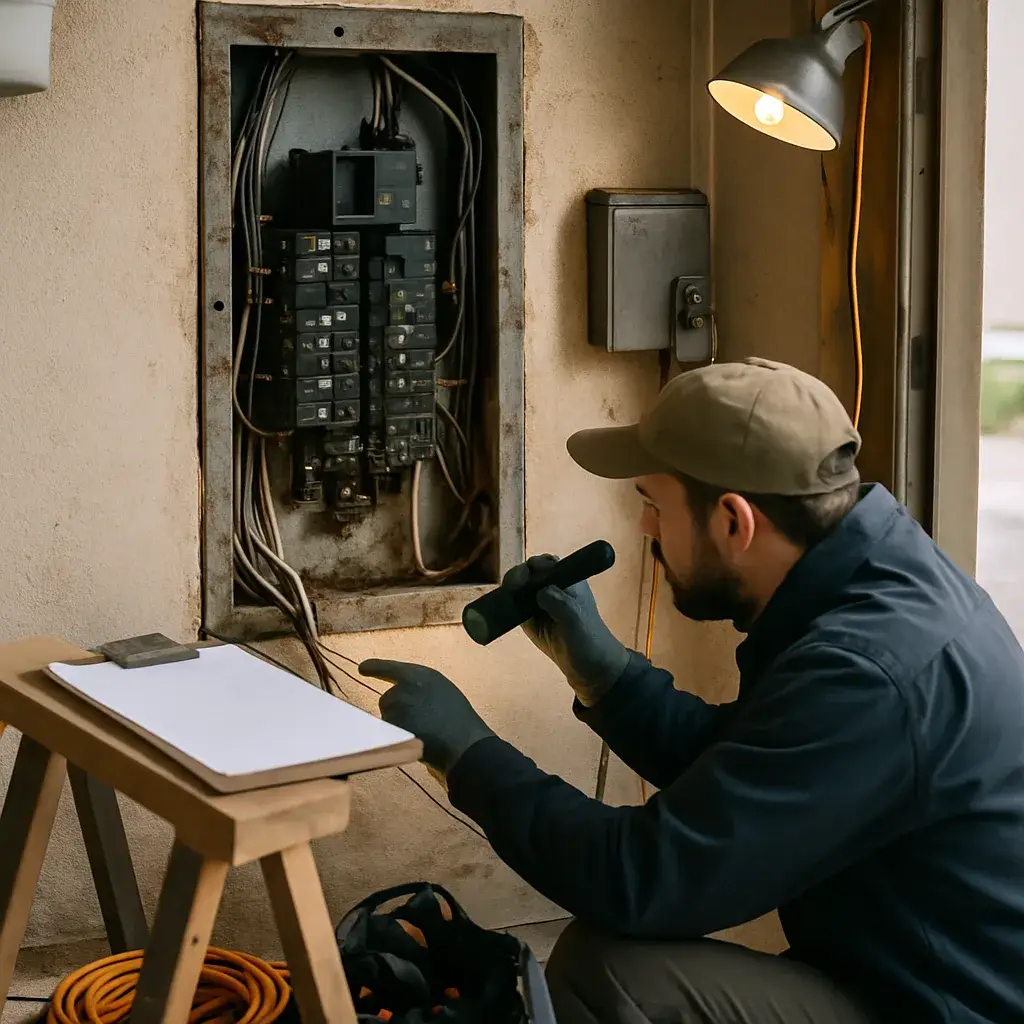
A lot of homes in Sunnyvale and surrounding DFW towns were built with 60 or 100 amp panels. That was when a house ran a window unit, a fridge, and a few lights. Now, the same panel has to carry central air, an electric range, a garage full of tools, and maybe an EV charger. This gap between what the panel was built for and what it’s feeding is the root of most panel problems we get called out for.
- Breakers trip when you run the AC and the dryer at the same time.
- The panel door feels warm, or you hear a faint buzzing sound near the box.
- Lights dim or flicker when a big appliance kicks on.
- No room left for a new circuit because every slot is already used.
- You have a fuse box instead of breakers, or visible rust inside the panel.
Older homes in this part of Texas often still run 100 amp service, sometimes less. That was fine for appliances from decades past. But add a bigger HVAC system, a hot tub, or a second refrigerator and the panel works right at its limit. Attic heat and hard winter freezes push HVAC systems harder than they used to run. That extra draw shows up as tripped breakers or a panel that’s just tired.
Not every tripped breaker means the whole panel needs to go. Sometimes it’s one overloaded circuit or a bad breaker. We will tell you if it is. We will not sell a bigger job than you need. When the panel itself is undersized, corroded, or built around a fuse system, replacing it with a properly grounded 200A panel solves the problem.
Bigger upgrades sometimes require coordination with Oncor on the service side. Utility meter work is not something we perform ourselves. We will flag that early if your situation needs it. This means no surprises about who handles what.
If you’re weighing whether your panel needs attention, or just want to understand what a replacement involves, our electrical panel replacement page walks through the details.
Panel work also comes up alongside other electrical jobs. Think about dedicated circuit installation for a new appliance or surge protection for the whole house. We handle that related work as part of the same visit when it makes sense.
Panel Brands With Documented Field Issues
Two panel brands come up more than any others when people ask us about safety: Federal Pacific Electric, often labeled Stab-Lok, and Zinsco. Both brands stopped being manufactured decades ago. But plenty of homes in Sunnyvale and other DFW towns still have one bolted to a wall in the garage or a hallway closet.
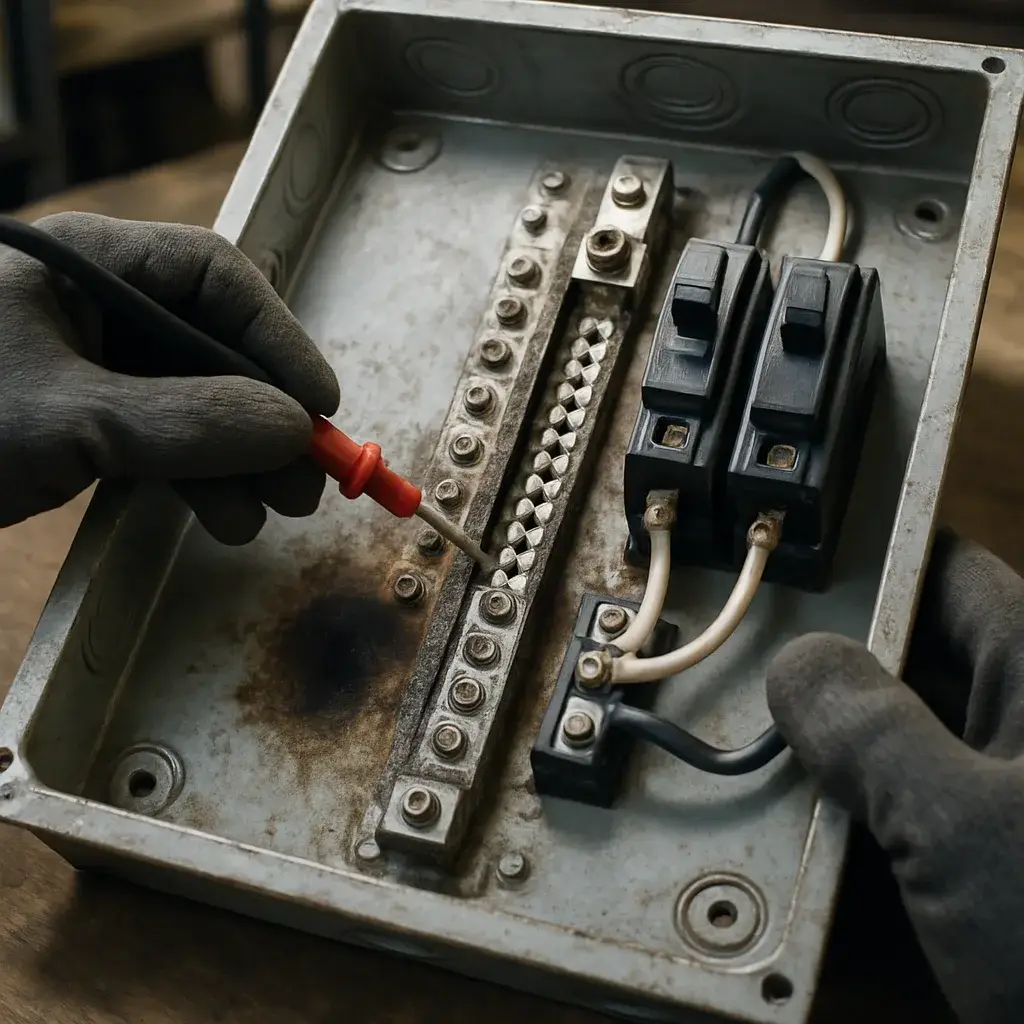
The concern isn’t cosmetic. The Consumer Product Safety Commission (CPSC) and independent testing organizations have documented cases where Federal Pacific breakers fail to trip during an overload or short. That’s the one job a breaker exists to do. Zinsco panels have a separate documented issue: the breaker connection can overheat and fuse to the bus bar over time. So the breaker looks fine but doesn’t disconnect the circuit when it should.
- Federal Pacific Electric / Stab-Lok: breakers documented to fail to trip under overload conditions, per CPSC-referenced testing.
- Zinsco: breaker-to-bus connections documented to overheat and fuse over time, masking a tripped breaker as still active.
- Both brands stopped production years ago, so replacement parts are scarce. And they are often not sourced from the original manufacturer.
- Age alone doesn’t confirm a problem panel. The brand name on the panel door is the first thing worth checking.
A panel with one of these brand names can run for years without any visible symptom. No flickering lights, no tripped breakers, nothing that would make a homeowner think to call anyone. That’s part of what makes brand identification useful on its own. It’s separate from whatever symptom brought someone to the point of asking about a panel in the first place.
When we go out for a panel replacement, part of that visit includes checking the brand and condition of the existing panel and breakers. We don’t just measure amperage and circuit count. If we find a documented brand on-site, we’ll point it out plainly and explain what’s known about it. That’s part of how we approach every panel job, not a separate service.
We also do electrical panel repair for households that aren’t ready for a full upgrade yet. A documented brand issue is one of the few situations where we’ll tell a homeowner plainly that a repair doesn’t solve the underlying concern. You can read more about our electrical panel replacement and upgrade work and what a licensed replacement involves.
Have questions? We’re happy to help.
Call Today, Get Service Today. Xtreme Air Services is ready to help.
Panels Without a Main Breaker or With Mismatched Breakers
Some older electrical panels just don’t have one main breaker to shut off the whole house. They use a split-bus setup instead. This means several breakers at the top of the panel act as main disconnects. Homes built before single-main-breaker panels became standard sometimes have this design. It wasn’t a code violation when installed.
You’d notice no single obvious main switch. A row of two to six breakers up top controls different sections of the panel. In an emergency, you’d flip several breakers instead of one. That’s the practical downside. It isn’t a safety failure on day one.
Mismatched breakers are a different issue. Every panel needs breakers listed for its specific brand and model. Over time, a different manufacturer’s breaker might get swapped in because it fit the slot. But it wasn’t tested or listed for that panel. A mismatched breaker can behave differently under a fault. That’s a real safety concern (and common in older Sunnyvale homes).
- Whether the panel has a single main disconnect or a split-bus design
- If every breaker in the panel is listed for that panel’s brand and model
- Signs of heat, arcing, or loose connections at breaker terminals
- If the panel’s total capacity still fits how your home uses power today
A split-bus panel with matched breakers and no heat damage might not need a same-day replacement. But a panel with three different breaker brands mixed in, or scorch marks at the connection point, is different. We walk you through what we find, in plain terms, before recommending anything.
If a panel does need work, we’re licensed electricians. We pull permits and schedule inspections when the job calls for it. A panel replacement moves your home to a single main disconnect. And new breakers are matched to the panel, tested before we leave.
Adding an EV Charger, Solar, or Major Appliances Raises a Capacity Question
People usually call us about capacity before a project, not after something breaks. An EV charger, a solar array, a new hot tub, or a bigger HVAC system all pull more power. More than the average home used when its panel was installed. That’s when the capacity question comes up: does your panel have room, and does the service coming into your house have room too?
Many homes in Sunnyvale and the surrounding towns off U.S. 80 were built with 100-amp panels. Back then, a house ran a fridge, a few window units, maybe a window AC. Now, a 200-amp panel is standard for new work. Most EV chargers and larger heat pump systems expect that. Adding a Level 2 charger to a 100-amp panel that’s already loaded with central air, an electric range, and a water heater often means there isn’t headroom left. We need to look at the numbers.
This is where a load calculation helps. It’s not a guess; it’s math. We add up what your home draws, factor in the new equipment, and compare it against what the panel and incoming service can safely carry. Sometimes your existing panel has room. All you need is a new breaker. Other times, the math says the panel is near its limit already. The new charger or solar inverter would tip it over.
We’ve also seen homeowners install a charger or solar system first. They find out during permitting that the panel needs upgrading anyway. It’s a more expensive way to discover this. A conversation with an electrician before you buy the equipment is cheaper than one after.
Solar adds its own wrinkle. Your panel has to handle power coming in from two directions: from Oncor and from your own array. That interconnection has specific rules. A standard panel swap doesn’t need to consider this. It’s part of why we look at the whole picture, not just the breaker count.
If you’re weighing a panel upgrade against smaller fixes like a dedicated circuit, our electrical panel replacement / upgrade page walks through what a full upgrade involves and what it doesn’t.
We don’t sell a panel upgrade just because a customer mentions solar or an EV charger. If the load calculation shows your current setup has room, we’ll tell you that. If it doesn’t, we’ll show you the numbers. The decision is yours, not a guess.
Ready to Get Started?
Call 972-288-2263 Today, Get Service Today.