


Electrical Panel Replacement / Upgrade vs. Repair: How We Decide Which One You Need
How we decide between repairing a panel and replacing it – what the bus and breakers tell us, and what each route actually costs.
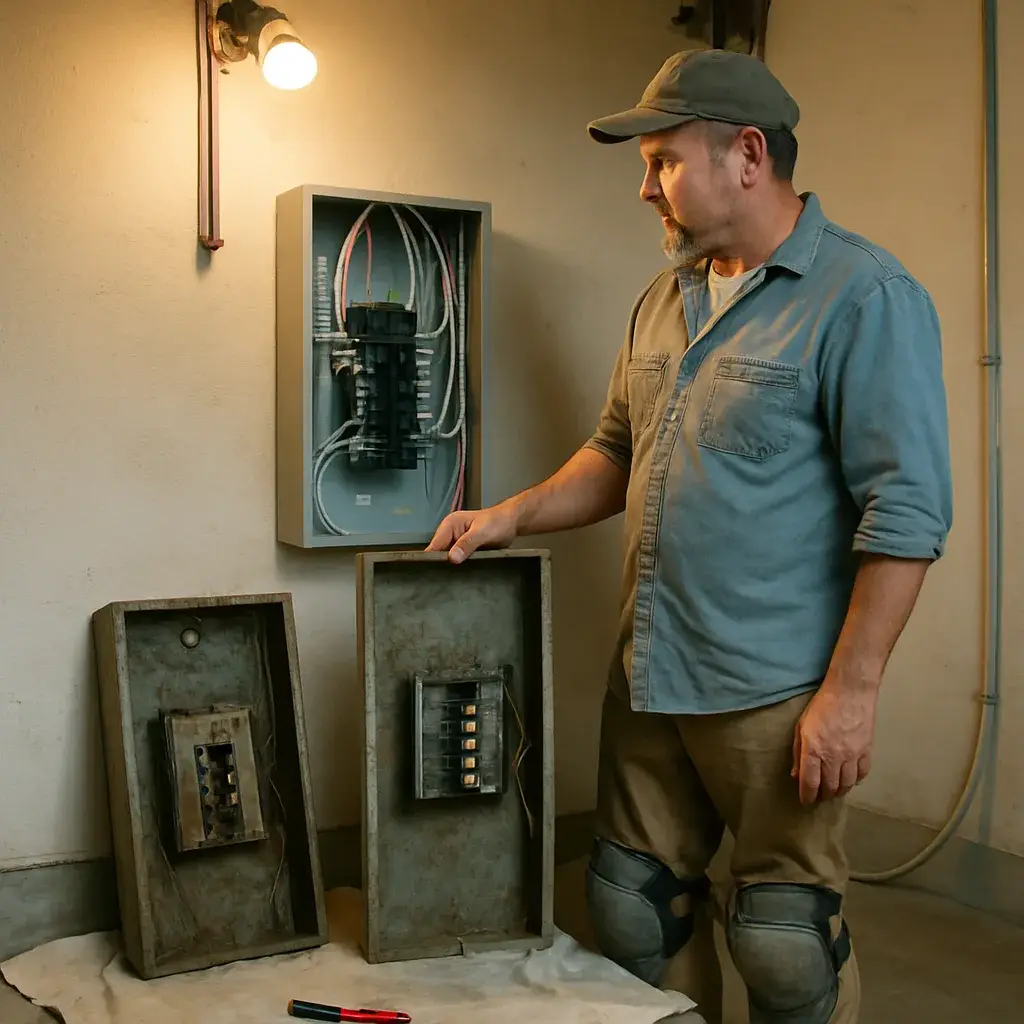
What’s Covered on This Page
- The Short Answer: Some Panel Problems Need A Repair, Others Need A Full Replacement
- The Factors That Decide Repair Or Replace
- When A Repair Is Usually Enough
- When Replacement Is The More Durable Option
- What A Panel Replacement Includes – And What It Doesn’t
- Related Links
- My panel is full and I need a circuit for a new range. Do I have to replace the whole panel?
- If I pay for a repair now and the panel fails in two years, did I waste that money?
- How long is my power off for a replacement, and is a repair any different?
- We’re in Rowlett and the panel keeps tripping. Can someone look at it today?
- The panel is warm and buzzing. Should I wait for my appointment?
- Will a bigger panel stop my lights dimming and bring the power bill down?
The Short Answer: Some Panel Problems Need A Repair, Others Need A Full Replacement
If one breaker keeps tripping, that’s often a repair. A single circuit might be acting up. The panel itself, its amperage, its breaker slots, its condition, is usually fine. But if the panel is old or maxed out on space, patching one issue just delays the next one. That’s when we’re talking replacement.
Panel replacement projects run $1,500 to $4,500, depending on the job. The most common one we see is a straight upgrade to a 200A panel. It includes new breakers and proper grounding. We inspect and test it when we’re done. That job lands between $2,100 and $3,300 for most homes.
- Panel amperage: a 100A panel struggling to run a modern home usually needs replacing, not patching.
- Panel brand and age: some older brands have breakers that are hard to source. They are also known for reliability problems.
- Condition of the meter and service entrance: this can affect scope. Sometimes it requires utility coordination.
- Whether grounding needs upgrading to meet current code.
- Number of circuits you need now or plan to add later.
- How easy the panel is to access. Tight crawlspaces or finished walls add labor.
- Any code corrections required before new work can be signed off and inspected.
If your panel is fine and the problem is a single failed breaker, replacing the whole panel is the wrong answer. It costs you more than it should. We’ll say so. But if you’re adding a hot tub, an EV charger, or a home addition, and your panel is already tight on space, a repair just kicks the real problem down the road.
Our panel and materials, installation, breakers, grounding, startup testing, and haul-away of the old panel are part of that quote. Utility-side meter work, home rewiring, broader code corrections, and permits aren’t included unless we’ve said so upfront. You can see the full breakdown on our electrical panel replacement service page.
The Factors That Decide Repair Or Replace
A panel gets repaired when the problem is isolated. Maybe a bad breaker, a loose lug, or a failed main switch. The rest of the panel is sound. A panel gets replaced when the panel is the problem itself. It’s undersized for the home’s load, or a brand known for failing breakers. We also replace it if a bus bar is showing heat damage. Or if there’s no room left for the circuits a modern home needs.
- Amperage: a 100A panel in an older Sunnyvale or Mesquite home often can’t handle a modern HVAC system, an EV charger, and a kitchen remodel all at once.
- Circuit count and open slots: if every slot is full and you need more circuits, a subpanel or full replacement usually makes more sense than squeezing in tandem breakers.
- Panel brand and age: some older panel brands have documented breaker failure issues. Repair is a short-term patch, not a fix.
- Grounding: older homes sometimes need a grounding upgrade. This is brought up to current code. It’s part of a replacement, not a simple repair.
- Service condition: the meter base and service entrance wire condition affect what’s realistic. Utility-side work itself isn’t part of our panel job.
- Permits and code corrections: if the existing panel has code violations from a prior install, those often get resolved during a replacement rather than left in place.
A straightforward repair, replacing a breaker or fixing a loose connection, runs well under the cost of a replacement. A full panel replacement, the kind most homeowners in Dallas County and Kaufman County ask about, typically runs $2,100 to $3,300. This is for a 200A upgrade with new breakers, proper grounding, startup testing, and haul-away of the old panel included. Across the wider range of panel jobs we see, total cost runs $1,500 to $4,500. It depends on amperage, brand, access, and whether grounding or code corrections are needed. What’s not included: service-entrance or meter work handled by Oncor, full home rewiring, and permit fees unless we’ve stated them upfront.
If your panel is 20 years old and undersized, a repair might get you through this year. But it’s not going to solve the amperage problem. We’ll tell you that before you spend money on a fix that doesn’t address what you need.
If you want the full breakdown of what a panel upgrade includes, our main service page walks through the process in more detail.
When A Repair Is Usually Enough
A panel repair usually makes sense when the panel itself is sound. Only a part of it is failing. A single bad breaker, a loose connection, or a failed component inside a panel that’s otherwise in good shape is a repair job. It’s not a replacement job. If the panel is the right amperage for your home, there’s no reason to replace the whole box.
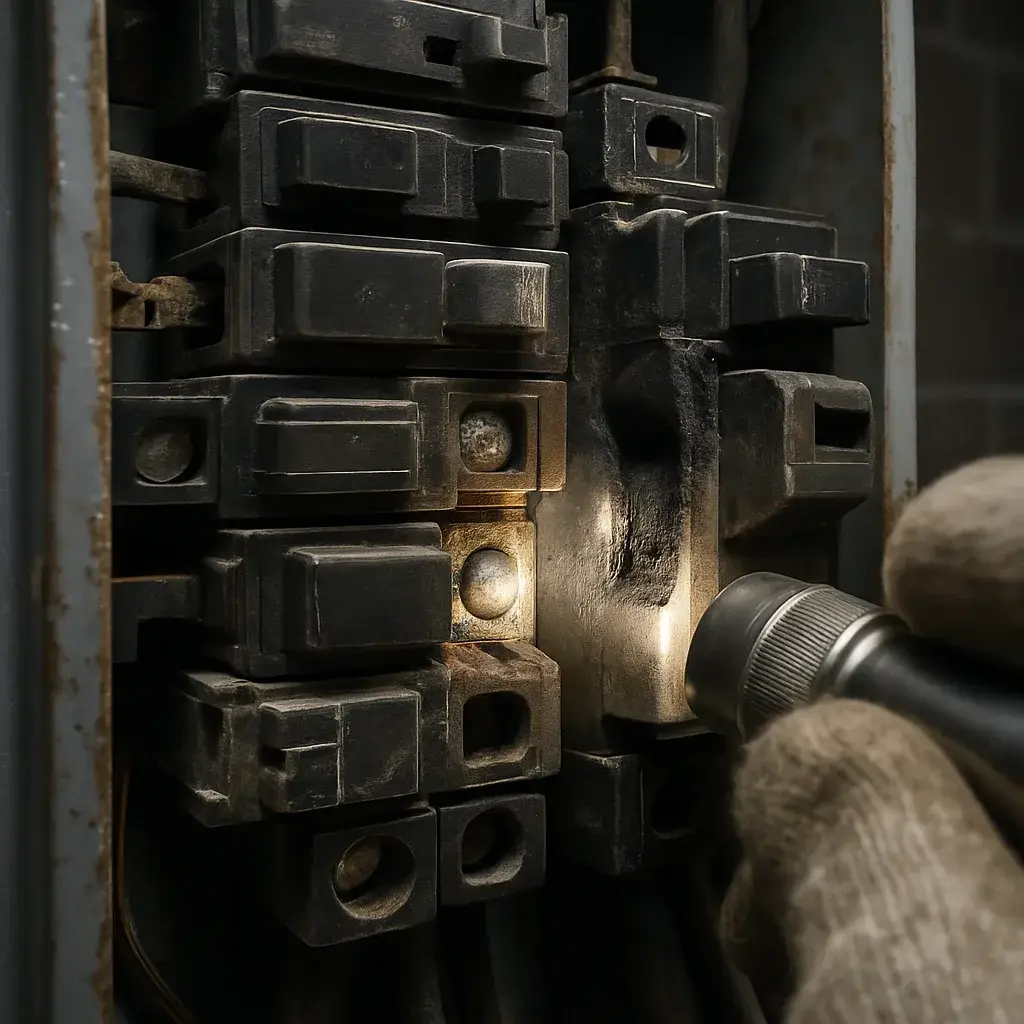
We look at a few things during a visit before we recommend replacing a panel. Is the panel rated for enough amperage to run what you have? Is the grounding done correctly? Is there rust, heat damage, or scorching inside the panel? Are the breakers original and matched to the panel brand? Or has someone mixed in parts that don’t belong? A panel that’s structurally fine with one bad breaker gets a new breaker. A panel that’s undersized, corroded, or has a history of overheating is a different conversation.
Older homes across Sunnyvale and the surrounding DFW area often have panels sized for a much smaller electrical load. A modern household runs today with central air, an EV charger, a hot tub, and a kitchen full of appliances. This can push a 100A panel past what it was ever built to handle. That’s a load issue, not a broken-part issue. No amount of breaker swapping fixes it.
Repair also tends to be the right call when a homeowner just needs a dedicated circuit added. Or a GFCI outlet installed. Or a code correction made to bring an existing setup up to standard. Those are covered separately as Dedicated circuit installation, GFCI outlet installation, and Code correction. They don’t require touching the panel itself in most cases.
If your panel is functioning correctly, isn’t overloaded, and just needs a part swapped or a loose connection tightened, we won’t push you toward a full upgrade you don’t need. That’s the kind of call a technician makes on site, looking at the actual panel, not off a phone description.
Every visit includes a written, flat-rate quote before any work starts. Whether it turns out to be a repair or a replacement, you’ll know the total cost and what’s involved before you approve anything.
Have questions? We’re happy to help.
Call Today, Get Service Today. Xtreme Air Services is ready to help.
When Replacement Is The More Durable Option
We replace a panel instead of repairing it when the panel is the limiting factor, not just one bad part inside it. If the panel is undersized for your home’s electrical load, or if the buses or lugs show heat damage. Or if the brand is one known for failure-prone breakers. Swapping a part just delays the same problem. A full panel replacement, typically a 200A upgrade with new breakers and proper grounding, runs $2,100 to $3,300 for most homes in our service area. We inspect and test it before we leave.
Several things move that number up or down: panel amperage, the brand of panel and breakers, the condition of your meter and service connection. Also, whether grounding needs upgrading, how many circuits you’re running, and how easy the panel is to access. Whether the job needs utility coordination or code upgrades can change it. A detached garage panel with tight access costs more to replace than an open panel on an exterior wall. Permits factor in too when the work requires one.
- The panel is undersized for current or planned electrical load, like adding a car charger or a large appliance circuit.
- The panel brand or bus design is one with a documented pattern of breaker failure.
- Grounding doesn’t meet current code and needs more than a spot fix.
- The panel shows heat discoloration, corrosion, or physical damage at the buses.
- You’re adding enough new circuits that the existing panel has no room left.
The price includes the new panel and materials, professional installation, breakers, grounding, startup and testing, and hauling away the old panel. It doesn’t include service-entrance or meter work done by the utility, rewiring, broader code corrections, or permits unless we’ve said so upfront in your quote. If your situation needs one of those, we’ll spell it out before any work starts, not after.
An older panel that’s still structurally sound and just needs a breaker or two doesn’t need a full replacement. We’ll tell you that. Replacement earns its cost when the panel, not a component in it, is what’s holding your home back. You can see more on what we cover on our electrical panel replacement and upgrade page before deciding which side of that line you’re on.
What A Panel Replacement Includes – And What It Doesn’t
When we replace a panel, the price covers the panel itself. And everything it takes to get it running safely. That includes the new panel and materials, the labor to install it, new breakers sized for your circuits, grounding work, and full startup testing. We also haul away your old panel. You’re not left with a dead box of wires sitting in the garage.
- New panel and materials
- Professional installation
- New breakers
- Grounding work
- Startup and testing
- Haul-away of the old panel
What’s not automatically part of that price is work that belongs to somebody else. Or work that only shows up once we’re inside the walls. Service-entrance and meter work is on Oncor’s side, not ours. We coordinate with them when it’s needed rather than billing for their part. Rewiring beyond the panel, code corrections your house needs to catch up on, and permit fees aren’t included unless we’ve already stated them in your quote.
- Service-entrance or meter work handled by Oncor
- Rewiring beyond the panel itself
- Code corrections found during the job
- Permits, unless already stated in your quote
That last one catches people off guard more than anything else. An older home in Sunnyvale or Mesquite with a panel from the 1980s often needs a grounding upgrade. Or a circuit brought up to current code once we open things up. That’s real work with a real cost attached. We’d rather tell you that up front than let a flat number look cleaner than the job is. Permits and inspections are handled correctly on every job we do. This is whether through the Town of Sunnyvale’s portal or Kaufman County, depending on which side of the line your property sits on.
If the total surprises you, financing is available on qualifying installations. The cost doesn’t have to land all at once. If you want to see how a panel upgrade fits against a smaller repair, our electrical panel replacement and upgrade service page walks through both paths in more detail.
Frequently Asked Questions
Common questions about electrical panel replacement or upgrade
My panel is full and I need a circuit for a new range. Do I have to replace the whole panel?
Space alone doesn’t force a replacement. If the panel is a current model in good shape, we can sometimes free up slots with tandem breakers or feed a small subpanel from the existing one, and that stays a repair. Replacement wins when the bus bar is damaged, the panel label doesn’t allow tandems, or the service is already at capacity – a range, an EV charger and a heat pump on a 100-amp service is a load calculation problem, not a breaker problem. A 200-amp upgrade runs $2,100 to $3,300.
If I pay for a repair now and the panel fails in two years, did I waste that money?
Not if the panel body is sound. A breaker swap or a burned lug repair on a healthy panel is worth doing, and it costs a fraction of the $1,500 to $4,500 a replacement runs. When the housing is corroded, the bus bar is scorched, or breakers for that model are no longer made, we say so rather than sell you the same repair twice. The $26 to $99 diagnostic gets you a firm written price for both paths, and it’s credited toward the work if you go ahead.
How long is my power off for a replacement, and is a repair any different?
Oncor has to disconnect and reconnect the service for a full replacement, so plan on being without power for most of a working day and move anything out of the freezer you can’t risk. The utility and the inspector set that day, not us. A repair is a different animal. Most breaker, lug and neutral work happens with the main off for a short stretch while the technician is standing at the panel, and you’re back on before the truck leaves. Weigh that gap if anyone at home runs medical equipment.
We’re in Rowlett and the panel keeps tripping. Can someone look at it today?
Usually, yes. Technicians run same-day calls six days a week across Rowlett, Mesquite, Garland, Forney, Rockwall, Seagoville, Balch Springs and the rest of Dallas and Kaufman counties. The phone at 972-288-2263 is answered 24/7, so you can book at 11pm for the next working day. Have a photo of the panel with the door open ready when you call. That usually tells us whether we’re looking at one bad breaker or a full service upgrade before the truck rolls.
The panel is warm and buzzing. Should I wait for my appointment?
Turn off the main breaker and call 972-288-2263 now. Heat, a burning smell, buzzing or scorch marks around a breaker mean a connection is arcing, and that’s the one situation where we don’t tell you to watch it for a few days. Those symptoms also push the decision hard toward replacement, because heat damage to the bus bar can’t be repaired – the bar is part of the panel. If one circuit trips and the panel stays cool, it’s fine to leave that circuit off and book normally.
Will a bigger panel stop my lights dimming and bring the power bill down?
No on the bill. A panel doesn’t change what your appliances draw, and the meter belongs to Oncor. Dimming is a maybe. If the whole house dips every time the AC compressor or the dryer starts and the service is only 100 amps, the $2,100 to $3,300 upgrade to 200 amps usually settles it. If one room flickers on its own, the cause is downstream – a loose neutral, a failed device, a bad splice in a junction box – and a new panel won’t touch it. The diagnostic visit separates those two before you spend anything.
Ready to Get Started?
Call 972-288-2263 Today, Get Service Today.