

What to Expect From Emergency / No-Heat Furnace Repair: Common Problems, Causes, and What We Do
Ignitor, flame sensor, blower and control-board failures, why a lit thermostat still means no heat, why a self-shutdown is the safety switch working, and what a same-day diagnostic and single-part repair include.
What’s Covered on This Page
- The Most Common Reasons a Furnace Stops Producing Heat
- Why a Working Thermostat Doesn’t Always Mean a Working Furnace
- Why a Furnace Shutting Itself Down Can Be the Safety System Working
- What a Same-Day Diagnostic Visit Typically Covers
- What’s Included When We Repair a Common Furnace Failure
- Related Links
The Most Common Reasons a Furnace Stops Producing Heat
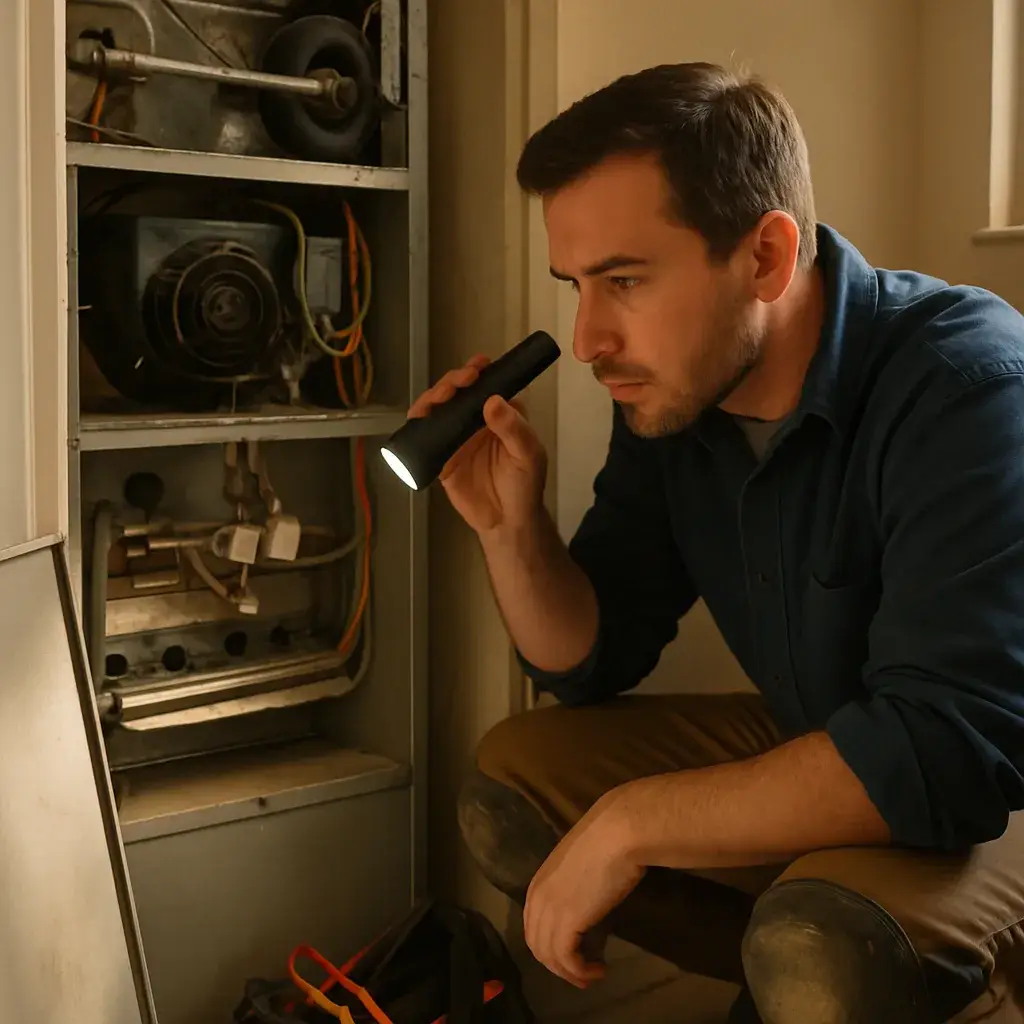
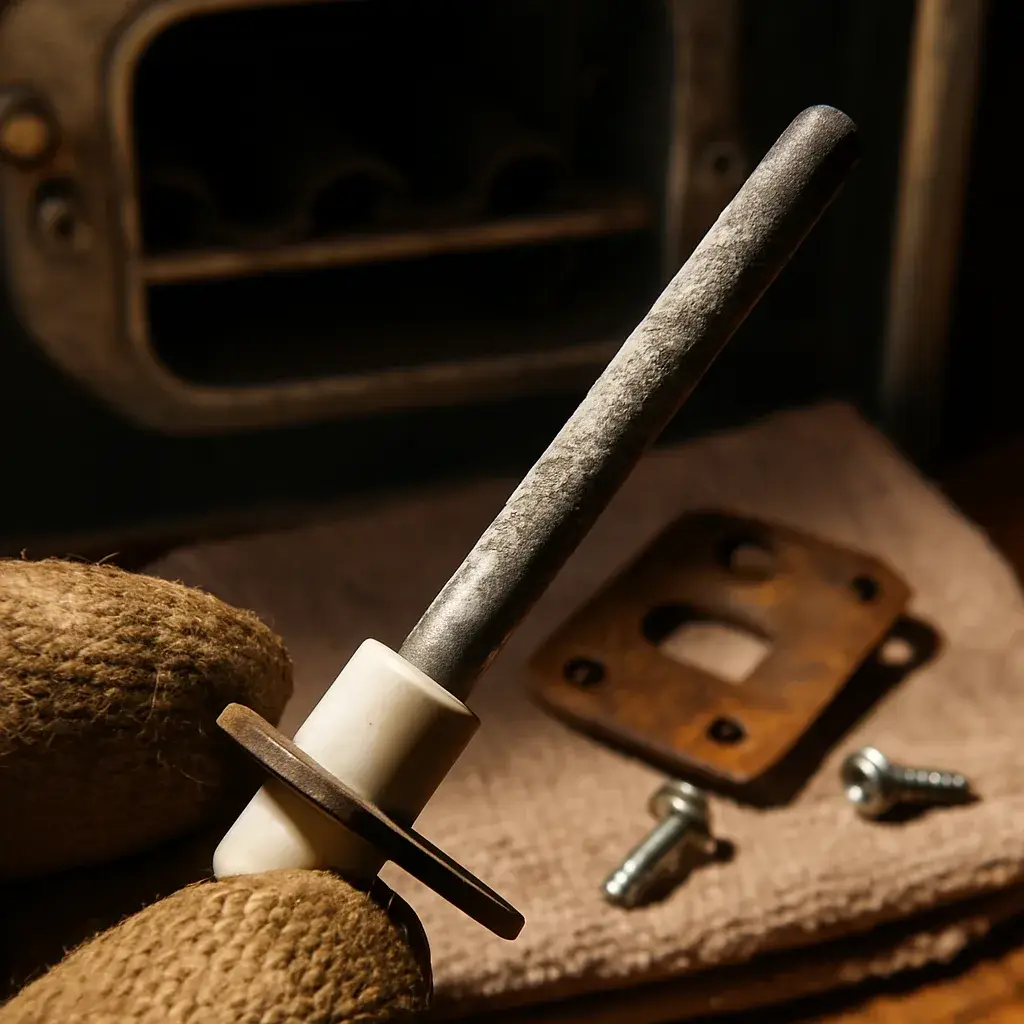
When a furnace won’t fire, we check the ignitor first. This small part gets brittle from heat cycles. After a few winters, it stops glowing enough to light the gas. You’ll notice the blower running, air moving, but no heat. That usually means a furnace ignitor replacement. It’s a common repair we see across Sunnyvale and the DFW area when the first cold front hits.
A dirty flame sensor causes a similar but different problem. The furnace lights, runs a few seconds, then shuts off. It might do this repeatedly. That’s the safety control doing its job. Cleaning the flame sensor usually solves it. Sometimes, on older units, the sensor needs replacing.
Blower motor trouble sounds different. You might hear the burner light but feel no air movement. Or you might get a grinding or squealing sound before the system quits. This points to a furnace blower motor repair. On the electrical side, a failed control board can cause almost any symptom. No ignition, a blower that won’t stop, or a system that just dies. A furnace control board replacement is a bigger job than an ignitor or sensor. And we won’t guess on it. We test the board’s outputs before we call it. Replacing a board that wasn’t the problem costs you twice.
Not every no-heat call is a repair. Sometimes it’s a thermostat with dead batteries. Or a tripped breaker. Maybe a furnace filter so clogged the system shut down to protect the blower. A furnace filter replacement is the cheapest fix. We’ll tell you if that’s all it is. On gas furnaces, we also check for carbon monoxide as part of any safety inspection. A cracked heat exchanger or venting problem can let it into your home without any obvious sign.
Whether you have electric or gas heat changes what we look for. A gas furnace repair usually focuses on ignition, gas valve function, and venting. An electric furnace repair is more about heating elements and their electrical circuits. Our Emergency / no-heat furnace repair service covers both. A technician can usually tell within minutes what system you have and where to start looking.
Why a Working Thermostat Doesn’t Always Mean a Working Furnace
A lit-up thermostat screen means your thermostat has power. But it doesn’t mean your furnace does. Those are two different electrical paths. Many homeowners think that if the display works, the whole heating system is fine elsewhere.
The thermostat’s job is simple. It senses room temperature and sends a low-voltage signal asking the furnace to run. That signal goes through thin control wires to the furnace’s control board. The furnace handles everything else from there. It needs to open the gas valve, spark or heat an ignitor, prove a flame with its sensor, and spin up the blower motor. All this pushes warm air through your ducts. Any one of those steps can fail while your thermostat keeps working as it should.
- A weak or dirty flame sensor can shut the furnace down seconds after it lights, even with a normal thermostat call.
- A cracked or worn ignitor can fail to light the burners. The thermostat calls for heat, but nothing happens at the furnace.
- A control board that doesn’t relay the signal correctly can leave the furnace unresponsive. The thermostat display still looks normal.
- A blower motor problem can mean the furnace heats, but that air never moves into the house.
This is why we don’t start by swapping your thermostat. A technician checks the low-voltage signal at the furnace. Not just at the wall. This helps us see where the chain breaks. Sometimes the fix is at the thermostat. But often, with a no-heat call, it’s further down the line at the furnace. Around Sunnyvale, Mesquite, and Garland, that usually means the attic or a hall closet, well away from the wall the thermostat is on.
We also see the opposite situation. An aging, miscalibrated, or incompatible thermostat can create heating complaints. These might look like a furnace problem, but they aren’t. If that’s the case, replacing or upgrading the thermostat (even to a smart thermostat if it fits your system) solves it. You won’t need to touch the furnace at all. We don’t guess in either direction. Nothing is assumed until a technician checks the equipment.
If you want to see how this diagnostic step fits into the larger repair process before you call, you can review our emergency furnace repair page for a fuller walkthrough.
Why a Furnace Shutting Itself Down Can Be the Safety System Working
A furnace that clicks off before your house warms up isn’t really broken. Furnaces have switches whose job is to shut the burner down the second something looks off. So when it stops, the system often did what it’s supposed to do. You’re safe.
A few parts usually cause this. These are the ones we check first on almost every no-heat call across Sunnyvale and the DFW area.
- A high-limit switch trips when the heat exchanger gets too hot. This can happen from restricted airflow or a dirty filter. It shuts the burner off before the metal is stressed.
- A switch won’t let the burner light if the venting airflow isn’t right. This protects against exhaust gases backing up into your home.
- A flame sensor with a light film of carbon can’t confirm the flame is burning clean. The control board cuts gas to the burner instead of letting it run unmonitored.
- A cracked heat exchanger can mix combustion gases with the air in your ducts. Furnaces are designed to shut down if this happens, for your safety.
That last one is why we take a repeated shutdown seriously. Carbon monoxide has no smell or color. The Consumer Product Safety Commission has linked it to hundreds of accidental deaths each year, mostly from heating equipment. A furnace shutting itself down shows the safety switch is working.
On a service call, a licensed Xtreme Air Services technician does a furnace safety inspection. We check the flame sensor and test for carbon monoxide before we touch anything else. If it’s a flame sensor cleaning or an ignitor swap, we often finish that the same visit. If it’s a heat exchanger issue, we’ll explain what that means for your equipment. We’ll show you your options before any work starts. We cover this process on our Emergency / no-heat furnace repair page.
Sometimes a furnace shuts down once, resets, and works fine. Other times, it’s a pattern that needs a part replaced. The point is to treat the shutdown as information, not a mystery.
Have questions? We’re happy to help.
Call Today, Get Service Today. Xtreme Air Services is ready to help.
What a Same-Day Diagnostic Visit Typically Covers
When your furnace isn’t working, a licensed, insured, background-checked technician arrives in uniform. First, we ask what you noticed: cold air, no thermostat response, a strange smell, or a clicking sound. This helps us get a starting point before we open the unit.
From there, we work through the furnace itself. For a gas furnace, we check the igniter, flame sensor, and gas valve. Electric furnaces mean looking at heating elements, the sequencer, and their electrical connections. We always check the blower motor and control board. A bad board can mimic many problems, sending you down the wrong path.
- Thermostat signal and wiring, confirming the furnace is getting a call for heat
- Ignitor or flame sensor condition on gas systems
- Blower motor operation and airflow through the system
- Control board function and any stored fault codes
- Gas valve and burner condition on gas furnaces, heating elements on electric furnaces
- A carbon monoxide test on gas equipment, part of every safety inspection we run
That last check isn’t optional for us. A furnace that’s not burning gas cleanly is a safety issue first. We won’t sign off on a repair without confirming that everything is safe.
Once we find the cause, we explain it simply: what failed, why, and what fixing it involves. Sometimes, a no-heat call is just one part, like a sensor or igniter, which we can often replace right away. Other times, it involves more. We will tell you that too. Nothing gets touched until you’ve seen and approved a written, flat-rate quote. If you want a general sense of what these repairs run before you call, our pricing guide for furnace repair breaks down typical ranges.
The visit itself usually happens the same day you call, often within a few hours. The diagnosis costs the same, whether it’s a Tuesday afternoon or a Saturday night. We don’t charge extra for nights or weekends on this kind of call.
What’s Included When We Repair a Common Furnace Failure
When we fix a common furnace problem, our price covers the diagnosis, the labor, and the new part needed to get things working. It’s that simple. We find the broken part, install a matching replacement, and test your system before we leave. We also clean up after ourselves, so you won’t find old parts or packaging lying around.
Now, that same visit does not cover a few things. If another part breaks at the same time, that’s an extra cost we will talk about with you before we do any work. Big parts, like a heat exchanger, aren’t part of a standard repair. Also, any code upgrades or permits are separate from the base repair unless we included them in your upfront quote. Our technicians always give you the flat-rate price in writing before starting, so you approve the number, not a surprise bill.
We do charge a service-call fee to get a technician to your door for the diagnosis. If you go ahead with the repair, we put that fee toward the total cost of the job. You will not pay twice for the same visit. And we charge the same rate if your furnace quits on a Tuesday afternoon or a Saturday night. No extra charge for nights or weekends here, which is something we feel strongly about.
Every repair we do comes with three layers of protection. There is our 100% satisfaction guarantee on the visit itself, a workmanship warranty on our labor, and the manufacturer’s warranty for the part we installed. These three things answer what you are likely thinking: was this done right, and what if the part goes bad later? We stand behind what we install because we get the parts ourselves and check them. That’s also why we generally use parts we trust, rather than equipment someone else supplied.
Most single-failure repairs get done in just one visit. If your unit needs more than a standard fix, our heating system repair team will explain all your options before you make any decisions.
Ready to Get Started?
Call 972-288-2263 Today, Get Service Today.