


Emergency / No-Heat Furnace Repair: Should You Repair or Replace?
The single-part failures worth repairing, the furnace age, compounding failures, discontinued parts, and safety findings that tip it to replacement, and how you get both numbers in writing before work starts.
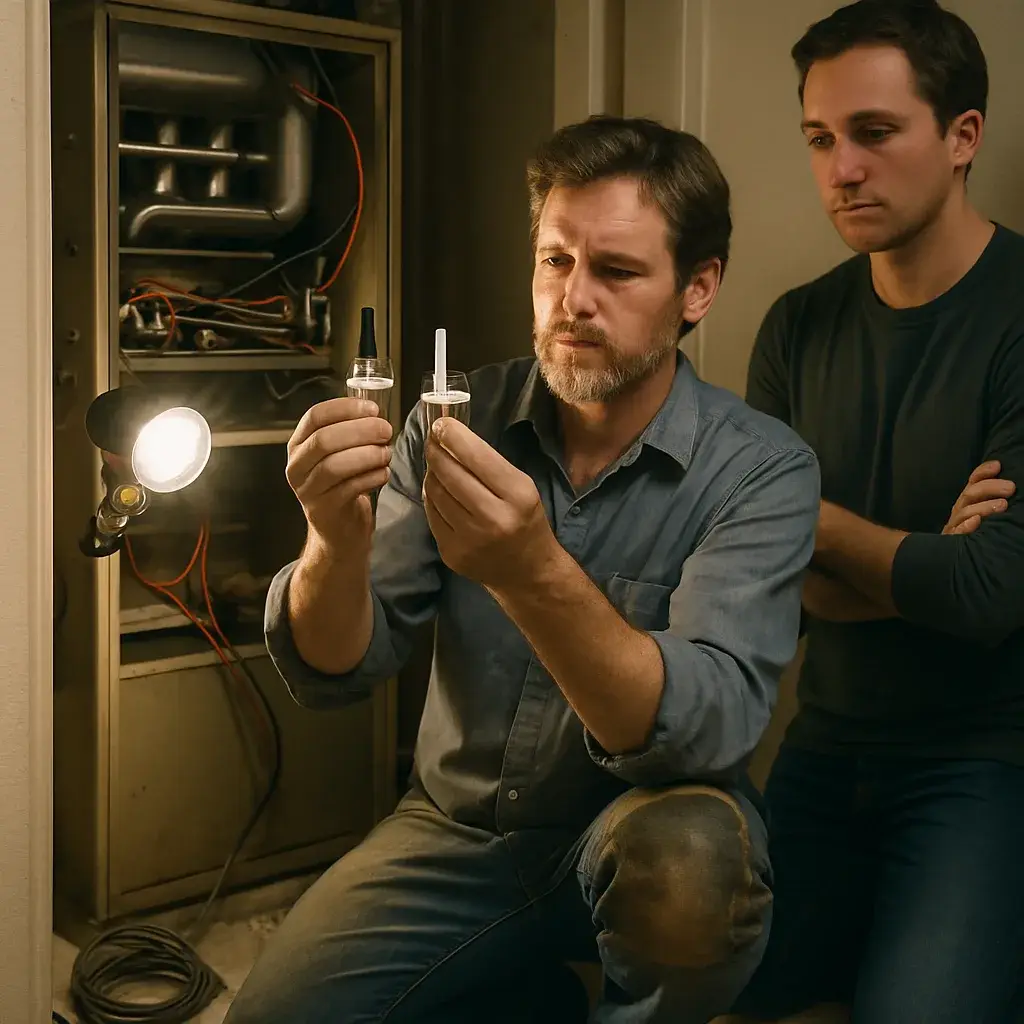
What’s Covered on This Page
- When We’d Recommend Repairing Your Furnace
- When We’d Recommend Replacing Instead
- How We Help You Decide Before Any Work Begins
- Related Links
- How do you decide whether to repair or replace my furnace?
- What do homeowners get wrong most often when comparing repair costs to replacement costs?
- When would you turn down repair work and recommend replacement instead?
- Is the $26 to $99 service call fee separate from what I pay for the repair itself?
- Can I finance a furnace repair the same way I could finance a full replacement?
When We’d Recommend Repairing Your Furnace
A no-heat furnace repair is usually a straightforward fix. We locate the failed part, replace or repair it, and test the system before we leave. Most calls end there, on the first visit. A single common failure usually causes the whole problem.
Typical repair costs run $200 to $900, depending on what’s wrong. A common job-one failed part on one visit-lands between $200 and $525. That price covers the diagnosis, labor, the standard replacement part, and a full test and cleanup afterward. It doesn’t cover a second failed part discovered mid-repair. Major components like a heat exchanger, code upgrades, or permit costs get quoted separately if they come up.
What moves the price is how bad the failure is. It also depends on whether the part is common or has to be sourced, and the unit’s age and brand. Did more than one component quit at once? Time of day doesn’t factor in. We don’t add a fee for nights or weekends. A furnace that dies at 9 PM on a Sunday costs the same to diagnose as one that quits on a Tuesday afternoon.
We recommend repair when the failure is isolated. Things like an ignitor, a flame sensor, a blower motor, or a control board are common single-point failures. This happens on a furnace that’s otherwise running fine. Fixing one of those keeps a working unit going. Where we’d tell you straight that repair isn’t the better move: a furnace stacking up multiple failed parts at once, or one old enough that the next part to go is likely to be a bigger, pricier one. That’s a real judgment call. We walk through it with you before any repair starts, not after.
- Single failed part, rest of the system tests fine: repair
- Furnace under 10-12 years old with normal wear: usually repair
- Multiple components failing in the same visit: worth comparing repair cost against replacement
- Older unit needing a major part on top of the current failure: we’ll lay out both options with real numbers
The service call itself runs $26 to $99. That fee gets credited toward the repair if you move forward with us. Every price is written and flat-rate, approved by you before we touch anything, so there’s no meter running while a technician works. You can see how this fits into the full furnace repair process on our heating repair page before you decide anything.
When We’d Recommend Replacing Instead
Not every no-heat call ends with a repair. We’d rather tell you that upfront than talk you into fixing a furnace that’s on its last leg. When a repair quote starts climbing toward the top of the typical $200 to $900 range, and the furnace itself is already 15 years or older, the math often tips toward replacement. You could spend $800 fixing a heat exchanger or control board on a unit that’s likely to need another major repair within a year or two anyway. In Sunnyvale’s mild winters, that trade-off matters less for run-time hours, but it still adds up over the appliance’s remaining lifespan.
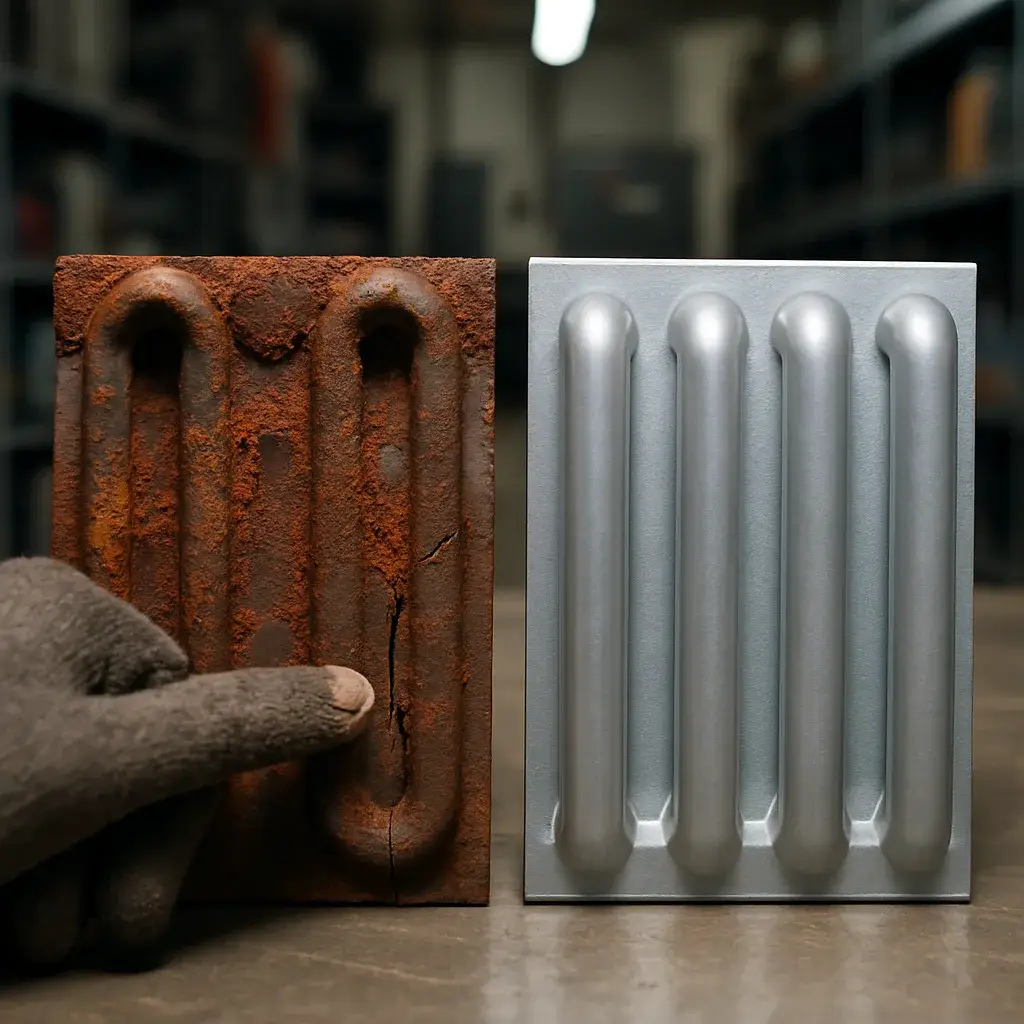
The clearest replacement signal we see in the field is compounding failures. A blower motor that’s seized alongside a cracked or failing ignitor, for example. That’s not two small problems. It’s two labor visits and two parts bills stacked into one job. Once combined repair costs approach what a mid-efficiency replacement furnace would run installed, most homeowners are better served putting that money toward a new system with a full warranty instead of patching an aging one piece by piece.
Parts availability is a separate issue from cost. It can force the decision even on a furnace that seems otherwise fine. Older models, especially those over 15 to 20 years old or from manufacturers that have since discontinued certain lines, sometimes use control boards, blower assemblies, or ignition modules that are no longer produced. When our technicians can’t source a factory part or are limited to a generic substitute that won’t carry a real warranty, we’ll say so plainly rather than stall your repair waiting on a part that may never arrive.
Safety findings are their own category. They are independent of price. If a carbon monoxide test or our standard safety inspection turns up a cracked heat exchanger, unsafe venting, or CO levels above acceptable thresholds, we won’t recommend repairing around that. A compromised heat exchanger in particular is a replace-it situation regardless of the furnace’s age or how minor the rest of the unit seems. The risk isn’t something a patch repair can responsibly fix.
If replacement is the right call, we’ll walk you through options on the spot. Financing is available for both larger repairs and full system replacements. An emergency doesn’t have to turn into a bigger financial strain than it needs to.
How We Help You Decide Before Any Work Begins
We don’t decide repair or replace for you before we’ve looked at the furnace. A technician comes out, finds the actual failed part, and lays out your options in plain English. This happens before any tools come out of the truck. You get a written, flat-rate price for the repair. If replacement makes more sense, we’ll say so and explain why, with numbers, not a guess.
For most no-heat calls, the answer is repair. A single failed part-an igniter, a flame sensor, a control board-gets found and fixed the same visit. Most of these calls run $200 to $525 for the common failure, inside a broader $200 to $900 range for the job overall. That range moves based on a few real factors.
- How far the failure goes, one part or several
- Whether the part is common and in stock or needs sourcing
- The age and brand of the furnace
- Whether more than one component failed at once
- Nights, weekends, and holidays cost the same as a weekday call with us
Diagnosis, labor, and the standard replacement part are included in that quote. We also include testing the system before we leave and cleaning up after ourselves. What’s not included: a second or third failed part discovered mid-repair, a major component like a heat exchanger, or code upgrades and permits. Those get quoted separately if they come up, and we’ll tell you before touching anything extra.
If a furnace is older and a second major part fails on top of the first, repair costs can start closing in on what replacement would run. That’s a real conversation, not a script. We have it with you before spending your money on a repair that might not be worth it long term. We’d rather tell you that up front than let you find out later.
The service call fee itself runs $26 to $99. It gets credited toward the repair if you move forward with us. Financing isn’t typically needed for a repair at this size, but it’s there for larger heating replacement jobs. You can read more about the full range of heating work we handle on our heating repair page.
Frequently Asked Questions
Common questions about Emergency / no-heat furnace repair
How do you decide whether to repair or replace my furnace?
We look at the actual failed part first, not a guess. A technician tests the system, finds what’s wrong, and checks the furnace’s age and overall condition. If it’s one isolated failure on a unit under 10-12 years old, repair usually makes sense. If several parts have failed together or the unit is 15 years or older, we compare the repair cost against a replacement cost with real numbers before you decide anything.
What do homeowners get wrong most often when comparing repair costs to replacement costs?
They compare the price of today’s repair to a new furnace, without factoring in what tends to fail next on an aging unit. A $300 fix looks like the obvious choice next to a full replacement. But if that furnace is old and the next likely part is a heat exchanger or control board, that math changes fast. We walk through both numbers with you so the comparison is complete, not partial.
When would you turn down repair work and recommend replacement instead?
We’d tell you to replace if a safety inspection finds a cracked heat exchanger, unsafe venting, or high carbon monoxide readings. We also lean toward replacement when a needed part is discontinued and only a generic substitute is available with no real warranty behind it. In those cases we say so directly, before any repair starts, rather than fixing around a problem that a patch repair can’t responsibly solve.
Is the $26 to $99 service call fee separate from what I pay for the repair itself?
The service call fee covers the visit and diagnosis, and it runs $26 to $99. If you move forward with the repair through us, that fee gets credited toward the repair cost instead of stacking on top of it. You’ll see the flat-rate repair price in writing before any work begins, so you know exactly what you’re approving.
Can I finance a furnace repair the same way I could finance a full replacement?
Financing is set up for larger repairs and full system replacements, not typically for a smaller single-part repair job. Most no-heat calls fall in the $200 to $525 range for one failed part, which is usually paid at the time of service. If the visit turns into a bigger repair or a replacement conversation, financing options are available for that larger amount.
Ready to Get Started?
Call 972-288-2263 Today, Get Service Today.