


What to Expect With Furnace Installation: Common Questions and Concerns
Why sizing comes from a load calculation, not square footage, where old ductwork fights a new unit, the permit and inspection step that follows a one-day install, and what first-startup smells are normal.
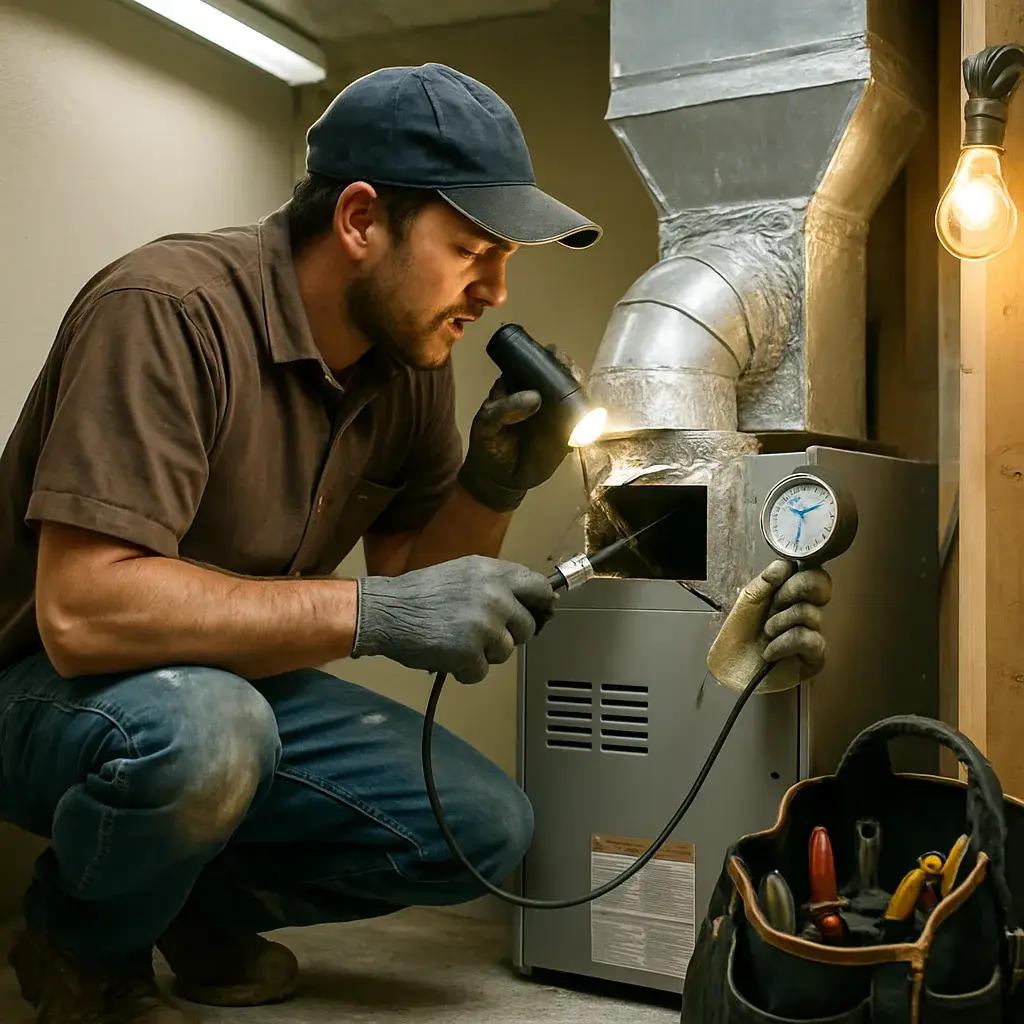
What’s Covered on This Page
- Furnace Sizing Is Based on a Load Calculation, Not a Square-Footage Guess
- Existing Ductwork Doesn’t Always Work With a New Furnace
- Permits and Code Inspections Are Part of Every Installation
- Most Standard Installations Are Completed in a Single Visit
- New Furnaces Can Have a Temporary Smell or Sound When First Started
- Related Links
Furnace Sizing Is Based on a Load Calculation, Not a Square-Footage Guess
A furnace that’s too big for the house tends to short cycle. It fires up, blasts heat fast, and shuts off before the air mixes evenly. This leaves you with a warm room next to a cold one, and a system that clicks on and off all day. A furnace that’s too small runs almost nonstop during a cold front. It still can’t get the house past 65. Neither one is rare. Both usually trace back to how the unit got sized in the first place.
The old shortcut is picking a furnace size off square footage alone. Maybe with a rough BTU-per-square-foot rule pulled from a chart. That number ignores a lot of things. An 1,800 square foot house from the 1970s off U.S. 80 with single-pane windows and thin attic insulation loses heat a lot faster than an 1,800 square foot home built in 2018 with better windows and sealed ductwork. Size them the same way, and one of those homes ends up with the wrong furnace.
Instead, we walk the house. We pull the real numbers that drive a load calculation. These include square footage by room, insulation levels, window count and type, ceiling height, air leakage around doors and attic access, and the condition of your existing ductwork. North Texas summers also push a lot of attic heat down into living space. So how the attic is set up matters, even on a heating job.
- Square footage and layout, measured room by room
- Insulation levels in walls and attic
- Number, size, and type of windows
- Ceiling height and overall home volume
- Air leakage around doors, attic access, and duct boots
- Condition and layout of existing ductwork
It depends on the house. We’ve seen two homes on the same street – same builder, same square footage – come out with different recommended furnace sizes once the ductwork and window upgrades got factored in. That’s the point of doing the calculation instead of guessing. If you want the fuller picture on how installs get scheduled and quoted, our furnace installation page walks through the rest of that process.
Existing Ductwork Doesn’t Always Work With a New Furnace
A lot of homeowners assume a furnace swap means the old one comes out and a new one goes in the same spot, same ducts, same everything. Sometimes that’s true. Often it isn’t. The ductwork in a lot of Dallas County and Kaufman County homes was sized for equipment that’s twenty or thirty years old. A new furnace moves air differently than the one it’s replacing.
Here’s what people notice after a mismatch: one room stays cold while the rest of the house is fine. Or the system runs longer than it should. Or there’s a whistling or rattling sound coming from the vents that wasn’t there before. None of that means the furnace itself is bad. It usually means the duct sizing, a leaky joint, or a bad piece is fighting the new equipment’s airflow.
Why does this happen so often around here? Slab-on-grade ranch homes from the 1950s through the 1990s make up a big chunk of the housing stock in this part of North Texas. Their duct systems were built for the AFUE and airflow specs of that era. A modern high-efficiency furnace, especially a variable-speed unit, moves a different volume of air. If the trunk line is undersized or a branch run got pinched during a past remodel, the new furnace has to work around a duct system that wasn’t built for it.
We look at the existing ductwork before we ever write a quote. Not after the equipment shows up. That includes checking duct size against the new furnace’s airflow requirements. We look for obvious leaks or crushed sections in the attic run. And we ask about any additions or room conversions that happened after the original ducts went in. If the ducts need sealing, resizing, or a run added, that’s a separate scope from the furnace itself. We don’t fold that into a furnace price without telling you first.
If your ducts are in reasonable shape, most installs don’t need any of this. The furnace goes in on the existing connections. We won’t invent duct work that isn’t needed just to pad a job. But if there’s a real mismatch, saying so up front is part of what makes the quote worth trusting. You can see how we break down what’s typically included and what isn’t on our main furnace installation service page.
Duct condition and sizing is one of the bigger reasons two furnace quotes for the same house can come in different scopes. It’s worth asking about specifically before you compare numbers.
Permits and Code Inspections Are Part of Every Installation
A furnace installation almost always needs a permit and a code inspection. And yes, that’s true even for a straight swap of an old unit for a new one. Gas connections, venting, and electrical work tied to a furnace all fall under building code. Skipping that step isn’t a shortcut we’re willing to take on a customer’s behalf.
Sunnyvale sits across the Dallas County and Kaufman County line. So which office handles your permit and inspection depends on which side of that line your home falls on. We pull the permit under our own license, TDLR-regulated HVAC License #TACLA29023C. We schedule the inspection once the work is done.
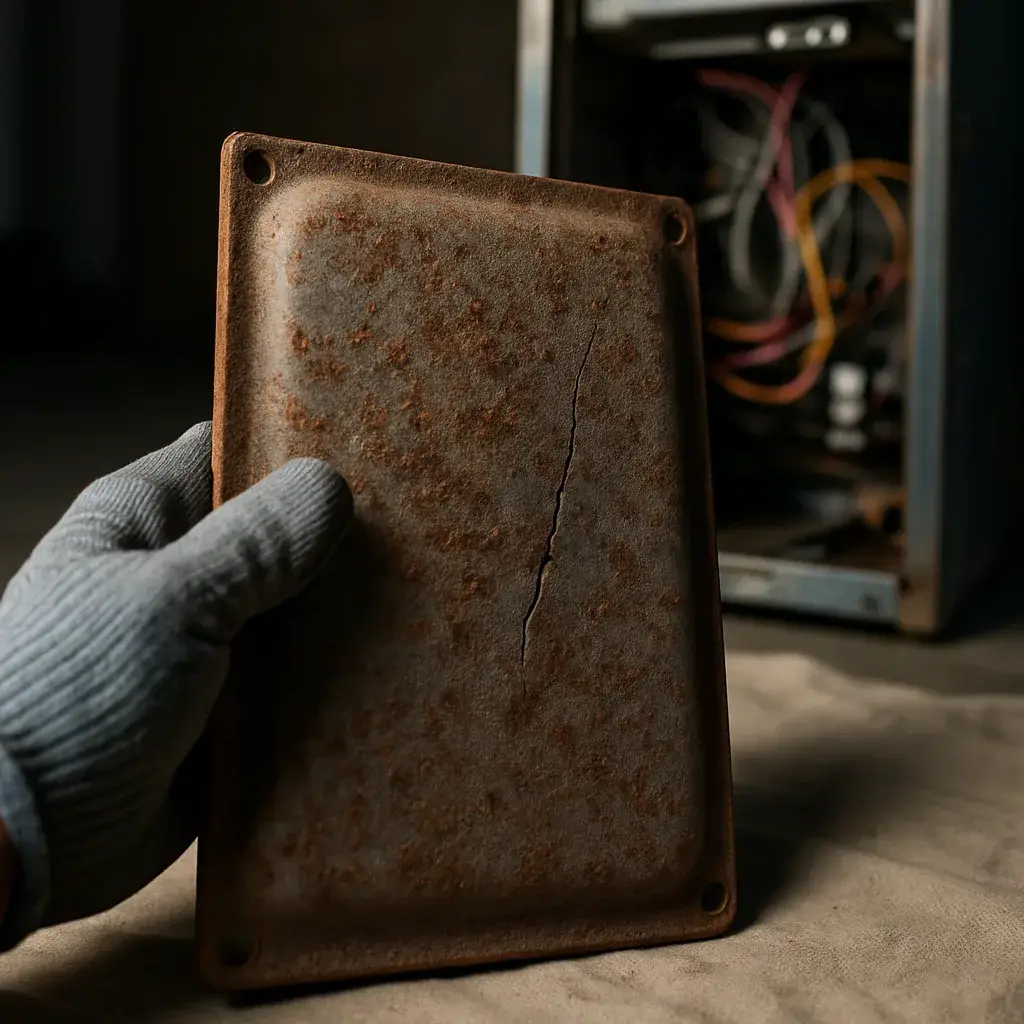
Here’s what that process protects. A furnace that’s vented wrong, or wired into an undersized circuit, can create a carbon monoxide risk or a fire risk. This isn’t obvious from looking at it. An inspector checks the venting, the gas line connection, and the electrical hookup against code before anyone signs off. That’s a second set of eyes on the parts of the job you can’t see once the furnace is buttoned up.
This does add a step to the timeline. Once an installation is finished, the inspection has to be scheduled with the jurisdiction. That date is set by the town’s office, not by us. Most inspections happen within a matter of days. We don’t control that calendar. We’d rather tell a customer that up front than promise a date we can’t guarantee.
We’ve turned down work where a customer wanted the furnace connected without pulling a permit at all. Usually to save time. We won’t do that. Every furnace we install, including through our furnace installation service, gets done to code with the permit and inspection that job requires.
- Permits are pulled under our TDLR-regulated license before installation work begins
- Which office issues the permit depends on Dallas County or Kaufman County jurisdiction
- Inspections cover gas connections, venting, and electrical hookups tied to the furnace
- Inspection scheduling is set by the town’s office, not by us, so it can add a few days to the timeline
Need help with Furnace installation?
Call Today, Get Service Today. Xtreme Air Services is ready to help.
Most Standard Installations Are Completed in a Single Visit
A standard, like-for-like furnace installation using your existing connections is usually a one-day job. Once you approve the written quote, our technicians install the new furnace, test it, and walk you through it before we leave. Most homeowners in Sunnyvale and across the Dallas-Fort Worth area get a working system the same day the work begins.
That single-visit timeline applies to the common job. This means swapping a furnace for a comparable unit without changing your ductwork, electrical, or gas line setup. It’s not the timeline for every install we do.
A few things push a job past one day. Older homes on the Dallas County side of Sunnyvale, and some of the established neighborhoods near U.S. 80, often have ductwork or electrical panels that weren’t built for a modern high-efficiency furnace. If we find the ductwork undersized, the electrical connection outdated, or a code correction required, that’s added work beyond the standard scope. We’ll tell you before we touch anything, not after.
- Equipment size, efficiency rating (AFUE), and brand or model chosen
- Ease of access to the furnace location, attic units take longer than closet installs
- Condition of existing ductwork, wiring, or gas lines feeding the unit
- Any code corrections or permits required for the job
- Custom fabrication, if standard connections don’t fit your setup
We won’t promise a same-day finish on a job that needs duct modifications or a panel upgrade just to make a sale sound simple. If your home needs that kind of work, we’ll say so in the written quote. Then we give you a realistic timeline before you approve anything.
Every install, standard or not, ends the same way. We do a walkthrough where we test the system with you. We explain the warranty coverage. And we confirm everything is running the way it should before we leave. You can see the typical cost ranges and what’s included on our furnace installation pricing page.
New Furnaces Can Have a Temporary Smell or Sound When First Started
A faint odor or a few odd ticks and pops the first time a new furnace runs is common. It’s not a sign of trouble. It’s worth knowing about before installation day, so you’re not second-guessing a brand new system.
The smell comes from manufacturing oils on the heat exchanger and burner assembly burning off as the metal warms up for the first time. Every furnace ships with a light coating of oil from the factory. That coating heats up the first few cycles it runs. Most homeowners describe it as a faint burnt-dust or metallic smell. It usually fades within the first hour or two of run time.
The sounds are mechanical, not electrical or gas-related. Sheet metal ductwork expands and contracts as hot air moves through it. That can cause light popping or ticking, especially in the first heating cycles after a new furnace installation. A new blower motor and new duct connections settling in can also make a brief humming or rattling sound before everything seats in place.
Attics in North Texas homes see wide temperature swings between summer and a hard winter freeze. That swing affects how ductwork expands and contracts around a new system for the first few weeks. It’s one reason the smell or sound can show up again briefly on the first really cold morning of the season, even after it seemed to go away.
What separates normal break-in from something worth a second look? A burning-oil smell that fades within a couple hours is expected. But a smell that lingers past the first day, smells like gas, or comes with visible smoke isn’t part of normal startup. Carbon monoxide has no smell at all. That’s why a furnace safety inspection matters, independent of anything you notice by nose or ear.
We walk through what to expect at startup during the acceptance walkthrough at the end of every furnace installation. We test the system together before we consider the job done. That’s also when we cover what’s normal in the first few cycles and what your warranty covers going forward.
Ready to Get Started?
Call 972-288-2263 Today, Get Service Today.