


Furnace Replacement vs. Repair: How We Help You Decide
The age-times-repair-cost math we run, why breakdown history and AFUE weigh as much as the repair price, the cracked heat exchanger that ends the debate, and what the quote covers.
What’s Covered on This Page
- The Short Answer on Repair vs. Replacement
- The Real Factors That Decide Repair or Replacement
- When We’d Recommend Repair
- When We’d Recommend Replacement
- What a Replacement Quote Includes
- Related Links
- How do you decide whether my furnace should be repaired or replaced?
- What’s the biggest mistake homeowners make when weighing repair against replacement?
- Will you try to sell me a new furnace when a repair would work fine?
- Do you offer financing if replacement turns out to be the better option?
- What happens if you find a safety issue during the furnace diagnostic visit?
The Short Answer on Repair vs. Replacement
We don’t have one magic number that tells every homeowner what to do. But we do have a way we walk through it with you on every call. We look at the furnace’s age, what the repair costs, and what shape the rest of the system is in before we recommend anything.
Here’s the math we use. Take the furnace’s age in years, multiply it by the repair cost. If that number tops $5,000, replacement is usually the better long-term move. A $600 blower motor on a 6-year-old furnace is nowhere close to that line. And a $1,200 heat exchanger issue on a 14-year-old unit is well past it.
We’ll also tell you plainly when replacement isn’t the right call. If your furnace is 5 years old and needs a control board, we’re not going to talk you into a new system. That’s not what our workmanship guarantee is for. Our diagnostic visit runs $26 to $99. We credit that toward the repair if you move forward with us.
- Furnace age: under 10 years favors repair. Over 12-15 years favors replacement.
- Repair cost relative to a new system: a single repair over roughly a third of replacement cost is a warning sign.
- Repeat breakdowns: a second major repair within a couple years shifts the math toward replacement.
- Safety issues like a cracked heat exchanger. We’d flag that during a safety inspection.
- Efficiency: an older, lower-AFUE furnace running the same load costs more to operate month to month.
The number that moves the most from house to house is what the current ductwork and connections look like. A like-for-like swap using existing connections keeps a job in that $4,600 to $6,300 range. Anything involving duct modifications, electrical upgrades, or code corrections adds to that. (This is the part people overthink sometimes.) That’s why we walk the full system before quoting a flat rate. You can see how we handle the installation side of things on our furnace replacement page.
The Real Factors That Decide Repair or Replacement
Age is the first thing we look at. But it’s never the only thing. A furnace that’s 15 to 20 years old and needs a big part (like a control board or heat exchanger) usually isn’t worth fixing. The repair might save you a few hundred dollars compared to a new system, but you’d still have an old unit that costs more to run all winter.
How often it’s broken down also matters. One repair in ten years is very different from your second service call this season. If we’re coming back every year for something new, that pattern tells you more than any single repair bill ever will.
Efficiency plays a role too. Furnaces have an AFUE rating. This number simply tells you how much of the fuel you pay for actually becomes heat in your home. Older units often run in the 60s or low 80s. Newer high-efficiency furnaces are much higher. So replacing it can cut your gas bill, even before you count the repairs you’re avoiding.
Safety is a factor we take seriously. If we find a cracked heat exchanger or a carbon monoxide reading during an inspection, the conversation changes fast. That’s true no matter how old the unit is. That’s not a repair-or-replace discussion, it’s a replacement talk. Period.
- The age of the unit and its repair history
- What specific part is failing (a control board or heat exchanger pushes toward replacement more than a blower motor or ignitor)
- The current AFUE rating compared to a new high-efficiency system
- Carbon monoxide levels or other safety concerns from an inspection
- The condition of your existing ductwork, since bad ducts affect what a new furnace can do
Here’s what we’ve noticed most people don’t hear until they get the invoice: if your furnace is under 10 years old and this is its first real repair, we’ll probably tell you to fix it. That’s usually an easy call. The tougher situations are furnaces at 10 to 12 years old with a repair that costs real money. That’s when the AFUE numbers, past repairs, and your plans for the house make all the difference.
On pricing, a typical furnace replacement in the DFW area usually costs $3,800 to $8,000. Most standard jobs fall between $4,600 and $6,300. This depends on the size and efficiency of the equipment. If you want us to check your existing furnace first, the service-call fee is $26 to $99. We credit that fee toward the job if you decide to move forward with us. We also offer financing for qualifying installations. That helps you get a full furnace replacement if it’s the right choice for your home and budget.
When We’d Recommend Repair
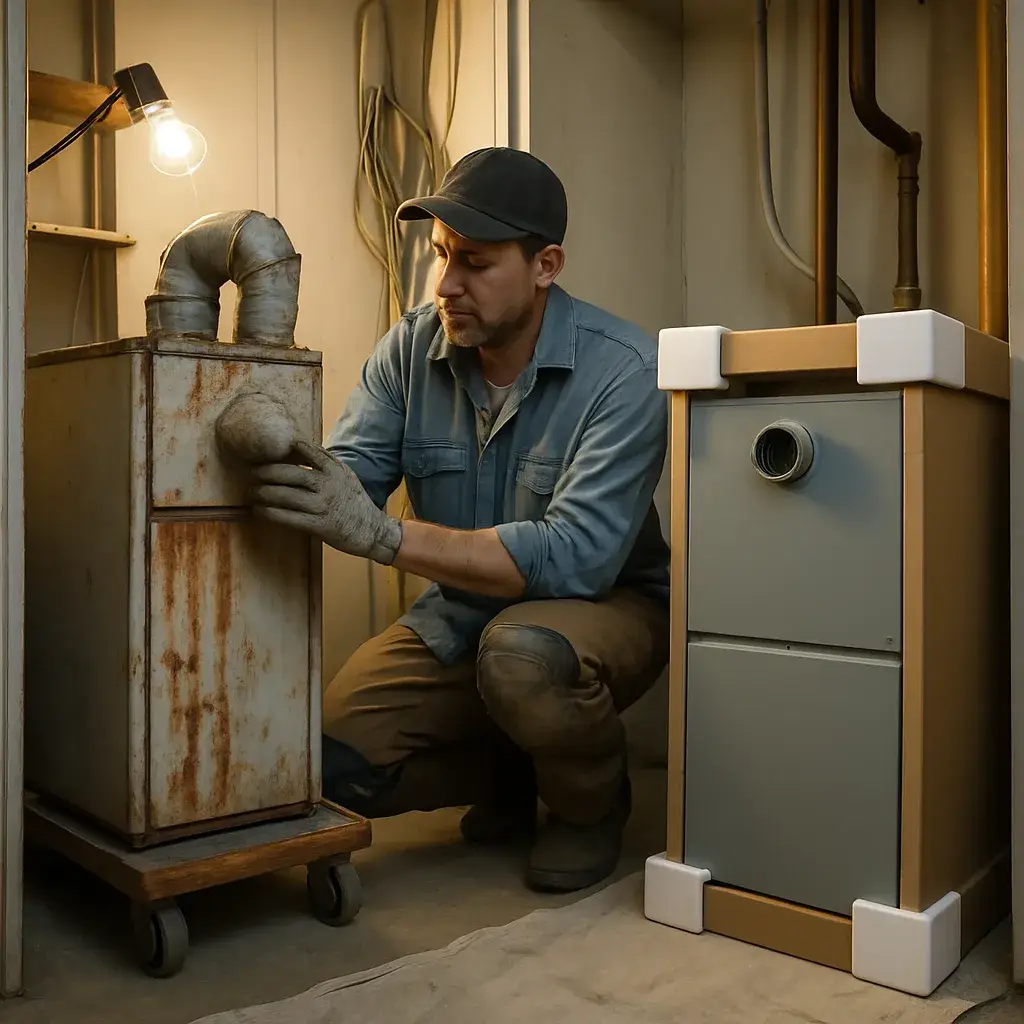
We’d lean toward repair when your furnace is under 10 to 12 years old. This works if the problem is just one part and the rest of the system is in good shape. A bad ignitor, a dirty flame sensor, or a failed blower motor are common, fixable problems. Furnaces often have plenty of life left after these fixes. If the cabinet is solid and the heat exchanger is clean, a full replacement probably doesn’t make sense yet.
Cost also matters. If a repair costs a fraction of a new furnace, and our technician doesn’t see other parts about to fail, repair usually wins. Our service-call fee runs $26 to $99. We credit that toward your repair if you move forward with us. So, getting the diagnosis won’t cost you extra on top of the fix.
We also look at how your furnace has been running, not just its age on paper. A furnace with regular maintenance and one isolated failure is different from one with three service calls in two winters. One well-timed repair on a furnace with a clean history is a reasonable bet. But a pattern of failures on an aging unit points a different direction. We cover that more when we talk about replacement.
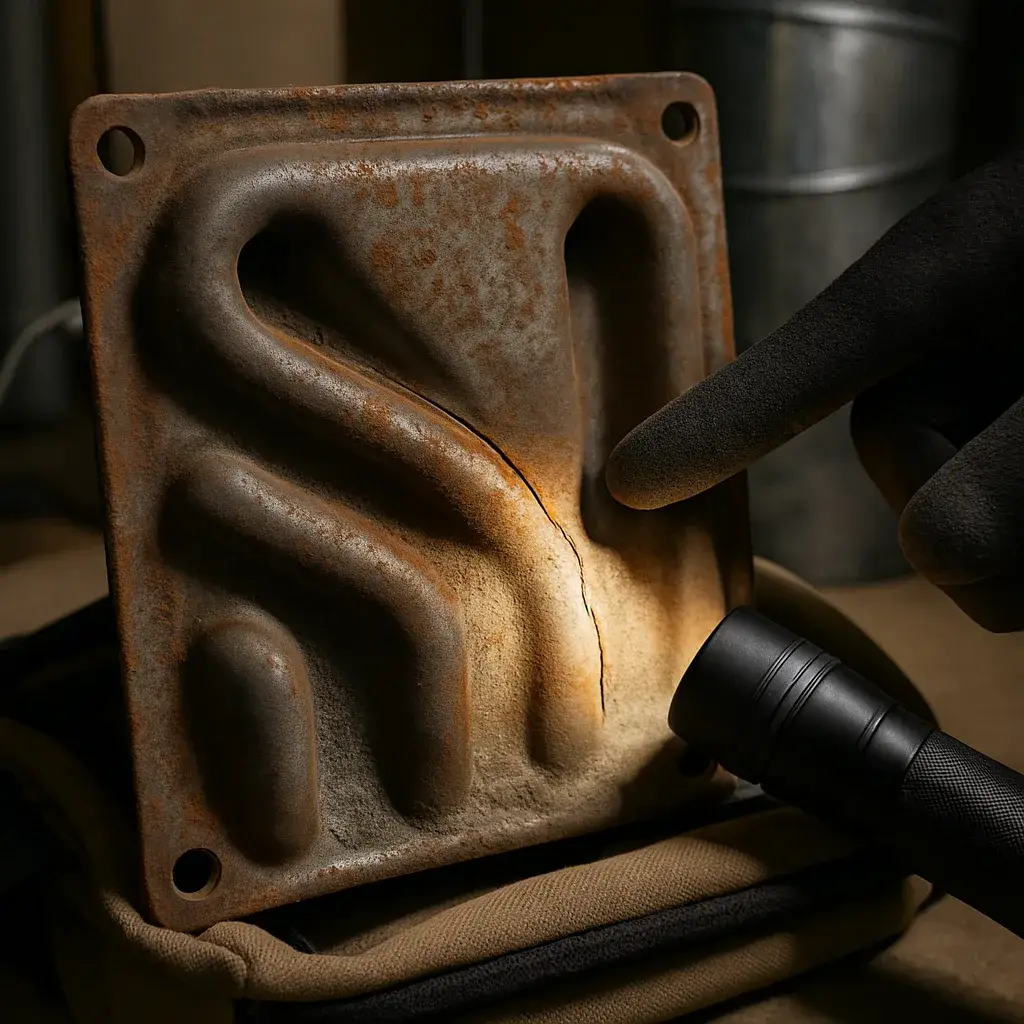
Here’s where it gets specific: a cracked heat exchanger is not a repair situation. This is a safety issue tied to carbon monoxide. We won’t patch around that. Aside from that one hard line, most single-component failures on a furnace under 12 years old are worth fixing rather than replacing. This is the part people sometimes overthink.
During your same-day diagnostic visit, our technician inspects your furnace. They’ll explain what’s failing in plain language. Then we give you a written flat-rate price before we touch anything. If repair is the sound option, that’s what we’ll say.
- Furnace is under 10 to 12 years old with a single failed part
- No history of repeated breakdowns in recent winters
- Heat exchanger and cabinet are in sound condition
- Repair cost is a small fraction of a full installation
- The unit has had reasonably regular maintenance
Not sure what your Furnace replacement project needs? Ask us.
Call Today, Get Service Today. Xtreme Air Services is ready to help.
When We’d Recommend Replacement
We’d recommend replacement when a repair bill starts to get close to the cost of a new furnace. Or when the furnace keeps breaking down in new ways year after year. A full furnace replacement here in Sunnyvale typically runs from $3,800 to $8,000. Most standard jobs are between $4,600 and $6,300. It depends on the size, efficiency, and how the new unit connects to your existing ductwork and utility lines.
The math is usually pretty simple. If a repair is a few hundred dollars and the furnace is otherwise in good shape, we fix it. No question. But if we see a cracked heat exchanger, a control board that’s failed on an older unit, or a blower motor that’s the second major part to go in a couple of years – the repair cost adds up fast. At that point, we’ll tell you that a new unit is a better use of your money.
Efficiency also plays a role. Older furnaces run well below the AFUE ratings you find on today’s equipment. So if you’re about to put serious money into repairing an inefficient unit, it’s often smarter to put that money toward a new furnace installation instead. We walk through these numbers with you when we do a heating system repair or furnace safety inspection call.
Safety findings matter a lot here. If carbon monoxide testing shows a problem tied to the furnace itself (not just a part we can fix), that’s a replacement conversation. Not a repair. We won’t try to patch over a safety issue just to save you money today. That just pushes the real cost down the road.
Sometimes it genuinely could go either way. The right call depends on how long you plan to stay in your home. It also depends on whether your ductwork can handle a higher-efficiency system, and what your current utility costs look like. We’ll show you both options with real numbers, (we never try to push you toward the bigger job).
If you do decide on replacement, the $26 to $99 diagnostic call-out fee counts toward the job. We also offer financing on qualifying installations if you’d like to spread out the cost. You can see more on our furnace replacement page before you call.
What a Replacement Quote Includes
Our written quote for a furnace replacement spells out the full scope before any work starts. A standard like-for-like job, using your existing connections with no major changes, usually runs $4,600 to $6,300. Across the full range of furnace sizes and efficiency levels, most jobs land between $3,800 and $8,000.
That price is a flat number, not an estimate that grows once the crew shows up. We give it to you upfront. Here’s what that price covers (and what it doesn’t).
- Included: the furnace and materials, professional installation, standard connections, startup and testing, and haul-away of your old unit
- Not included: duct, electrical, or plumbing modifications
- Not included: code corrections
- Not included: permits, unless we’ve stated them on the quote
A few things move the number up or down. Size and capacity matter, along with the AFUE efficiency rating you choose. Brand and model play a part too. So does how easy the furnace is to get to (attics in Sunnyvale can be a tight squeeze, we’ve noticed). And the shape your current ductwork and wiring are in. If your home needs a code upgrade, or the job calls for custom sheet metal work, that gets added and explained before we touch anything.
If you’re comparing options before you’re ready to commit, our Furnace replacement page walks through the equipment side of the decision in more detail.
A visit to look at your current setup and confirm the right size and options runs $26 to $99. If you move forward with the replacement, that fee gets credited toward the job. You’re not paying twice to get a real number.
Furnace replacements aren’t small purchases. So we offer financing on qualifying installations, subject to approved credit. That’s worth asking about up front if a full cash price isn’t how you want to handle it.
Frequently Asked Questions
Common questions about Furnace replacement
How do you decide whether my furnace should be repaired or replaced?
We look at the furnace’s age, the cost of the repair, and its breakdown history during the diagnostic visit, which runs $26 to $99. If the repair is a single part and the furnace is under 10 years old, repair usually makes sense. Past that age, or with a second major repair, replacement tends to save more money over time. We also check for safety issues like a cracked heat exchanger, which can change the recommendation no matter the furnace’s age.
What’s the biggest mistake homeowners make when weighing repair against replacement?
Most people focus only on the repair price and skip the AFUE rating and past repair history. A $600 fix can look like an easy win, but if it’s the second major repair in two winters on an older, lower-efficiency furnace, the math changes. We factor in what the unit costs to run each month, not just what today’s repair costs, before we make a recommendation.
Will you try to sell me a new furnace when a repair would work fine?
No. If your furnace is young and needs a common part like a control board or ignitor, we’ll recommend the repair. That’s what our workmanship guarantee is built around. We only push toward replacement when the numbers, or a safety finding like a cracked heat exchanger, genuinely support it. A repair on a furnace with a clean history and years of life left is a reasonable call, and we’ll say so.
Do you offer financing if replacement turns out to be the better option?
Yes. We offer financing for qualifying furnace installations and larger jobs, subject to approved credit. That’s usually a factor once your furnace is past its efficient years and the math points toward replacement. Financing doesn’t change our recommendation either way, it just gives you a way to move forward once you decide replacement makes sense for your home.
What happens if you find a safety issue during the furnace diagnostic visit?
We’ll flag it right away and explain what we found, whether that’s a cracked heat exchanger or a carbon monoxide reading. At that point the conversation shifts to replacement, regardless of the furnace’s age or the size of the repair. Safety findings aren’t part of the normal repair-versus-replace math, they’re a separate call we make during the inspection to keep your home safe.
Ready to Get Started?
Call 972-288-2263 Today, Get Service Today.