


Generator Fuel Line Connection: Repair or Replace the Existing Line?
How we decide whether to repair or replace an existing generator fuel line in Sunnyvale, TX.
What’s Covered on This Page
- The Short Answer on Repairing vs. Replacing a Generator Fuel Line
- The Factors That Decide Repair or Replace
- When We’d Repair or Connect to the Existing Line
- When We’d Replace the Fuel Line Instead
- How We Help You Decide Before Any Work Begins
- Will you reconnect my existing line if it’s undersized for my generator?
- What happens if my gas meter can’t handle the added generator load?
- Does the $800 to $1,400 price assume a repair or a brand-new line?
- Is the service-call fee still credited if you recommend replacement instead of a simple reconnection?
- What’s the factor that most often turns a simple connection into a bigger job?
The Short Answer on Repairing vs. Replacing a Generator Fuel Line
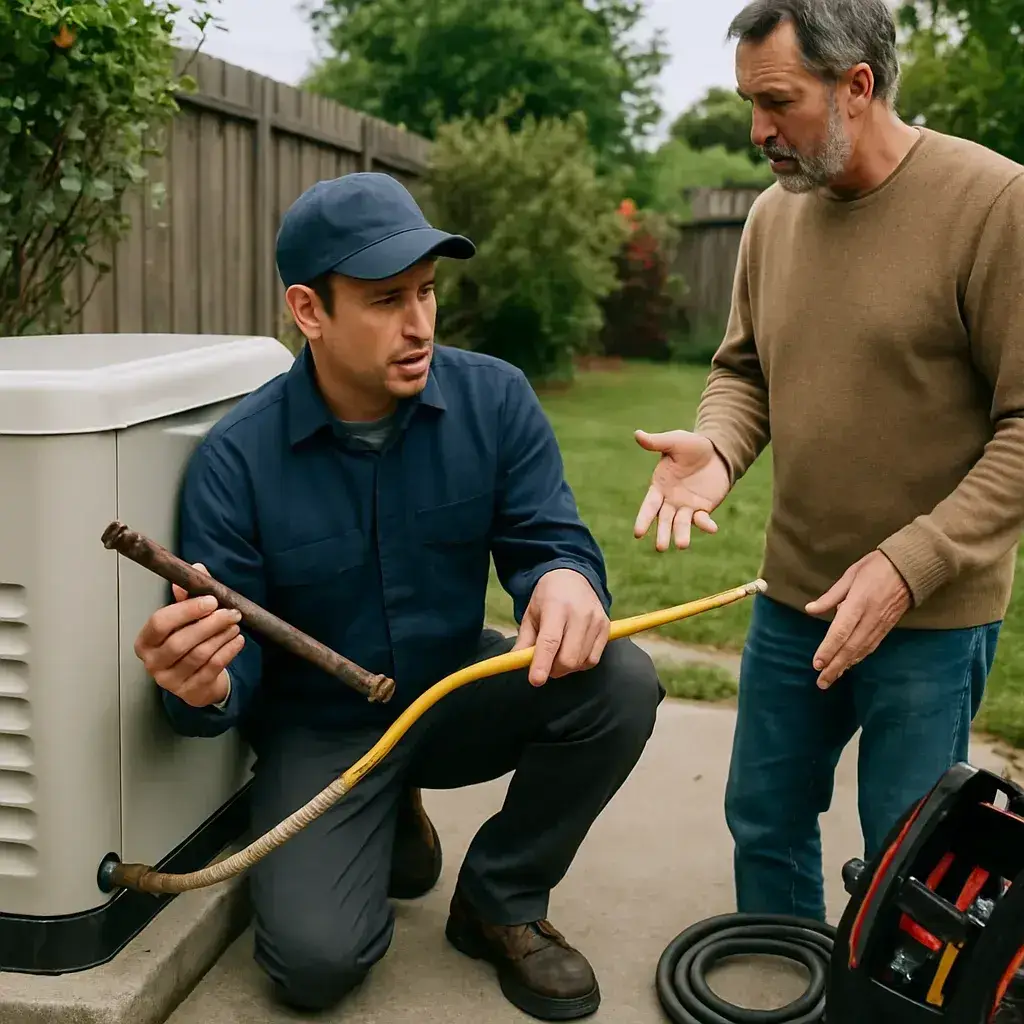
There isn’t much of a repair-versus-replace fork on a fuel line, not the way there is with a compressor or a water heater tank. Most jobs fall into one of two buckets: connecting a new line to a generator that never had one, or extending and reworking an existing line because the unit moved, got bigger, or switched fuel types. Either way, we’re running pipe, sizing it correctly for the generator’s fuel demand, making the connections, and testing everything before we call it done.
What actually moves the price is mostly physical. Fuel type matters first, since natural gas and propane call for different pipe sizing. Line length and routing matter too, especially on older Sunnyvale and Dallas-area homes where the gas meter sits on the opposite side of the house from wherever the generator pad ended up. Pipe size comes into play if the generator is large enough to need a bigger line than what’s already there. And access counts for a lot: a line running through an open crawlspace goes a lot faster than one that has to be fished through a finished wall or slab.
- Included in our pricing: the fuel line, materials, professional installation, all connections, and testing before we sign off
- Not included: meter or regulator upgrades, the fuel tank itself, code corrections, and permits unless we’ve stated otherwise in your quote
- A $26 to $99 service-call fee applies to the initial visit, and it’s credited toward the job if you move forward with us
If your existing line needs a code upgrade, or your gas meter can’t handle the added load, that’s a separate cost we’ll flag before any work starts, not something folded quietly into the fuel line price. We’d rather tell you up front than have it show up as a surprise on the invoice. On larger installations, financing is available on approved credit if the total scope runs bigger than expected.
The Factors That Decide Repair or Replace
Fuel type comes first. Natural gas and propane run at different pressures and need different pipe sizing, so a line built for one doesn’t just get patched to work with the other. If your generator was set up for propane and you’re switching to natural gas, that’s a new line, not a fix.
Line length and routing matter more than most homeowners expect. A short run from an existing gas meter to a generator pad a few feet away is a different job entirely from routing 60 feet of pipe around a foundation, through a fence line, or under a driveway. Longer runs mean more joints, more places for a leak to start, and more reasons we’d size the pipe up rather than reuse what’s already there.
Pipe size gets checked with a test every time, whether it’s a repair or a new install. If the existing line can’t hold what your generator’s BTU demand requires, we’re not going to reconnect it and call it a day. That’s an undersized line, and undersized lines get replaced, not patched.
Access changes the math too. A line running through open yard is straightforward. One buried under landscaping, near a slab foundation, or routed through a tight crawlspace takes more time and can push a job toward replacement, since digging up a short problem section rarely costs less than running clean new pipe alongside it.
Code upgrades and permits are the factor people ask about least and should ask about most. If your home’s existing gas supply doesn’t meet current code for the added generator load, that gets addressed before we connect anything. We don’t skip this step. Permits and inspections apply when the work requires them, and that part isn’t negotiable on our end.
- Fuel type match between your generator and your existing supply
- Total line length and how much of the route is exposed versus buried
- Pipe diameter and whether it passes a test at your generator’s demand
- Physical access, including foundations, landscaping, and crawlspaces
- Whether current code requires an upgrade before the new connection goes in
Most of the time, a straightforward reconnection that passes its test stays a repair. Once the pipe size is wrong for the load, the fuel type doesn’t match, or code requires new supply work, it moves into replacement territory. Our pricing page for this service walks through the full cost breakdown in more depth.
When We’d Repair or Connect to the Existing Line
Most of the time, connecting to your existing gas or propane line is the right call, not a full new run. If your meter or tank already has enough capacity and the generator sits within a reasonable distance, we tie into what’s there, size the connection correctly, and test it. That’s the $800 to $1,400 job we quote most often for a standard fuel line connection.
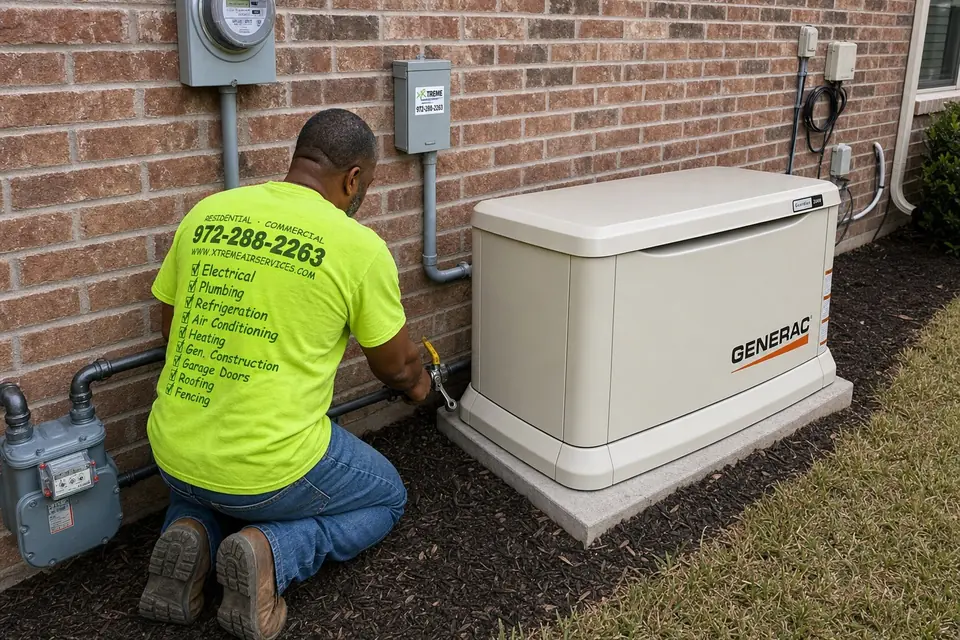
What changes the math is distance, fuel type, and access. A propane tank set 15 feet from the pad is a different job than a natural gas line that has to route under a slab or around a finished patio. Longer runs need bigger pipe to keep pressure where it needs to be, and every extra foot of trenching or fishing through a wall adds labor. Fuel type matters too, since propane and natural gas have different pressure and sizing rules. We size the line to the fuel you’re running, not the other way around.
Here’s where the job gets bigger than a simple connection. If your existing meter or regulator doesn’t have the capacity to feed the generator on top of the house, that’s a meter or regulator upgrade, and it’s not included in the standard fuel line price. Same goes for a supply tank that’s undersized for a whole-home standby unit. We’ll flag that during the visit rather than quote you a number that won’t hold once we’re onsite.
- Fuel type, natural gas or propane, since sizing and rules differ
- Line length and routing, straight runs cost less than ones that go around obstacles
- Pipe size needed to keep pressure correct at the generator
- Access, an easy crawlspace run versus trenching through landscaping or concrete
- Whether the meter, regulator, or tank has capacity for the added load
- Permits and any code corrections the inspector requires
The connection price covers the fuel line, materials, the installation and connections, and testing. It doesn’t cover meter or regulator upgrades, the propane tank itself, code corrections, or permits, unless we’ve already priced those in writing. We charge a service call fee of $26 to $99, and that gets credited toward the job if you move forward with us. On larger installations, financing is available for approved buyers, which matters more on jobs that turn into a meter upgrade or a longer trench than anyone expected.
This connection work is usually one piece of a bigger generator install, and we handle the sizing and placement side of that through our generator installation services as well.
Thinking about Generator fuel line connection? Let’s talk.
Call Today, Get Service Today. Xtreme Air Services is ready to help.
When We’d Replace the Fuel Line Instead
We replace the line instead of just connecting to it when the existing pipe can’t safely carry what the new generator needs. That’s the short version. A generator fuel line job runs $800 to $1,400 in most cases, inside a broader $500 to $2,000 range, and the biggest reason a job lands at the high end is that we’re not just running new pipe to the unit, we’re correcting something already in the ground or on the wall.
Pipe size is the first thing we check. A line sized for an old 10kW unit won’t move enough gas or propane for a 20kW standby generator. Undersized pipe means low pressure at the appliance, which shows up as a generator that struggles to reach full output or won’t start under load. If the existing line is undersized for the new equipment, we replace that section rather than tie into it.
Fuel type matters too. If a home is switching from propane to natural gas, or the generator spec calls for a different pipe diameter than what’s buried, that’s a replacement, not a connection. We also look at the material and condition of what’s there. Older black iron pipe can corrode from the inside over years, and buried polyethylene line that’s been nicked or improperly joined doesn’t get reused just because it’s convenient.
- Line size doesn’t match the new generator’s BTU demand
- Fuel type is changing (propane to natural gas or the reverse)
- Existing pipe shows corrosion, damage, or improper past joints
- Routing crosses a spot code won’t allow, forcing a new path
- Access requires digging anyway, so reusing old pipe saves little
Routing and access drive the decision as much as the pipe itself. If the generator pad sits in a new spot, or the shortest safe path to the meter crosses a driveway or foundation, running fresh line is usually simpler and more reliable than trying to extend or repair a line that was routed for a different setup. And if we’re already trenching for access, there’s rarely a reason to reuse pipe that was marginal to begin with.
What’s included is the same either way: materials, professional installation, connections, and testing to confirm the line holds before we ever fire up the generator. What’s not included is meter or regulator upgrades, tank supply, code corrections, or permits, unless we’ve stated those up front in writing. The $26 to $99 service call fee gets credited toward the job if you move forward with us, and financing is available on qualifying installations if a replacement pushes the job toward the higher end of that range.
How We Help You Decide Before Any Work Begins
When you call us about connecting a fuel line to your generator, we look at what the job actually needs before we ever quote a number. A technician comes out, looks at your generator, your fuel source, and your yard, then writes up a flat-rate price on the spot. You see the total before any tool touches your property.
A few things move the price up or down. Fuel type matters first, since natural gas and propane connect differently. Line length and how it has to route around your home or business changes the labor. Pipe size depends on your generator’s draw. Tight access under a house or through a slab foundation adds time. And if the job triggers a code upgrade or requires a permit, that’s part of the picture too.
- Fuel type: natural gas or propane
- Line length and routing around the property
- Pipe size and requirements
- Access to the connection point
- Code upgrades or permits, when they apply
Most fuel line connections run between five hundred and two thousand dollars total, with the typical job landing between eight hundred and fourteen hundred dollars. That price covers the fuel line, materials, the installation, the connections, and testing to confirm everything holds. It does not cover a meter or regulator upgrade, running new supply from a propane tank, or permit fees, unless we’ve already told you those apply to your job.
We charge a service-call fee between twenty-six and ninety-nine dollars for the visit. If you decide to move forward with the connection, that fee gets credited toward the job, so you’re not paying twice just to get a number in writing. Financing is available on qualifying installations if that helps you plan the cost.
See our full generator fuel line connection service in Sunnyvale for what the complete job involves.
Frequently Asked Questions
Common questions about Generator Fuel Line Connection in Sunnyvale
Will you reconnect my existing line if it’s undersized for my generator?
No. We test the pipe size against your generator’s fuel demand every time. If the existing line can’t handle that load, we replace it instead of patching it and calling the job done. Reconnecting an undersized line isn’t something we’ll do, even if it would keep the invoice lower. This is one of the clearer repair-or-replace calls in this type of work, and the test tells us the answer before we start.
What happens if my gas meter can’t handle the added generator load?
That’s treated as a separate cost from the fuel line itself, and we flag it before any work starts. Meter and regulator upgrades aren’t included in our standard fuel line pricing of $800 to $1,400. We’d rather tell you about it upfront than have it show up as a surprise later. On larger installations that grow beyond the original scope, financing is available on approved credit.
Does the $800 to $1,400 price assume a repair or a brand-new line?
It can be either. That range covers connecting a new line to a generator that never had one, and it also covers reworking an existing line for a moved or upgraded unit. What sets the price is fuel type, line length, pipe size, and access, not whether we’re calling it a repair or a new run. Our overall range for this work runs $500 to $2,000 depending on those factors.
Is the service-call fee still credited if you recommend replacement instead of a simple reconnection?
Yes. The $26 to $99 service-call fee for the initial visit gets credited toward the job either way, whether the outcome is a straightforward reconnection or a full new line. That fee covers the visit and the pressure test that tells us which option fits your setup, so it applies before we know the answer.
What’s the factor that most often turns a simple connection into a bigger job?
Code and permit requirements catch people off guard more than anything else. Homeowners tend to focus on line length or fuel type, but if your home’s existing gas supply doesn’t meet current code for the added generator load, that gets addressed first. We don’t skip permits or inspections when they apply, and that step isn’t something we negotiate around on our end.
Ready to Get Started?
Call 972-288-2263 Today, Get Service Today.