


What Heating System Repair Costs
The $150 to $700 range and where the common single-part fix lands, what part cost and furnace age move the number, what the quote covers and excludes, and when financing applies.
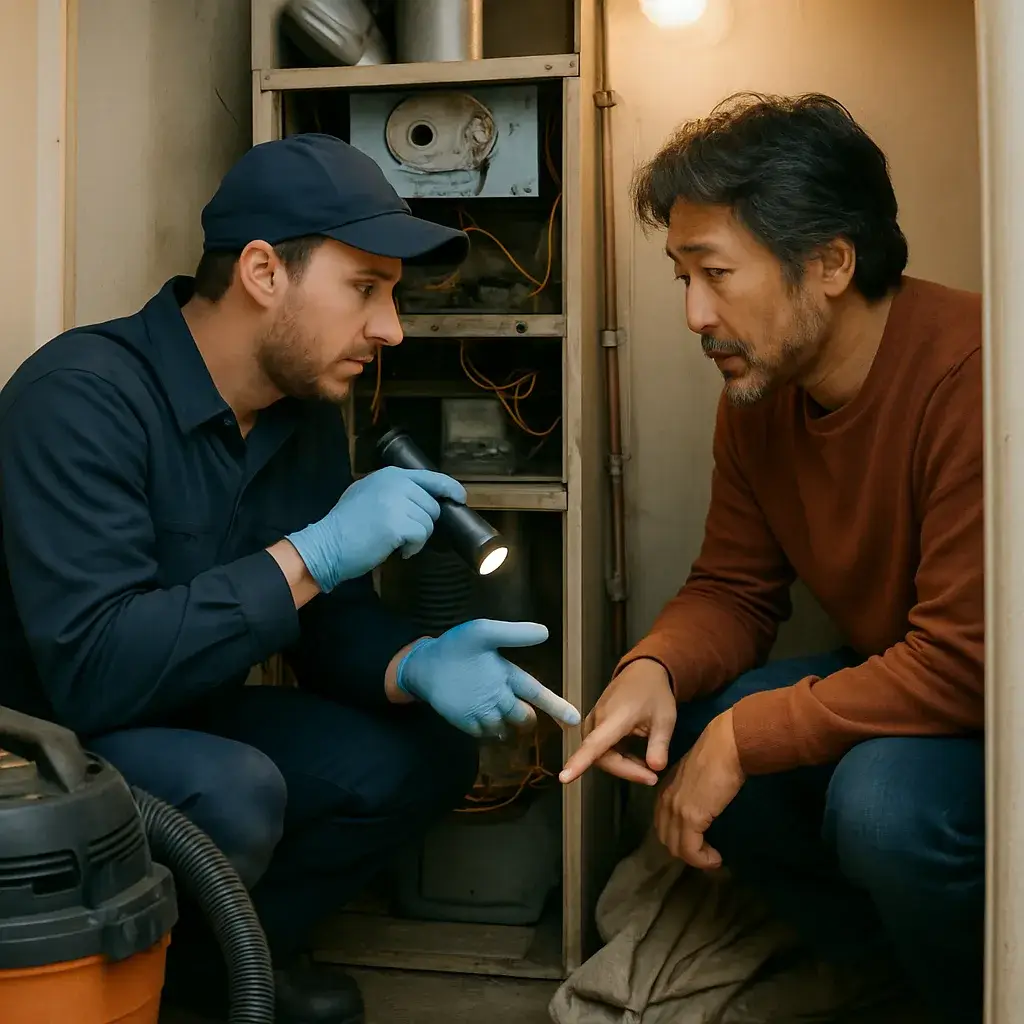
What’s Covered on This Page
The Real Cost Range for Heating System Repair
Most heating system repair jobs we run land between $150 and $700. The typical call, with one failed part found, replaced, and tested, comes in at $150 to $400. That range holds up whether the furnace sits in a hot attic in a 1970s ranch home or a closet in a newer Forney or Rockwall subdivision. Most calls we take are a single common failure fixed on the first visit, not a string of parts going bad at once.
A few things push a job toward the higher end of that range. How far the failure has spread matters. A bad ignitor is a quick fix, but a burned control board takes longer and costs more in parts. The part itself matters too. Some parts sit on the truck. Others have to be ordered from the manufacturer, and older or less common equipment brands can mean a longer wait and a higher price. The age of the system plays a role as well. Older furnaces sometimes need parts that aren’t stocked anywhere close by. And if more than one component failed at the same time, you’re paying for more than one repair.
- Extent of the failure, from a single part to multiple failed components
- Part cost and availability for your furnace’s age and brand
- Whether the diagnosis turns up more than one failed part
- Timing, though nights and weekends cost the same as any weekday with us
The quoted price covers the diagnosis, the labor, and the standard replacement part, plus testing the system and cleaning up after ourselves. It does not cover a second or third failed part discovered during the repair, a major component like a full heat exchanger, code upgrades, or permits. Those get quoted separately once we know what we’re dealing with. We won’t touch anything beyond the original scope without telling you the new number first.
Every visit starts with a $26 to $99 service-call fee. That amount goes toward the repair if you decide to have us fix it. Financing isn’t typically something homeowners need for a repair this size. But it’s available if a bigger repair or a full heating system replacement turns out to be the better call. You can read more about how repair compares to replacement on our heating system repair page.
What Drives Your Heating System Repair Price Up or Down
These calls land between $150 and $400. The full range runs $150 to $700 depending on what the technician finds. A handful of things push a job toward one end or the other. None of them are a mystery once you know what to look for.
- How far the failure has spread. A single bad part fixed on the first visit stays near the low end. A failure that damaged a second component costs more to correct.
- Part cost and availability. Some parts sit on the truck. Others, especially for older or less common furnace brands, take longer to source and cost more.
- Equipment age and brand. A furnace that’s 15 or 20 years old can need parts that aren’t stocked everywhere. This adds to the price and sometimes the timeline.
- Whether more than one component failed at once. This happens more with older systems that haven’t had regular maintenance, and it changes the scope of the repair.
- When we come out. Nights and weekends cost the same as a weekday visit. We don’t add an overtime charge just because the call came in after hours.
Here’s what’s covered in that price: diagnosis, labor, and the standard replacement part. Plus testing the system afterward and cleaning up before we leave. What’s not included is anything beyond that single fix. Additional failed parts, major components, code upgrades, or permit work, unless we’ve quoted that separately in writing first.
We charge a $26 to $99 service call fee to come out and diagnose the problem. That fee gets credited toward the repair if you decide to move forward with us. Financing isn’t typically part of a smaller repair like this one. But it’s available if the technician finds something bigger, like a component that points toward a full system replacement instead.
If you want the fuller breakdown of what heating and cooling work runs across the board, our heating system repair service page walks through pricing for related jobs too.
Older furnaces with harder-to-find control boards or ignitors are the jobs most likely to land near the top of the range. Simply because of what the part costs and how fast it can get to us. That’s not a guess we make over the phone. It’s why every price gets confirmed in writing after the technician has looked at your system, not before.
What’s Included and What’s Not
When we quote our heating system repair service, the price covers everything needed to find the failed part and get your system running again on that visit.
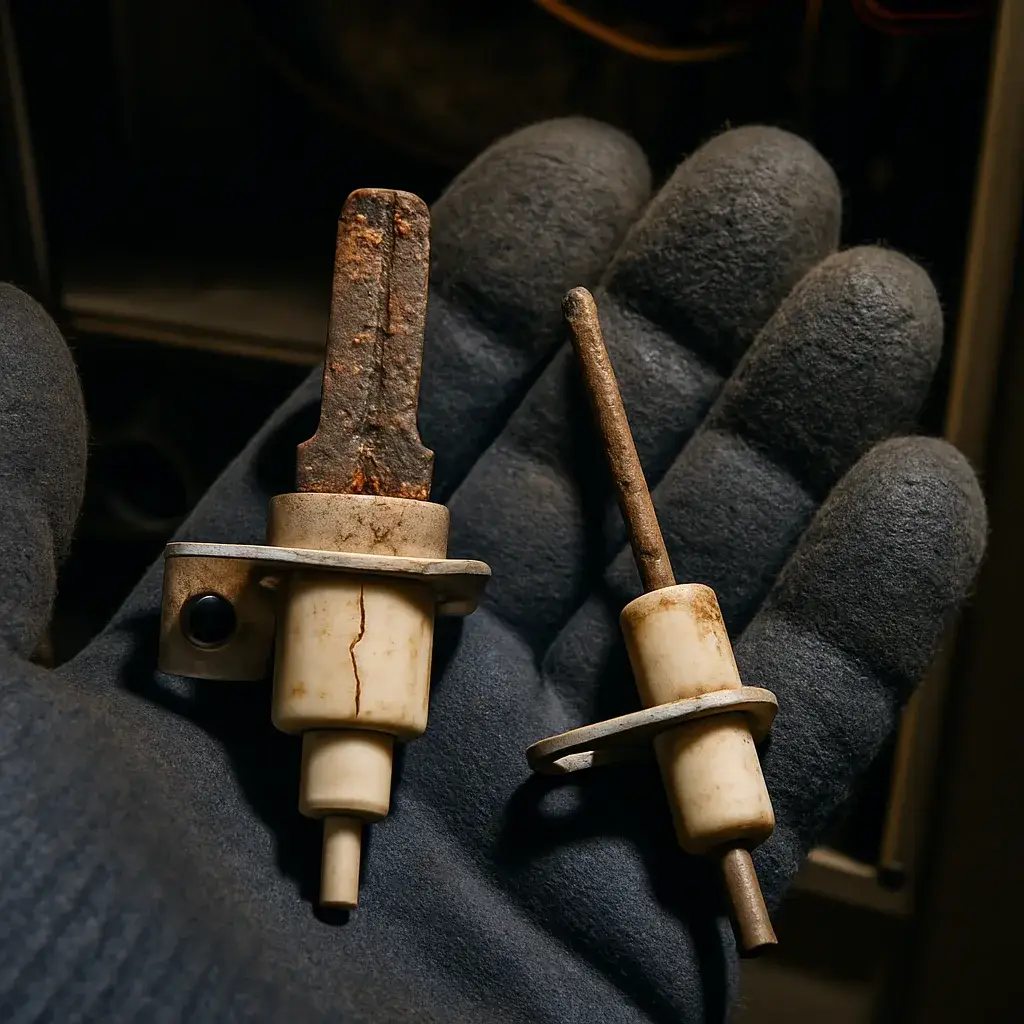
- Diagnosis to find the actual failed part, not a guess
- Labor to remove and replace it
- The standard replacement part itself
- Testing the system afterward to confirm it runs right
- Cleanup before we leave
That covers the common case: one failed part, fixed on the first visit. But not every furnace call stops there. We tell you before we touch anything, not after.
- A second or third part that’s also failed, once we’re inside the unit
- Major components like a heat exchanger or control board assembly, if the damage goes beyond the original part
- Code upgrades your system needs to meet current standards
- Permits, if the scope of the work requires one
Any of those get quoted separately, in writing, before we do the work. You’re never billed for something you didn’t approve first.
There’s also a service-call fee of $26 to $99 for the visit itself. If you decide to move forward with the repair, that fee gets credited toward the job. If you decide not to repair, you’ve paid for the diagnosis and nothing else.
Financing isn’t typically part of a smaller repair like this one. Most jobs land in the $150 to $700 range and get resolved same-visit. If a repair turns into something bigger, financing is available on larger repairs and full replacements.
If your furnace needs more than one part, or the failure points to a bigger issue underneath it, the flat rate on the smaller job isn’t the number that applies anymore. We’d walk you through the new number before doing anything. You decide from there.
Ready when you are – get in touch today.
Call Today, Get Service Today. Xtreme Air Services is ready to help.
The Most Common Heating System Repair Job and What It Runs
These calls run between $150 and $700. The single most common job lands between $150 and $400. That job looks the same almost every time: we find the part that failed, replace or repair it, and test the system to confirm it’s heating right before we leave. One trip, one fix, done.
That price includes the diagnostic visit, our labor, and the standard replacement part, plus testing and cleanup when we’re finished. It does not include extra parts if more than one thing has failed, major components, code upgrades, or permits. Those get quoted separately once we know what we’re dealing with.
A few things move the number inside that range. The extent of the failure matters a lot. A bad flame sensor is a quick clean or swap, while a furnace control board replacement takes more time and a pricier part. Part cost and availability play in too. Especially on older equipment where the manufacturer doesn’t stock parts the way they used to. The age and brand of your system, whether more than one part has failed at once, and the time of day all factor in. Nights and weekends cost the same as a weekday call with us, so a furnace quitting during a February cold snap doesn’t carry an overtime charge on top of the repair.
- Flame sensor cleaning or replacement
- Furnace ignitor replacement
- Furnace blower motor repair
- Furnace control board replacement
- Gas or electric furnace repair for a failed component
- Heat pump repair for a single failed part
Every visit starts with a $26 to $99 service-call fee. That fee gets credited toward the repair if you have us do the work. If the fix turns out to be something bigger, like a full furnace or heat pump replacement, financing options open up. For the smaller, single-part repair that makes up most of these jobs, financing usually isn’t part of the conversation. There just isn’t enough cost to finance.
If your system needs more than a single-part fix, or you’re weighing repair against replacing the whole unit, our heating system repair page walks through what pushes a job past a simple repair.
Financing for Larger Repairs
Most of these repair calls don’t need financing. A typical repair runs $150 to $700. The bulk of those jobs land in the $150 to $400 range for a single failed part. That’s a job most homeowners just pay for outright. So we don’t push financing paperwork on a call that doesn’t need it.
Financing comes into play on the bigger stuff. If a technician gets into your system and finds more than one component has failed, or the repair points toward replacing a major part of the furnace or heat pump, that’s a different cost picture. Those larger repairs and full replacements are where financing options make sense, and we offer them for exactly that reason.
We won’t know which category your job falls into until a technician looks at the system. That’s part of why we give you a written, flat-rate quote before any work starts. If the number comes back higher than expected because of a bigger failure, you’ll see the financing option right there in the quote, not as an afterthought after you’ve already agreed to something else.
We don’t dress up a small repair to make it financing-eligible. If your issue is a single part fix in that $150 to $400 range, we’ll tell you that’s what it is. Financing exists for the jobs that genuinely need it, not as a sales tool for every visit. You can read more about what’s covered on our heating system repair page if you want the full picture of what we handle beyond a single-part fix.
Frequently Asked Questions
Common questions about Heating system repair
What should I have ready before calling about a heating repair?
Four details make a repair call more useful: what the thermostat is set to, whether the blower runs at all, what you heard right before the heat quit, and where the unit sits. A click and then silence, a rumble, or a squeal each point at different components. Attic, hall closet, and garage installations each change how the technician reaches the equipment and what gets carried up. If your furnace has a small sight window, note the pattern of the light blinking behind it – that is the control board reporting its own fault code. None of it replaces the on-site diagnosis, but it shapes what the technician brings.
Ready to Get Started?
Call 972-288-2263 Today, Get Service Today.