


What Are the Most Common Problems and Questions With Home Rewiring?
Ungrounded outlets, aluminum and knob-and-tube found mid-renovation, breakers that keep tripping – and whether the whole house really needs doing.
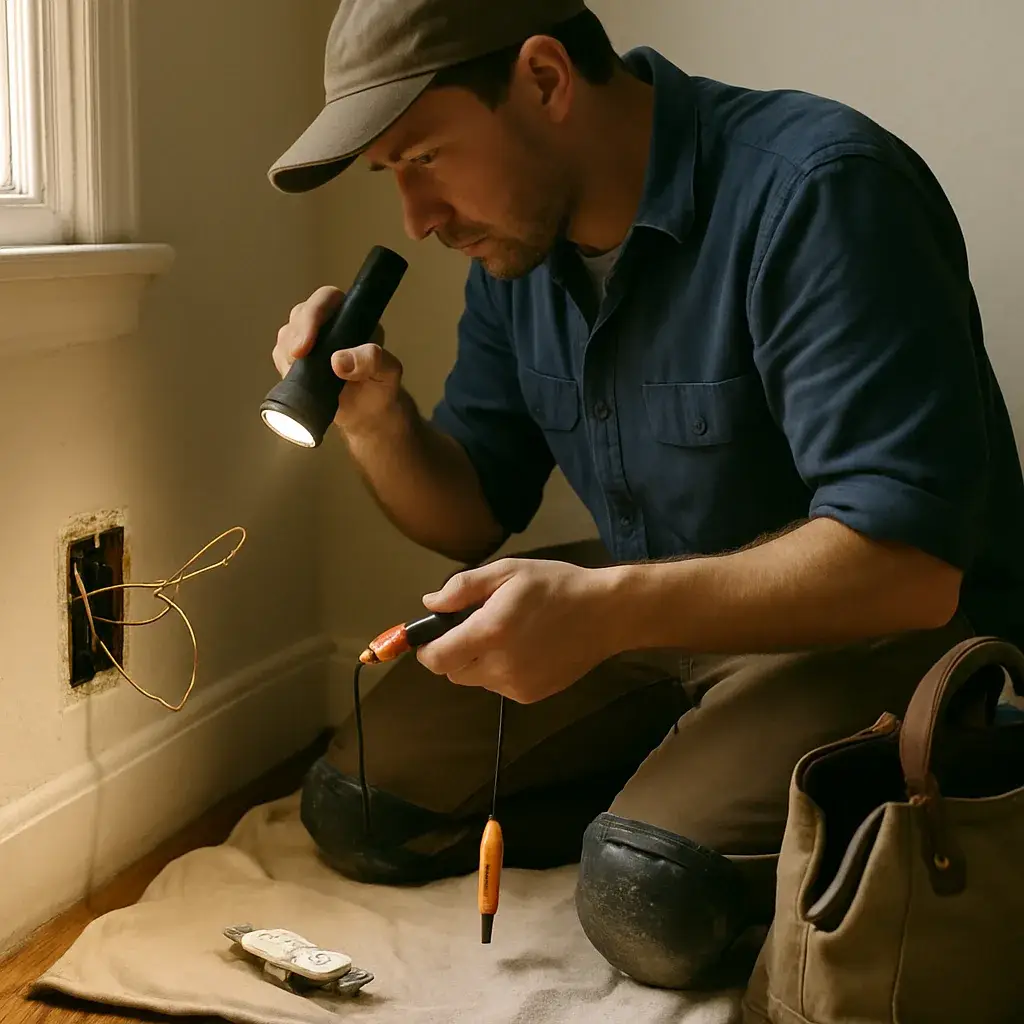
What’s Covered on This Page
- Outlets That Aren’t Grounded Are One of the Most Common Findings in Older Homes
- Aluminum Wiring and Knob-and-Tube Wiring Often Surface During a Renovation or Home Purchase
- Frequent Breaker Trips Often Point to a Home Wired for a Different Era of Electrical Use
- Whether You Need the Whole House Rewired or Just Part of It Depends on Room-by-Room Wiring Condition
- Rewiring Involves Some Wall Access, But Not Necessarily Moving Out
- Related Links
Outlets That Aren’t Grounded Are One of the Most Common Findings in Older Homes
If you’ve had a home inspection in Sunnyvale or any of the older areas of Mesquite, Garland, or Dallas, you’ve probably seen this report. It mentions two-prong outlets, or three-prong outlets that aren’t grounded. This is a common finding. We see it especially in slab-on-grade ranch homes built from the 1950s to the 1970s. The electrical code didn’t require a ground wire to every outlet then. These outlets worked fine for lamps and radios. But they weren’t built for most grounded, three-prong equipment we plug in today.
You’ll probably notice small things at first. Maybe a three-prong plug fits loose. An outlet tester shows an open ground. Or a laptop charger gives a faint tingle when you touch its metal case. None of that means your house is unsafe to live in day to day. It does mean a piece of electrical equipment doesn’t have the path it needs for a fault current. This is particularly true for anything with a metal housing.
A GFCI outlet can legally replace a two-prong outlet. It will still protect you from shock, even without a ground wire behind it. That’s a real, code-recognized fix for a single outlet or a bathroom or kitchen circuit. What it won’t do is add a true ground path. Sensitive electronics or surge protection won’t work properly without it. If a room’s whole circuit is ungrounded, has aluminum wiring, or old knob-and-tube, patching one outlet at a time only goes so far.
- Aluminum wiring from certain build years often gets handled alongside grounding work, not as a separate task.
- Knob-and-tube wiring, if still present, has no ground conductor at all by design.
- We use a whole-house electrical safety inspection to find out how far ungrounded circuits extend. We do this before recommending anything.
For a single problem outlet, installing a ground wire or swapping a GFCI is often enough. But when ungrounded outlets show up room after room, that points to the original branch wiring. It’s usually not just one device. That’s when we discuss our home rewiring service as an option. It’s better than patching outlet-by-outlet. We don’t push a full rewire on a house that only needs a few GFCIs. We will tell you what your home needs after we’ve opened your panel and traced a few circuits. Not before.
Cost depends heavily on how many circuits we need to work on. It also depends on how much access there is in the attic or walls. Our home rewiring pricing guide gives a breakdown of what drives the range. (This is the part people overthink.)
Aluminum Wiring and Knob-and-Tube Wiring Often Surface During a Renovation or Home Purchase
This comes up a lot with older homes around Sunnyvale, Mesquite, and the rest of Dallas County. A home inspector finds old wiring during a sale. Or a contractor opens a wall during a remodel. They might find aluminum branch wiring or old ceramic knob-and-tube runs. Neither one means your house is unsafe right away. But both get flagged because they are outdated ways of running power.
Aluminum wiring shows up in homes built or wired between the mid-1960s and early 1970s. This was when copper prices pushed builders to switch. Knob-and-tube is older. We see it in homes from before the 1950s that haven’t been fully rewired. Aluminum wire expands and contracts more than copper. Connections at outlets and switches can loosen over time. Knob-and-tube has no ground wire. Its old rubber or cloth insulation gets brittle with age. The National Fire Protection Association (NFPA) notes aging wiring needs its connections checked. Loose points generate heat. You’ll notice this is a real fire safety concern.
During a home purchase, an inspector’s report usually catches this. Sometimes an insurance carrier asks questions before writing a policy. During a renovation, we typically find it when drywall comes down. The old wiring is right there. Your home doesn’t need to be torn apart. A licensed electrician can trace the circuits. They check how much of the house is affected. Then they tell you if it’s in a few rooms or the whole structure.
When we are brought in for this, our licensed technicians assess what’s in the walls. They do this before recommending anything. Every rewiring job we do is performed to code. Permits and inspections are pulled when required. That is just how the work has to be done to pass inspection. It also makes sure it is covered under our workmanship warranty. Our home rewiring page walks through how a full rewire is scoped. It also shows what is typically included.
Not every wall with old wiring needs to come down. Sometimes only the affected circuits need replacing. Other times, a full rewire makes more sense. This is especially true if you are already opening up the house for a remodel. That call depends on how much of your home is still on the original wiring. It also depends on what you are trying to accomplish with the renovation. Cost varies with scope. Our pricing guide breaks down what drives that range.
Frequent Breaker Trips Often Point to a Home Wired for a Different Era of Electrical Use
A breaker that trips more than once every few months is one of the top reasons people call us about home rewiring. You notice it starts small. The microwave and toaster can’t run at the same time. And the upstairs bedroom outlet trips when a space heater and a hair dryer both get plugged in. Then it starts happening more. It stops feeling random.
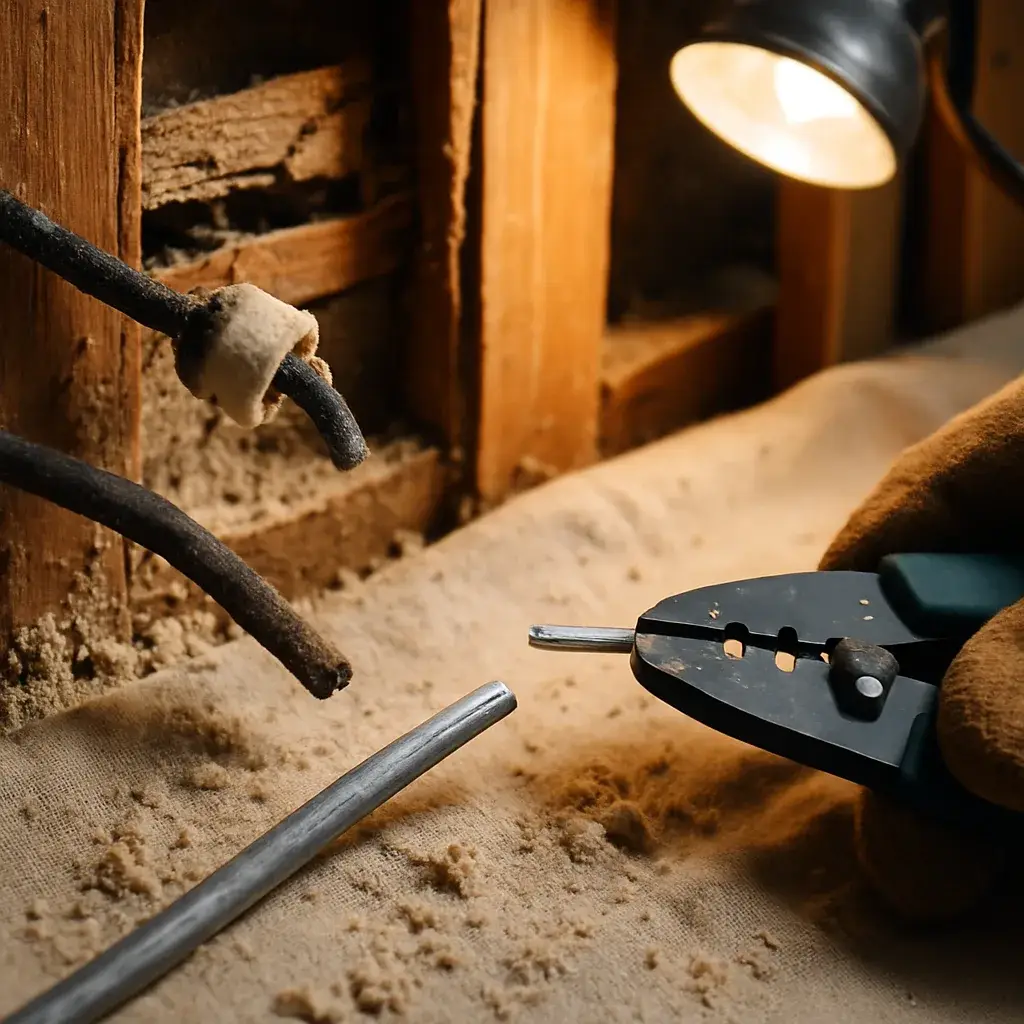
In many of the older slab homes around Sunnyvale, Mesquite, and Forney, the wiring was sized for a 1960s or 1970s household. Fewer appliances. No central air in some cases. No computers or window units stacked on the same circuit. Decades later, that same circuit is running a TV, a gaming console, a phone charger, and a portable heater in the winter. The breaker isn’t broken. It’s doing its job by tripping before the wire overheats.
A few things line up when this points to a wiring capacity problem (instead of just a one-off overload):
- The same breaker trips on different days, not just when one big appliance runs
- It happens in older sections of the house rather than newer additions
- Outlets feel warm or a light flickers right before the trip
- The home still has some original circuits from a remodel decades back
- More devices have been added to the house than the panel was built for
None of that means every tripped breaker calls for a rewiring project. Sometimes it’s one overloaded circuit that needs its own dedicated line, not a whole-house rewire. We look at the panel, trace which circuits are carrying what, and check the condition of the wire itself before we recommend anything. If the fix is smaller than a full rewire, we say so. Our home rewiring service is built around replacing outdated or unsafe wiring throughout the home with new circuits and grounding. That’s a different scope than adding one circuit.
What we’re checking for is whether the wire gauge, insulation, and circuit layout can handle how the home is used today. A licensed electrician can walk the attic and crawlspace, pull a panel cover, and tell you which one you’re dealing with within a visit.
Have questions? We’re happy to help.
Call Today, Get Service Today. Xtreme Air Services is ready to help.
Whether You Need the Whole House Rewired or Just Part of It Depends on Room-by-Room Wiring Condition
It all depends on what’s hidden in your walls. A 1975 ranch house in Sunnyvale might have original wiring in one room, but three others updated by a past owner. We always look at your house room by room before saying if it’s a whole-house job or a partial one.
Homeowners typically notice problems unevenly. A bedroom added in the 1990s runs fine, for example. But the two original bedrooms might have outlets that feel warm. Or the lights dim when the microwave kicks on. Sometimes it’s the opposite. The main part of the house was rewired years back. A converted garage or sunroom addition still runs on older wire. It was never brought up to code with the rest of the house.
That unevenness comes from how North Texas homes get built and modified. Additions get wired at different times, by different people. Some older DFW homes still have aluminum branch wiring or knob-and-tube sections mixed in with newer copper circuits. This happens after a partial upgrade. None of that shows up from the curb, by the way. And it usually doesn’t show up from a quick look at the breaker panel either.
During your diagnostic visit, a licensed technician walks the attic and any accessible crawlspace. We open the panel. We test circuits room by room instead of guessing from the outside. That’s what decides the scope, not a flat assumption that an older house needs everything torn out.
- Wire type and condition in each room’s walls and attic run
- Grounding at outlets and whether GFCI protection is missing where it’s needed
- Panel connections and whether circuits are overloaded or undersized
- Junction boxes for old splices or unsafe connections
- Whether one section of the house was already updated and can be left alone
If two rooms check out fine and three don’t, we’ll tell you plainly. We won’t push a whole-house price when it isn’t needed. We’d rather quote the job that matches what we found in your walls. Our home rewiring pricing page shows how full and partial jobs are priced before you even schedule a visit.
Once the walk-through is done, our home rewiring service includes a written, flat-rate quote. You see the number before any work starts. You know the scope and the price at the same time, not after the walls are already open.
Rewiring Involves Some Wall Access, But Not Necessarily Moving Out
Most homeowners stay in their house while we rewire it. We open walls when we have to, but we don’t tear out an entire room just to run a few new circuits. A lot of the work happens through the attic and, in some homes, the crawlspace. This lets us pull wire without cutting into every wall.
How much wall access a job needs depends on your home. A newer subdivision home in Sunnyvale with an accessible attic might need only a few small openings. An older slab home in an established Mesquite neighborhood, with wiring run through interior walls (and no attic path), usually needs more cuts. We won’t know the exact scope until a technician looks at your home. We’ll trace the existing wiring first.
This is why we walk through your house with you before any work starts. For home rewiring service, we look at the panel, the attic, and the rooms getting new circuits. Then we put the plan in writing. You see the scope and the price before we touch a wall, not after. (It helps avoid surprises.)
- We use access points like the attic and crawlspace first, before we open interior walls.
- Openings needed for new wire runs, switches, or outlet boxes are small and localized.
- Drywall repair and paint aren’t part of what we install, so plan on a drywall finisher or painter afterward.
- Homes with additions, dropped ceilings, or wiring buried in finished walls with no attic access typically need more openings.
We patch what we open enough to close it up safely. But finishing drywall to a paint-ready surface isn’t part of the rewiring itself. If that matters to your plans, it’s worth lining up a drywall or paint contractor for right after we finish. Most homeowners keep living in the house the whole time. Room by room, not wall to wall, is how this works.
Ready to Get Started?
Call 972-288-2263 Today, Get Service Today.