

Industrial HVAC Service in Sunnyvale: Keep Your Facility Running
Process loads, high-bay spaces, and production equipment kept running – on a service plan built around your shift schedule, not ours.
What’s Covered on This Page
- Signs Your Industrial Cooling or Refrigeration System Needs Service
- Industrial HVAC vs. Commercial HVAC: What Sets Them Apart
- When In-House Staff Can Handle It and When to Call a Technician
- What to Expect During an Industrial HVAC Service Call
- Boiler Compliance and Preventive Maintenance for Industrial Equipment
- How fast can you get someone out to my Sunnyvale facility for industrial HVAC service?
- What happens when your technician arrives at my building?
- What causes uneven temperatures in Sunnyvale warehouse buildings?
- How do I know if my building needs industrial HVAC service instead of commercial?
- Can my own maintenance staff handle industrial HVAC upkeep, or do I need to call a technician?
- Why do industrial boilers need regular safety inspections?
Signs Your Industrial Cooling or Refrigeration System Needs Service
Industrial HVAC service isn’t something you call for on a whim. Your rooftop units, walk-ins, and process cooling equipment are built tough. They still warn you before they quit. Here’s what we tell facility managers: The system almost never fails without warning. Reading those signs can separate a $500 fix from a $4,800 one.
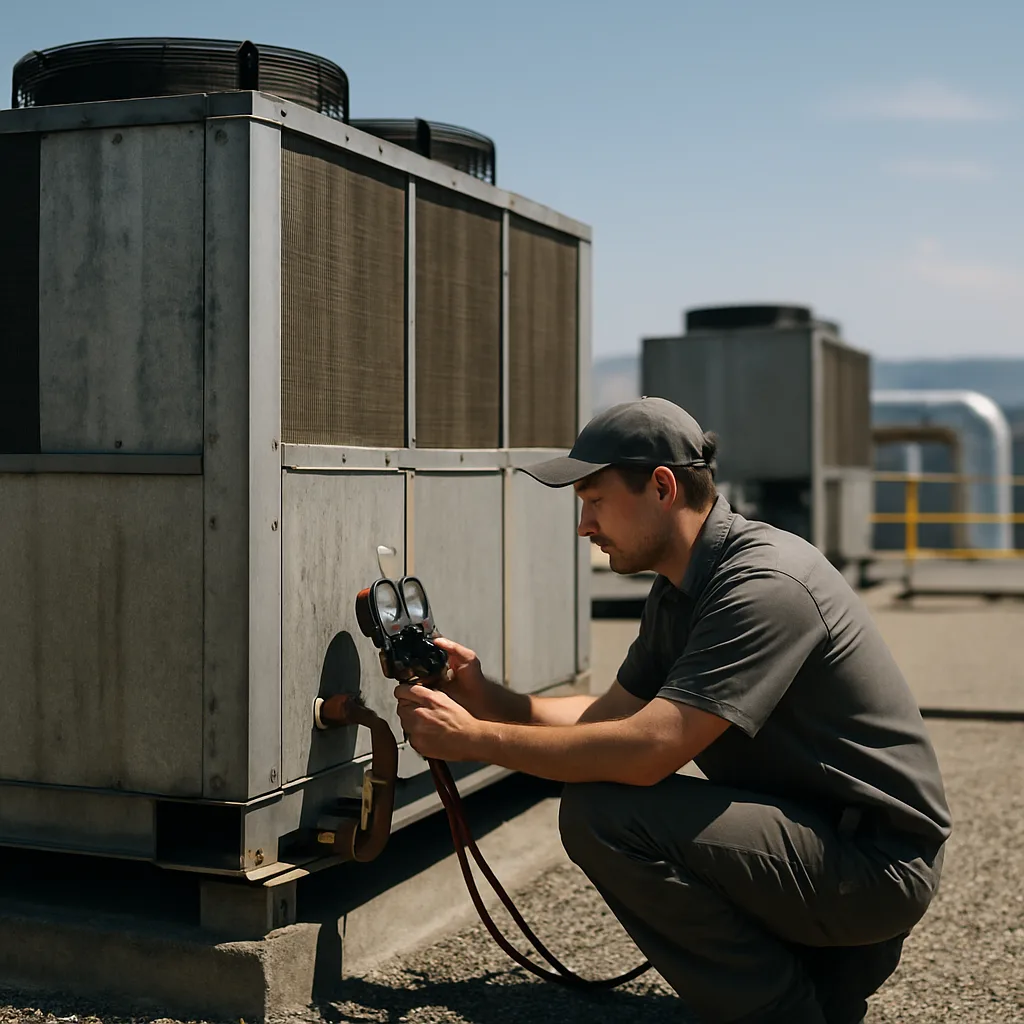
We’ve walked into plenty of Sunnyvale warehouses and distribution buildings along the highway corridor where rooftop units run nearly nonstop through summer. That continuous duty cycle wears parts faster than it does in a typical office building. The warning signs show up sooner and matter more.
- Uneven temperatures across the building, with one zone cold and another running warm
- Short cycling, where the unit turns on and off much more often than it should
- A hum, rattle, or grinding noise that wasn’t there last month
- Ice building up on coils or refrigeration lines
- A power bill that jumped without any change in how the building is used
- A breaker that trips whenever the compressor tries to start
Not sure whether you’re hearing normal wear or a real problem? That’s a common question. One bad part often causes the whole headache rather than the entire system failing at once.
Industrial HVAC vs. Commercial HVAC: What Sets Them Apart
Commercial HVAC usually means keeping offices, retail spaces, or small restaurants comfortable. Industrial HVAC is different. It includes warehouse rooftop units, process cooling tied to manufacturing lines, and exhaust systems that remove fumes from shop floors. Its controls may need to run around the clock, not just nine to five.
Sunnyvale’s industrial and light-manufacturing buildings often sit on large concrete slabs with high ceilings. That changes the whole approach. One rooftop unit might serve thousands of square feet of open floor space. When it fails, you can lose production, not just comfort.
Here’s the real difference: Commercial systems are usually one or two units sized for people. Industrial systems often add make-up air, ventilation for equipment heat, and refrigeration or cold storage serving the same building. The stakes are higher. A walk-in cooler down for a day means lost inventory, not just a warm break room.
Not sure which type your building has? It’s fine not to know right away. If your system serves a shop floor, warehouse, or process line rather than only offices, you’re likely dealing with industrial HVAC.
When In-House Staff Can Handle It and When to Call a Technician
Plenty of routine work belongs to your own crew: swapping filters, clearing leaves and debris from rooftop units, checking condensate drainage, and logging temperatures. Your team can and should handle all of that. It’s basic upkeep, not a repair.
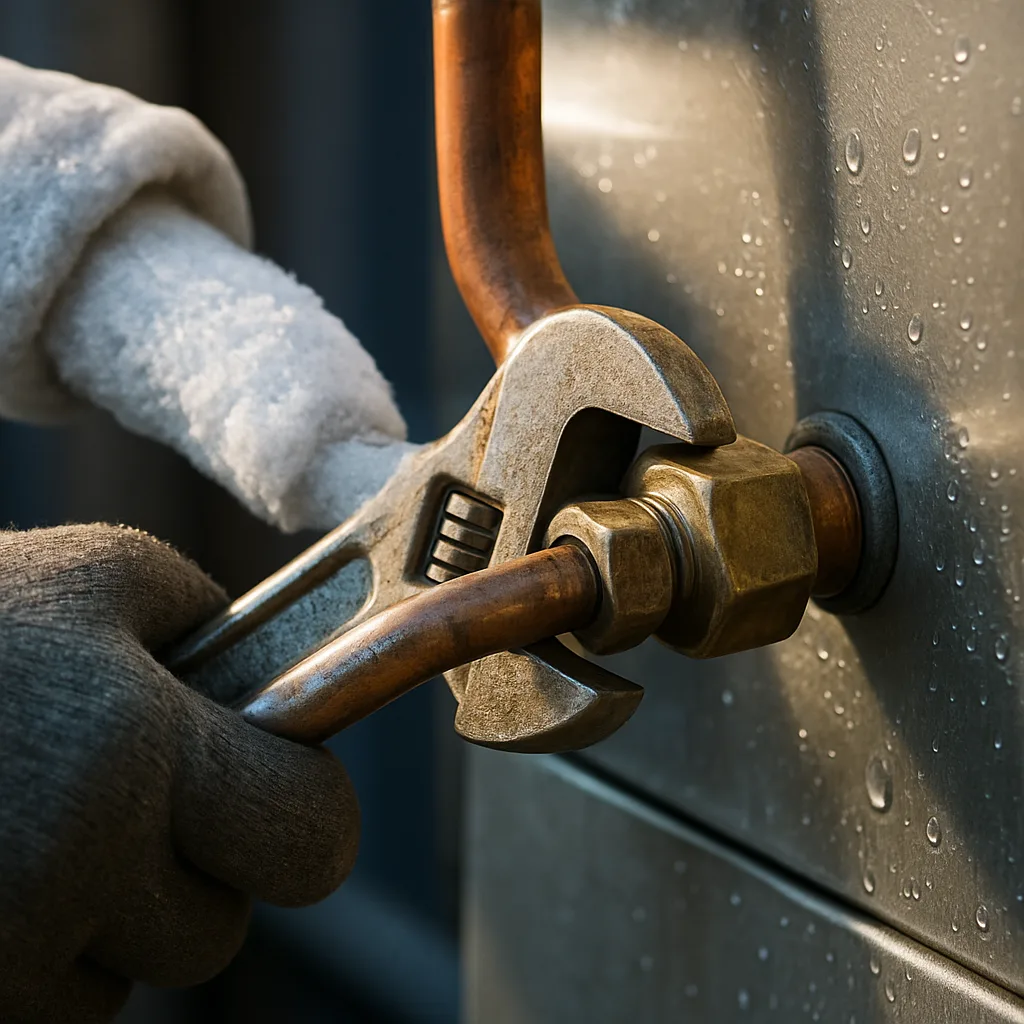
The line moves once you’re inside the cabinet and touching refrigerant, electrical components, or control boards. That’s work for a licensed technician, full stop. Texas law also regulates refrigerant handling and most electrical repairs on commercial equipment. 80 six days a week.
- The unit trips a breaker, or a fuse blows more than once
- You smell burning near the electrical panel or hear hard clicking from the compressor
- Refrigerant levels look low, or you see ice on the coil
- A control board or thermostat displays error codes your team can’t read
- The unit is under warranty, and unauthorized work could void it
If your maintenance staff is trained and comfortable with basic upkeep, keep doing it. That saves money and keeps small issues small. Once refrigerant, wiring, or a major component is involved, bring in a licensed technician. Xtreme Air Services is licensed and insured under HVAC License TACLA29023C. We get calls from facility managers who tried the DIY route first. Sometimes it works out. Sometimes it costs more in the end. Either way, you can decide with good information in front of you.
Not sure what your Industrial HVAC service project needs? Ask us.
Call Today, Get Service Today. Xtreme Air Services is ready to help.
What to Expect During an Industrial HVAC Service Call
Here’s what happens after you call. A technician heads out, walks your building, and checks the system that’s giving you trouble. Rooftop units on Sunnyvale’s warehouse and light-industrial buildings take a beating from direct sun and dust. We start there before touching a panel or gauge.
- We ask what you noticed first, such as warm air, a tripped breaker, or a strange noise, and when it started.
- We inspect the unit and check its electrical connections, refrigerant levels, and moving parts.
- We find the failed part and explain it in plain English, without dumping jargon on you.
- We give you the price before any repair starts. You approve it, and then we get to work.
- We test the system under load to confirm it’s fixed, not just running for the moment.
- We clean up and walk you through the work before we leave.
Often, the problem is one failed part, such as a contactor, capacitor, or bad sensor. Most jobs are diagnosed and repaired during that first visit.
Sometimes it’s not that simple. If the unit is older or several components failed at once, we’ll tell you before work starts. You won’t pay more because your compressor quit at 9 p.m. on Saturday instead of Tuesday afternoon.
Boiler Compliance and Preventive Maintenance for Industrial Equipment
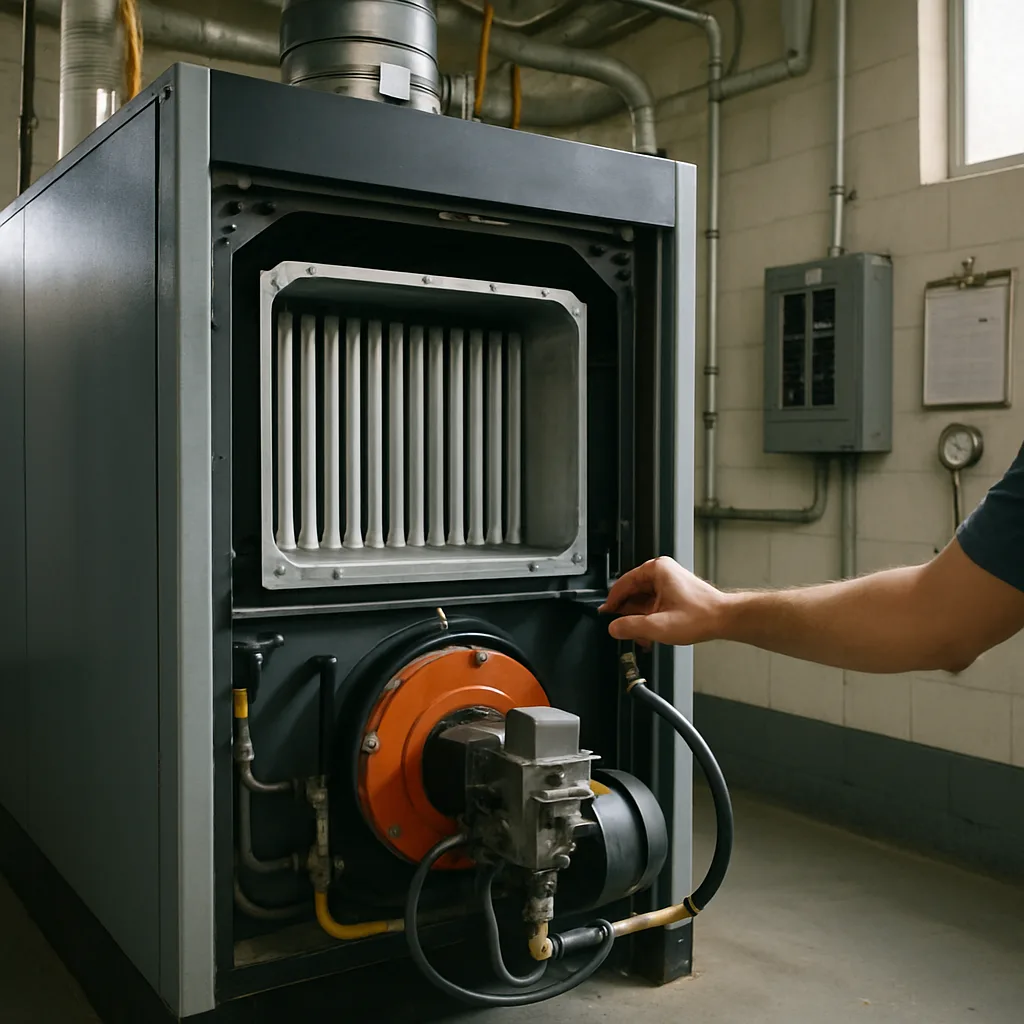
Boilers don’t fail quietly. They fail loudly and usually at the worst time, often during a production run or cold snap. A safety inspection catches small problems before they cause a disruptive failure.
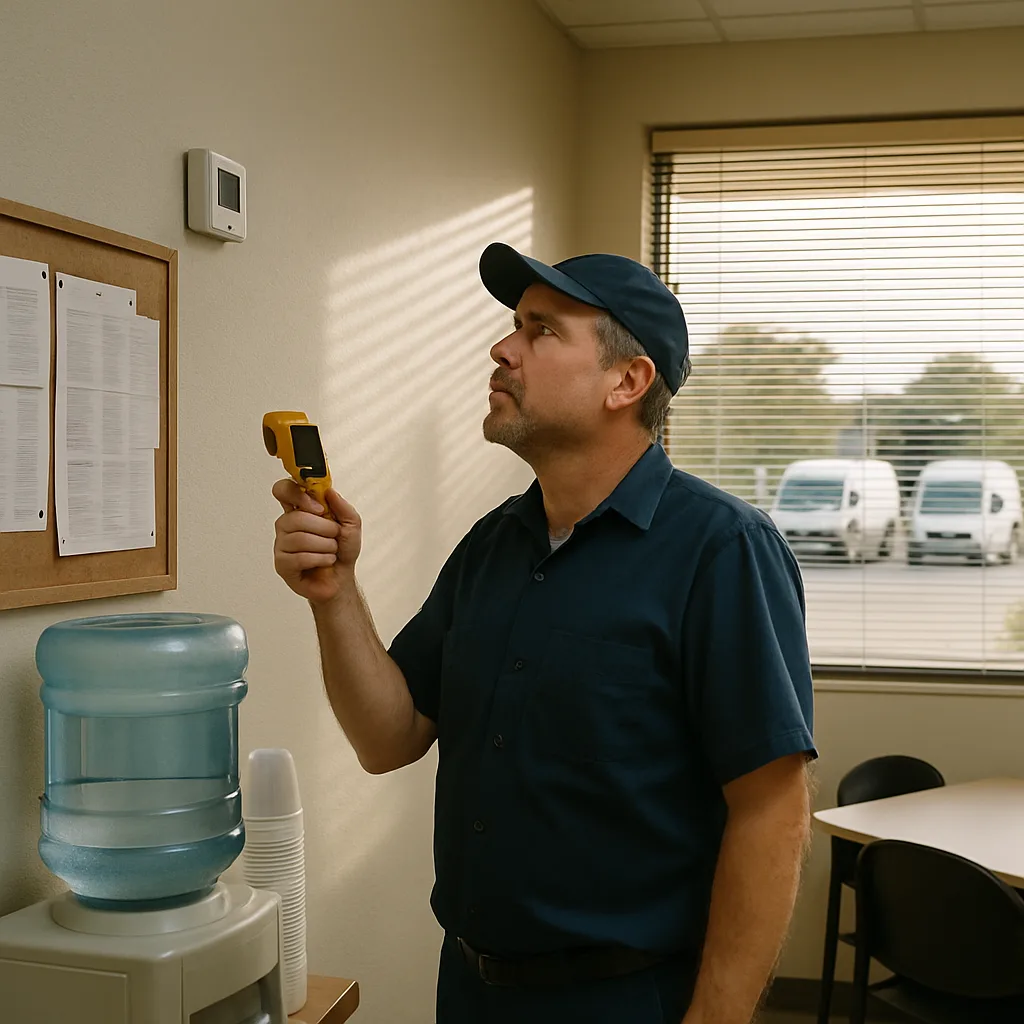
Here’s the truth about industrial boilers and mechanical equipment: Compliance isn’t a formality you check once and forget. Vessels, burners, and controls drift out of spec over time. Scale builds inside tubes, safety valves stick, and combustion efficiency drops unnoticed until the utility bill jumps. A failed boiler safety inspection often traces back to a maintenance gap, not a design flaw.
What does a preventive maintenance visit cover on industrial equipment?
- Combustion tuning and burner inspection to keep efficiency where it should be
- Safety valve testing and control checks
- Boiler cleaning to clear scale and soot buildup from heat exchange surfaces
- Refractory and gasket condition checks on aging units
- Controls and building automation calibration so the system runs the way it’s set to run
We handle boiler installation, boiler replacement, boiler repair, boiler servicing, and boiler safety inspections during commercial preventive maintenance. We also schedule those visits so you don’t have to track them yourself. A facility that runs a boiler year-round can’t afford a surprise shutdown. Your tenants or production line feel it immediately.
A maintenance plan protects your uptime and your budget. Catching a failing gasket during a scheduled visit costs a fraction of an emergency call after it gives out.
Frequently Asked Questions
Common questions about Industrial HVAC service
How fast can you get someone out to my Sunnyvale facility for industrial HVAC service?
We aim to reach your facility quickly, especially when a rooftop unit or refrigeration system goes down. Sunnyvale’s warehouse and light-industrial buildings often run cooling systems nonstop through summer, so a delay can mean lost inventory or a production shutdown. When you call, tell us what you’re seeing, like warm air or a tripped breaker. We use that information to prioritize the visit and bring the right parts on the first trip.
What happens when your technician arrives at my building?
A technician walks your building first and asks what you noticed, like a strange noise or a zone that won’t cool. Then we inspect the unit, check electrical connections and refrigerant levels, and find the failed part. We explain the problem in plain language and give you a price before any repair starts. Most jobs get diagnosed and fixed during that same visit, especially when the issue is one part, like a capacitor or a sensor.
What causes uneven temperatures in Sunnyvale warehouse buildings?
Uneven temperatures usually mean one rooftop unit is struggling to cover too much open floor space. Many Sunnyvale warehouses and light-manufacturing buildings sit on large concrete slabs with high ceilings, and a single unit may serve thousands of square feet. When that unit wears down from constant summer duty cycles, one zone runs cold while another stays warm. Catching this sign early keeps it a simple repair instead of a full breakdown.
How do I know if my building needs industrial HVAC service instead of commercial?
If your system cools a shop floor, warehouse, or process line instead of just offices, you’re dealing with industrial HVAC. Commercial systems are usually sized for people working in offices or retail spaces. Industrial setups often add make-up air, process cooling, or refrigeration tied to production. The stakes are higher too. A dead walk-in cooler means lost inventory, not just an uncomfortable break room.
Can my own maintenance staff handle industrial HVAC upkeep, or do I need to call a technician?
Your staff can handle routine upkeep like swapping filters, clearing debris off rooftop units, and checking condensate drainage. Once you’re inside the cabinet touching refrigerant, wiring, or a control board, that work needs a licensed technician. Watch for repeated breaker trips, burning smells, ice on coils, or error codes your team can’t read. Texas law also regulates refrigerant handling and most electrical repairs on commercial equipment, so calling a technician at that point protects your building and your crew.
Why do industrial boilers need regular safety inspections?
Boilers rarely give a quiet warning before they fail, and they often quit during a production run or a cold snap. A safety inspection catches worn parts, faulty burners, or vessel issues before they cause a disruptive shutdown. For Sunnyvale facilities running equipment year-round, a scheduled inspection costs far less than an emergency failure. Staying current on compliance also keeps your operation running without unplanned downtime.
Ready to Get Started?
Call 972-288-2263 Today, Get Service Today.