

Commercial HVAC Installation in Sunnyvale That Keeps Your Business Running
New rooftop and split-system installs for Sunnyvale offices, retail, and light industrial buildings – load-calculated and curb-checked before we quote, not sized off square footage.
What’s Covered on This Page
- Recognizing When a Commercial System Has Reached End of Life
- Repair, Maintain, or Replace: Making the Right Call for Your Building
- The Installation Process, From Load Calculation to Startup
- New Construction and Retrofit Projects Near the U.S. 80 Corridor in Sunnyvale
- Permits, Licensing, and Code Compliance to Verify Before You Hire
- How long does a commercial HVAC installation take in Sunnyvale?
- How do I know if I need a repair or a full replacement?
- What happens during the startup and walkthrough after installation?
- Does my older Sunnyvale building need code or permit updates before a new unit goes in?
- Can you get to my building fast if a rooftop unit fails during a heat wave?
Recognizing When a Commercial System Has Reached End of Life
You know the pattern. The unit trips out on the hottest afternoon, and your tenant calls. Your technician finds a part that’s cracked, rusted, or worn thin. We see this every week in older strip centers near Sunnyvale’s main corridor. Some still use the rooftop units installed when the buildings were built. One fix isn’t the problem. It’s the third fix this year.
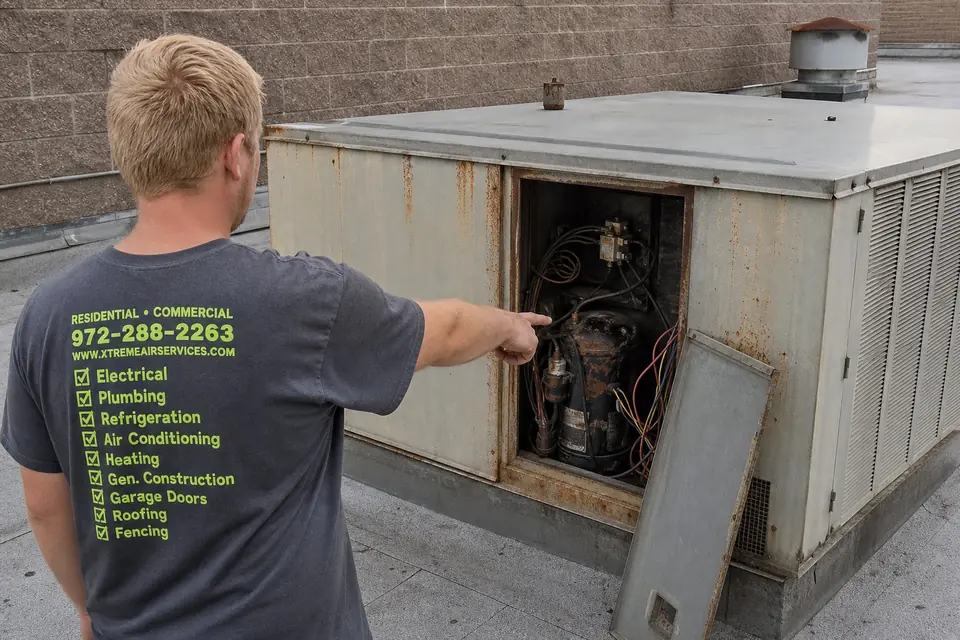
- The system is 12 to 15 years old and needs a major component, such as a compressor, coil, or control board
- Your energy bills keep climbing even though nothing else in the building changed
- Repairs are stacking up faster than in past years
- The refrigerant type is outdated and harder to source
- Some rooms or sections never reach a comfortable temperature, no matter where you set the thermostat
Age alone doesn’t decide it. A well-maintained 14-year-old unit can outlast a neglected 9-year-old one. What matters is the failure pattern. The tonnage must also match how you use the space. You may have added equipment, walls, or square footage since the last installation. If so, the old sizing may no longer work.
Repair, Maintain, or Replace: Making the Right Call for Your Building
Not every rooftop unit needs to come off the roof. Sometimes a bad capacitor or dirty condenser coil is the whole problem. A repair may get you through another season. But there comes a point when repairs stop making sense. Knowing where that line sits is half the battle.
We inspect many buildings along Sunnyvale’s Hwy 80 corridor with original single-stage rooftop units from the 1990s. Their refrigerants and efficiency ratings are decades behind today’s standards. Those units can often be nursed along. But each repair on old equipment is a bet against the next failure, not a lasting fix.
- You’re calling for the same repair two or three times in one year
- The unit is more than 12 to 15 years old, and parts are getting harder to source
- Your energy bills keep climbing even after maintenance visits
- The building’s use has changed, with more equipment, occupants, or heat load than the system was sized for
- A tenant or inspector has reported airflow or comfort problems in specific zones
That last point matters more than many people think. Some commercial HVAC installation calls aren’t caused by complete failures. They come from buildings that gained square footage or changed how a space is used. Yet no one redid the cooling load calculation. The old equipment is sized for the old floor plan but running the new one. It may limp along, but it won’t work right.
The Installation Process, From Load Calculation to Startup
A commercial installation isn’t just swapping boxes. Each step matters. Skipping one can leave your building with a short-cycling unit or hot spots in the back office. Here’s how we handle the process.
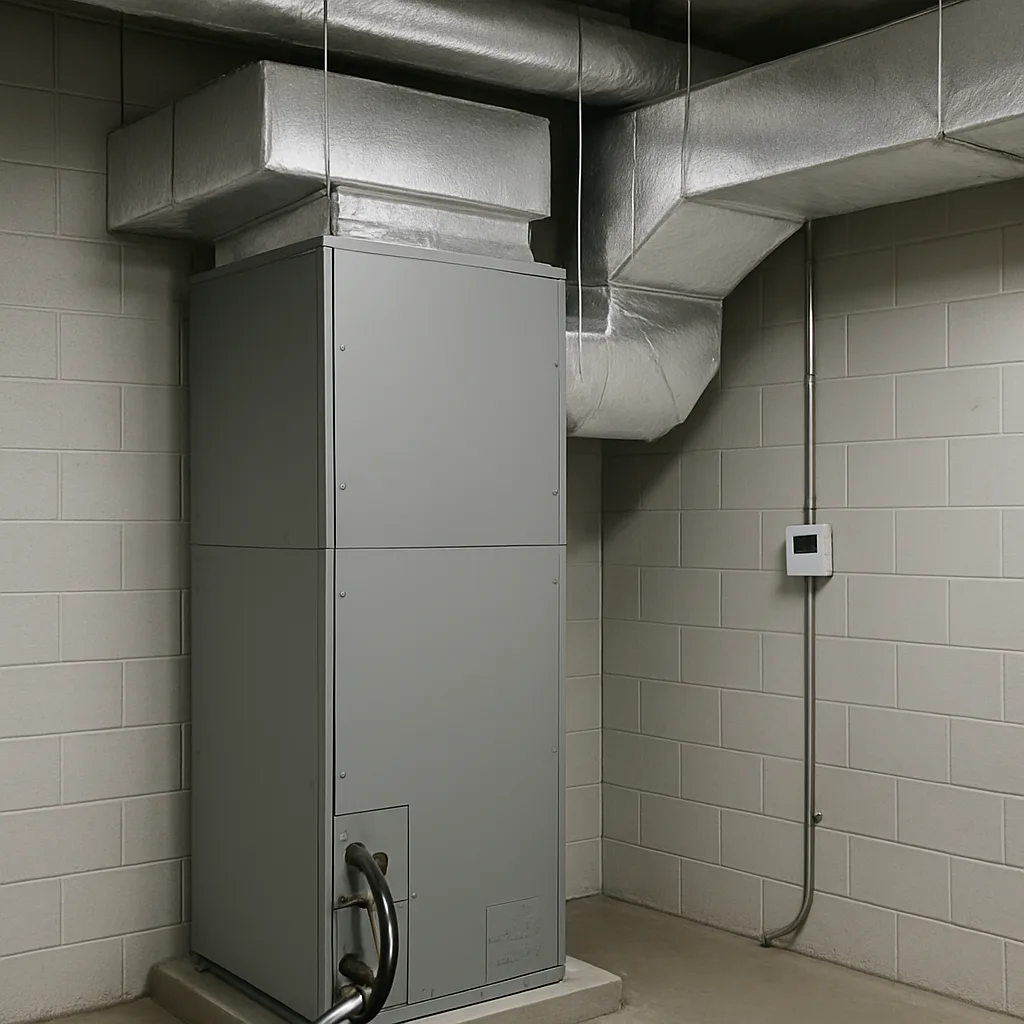
- Load calculation. We measure square footage, ceiling height, insulation, and heat sources. Kitchen equipment and server rooms also factor into correct system sizing.
- Equipment selection. We match tonnage, efficiency rating, and unit type to your building’s load, not only the old unit’s size.
- Site prep and staging. We sort out roof access, crane needs, and curb adapters before the equipment arrives.
- Old unit removal. We disconnect and haul away the existing system as part of the job.
- Set and connect. We set the equipment and connect it to the existing ductwork and electrical system. Refrigerant lines are installed or reused where possible.
- Startup and testing. We start the system and check its refrigerant charge, airflow, and control response.
- Walkthrough. We show you the thermostat setup and confirm that each zone cools or heats as it should.
Step five is where jobs go sideways when a crew rushes. Mismatched connections can cause leaks later. We’ve repaired plenty that a careful crew could have avoided the first time. Startup testing isn’t optional either. That’s how we catch a bad capacitor or wiring mistake before you rely on the system in July.
Most straightforward, like-for-like installations take a day or two. Larger jobs with ductwork changes or code upgrades take longer. We’ll tell you that upfront, not halfway through the work.
Need help with Commercial HVAC installation?
Call Today, Get Service Today. Xtreme Air Services is ready to help.
New Construction and Retrofit Projects Near the U.S. 80 Corridor in Sunnyvale
Sunnyvale sits along the U.S. 80 corridor, where commercial growth includes new retail pads, warehouses, and office space. Older buildings nearby may have used the same rooftop units for 20 years. That mix matters. New construction and retrofit installations aren’t the same job, even when both end with a working system.
New construction gives us a clean slate. We size the equipment from the building’s cooling load. Then we place the ductwork where it makes sense and coordinate with the electrical panel before drywall goes up. That avoids guesswork and conflicts with old infrastructure.
Retrofit work along the corridor is different. Older buildings near U.S. 80 may have ductwork sized for equipment that’s long gone. Their electrical service may also need an upgrade before it can support a higher-efficiency unit. We see this every week. A business owner requests a straight swap, but the wiring or curb needs modification first.
- Roof structure and curb compatibility for rooftop units on older buildings
- Ductwork condition and whether it can handle a higher-capacity system
- Electrical panel capacity for new equipment
- Permit and code requirements based on the building’s age and use
Both paths need careful planning. Skip that step, and you may end up with a system fighting the building instead of working with it.
Permits, Licensing, and Code Compliance to Verify Before You Hire
Many business owners don’t think about permits until there’s a problem. A rooftop unit or new commercial mechanical system usually needs one. The local building department must also approve the completed work. If that step is skipped, you could face problems with insurance or a future sale.
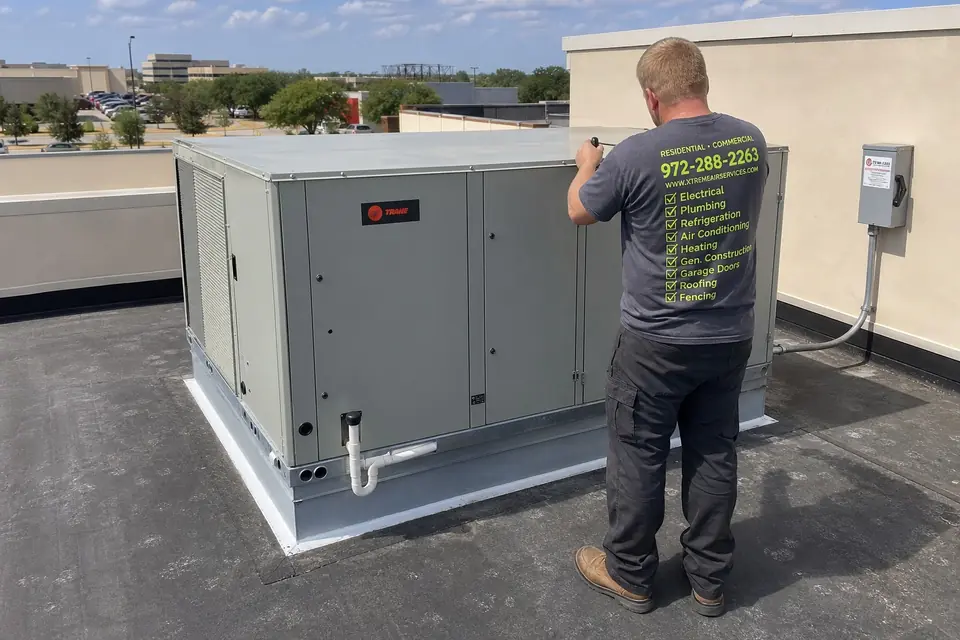
What should you check? Ask whether your contractor will pull the permit and whose name will appear on it. A licensed HVAC contractor should provide an active license number without hesitation. Xtreme Air Services is a fully licensed and insured HVAC, plumbing, and electrical contractor. We’ll give you our HVAC license number upfront, so you don’t have to dig for it.
- Confirm that the contractor’s license is active and matches the business name on your contract
- Ask who will pull the permit, and get the answer in writing before work starts
- Confirm that the final inspection will be scheduled rather than skipped
- Verify proof of insurance for the crew working in your building
- Ask whether your building needs code upgrades. Older properties may require electrical or ductwork changes to pass inspection
Some older commercial spaces around Sunnyvale have wiring or ductwork that predates current code. That can turn a straightforward swap into a larger project. It isn’t necessarily bad news, but it belongs in the upfront conversation. You shouldn’t learn about it after the crane has placed the new unit on the roof.
Frequently Asked Questions
Common questions about Commercial HVAC installation
How long does a commercial HVAC installation take in Sunnyvale?
Most straightforward, like-for-like installations take one to two days. Larger jobs need more time if we’re changing ductwork or upgrading equipment to meet current code. If your building needs electrical panel work or new curb adapters for the rooftop unit, we’ll add that time to your schedule upfront. We never let a job “grow” on you halfway through. You’ll know the real timeline before we start.
How do I know if I need a repair or a full replacement?
You likely need a replacement if you’re calling for the same repair two or three times in one year. Age matters too, but the failure pattern tells us more. A unit between 12 and 15 years old that needs a major part, like a compressor or coil, often costs more to patch than to replace. Climbing energy bills and rooms that never reach a comfortable temperature are other signs the system is done, not just tired.
What happens during the startup and walkthrough after installation?
We start the new system and check the refrigerant charge, airflow, and control response before we call the job finished. This step catches a bad capacitor or wiring mistake before you’re relying on the system on a hot afternoon. Then we walk you through the thermostat setup and confirm every zone heats and cools correctly. This isn’t a quick handshake and exit. It’s how we make sure the install works the way it should from day one.
Does my older Sunnyvale building need code or permit updates before a new unit goes in?
Yes, older buildings near Sunnyvale’s main corridor often need permit and code review tied to the building’s age and use. Many strip centers along this stretch still run original rooftop units from decades back, and their electrical service may need an upgrade before it can support higher-efficiency equipment. Ductwork sized for old equipment can also be a mismatch for a new system. We check roof curb compatibility, wiring, and ductwork condition before we quote the job, so there are no surprises mid-install.
Can you get to my building fast if a rooftop unit fails during a heat wave?
We cover buildings across Sunnyvale, including the strip centers and offices along the main corridor, and we prioritize calls where a full system failure is affecting tenants. If your unit trips out on the hottest afternoon, tell us that when you call so we can move quickly. In many cases, a cracked or rusted part triggers the failure, and we can often confirm on-site whether a repair will hold or whether it’s time to talk replacement.
Ready to Get Started?
Call 972-288-2263 Today, Get Service Today.